The Great Movie Boss Debate: Part 1
The Great Movie Boss Debate: Part 1
By Erik Hofmeyer
So you want to be a better boss?
Maybe you’re reading the latest Dr. Brene Brown book or perusing YouTube for Simon Sinek Ted Talks. Or maybe you’re registering for your company’s in-house professional development courses if they don’t skimp out and just offer web-based content. Or you could be scrolling your LinkedIn feed littered with “thought leaders” sharing dramatically overly summarized blurbs about great people, or great deeds, to try and make themselves look insightful.
But have you tried looking to film?
There are some great bosses in movies. Obviously, we know the silver screen is a fantasy land and these lessons in leadership are a bit of stretch, but nonetheless, it’s fun to analyze some characters who we’d love to work for.
We’re casting a wide net here with both leaders and managers (yes, leadership and management are different things) because there’s a vast array of styles out there. Take Star Trek for example. There is the brash and clever Captain Kirk, and there’s the more cerebral Captain Picard who was collaborative and diplomatic, and everything else in-between.
Let us know what you think of our list! And maybe we’ll cover this topic on the podcast.
1. Sam Rockwell as Owen from The Way, Way Back
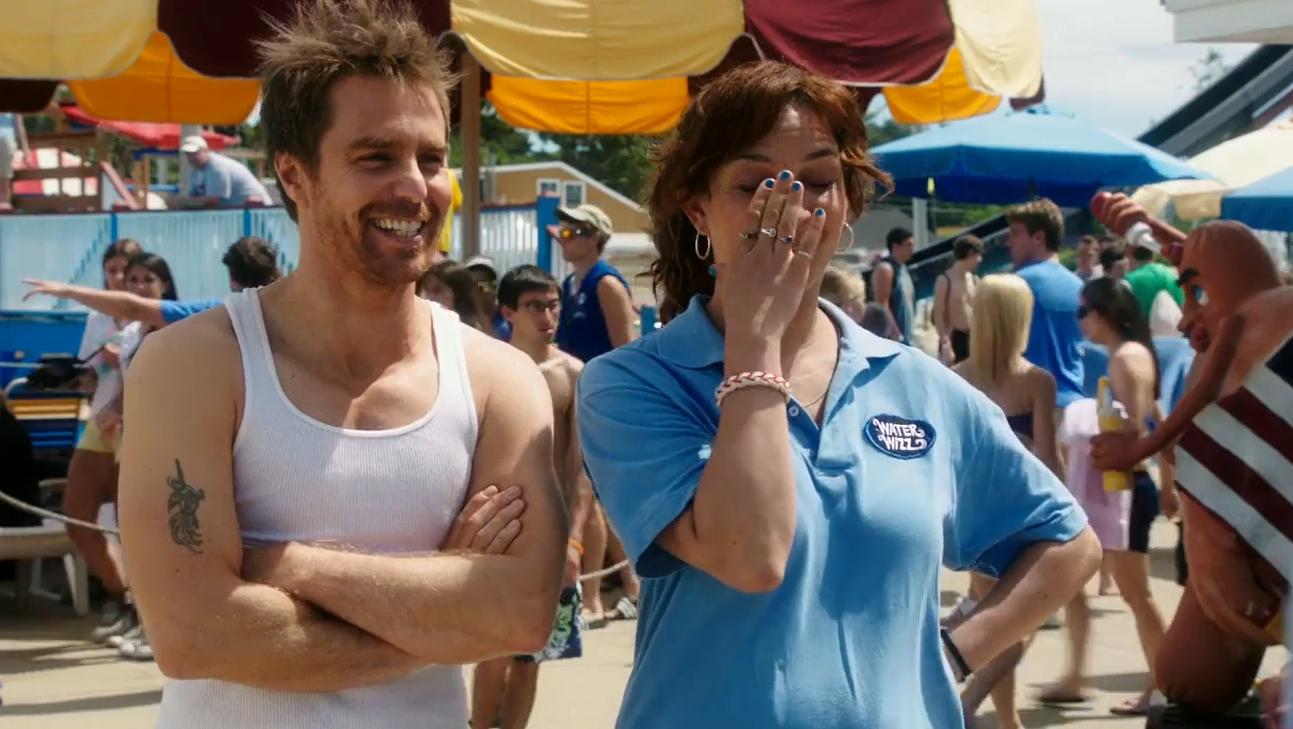
Do you remember your first boss? Was the boss good, bad or just plain unremarkable? In The Way, Way Back, Duncan (Liam James) is an awkward teen vacationing at a beach house with his mother (Toni Collette), and her boyfriend, Trent (Steve Carell) who’s a fire hydrant of condescension. Fortunately, Duncan makes a friend named Owen (Sam Rockwell) who saves his summer by offering him his first-ever job at a water park so he has some space to breathe.
Sam Rockwell’s character as the owner of a waterpark is so perfect. Bosses who manage teenagers or college-aged employees have more responsibility than they often realize. Generally speaking, teenagers entering the workforce have vague baseline expectations for good or bad workplace leadership and/or behavior. Also, teenagers enter the workforce accompanied by a wide variety of backgrounds in their “home life.” So, being a boss is a real opportunity to be a force for good.
Getting a job at the waterpark injected a massive confidence boost and instant network of new friends. To us, the lesson here is that mentors can fill in gaps in lives that parents are unable to fill.
Favorite Quote: “No pattern on my quarter. Cut your own path.”
2. Rebecca Hall as Dr. Ilene Andrews in Godzilla x Kong: The New Empire (2024)

Okay, we get it, the people aren’t the main attraction to a movie about a giant titan royal rumble. But Rebecca Hall showed us some excellent boss energy as Dr. Ilene Andrews who oozed confidence as a boss at the top of her game in her high-up role in Monarch monitoring Kong’s life in the Hollow Earth. The team respected her distinguished doctoral education, track record of achievement, the ability to make tough decisions and lead from the front, and all while looking after a teenage child. A couple neat leadership highlights jumped out at me.
First, she knew when to look at problems differently from an “outside” perspective by bringing in podcaster Bernie Hayes (Brian Tyree Henry), who also starred in the previous Godzilla vs. Kong movie. The humility and self-awareness of knowing/admitting that a team needs help is a key leadership trait.
Second, her team members felt empowered to run with innovative ideas and take calculated risks. For example, Trapper, Kong’s personal veterinarian, played by the hilarious Dan Stevens, had a wild (and successful) idea to take off to lead a flock of electrically charged flying beasts, in mating season, toward the advancing giant apes to slow them down until Kong arrives from the surface. Yes, we know how silly this sounds, but the point is that team members taking ownership and bringing ideas to the table is a sign of a healthy work culture.
Favorite Quote: “After Mechagodzilla, we realized that there were some threats that even Kong couldn’t face. So, we started working on some minor augmentations.”
3. Anthony LaPaglia as Joe Reaves Empire Records
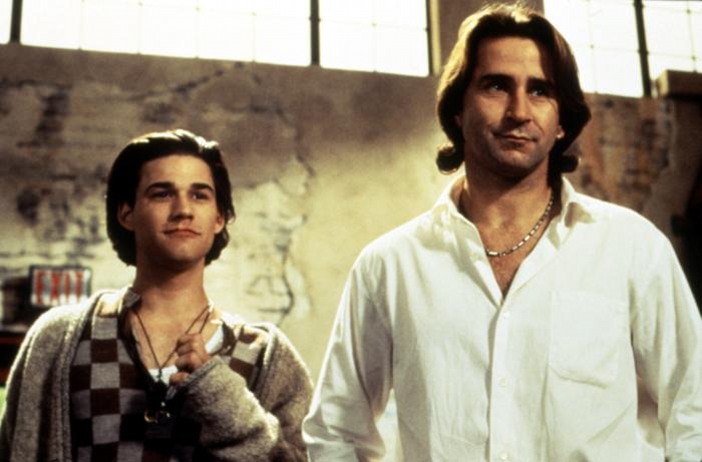
He’s the kind of boss that every high school or college student would love – authentic, somewhat jaded, doesn’t get bent at small stuff, but at the same time he was someone who really cared for team members.
Empire Records featured a tight-knit group of music-savvy youths who, as the brilliant Roger Ebert explained, is “one of those films where in a single day, in a single music store, every conceivable thing happens to every conceivable character, and at the end of the day, they are all a lot wiser, as the endless list of music credits scrolls up the screen.”
Empire Records was more than work – it was a refuge where characters could be themselves by vetoing music selections, dancing with customers, going all out for Rex Manning Day (mark your calendar for April 8), and more. Building this kind of work environment is infectious for business and the envy of managers everywhere. Also, an engaged workforce is less likely to pilfer, “call in sick,” and more likely to turn the store into a community fixture.
It’s the type of store that only exists in movies, but boy, the team loved him so much that one of the employees rode his motorcycle to Atlantic City to try and win enough money to save the store from being bought out by Music Town. And then, the staff threw a massive block party and concert to raise funds for Joe. Obviously, employees need to learn the rules, processes, and basic customer service etiquette. But outside of that, letting employees enjoy work and bring their authentic selves is a solid business strategy.
Favorite Quote: “You’re doing a great job, Deb.” When he saw a team member struggling with mental health issues. He had the emotional intelligence to reach her from a different angle and ensure she knew that she was appreciated and belonged there.
4. Regina Hall as Lisa in Support the Girls

For Joe at Empire Records, giving employees space was the right tact for the situation. But other times, managers need to be really hands-on for their team. Support the Girls was a perfect example of that style.
Regina Hall crushed her role as Lisa, the general manager of Double Whammies, a sports bar that features skimpily dressed waitresses. The restaurant is an aptly named double entendre because she gets hit with a barrage of whammies but keeps on going. Lisa is nurturing and protective of her staff who toil away to get by, and the story follows her as she faces an extremely trying, microcosm of a day that tests her optimism at every turn. She has plenty to contend with a botched break in, her servers facing a myriad of personal issues, a ridiculous restaurant owner, and more.
She began the day by crying in her car, however, she found the strength to grind on because of compassion for her team. Great bosses like Lisa are energized by their teams who look to them for leadership. And they’re energized by the victories they generate for people. One example was bending rules with a car wash to raise funds for one of the servers. Or entertaining a kid at the restaurant because his mom couldn’t find childcare for the day. It reminded me a lot of the military style of “servant leadership” where leaders and supervisors focus on the wellbeing of teams and often try to “shield” troops from outside pressures so they can do their job.
I also loved the empathy she showed for team members even when she had to terminate employment. For example, she had to let one server go due to a regrettable choice in a tattoo, but there was kindness and a pledge to support her. Another employee committed a fireable offense, but she decided to forego law enforcement involvement and let him walk away to avoid inflicting additional turmoil.
Favorite Quote: “I can take f**king up all day, but I can’t take not trying.”
5. Tom Hanks as CAPT Ernest Krause in Greyhound
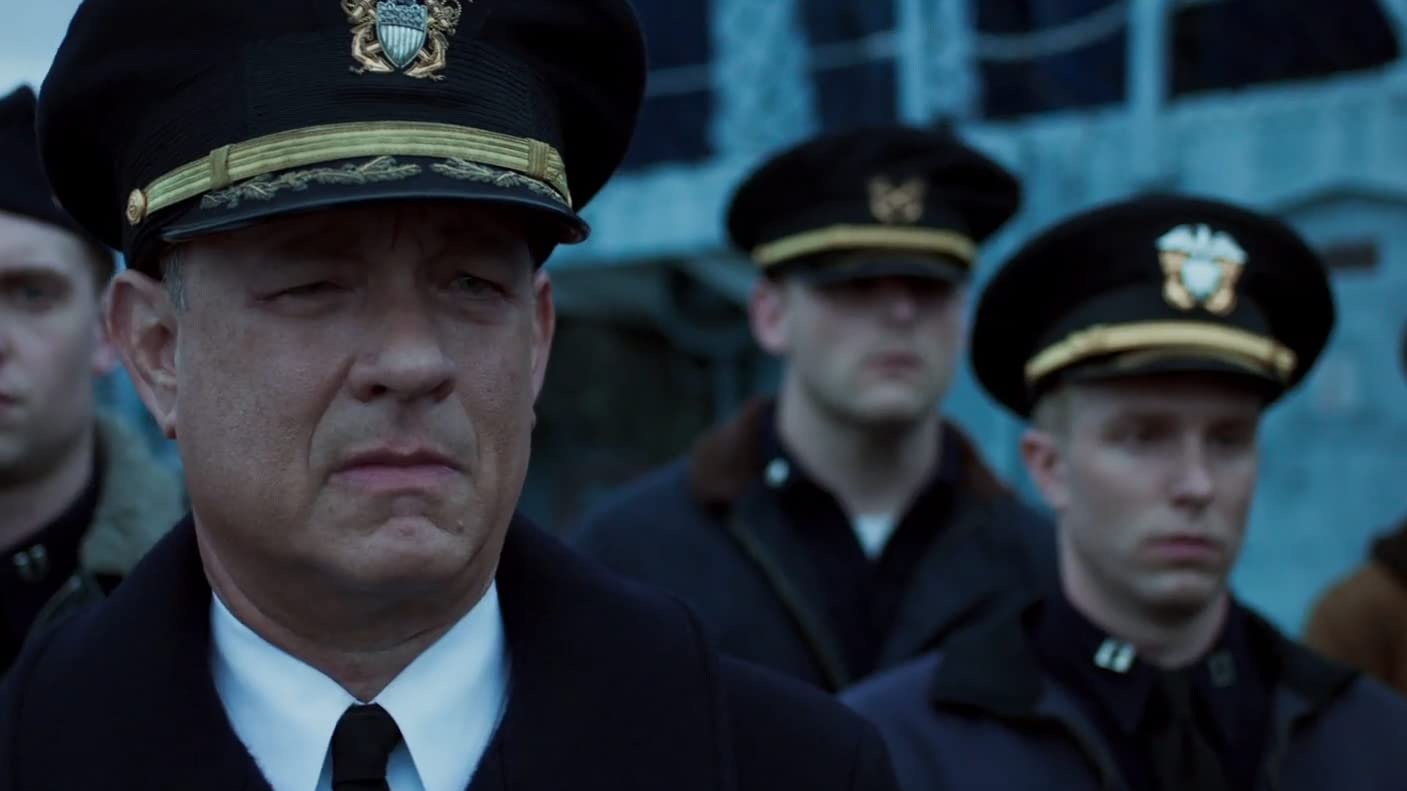
Greyhound, along with Support the Girls, is one of the most criminally underrated movies in recent history, mostly likely because it came out amidst the chaos in 2020 and right before Apple TV’s popularity boost post-Ted Lasso.
It’s a tight, intense WWII thriller about an international convoy of 37 ships on a treacherous mission across the Atlantic Ocean to England to deliver Soldiers and supplies to Allied forces. It’s a deadly cat and mouse game with German U-boats heading that features strong leadership and team heroism. The “Battle of the Atlantic” is one of the largest naval battles in history and one of the few movies to ever feature the supply chain that makes operations possible.
The Captain isn’t an all-knowing superhero. He’s someone who dedicated his life to his craft, and who sometimes doubts himself, gets fatigued, and feels the immense pressure of the mission just like everyone else. One area that leaped out at me was communication. For example, the crisp radio transmissions; the way he speaks to everyone on the ship in the same respectful tone; the way he listened to his team. One particular scene was how the Captain corrected a critical mistake. During a stressful maneuver, a Sailor panicked and shouted out in fright. In war, seconds could mean the difference between life and death. He immediately cut off the panicked Sailor with a normal tone of voice, made an on-the-spot correction, and then everyone moved forward together. Effective coaching is essential because, if not, people either repeat the same mistakes and professional growth is stalled.
Favorite Quote: “I will tolerate no more fisticuffs on my ship, so restore the relationships you have damaged and fill me with peace.”


 Movies, Films & Flix