Wicker (2026) – Review
Quick Thoughts:
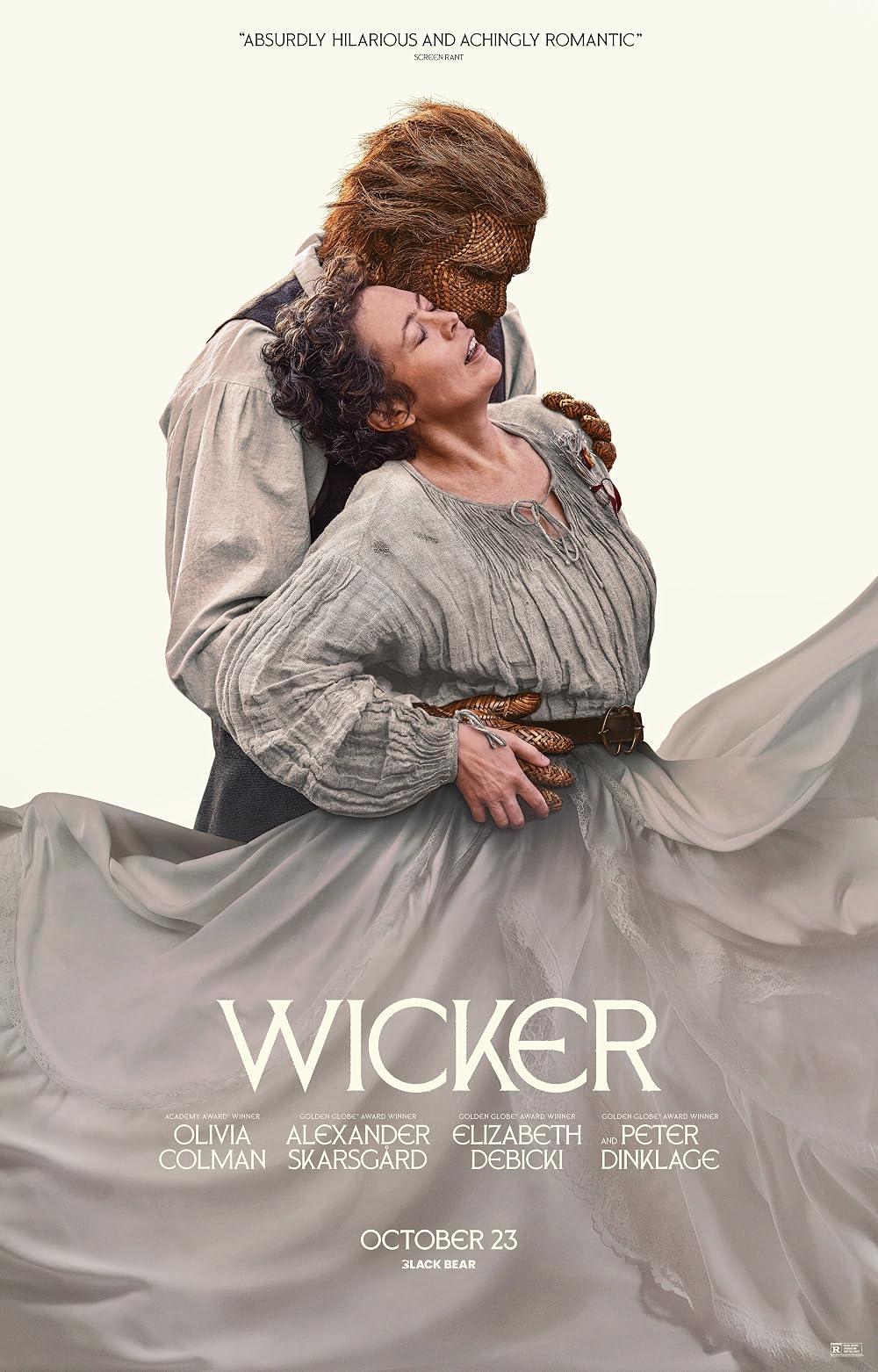
- Wicker is a delightful romance that takes a high-concept idea and creates a neat world.
- Director/writers Eleanor Wilson and Alex Huston Fischer have created something special.
- Alexander Skarsgård’s physicality is perfect. You believe he’s made of wicker (the sound design is great too).
- Olivia Colman can sell anything. You legitimately believe she’s in love with a wicker man.
- Between Cyrano and Wicker, I really like a romantic period piece featuring Peter Dinklage.
- Once again, it’s impressive that Wilson and Fischer took a short story and expanded it into an endearing, fully fleshed-out screenplay. It’s harder than it seems.
Based on “The Wicker Husband,” a short story by Ursula Wills, Wicker focuses on what happens when a Fisherwoman (Olivia Colman) asks a Basketmaker (Peter Dinklage) to make her a Wicker Husband (Alexander Skarsgård). The film is funny, mature, and intelligently written by Eleanor Wilson and Alex Huston Fischer (who also directed and are married). The best thing about the experience, aside from the wonderful casting and absurd premise, is how it explores new love, jealousy, and opening yourself up after a decade of building walls. It makes you wish more rom-coms were written by married couples who add different perspectives and insights into their high-concept screenplays. Many people will watch Wicker because it’s about Alexander Skarsgård having sex with Oscar-winner Olivia Colman, but hopefully they’ll leave the theater thinking about how to be a better partner (or scheming how to create a wicker spouse).
Wilson and Fischer’s first film, Save Yourselves! tells the story of a couple saving themselves during an alien invasion, so between it and Wicker, the duo enjoy high-concept love stories with a fantasy or sci-fi twist. Wicker takes place in a 17th-century (ish) fantasy village by an unknown sea, and opens with a wedding ceremony in which a man named Bottlewasher places a collar around the neck of a soon-to-be-dissatisfied young woman. During the afterparty, we’re introduced to Fisherwoman (Colman), the village fisherperson who lives on the outskirts of town, and seems happy she never married a mediocre husband and lost her autonomy. During the festivities, she comes across Tailor’s Wife (Elizabeth Debicki), the beautiful local mean-woman who in another world could’ve run the village, but instead is a walking advertisement for her tailor husband. After being casually (and cruelly) told that she’ll live out her days alone, the Fisherwoman picks up an exploding wicker basket that predicts she’ll be the next to marry. That night, she travels to the village’s somewhat mystical basketmaker and asks him to make her a husband.
The following day, a naked wicker man walks around the town getting ready for his marriage to the Fisherwoman. In a neat coincidence, the two have a nice marriage as they have bed-destroying sex (which he promptly and often repairs), comfortable quiet moments, and intimate dances at wedding receptions. As she works, he repairs her home, and their comfortable existence begins to infect the town with jealousy as locals start noticing their inadequacies. It’s all very funny (and true), and made better by Olivia Colman, Peter Dinklage, Elizabeth Debicki, and a committed Alexander Skarsgård, the first WHILF in cinema history.
Cinematographer Lol Crawley (The Brutalist, The Devil All the Time, Vox Lux, The OA) was instructed to make the film look like a 17th-century Dutch painting, and he succeeds in making the village designed by Renátó Cseh (production designer) look wonderful. The 1:85 aspect ratio works well for the romantic fantasy (and making Skarsgård look huge), and his idea to use three Arri Alexa Mini LF cameras for the crowd scenes creates welcome naturalism (the extras are really good). The magicians at Wētā Workshop created a flammable work of art that retrains Skarsgård’s looks (and hair). Joe Dunckley and his crew spent 18 months researching and developing the look to create a stoic, handsome, imposing, and strangely sexy creation (according to the press notes).
Shot in Hungary over 30 days, the handsome production takes a simple idea and expands into something fun and true. I can’t wait to see what the directors do next.
Share this post:

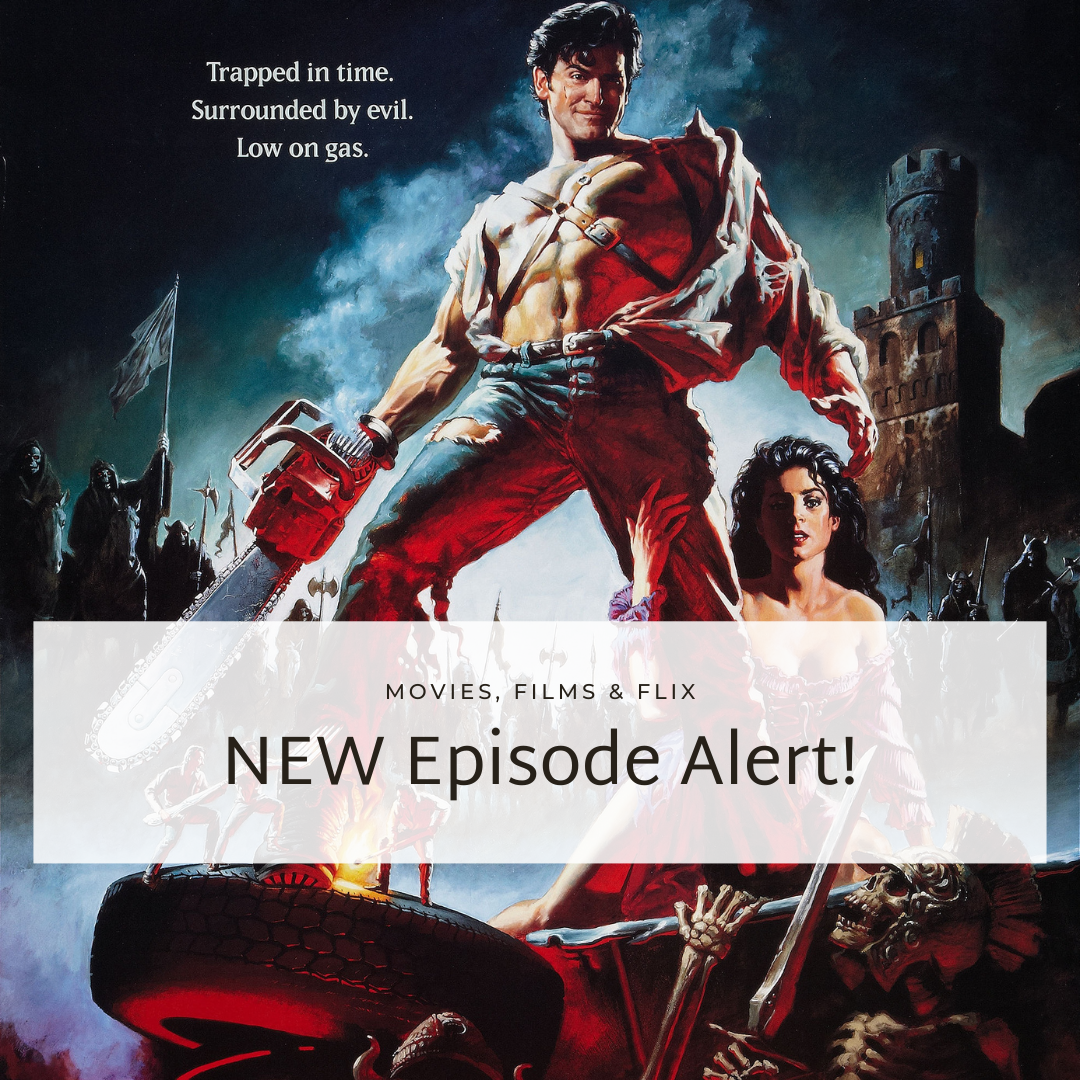
The Movies, Films and Flix Podcast – Episode 729: Army of Darkness (1992), Bruce Campbell and Catapults
You can download or stream the pod on Apple Podcasts, Tune In, Podbean, or Spreaker (or wherever you listen to podcasts…..we’re almost everywhere).
If you get a chance please make sure to review, rate and share. You are awesome.
Mark and John Levengood discuss the 1992 horror-action comedy Army of Darkness. Directed by Sam Raimi and starring Bruce Campbell, Embeth Davidtz, and an army of skeletons, the movie focuses on what happens when a blowhard awakens an evil army. In this episode, they also talk about pit fights, dangerous books, and evil clones. Enjoy!
If you are a fan of the podcast, make sure to send in some random listener questions (we love random questions). We thank you for listening, and hope you enjoy the episode!
Share this post:

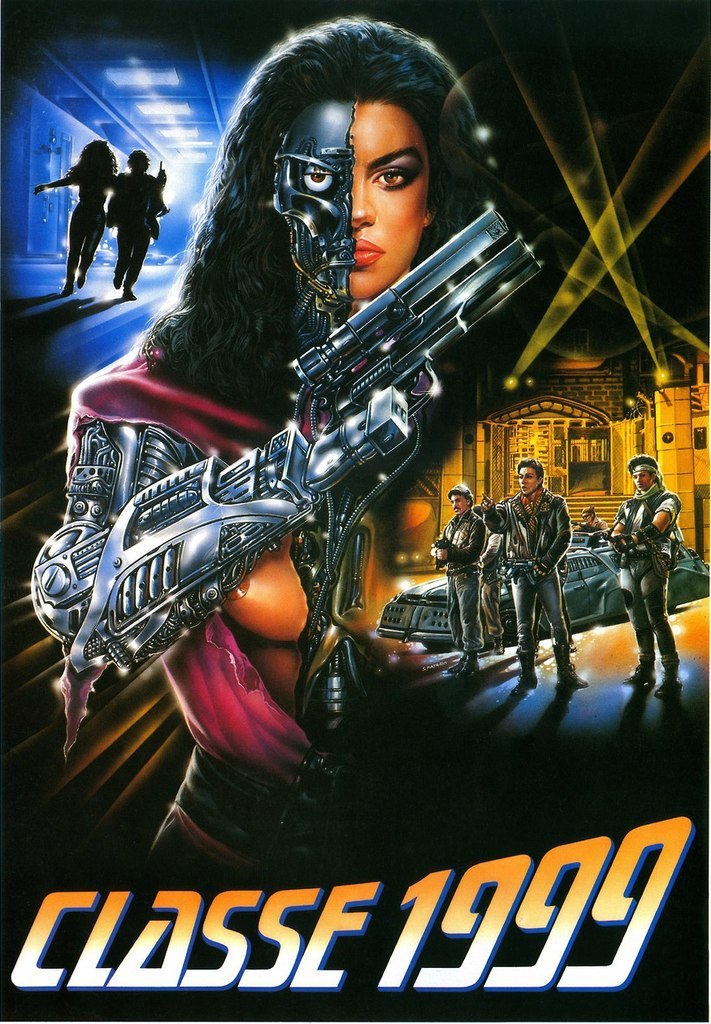
John’s Horror Corner: Class of 1999 (1990), an A+ for this star-studded B-movie that should probably be a 9.9 out of 10 on IMDB.
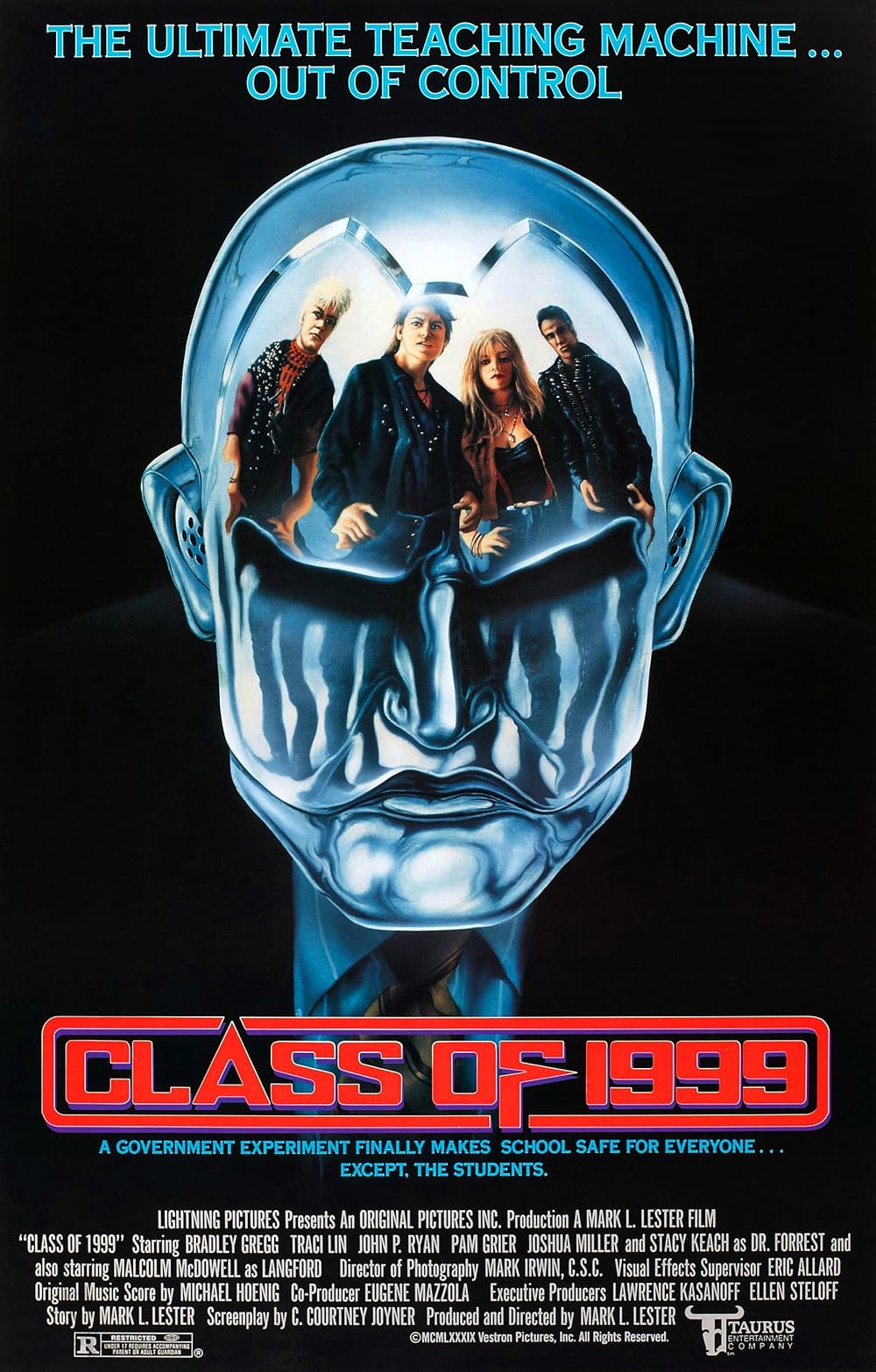
MY CALL: If you love campy violence, evil robots, and think we need to clean up our public schools, then this old flick is for you! MOVIES LIKE Class of 1999: This would pair well with RoboCop (1990) or The Faculty (1998). For more killer robot movies, consider Saturn 3 (1980), Chopping Mall (1986), Deadly Friend (1986), Moontrap (1989), Hardware (1990), Nemesis (1992), Screamers (1995), Virus (1999), Ex Machina (2015), Willy’s Wonderland (2021), M3GAN (2022) and Subservience (2024).
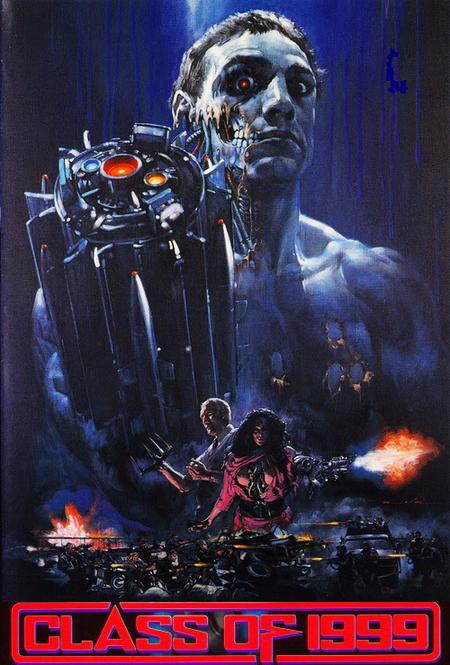
In the dismal future of 1999, gangs have overtaken the country and even infected high schools. A company specializing in automation and robotics led by Dr. Forrest (Stacey Keach; Escape from New York, Body Bags, Children of the Corn 666), MegaTech has “built” the next generation of educators—robots with perfect-looking human skin, equipped with class syllabi and military-grade concealed weapons. Because many high schools are centered in gang-controlled areas where no law enforcement dare go, these advanced cyber-teachers will allow classes to continue uninterrupted. And now for an aside… how much money exactly is being spent to make sure a gang-zone high school is held in session? Of all crazy things in this movie, THAT is my greatest suspension of disbelief! That, and Stacey Keach’s cyber-douchebag haircut. Oof! He looks like the evil manager of an early 80s Synth band.
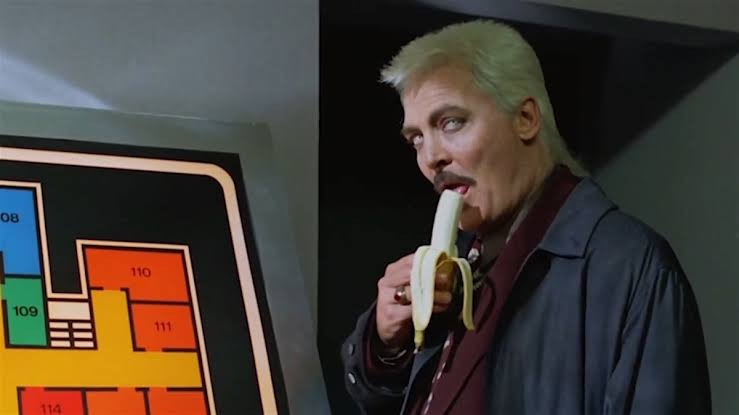
To properly test these cyber-teachers, teen convicted felons have been released from prison to attend school. Upon release, Cody (Bradley Gregg; Fire in the Sky, A Nightmare on Elm Street 3) head straight to school (like you do, directly from the prison entry gates), and quickly finds a fondness for the principal’s (Malcolm McDowell; Antiviral, 31) daughter (Traci Lind; Fright Night part 2, Spellcaster).
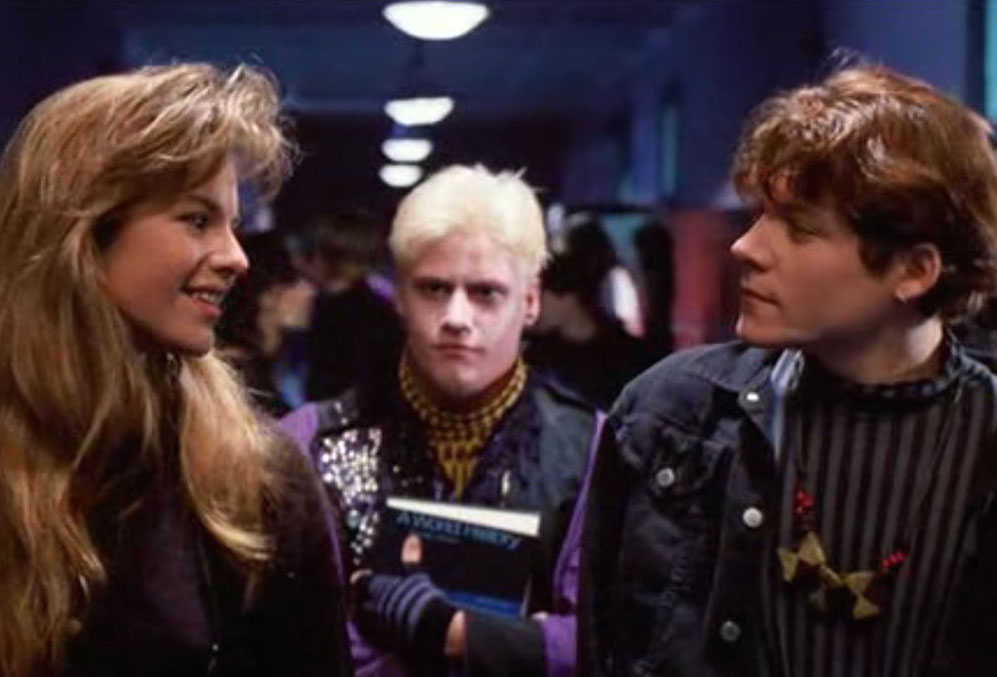
On their way to school, other gang kids attack Angel (Joshua John Miller; Halloween III, Near Dark, The Willies), Cody and Sonny (Darren E. Burrows; 976-EVIL) with machine guns, explosives and armored vehicles. It’s like a B-movie microbudget Mad Max: Fury Road (2015). Upon arrival, private armed security manages the school like a prison, with tower guards and a “coat check” ticket system for guns upon entry. Then Dr. Forrest dons a lab coat and monitors the school from an advanced tech command center in the basement. Again, this sounds very, very expensive. Maybe consider homeschooling. Maybe I shouldn’t be surprised when I consider our national defense budget…

Our new teachers—Mr. Bryles (Patrick Kilpatrick; The Toxic Avenger, The Cellar, The Granny), Mr. Hardin (John P. Ryan; It’s Alive, It Lives Again, ) and Ms. Conners (Pam Grier; Bones, Scream Blacula Scream)—readily discipline unruly students with physical violence. What begins as stomping on feet, shoving bullies, and brutal spanking (yes, butt-spanking them black and blue!) graduates to the flat-out neck-breaking assassination of a student with a gun. From here, the fun starts. A drug-addled teen has his stash jammed down his throat for an overdose death, a flaming still-living body is thrown into a living room, a back is snapped pulling a kid throw a hole in the wall, Pam’s hand melts away to reveal a flame thrower, Patrick’s is a minigun with a rocket launcher, the third has a claw with a power drill he drills into a student’s skull, the shambling robotic remains of the gym teacher are a raggedy awesome sight, and that gym teacher bot gets the most worthy demise of the movie.

Director Mark L. Lester’s (Firestarter, Class of 1984, Commando, Showdown in Little Tokyo) dystopian future is delightfully over-the-top in all the best ways. This is kinda’ like a B-movie made better and with more budget; a top shelf B-movie. For its era, the pacing of this movie is strong, the dark humor is abundant, and the effects and action scenes are abundant.
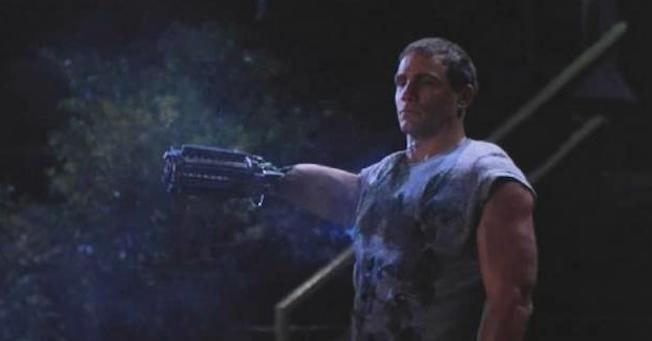
The most realistic thing about this movie is that the three robo-teachers are roommates in a townhouse. Because even a billion-dollar trio of military cyborgs can’t survive on a public teacher’s salary alone. And like schoolteachers, they are very clicky. You’ve gotta’ admire how they have each other’s robotic backs.
Share this post:

Once Upon a Time in Harlem (2026) – Review
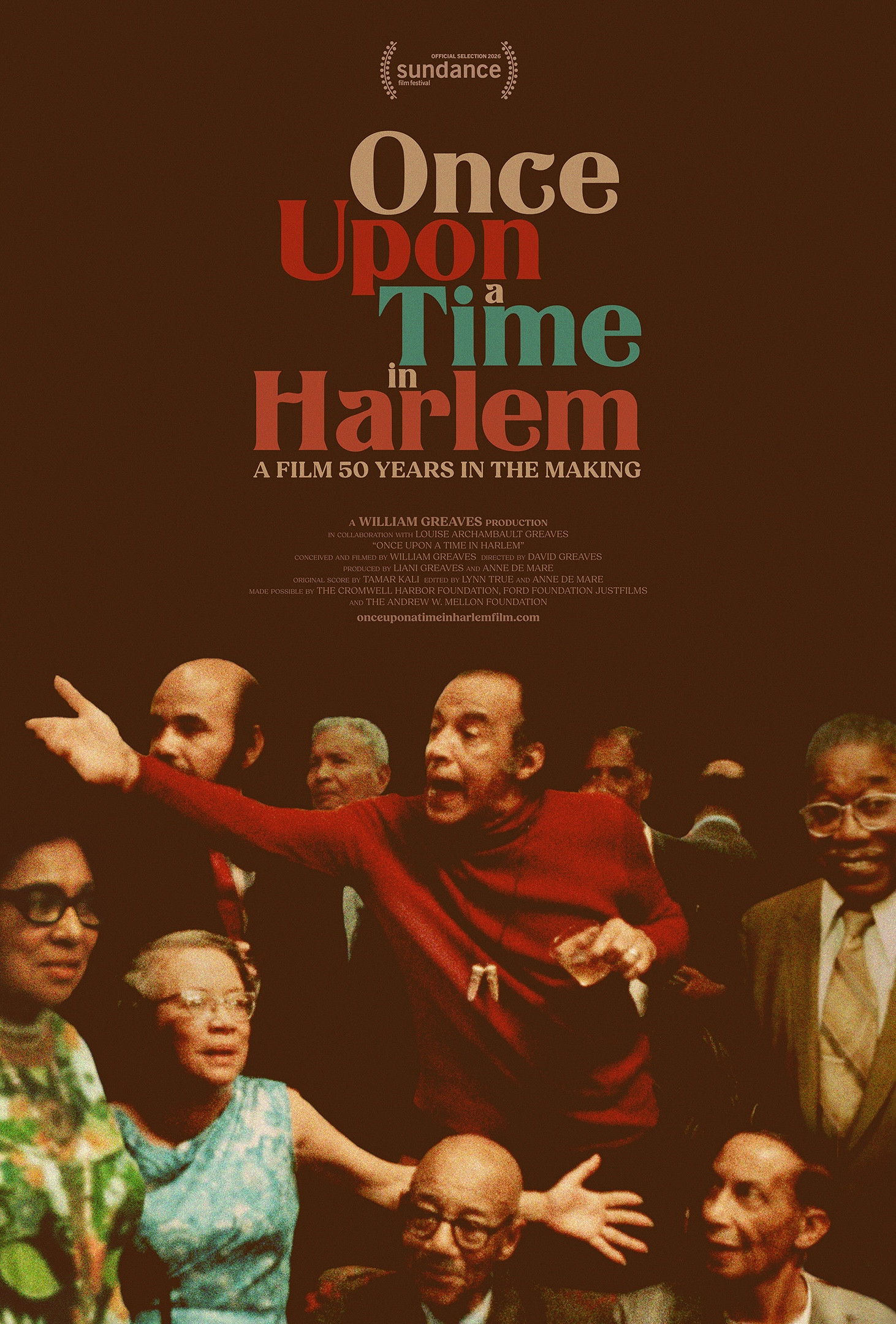
Quick Thoughts:
- It’s one of the best documentaries of the year.
- Once Upon a Time in Harlem introduced me to interesting and intelligent people whom I want to know more about.
- More than 50 years in the making, this doc feels like a perfectly preserved time capsule.
- William Greaves knew how to film a party.
- The interview setups are gorgeous.
Directed and produced by William Greaves, who between 1953 and 2005 worked as a writer, director, cinematographer, or editor on more than 75 projects. Once Upon a Time in Harlem is an enlightening, educational look at the Harlem Renaissance (1918 to mid-1930s) and the people who made that time special.
In April 1972, Greaves sent a letter to Jean Blackwell-Hutson asking for her help coordinating a get-together for surviving Harlem Renaissance figures. He then hired four cameramen (including his son David) to film the four-hour cocktail party in a cinema-verite style at Duke Ellington’s home. The cameraman (and sound crew) move effortlessly through the party, capturing conversations and interactions, and eventually settle in a comfy room to record a group conversation amongst legendary figures like Leigh Whipper, James Van Der Zee, Aaron Douglas, Ida Mae Cullen, and Eube Blake. It’s all interesting, but the knowledge gained and the stories told about gangster/philanthropist Casper Holstein and the importance of libraries (and librarians) stand out.
The guests know they are being recorded, so there’s a bit of showmanship; however, as the cocktail party progresses, the guests get more comfortable and begin to converse, argue, debate, and share stories about the Harlem Renaissance. It’s a fascinating watch, and further proof that Greaves was an expert filmmaker who could create an atmosphere where dozens of luminaries felt comfortable enough to be themselves.
In the press notes, I learned William invited several partygoers to return the following day (wearing the same clothes) for interviews about their experiences. I originally wondered how he pulled aside so many people during the cocktail party, so it’s neat knowing the famous authors, poets, artists, librarians, actors, and musicians agreed to return.
Greaves tinkered with the footage for decades and couldn’t create a final cut before he passed in 2014. In 2022, Louise Greaves set about preserving the 60,000 feet of footage, and in 2026, the film premiered at Sundance and later screened at Cannes, where it received a “Golden Eye” nomination for best documentary. The result is a gorgeous documentary that took 54 years to see the light of day.
Final thoughts – Watch it. It’s wonderful.
Share this post:

Ghost in the Cell (2026) – Review
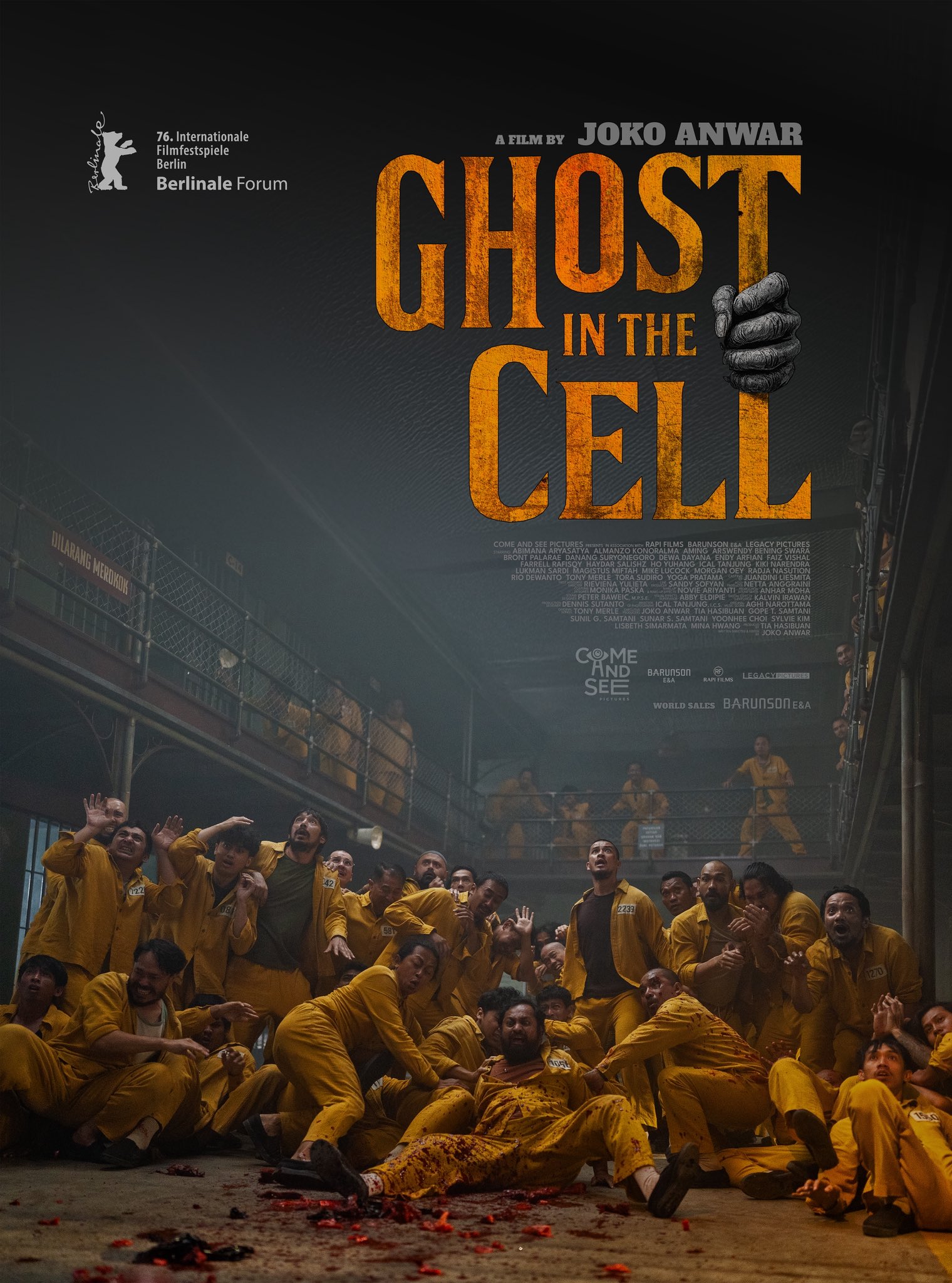
Quick Thoughts:
- Ghost in the Cell is a brutal laughfest filled with blood explosions, likable characters, and a surprising amount of dancing.
- I laughed aloud many times and loved all the surprises the film offers.
- Abimana Aryasatra is the best. Watch The Night Comes for Us.
- The idea of prisoners stopping a jailhouse brawl to dance (or pray) is wonderful.
- The level of gore is wild.
- Director Joko Anwar makes cool stuff with a message.
- Best 2026 dancing.
Written and directed by Joko Anwar (Satan’s Slave 1 & 2), Ghost in the Cell is a refreshingly straightforward horror comedy about an angry ghost seeking revenge on the people who destroyed its protected forest. It’s the best time you’ll have all year watching people being brutally turned into bloody art fixtures resembling something from the Hellraiser franchise. Joko Anwar had something to say, and he used the horror genre to deliver a politically charged horror comedy. In an interview with Variety, he mentioned that he set out to “channel societal anxieties about systemic corruption and environmental destruction through supernatural horror.” The ghost in the film isn’t a metaphor, it’s a destructive force who awakes when Indonesian governmental corruption allows a protected forest to be demolished.
In a brutally sly move, the ghost attaches itself to a young journalist named Dimas (Endy Arfian) who visits the forest while on an assignment to uncover government corruption. When he gets back to his office, his angry boss is brutally killed and tied to an extremely well-anchored ceiling fan. Dimas is convicted of the murder and sent to a soon-to-be besieged prison. During his first day, he’s roomed with Pendi (Lukman Sardi), a psychopath who works as an enforcer for the prison’s most powerful gang (people want him dead for what he knows). He also meets Anggoro (Abimana Aryasatra) and his gang of likable criminals who ended up in jail for non-violent illegal schemes (mostly involving stealing money).
On the following day, Pendi’s mutilated corpse is discovered in the shower room, and it kicks off a wild series of events involving dance classes, smooshed bodies, and red auras. In a welcome coincidence, Six (Yoga Pratama), a nice convict who suffers from constant headaches (due to supernatural visions), realizes what’s going on. He notices the ghost only kills prisoners with red auras (which indicate anger), so to survive, the prisoners led by Anggoro need to stay relaxed while they battle murderous guards, deadly gangs, and angry ghosts.
This leads to hilarious moments when fights are halted so the combatants can dance/meditate/pray to lower their aura color. Much of the humor is situational, and the actors go all-in during the dance sequences and action scenes. The tonal shifts are gnarly, but Anwar is skilled enough to make them feel organic within the story.
Ical Tanjung’s (Satan’s Slaves 1 & 2) inspired cinematography lets the camera roam the prison, which makes the gnarly production feel polished and alive. Also, the practical effects and makeup design by Dodi Setiadi (The Shadow Strays) and Novie Ariyanti (The Night Comes for Us, The Raid, Preman) are believably grotesque and beautifully macabre (which was by design). Overall, Ghost in the Cell is a top-notch production that has something to say. It’s neat.
Share this post:

TIFF Quick Thoughts – Part Three – Whatcha Want, The Last Photograph, Onwards and Sideways, Being Heumann, The Face of Horror
This is a bit late, but here’s the third installment of my TIFF quick thoughts. It’s a neat batch of films, and I plan on writing longer reviews when they’re released in theaters or start streaming. Enjoy!
Whatcha Want (2026)
- Directed by – Mina Shum
- Starring – Isabella Wei, Ming-Na Wen, Tzi Ma, Helen Dang, Manny Fernandez
- Why I watched it – I wanted to catch a Mina Shum film. I made a point to watch Canadian films, and I’m really happy I did.
Quick thoughts:
- Isabella Wei is a star. She owns the screen
- The straightforward narrative is an asset for people looking for a comfort-food watch.
- Ming-Na Wen’s character has the most interesting arc. She’s accepted her situation and tries to make the best of it.
- It’s nice seeing Vancouver be Vancouver (instead of some other city).
- It opens up an interesting world of female “trophy wife” emigrants who live alone for most of the year because their husbands work overseas. They are at the complete mercy of their husbands. It’s a tough situation
Random Awards
- Best Dancing at TIFF Award
- Ming-Na Wen is an Immortal Award
- Of Course She Rolls her Ankle Award
- Most Conveniently Located Dance Class Award
- Most Interesting Way to Save Money Award

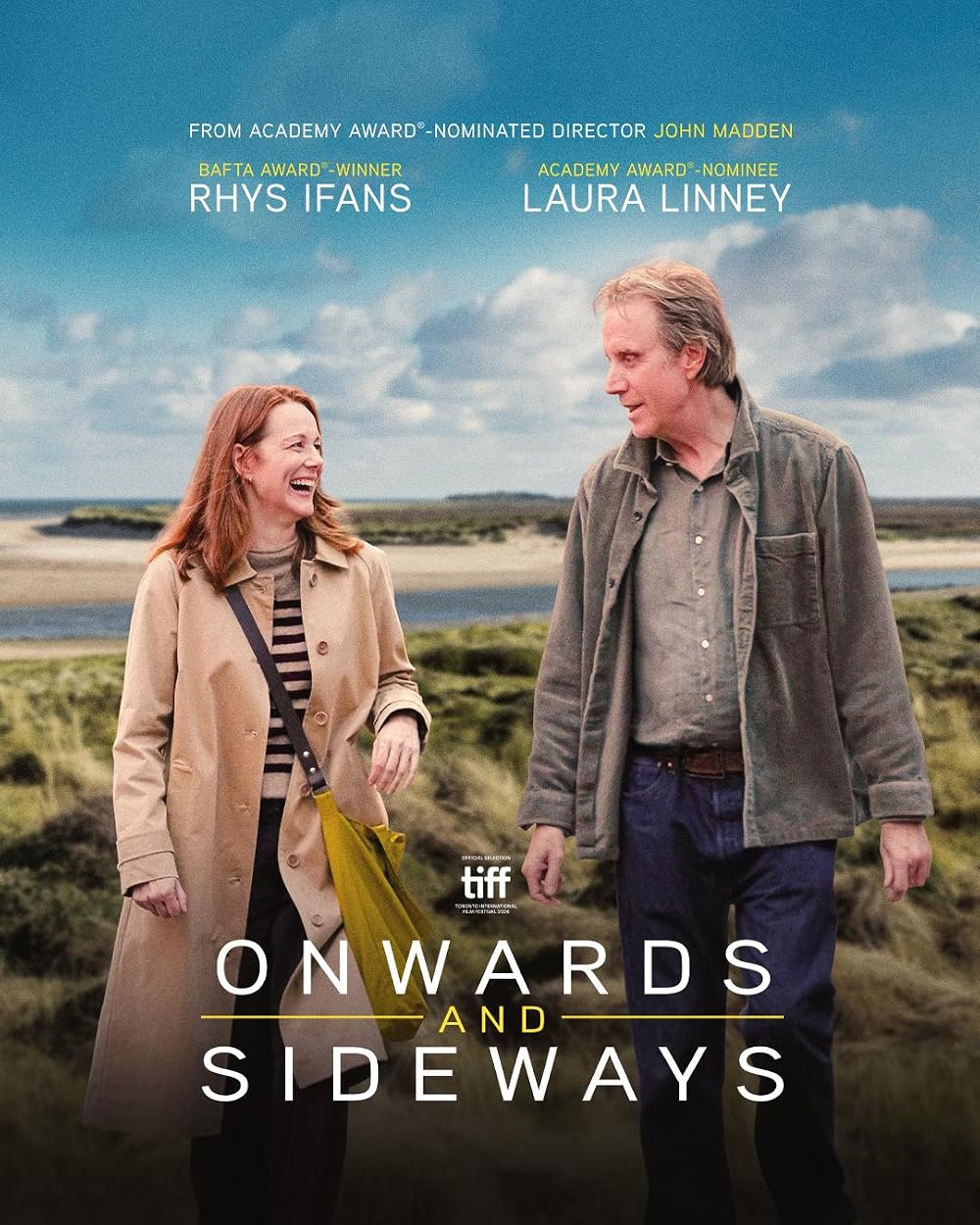
The Last Photograph
- Director – Zack Snyder
- Starring – Stuart Martin, Fra Free
- Why I watched it – I had to see the world premiere of Zack Snyder’s latest film.
Quick Thoughts
- The Last Photograph is an ugly film with memorable visuals
- I’ve been a Zack Snyder fan (within reason) since Dawn of the Dead (2005), so it was disappointing watching him create an ugly slog for his comeback film
- It would be interesting to hear a non-Snyder fan defend The Last Photograph.
- It features child murder, corpse nudity, child trafficking, pedophilia, excessive heroin use, gratuitous nudity, and a lot of ugly stuff. None of it is needed or organic to the film.
- I wish Snyder would direct another zombie film. I like Army of the Dead and Dawn of the Dead.
Random Awards
- Best Slow-Motion Drug Usage Award
- The “Hey I’m Making Apocalypse Now in South America” Award
- The “Hey, it would be cool if we showed little children being murdered” Award
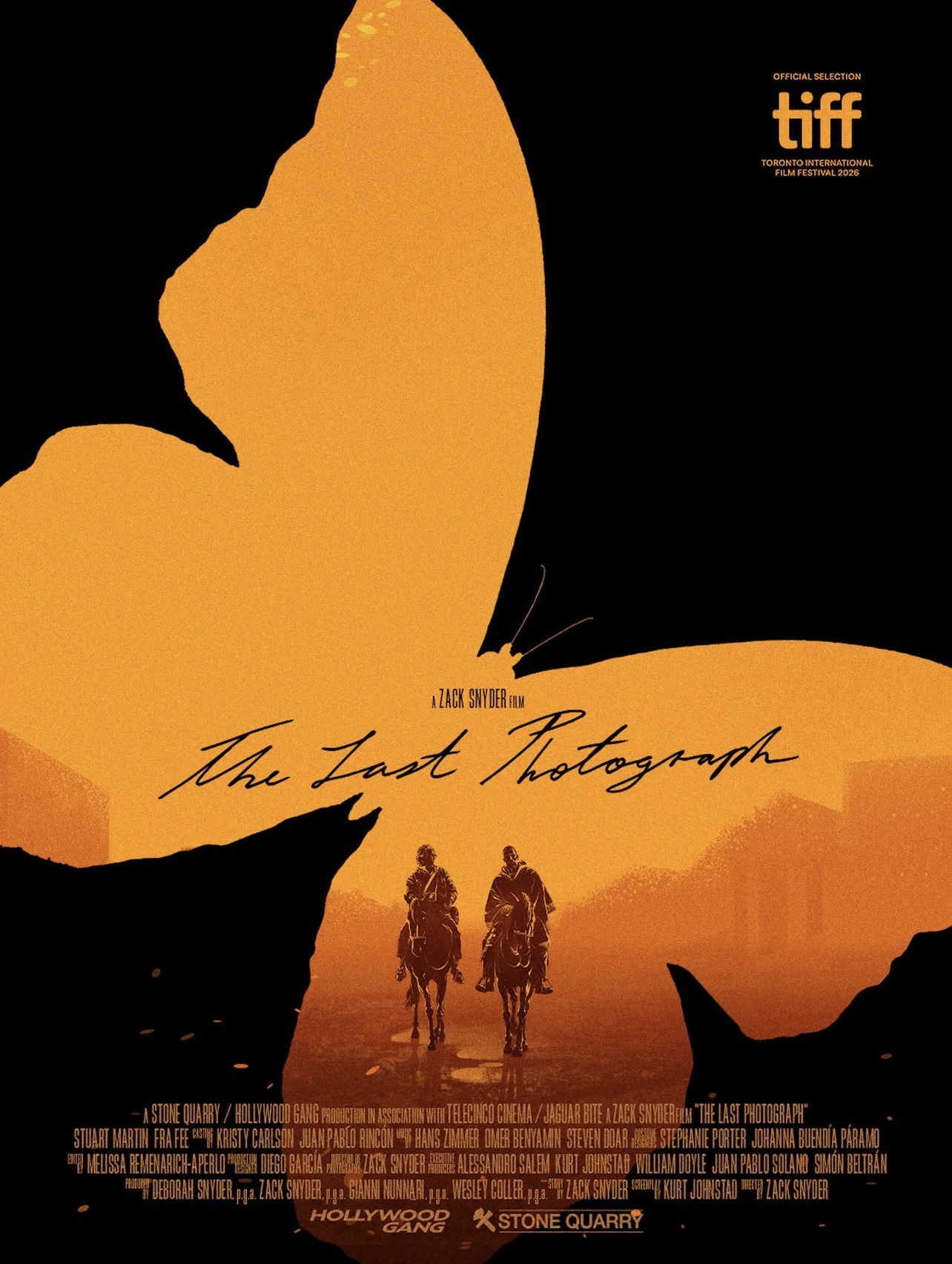
Onwards and Sideways
- Director – John Madden
- Starring – Rhys Ifans and Laura Linney
- Why I watched it – Laura Linney is always good.
Quick Thoughts
- Rhys Ifans and Laura Linney are wonderful.
- It’s a warm/insightful look into living with Parkinson’s disease.
- Paul Mayhew-Archer uses his experiences with Parkinson’s to write an honest film.
- It’s very safe (which isn’t a bad thing). It didn’t need to be anything else.
- I learned a lot.
Random Awards
- Best Skydiving Advertisement Award
- Best 2026 Parking Space Argument Award
- Laura Linney is the Best Award
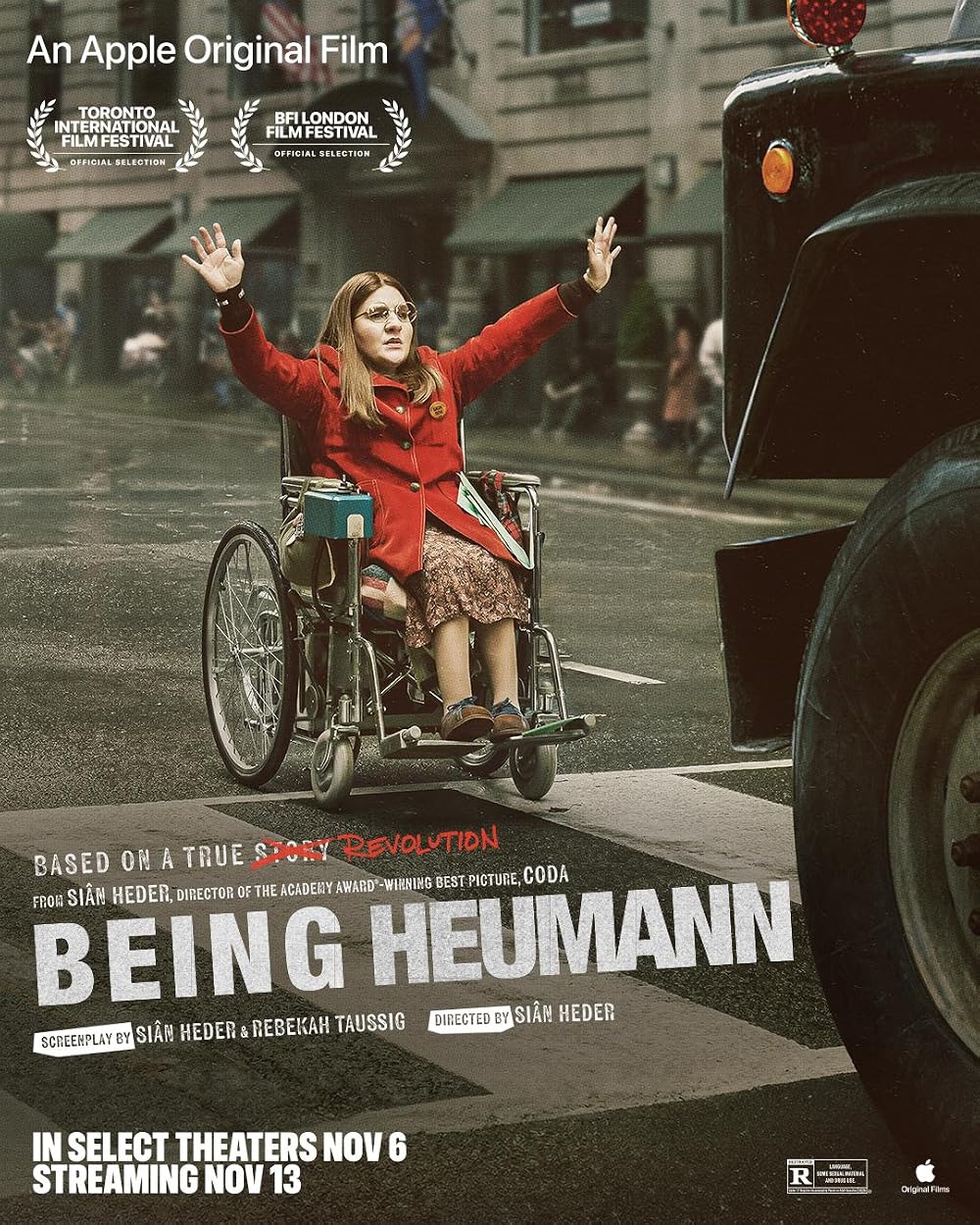
Being Heumann
- Director – Sian Heder
- Starring – Ruth Madeley, Mark Ruffalo, Dylan O’Brien, Madeline Delp, Rob Delaney, Ray Fisher, Michael Patrick Thornton
- Why I watched it – Heder is an excellent director and I wanted to see her follow-up to CODA.
Quick Thoughts
- Taking place during a 28-day occupation of the San Francisco Federal Building, Being Heumann does a fine job exploring what led to sweeping accessibility regulations in 1977.
- It plays it safe, which will help with mainstream audiences, but you can feel the events being watered down.
- The ensemble cast is wonderful and filled with fresh faces.
- Ruth Madeley is excellent as Judith Heumann. She’s a human bulldozer who makes mistakes, fights for what she believes in, and becomes a better leader throughout the film. It’s neat.
Random Awards
- Best 2026 Rolled Ankle Award
- Best Elevator Loft Award
- Best Box Truck Award
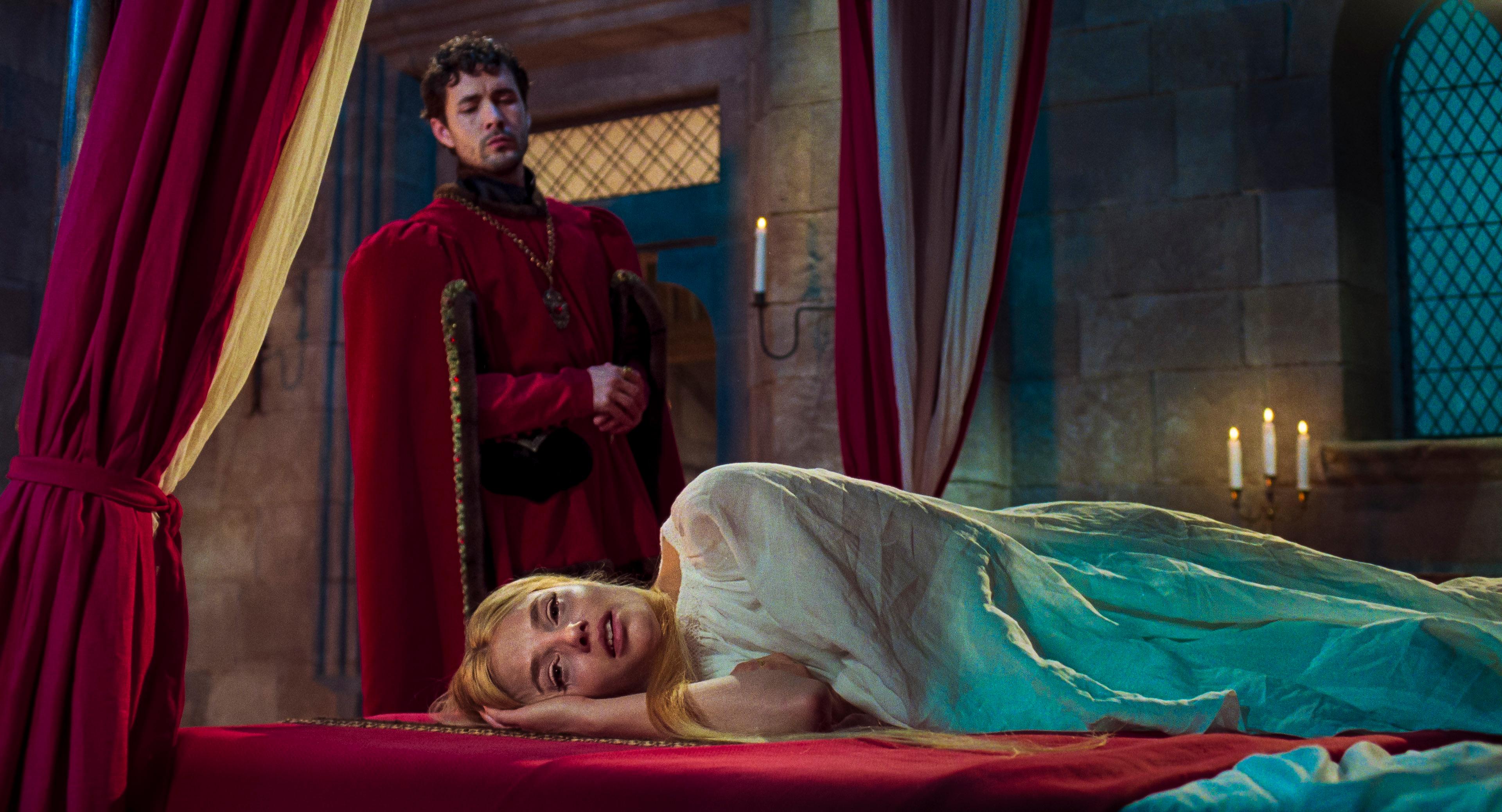
The Face of Horror
- Directors – Anna Biller
- Starring – Jonah Hauer-King, Kristine Froseth, Ellie Bamber, Leo Suter, Bella Heathcote, Ben Radcliffe
- Why I Watched It – I love The Love Witch.
Quick Thoughts:
- Kristine Froseth is wonderful. She understood the assignment
- Don’t call it campy. It’s a brightly-colored adaptation of a famous Japanese ghost story that blends melodrama, violence, and vibrant designs.
- Since it’s an Anna Biller film, it feels handmade and carefully crafted. A lot of love went into creating it, and I like that.
- It made me want to rewatch some of my favorite Hammer Horror films.
- Anna Biller is the best.
Random Awards
- Best 2026 Boisterous Laughing Award
- Best Form-Fitting Armor Award
- Best Face of Horror Award
- Best Laughs That Come From a Cheeky Costume Award
Share this post:

Wild Horse Nine (2026) – Review

Quick Thoughts:
- John Malkovich delivers an all-time performance.
- Parker Posey!
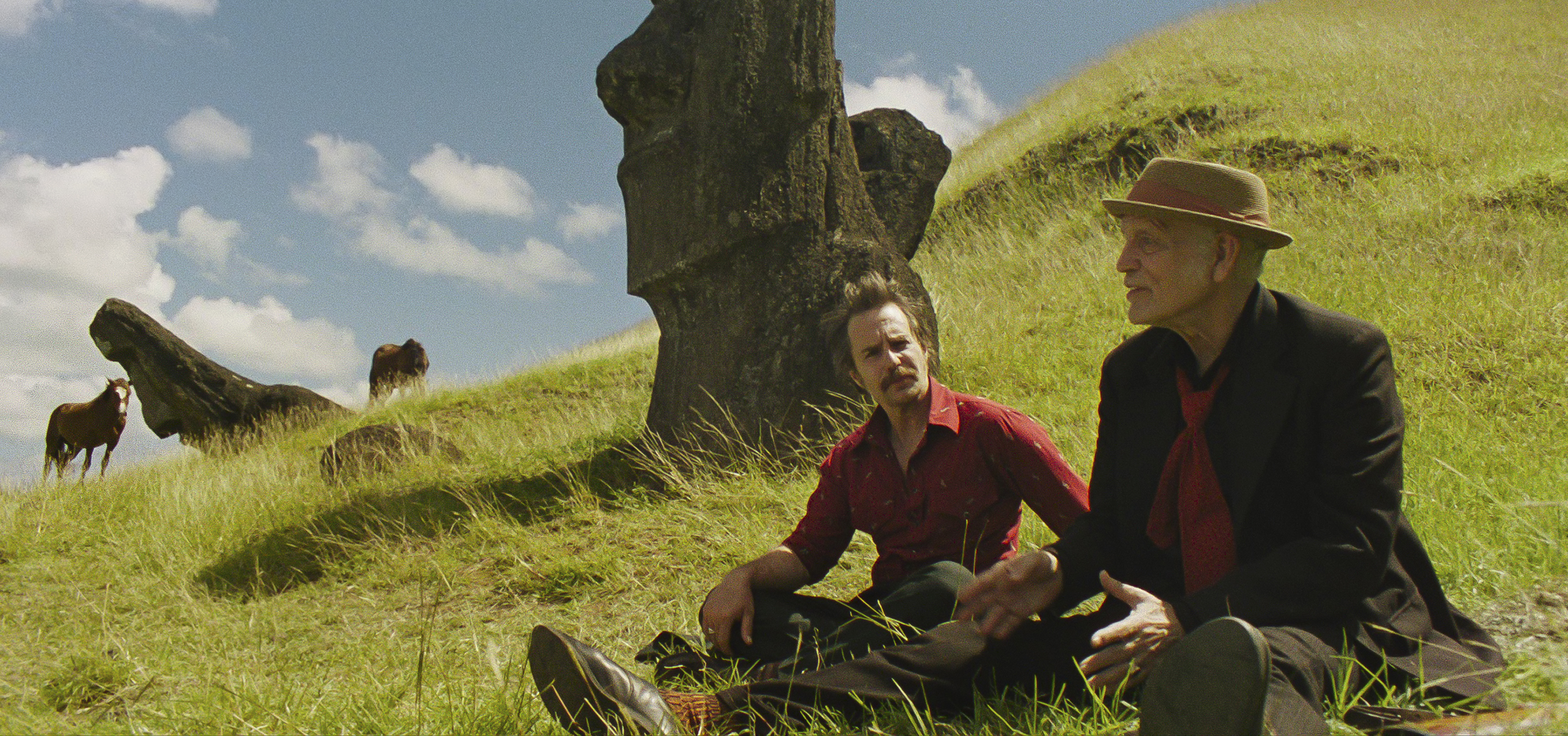
- The on-location shoot at Rapa Nui gives the film an authentic vibe. I love that director/writer Martin McDonagh loves shooting on-location.
- Between Wild Horse Nine, Seven Psychopaths, and Three Billboards Outside Ebbing, Missouri, Sam Rockwell and McDonagh have created a wonderful “numbers” trilogy.
- Best 2026 usage of moths.
- There’s a great bit about a sandwich.
- You’ll learn a lot about global cheese production.
- Fun research – While writing the screenplay, McDonagh wrote “GUILT” and “REGRET” at the top of page one. Makes sense.
John Malkovich makes everything better, and his performance in Wild Horse Nine is an absolute showstopper. He’s great in Being John Malkovich, Shadow of the Vampire, Red, Dangerous Liaisons, In the Line of Fire, Con Air, and Rounders, but he hits another gear in Wild Horse Nine. Director/writer Martin McDonagh and his screenplays draw out excellent performances from excellent actors, and he’s been on a roll with his last two films. The Banshees of Inisherin and Three Billboards Outside Ebbing, Missouri received seven Academy Award nominations for acting, and early odds suggest Malkovich and Sam Rockwell are a lock. Wild Horse Nine is the total package with a crackling screenplay, on-location filming at Rapa Nui, Ben Davis cinematography, and dedicated work from Malkovich. He has stiff competition from Matt Damon (The Odyssey) and Andrew Scott (Elsinore), but it would be lovely to see him recognised for his thrilling work in Wild Horse Nine.
Wild Horse Nine focuses on a long-time CIA employee named Chris (John Malkovich) enjoying one last vacation with his friend/CIA partner Lee (Sam Rockwell) before his cancer-riddled body fails him. During their trip to Rapa Nui to see the “big heads,” Chris plans to record his memoir, which could prove disastrous for the CIA because he was in Dallas the day JFK was assassinated. Understandably, the secretive agency doesn’t want him to unleash state secrets, so the South American CIA bureau chief MJ (Steve Buscemi) tasks Lee with destroying Chris’s tape recordings.
With death on the horizon, and a morphine-addled brain, Chris worries that the 68 people he killed (and countless coup d’etats) will give him a one-way ticket to hell (McDonagh loves tackling religion). He also wonders if dinosaurs have souls and hopes rain doesn’t hurt the moths he rescues from his hotel room. Despite his morphine-caused memory issues, Chris is still hyper-observant, very dangerous, and suspicious of MJ, who may or may not be addicted to heroin. To prepare for the role, Malkovich and Rockwell rehearsed scenes endlessly, and their work paid off because their line readings feel organic and in the moment. In the hands of lesser-trained actors, McDonagh’s dialogue can come across as over-written and inorganic, but Malkovich, Rockwell, Parker Posey and Mariana di Girolamo ensure McDonagh another Oscar nomination.
Shooting for six weeks on Rapa Nui, the isolated island gave Sam Rockwell and John Malkovich plenty of time to mull over the script and devise a dynamic that plays well on andoff-screen. During a long-distance call between Lee and his wife Marge (Parker Posey), they stop sniping at each other to discuss Chris and his health issues. Mentioning John Malkovich’s character softens the conversation and gives the married couple a moment to empathise (and not scream at each other). It’s not often that you can have empathy for a CIA-spook who has murdered 68 people and destabilised many governments – but you do, because Malkovich is so good.
Wild Horse Nine is only the second film to shoot on Rapa Nui, and cinematographer Ben Davis(Layer Cake, Seven Psychopaths, The Banshees of Inisherin) frames the famous moai statues in gorgeous wide shots that give Rockwell and Malkovich time to walk among them while talking about cheese or moths. Davis shot with an Arri Alexa 35 digital cinema camera, and the footage was expertly graded to look like it was shot on Ektachrome, a popular film stock from the 1970s. Shooting on film on the isolated island was impractical, so it’s neat they shot on an Arri and relied on color grading to make it seem like it was shot in the 70s. A nice touch is the focus on the color red, which pops on Ektachrome and creates a unique colour palette on the lush green island.
Share this post:

The Movies, Films and Flix Podcast – Episode 728: Saw II (2005), Needle Pits, and Hidden Numbers
You can download or stream the pod on Apple Podcasts, Tune In, Podbean, or Spreaker (or wherever you listen to podcasts…..we’re almost everywhere).
If you get a chance please make sure to review, rate and share. You are awesome.
Mark and Lisa discuss the 2005 horror sequel Saw II. Directed by Darren Lynn Bousman and starring Donnie Wahlberg, Tobin Bell, Shawnee Smith, and a needle pit, the movie focuses on what happens when a serial killer wants to play another murderous game. In this episode, they also talk about memorable traps, hidden numbers, and angry cops. Enjoy!
If you are a fan of the podcast, make sure to send in some random listener questions (we love random questions). We thank you for listening, and hope you enjoy the episode!

Share this post:

You Can See Everything (2026) – Review

Quick Thoughts:
- Nathan Fielder and Lance Oppenheim have crafted a thrilling documentary that will make A24 a lot of money.
- Elizabeth Holmes is more of a mystery now.
- Hopefully it teaches doc filmmakers to be fluid, dogged, and able to pivot. I love where this doc goes.
- You might see everything or nothing.
- Best 2026 usage of Abbott and Costello.
- Watching Nathan Fielder attempt to understand Holmes is a 2026 highlight.
You Can See Everything features everything great about documentaries. Laser-focused topics, interesting subjects, total access, twists/turns, and an evolving narrative. Directors Nathan Fielder and Lance Oppenheim planned to film Elizabeth Holmes and her husband Billy Evans for 34 days in 2023; their plans derailed when the infamous Theranos founder and her squirrely husband took them on a ride they never expected. This isn’t surprising considering Elizabeth Holmes is an absolute cypher who swears she’s never told a lie in her life (amazing scene) and also claims she didn’t defraud investors who bought her Edison blood-testing device. Elizabeth Holmes is an anomaly, and the more time you spend with her, the less you know. In a recent interview, Fielder talks about how he still isn’t sure what he experienced during the 34 days before Holmes surrendered herself to a Texas minimum-security prison, because despite getting complete access to his subjects, they say nothing real and are walking contradictions. In a memorable moment, Fiedler screens Abbott and Costello’s famous “Who’s on first?” routine for Holmes, and she has no idea why the bit is funny (they talk over each other?). So, she is smart enough to build a ruthless empire and gain influential backers, but can’t comprehend why the cheeky comedy routine is so funny. Is she misunderstood? Is she always lying? Is Billy pulling the strings? Are they working together? The answer seems clear, but the more time you spend with the couple, the more questions you have.
You Can See Everything doesn’t leave you with concrete answers, but it’s an interesting journey into the mind of a man who really wants to understand Elizabeth Holmes. Fielder seems genuinely protective and cautious of Holmes, whose unblinking stare and miles of contradictions make for an interesting documentary subject. Holmes dropped out of Stanford and built a secretive empire by acquiring a league of influential backers who believed in her mission to make healthcare more affordable. She and her partner, Ramesh “Sunny” Balwani, were eventually charged with defrauding $700 million from investors, and Holmes was sentenced to spend 11 years in a minimum-security prison.
The first third of the documentary primarily focuses on Fielder trying to wrap his head around Holmes and Evans. Evans is a controlling person who grabs bowls from Elizabeth’s hands to finish whisking eggs (she does it wrong), and is quick to direct the doc, which causes conflict with Fielder and Oppenheim. Later in the documentary, Evans calls himself “pretty strategic and well-resourced,” adding a menacing element to the Silicon Valley bro (and heir to a hotel empire) who listens to podcasts at 2x speed and lets cameras capture him in the shower. It’s wild that Holmes and Evans reached out to A24 about a documentary, and it’s really difficult to understand why they didn’t want a fluff piece about Holmes’ innocence and their attempt to create a Theranos 2.0. Everything they do seems strategic, but they’re so cagey that it’s impossible to understand their motives (or maybe it’s clear as day).
We never get the answer, but it’s fun to watch. The documentary continues long after Elizabeth turns herself in to prison, but what follows shouldn’t be spoiled. It isn’t a spoiler to say that David Bolen’s (Primetime, The Python Hunt) cinematography is incredible, and the near-constant close-ups give audiences countless opportunities to count Fielder’s pores and blackheads. The close-ups work especially well with Holmes, whose gigantic unblinking blue eyes resemble a black hole of mystery.
Final Thoughts – Watch it in theaters.
Share this post:

The Beast (2026) – Review
Quick Thoughts:
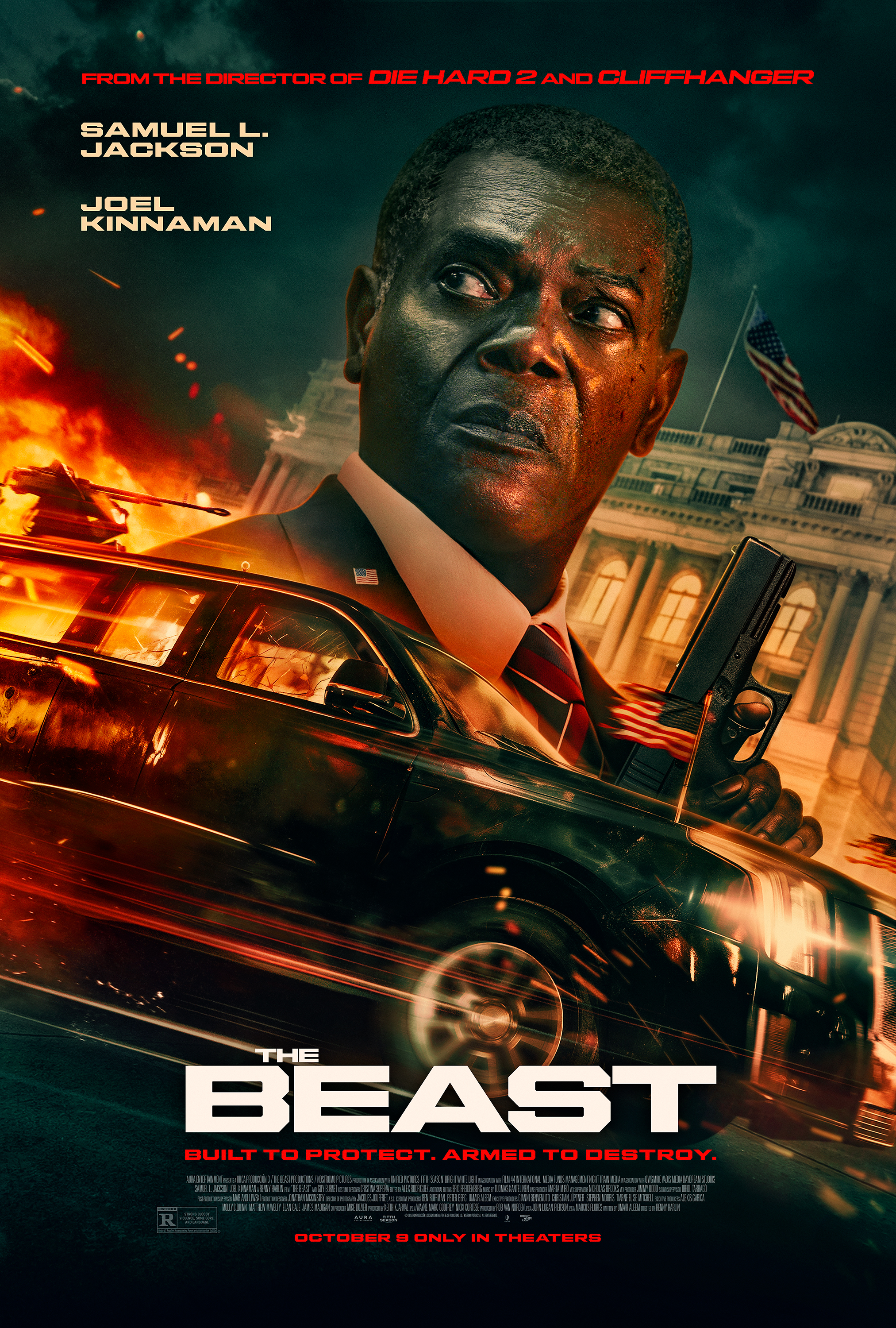
- I love when Renny Harlin and Samuel L. Jackson team up. The Long Kiss Goodnight, Deep Blue Sea, Cleaner, and The Beast are a good time.
- It’s the best Renny Harlin-directed action film since 12 Rounds.
- There’s a wonderful bit about how Jackson says “mother****er”
- Joel Kinnaman and Samuel L. Jackson put in a good shift.
- Wonderful railgun moment.
- The world needs more 90-minute (without credits) movies.
- I like the RoboCop (2014) reunion.
- Between the super SUV in Captain America: The Winter Soldier, and the “rolling armored white house on wheels” in The Beast, Jackson loves an armored vehicle.
At a brisk 99 minutes, The Beast is an expertly crafted high-concept action film that lets Samuel L. Jackson shine (and blow up mercenaries). It also lets Renny Harlin do what he does best: direct a visually interesting action film that punches above its weight. Filmed in Spain, Renny and crew spent 18 days shooting in an XR virtual studio with LED screens, and the result is solid-looking VFX that never detract from the action. Cinematographer Jacques Jouffret (American Primeval, Novocaine, Gran Turismo) does a fine job of finding interesting shots within the badass vehicle, preventing a claustrophobic/repetitive look. Overall, it’s a technically polished low-budget action film that wants to be nothing more than a good time.
The film opens with Joel Kinnaman’s character, Agent Taft, battling a masked mercenary inside a rolling armored white house on wheels nicknamed “The Beast.” The two bulky men tussle inside the spacious backseat as President Oscar Paladin (Samuel L. Jackson) drives through a warzone between a well-stocked militia and overmatched Secret Service agents who are mowed down in the chaos. During the fight (which ends with a beautiful explosion), Agent Taft is shot three times while kicking his opponent out of the vehicle, which knocks him out of the action and forces Paladin to drive the car, save Taft, and escape a highly organized militia who’ve unleashed a coordinated attack around the world.
Between the plane crash in Deep Water and the meat-and-potatoes action (this is a compliment) in The Beast, Renny Harlin seems rejuvenated and able to recapture the action magic he created in Cliffhanger, 12 Rounds, and Die Hard 2. In true Renny Harlin fashion, he signed on for The Beast after director James Madigan dropped out (Renny takes a lot of gigs with little prep time). Thankfully, his relationships with Jackson and Kinnaman let him jump into the project successfully. You can tell that Jackson feels comfortable with Harlin because he is lively, funny, and fully committed. Jackson also has solid chemistry with Kinnaman, who spends 100% of his screen time bleeding out in the back of the rolling tank. The two drink whiskey, and talk about Waylon Jennings, crunchy snow, bread cast, and how to say the word “motherf****er.”
The screenplay by Umair Aleem (Kate, The Beekeeper 2) is a bit clunky in that it saddles Jackson’s character with PTSD-esque symptoms from his days as a soldier, which conveniently manifest during the crisis. This means that Jackson has to survive the unidentified soldiers and control the “beast” inside him to help save the world. Since it takes place almost entirely in a vehicle, extra subplots make sense, but you can tell Harlin is better at staging fun action scenes than at handling a man learning to deal with trauma. That being said, Aleem deserves credit for writing a high-concept action film that moves propulsively and gives Jackson a chance to crush a lead role.


