September 5 (2025) – Review
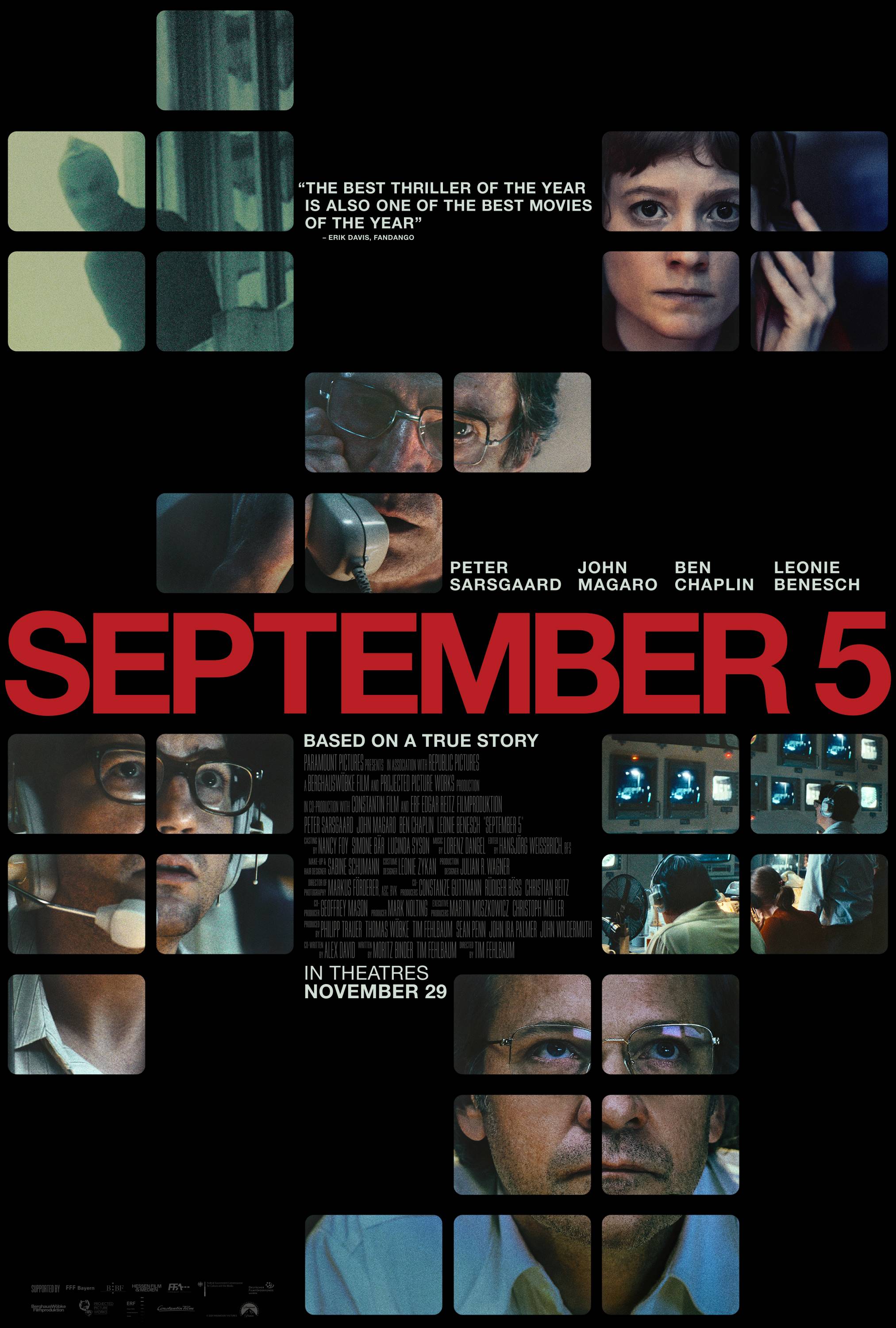
Quick Thoughts – Grade – B+ – At a breezy 95-minutes, September 5 is a lean-and-mean film that features capable people being capable.
Directed by Tim Fehlbaum, and focusing on the American sports broadcasting team who provided live coverage of the terrorist attacks at the 1972 Summer Olympics in Munich, Germany, September 5 is an unshowy and professionally crafted thriller. What’s interesting is that instead of diving into worldwide politics or going big (think dramatic speeches), the no-frills film remains laser focused on the broadcasting team who filmed the events which were viewed by an estimated 900 million people worldwide. The German/U.S. co-production was filmed in cramped sound stages in Bavaria (which adds to the tension) and went through many rewrites after director Fehlbaum and co-writers Moritz Binder and Alex David got the rights to the original footage and learned that there would be no organic way to recreate the spontaneity of the situation. Instead of centering around Jim McKay’s live broadcast, the majority of the film puts a spotlight on rookie director Geoffrey Mason (John Magarro) who alongside veteran director Roone Aldredge (Peter Sarsgaard) have to figure out how to cover a real-time hostage situation that is being watched by the world. The movie can be best described as a “What do we do?” experience in which smart people navigate a world changing situation that is way above their pay grade. .
I love films that feature capable people being capable, and September 5 is full of smart people figuring things out. Playing the smart people are Peter Sarsgaard, John Magarro, Benjamin Walker, Leonie Benesch (watch The Teacher’s Lounge), and Ben Chaplin, who deliver unshowy performances and are believable as professionals who are dealing with an unparalleled situation. The sports broadcasters were expecting a boring night of minor athletic events and instead found themselves broadcasting a terrorist event to the entire world. Over the course of the 17-hour event the ABC crew isn’t perfect as they prematurely claim that all the Israeli hostages survived the ordeal, and their coverage alerts the members of the Palestinian militant group Black September to the German police officers attempting to infiltrate their rooms in the Olympic village. It’s fun watching the crew learn and adapt as they sneak film into the Olympic village by having one of their staff pretend to be an athlete, and fabricate logos to make sure everyone knows that ABC news is responsible for the coverage. Mistakes were made, but the situation was so new that there were always going to be mistakes.
Fehlbaum’s adherence to avoiding “big” moments will definitely hurt its chances this awards season. However, it’s refreshing that there are no sanctimonious speeches by pontificating news anchors or fictionalized drama that amp up the drama (there’s enough of it already). This does prevent it from tackling the history behind the conflict between Israel and Palestine, however, with a limited budget and a 95-minute running time, it would be impossible to add a full explanation of why the Black September members were holding the Israeli athletes hostage. I like the decision to play the film as a docudrama because by focusing on the control room the filmmakers could showcase the decisions and arguments that helped the ABC sports crew capture footage that would change the way people absorbed news.
The mostly handheld cinematography by Markus Förderer’s does a fine job of capturing the important conversions and the production design by Julian R. Wagner feels lived in and authentic. The prop department must’ve had their work cut out for them as there’s loads of period appropriate editing equipment and cameras that add to the authenticity of the film. By limiting the locations and action, Fehlbaum and his crew were able to focus on getting the small details right and the decision paid off with the handsome sets, costumes and production design.


 Movies, Films & Flix