Bring Her Back (2025) – Review
- Grade – B
- I like that the Philippou brothers followed up Talk to Me with an original horror film. They could’ve easily cashed in and made Talk 2 Me.
- Sora Wong and Billy Barratt are excellent.
- There are a few too many themes and ideas (resurrection, loss, trauma, grief, possession, black magic, abuse). I know they were inspired by several real-life tragedies and events, but it’s all over the place.
- I appreciate that the brothers wanted to create something original and unique. The special effects, gore, production design, costume design and cinematography are all top-notch. I wish more directors would take swings like this.
- The “Horror Movie Swimming Pool Hall of Fame” has a new inductee
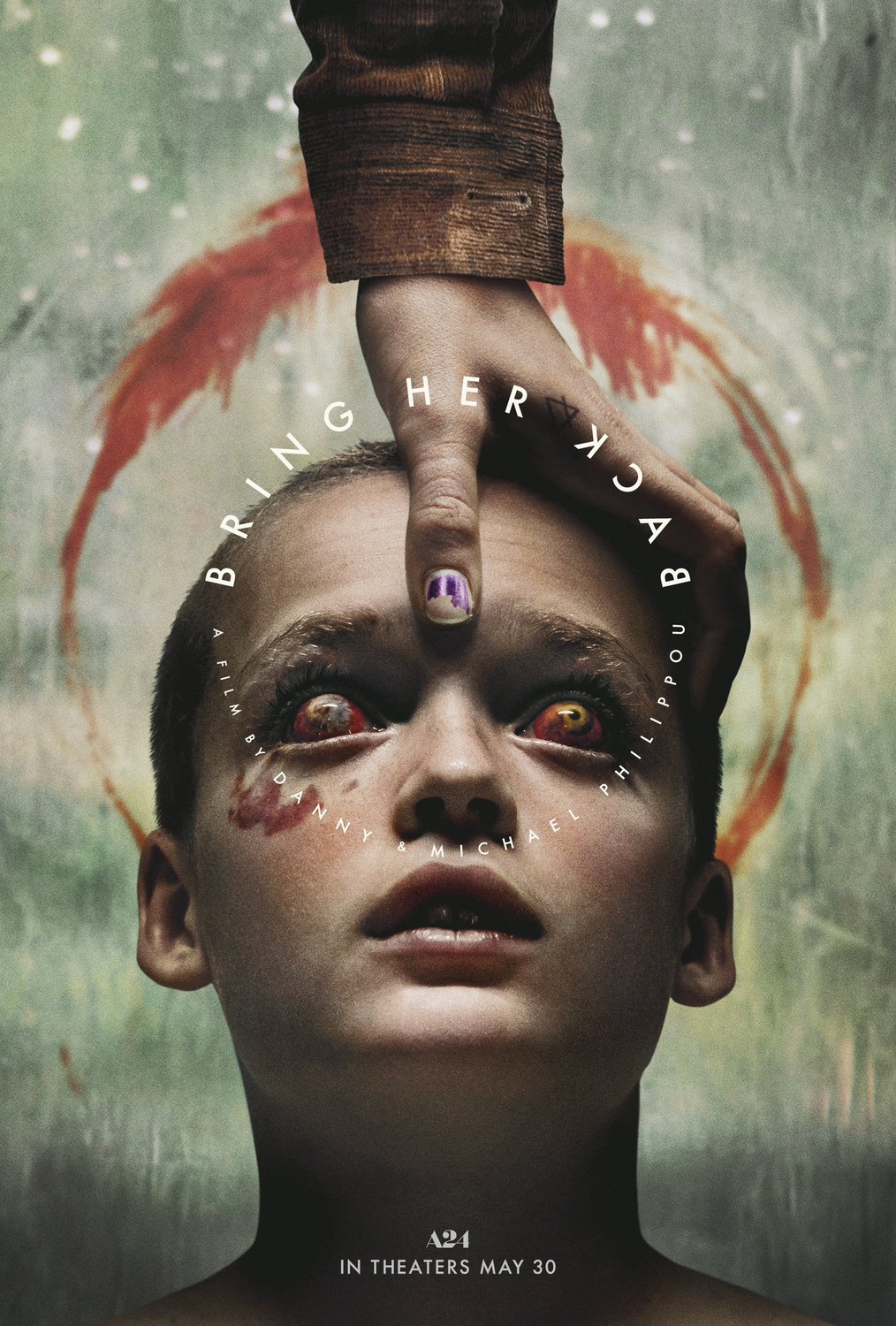
After the massive success of Talk to Me (2023), I like that Danny and Michael Philippou went out of their way to avoid directing a “bigger and crazier” sequel or follow-up. I also appreciate that the cool people at A24 were smart enough to keep them happy because the $92 million worldwide haul of Talk to Me earned the brothers a chance to direct an original horror film about grief, loss and what happens when a child starts biting into a sharpened knife. That being said, Bring Her Back pulls its punches (which is slightly insane to say) and tackles a few too many themes. The result is a horror film that I respect and admire – but don’t love.
Bring Her Back focuses on two siblings having quite possibly the worst three months in existence. The film opens with 17-year-old Andy (Billy Barrett – excellent) and his partially sighted younger sister Piper (Sora Wong – also excellent) being placed in a short-term foster home after the death of their father. Their hope is that when Andy turns 18 in a few months the two can find a place to live. However, since it’s a horror film, their new foster mother Laura (Sally Hawkins) has other plans for them. What’s interesting is that the film wastes no time letting you know that terrible times are ahead for the siblings. For instance, Laura’s secluded house is surrounded by a white circle of paint (this is never a good thing), she has an empty triangle- shaped swimming pool, and is the foster parent of a selectively mute child named Ollie (Jonah Wren Phillips), whom she keeps locked in a room. To spoil anything else would be cruel, just know that skin is ripped, faces are punched, and urine is used in creative ways.
The highlights of Bring Her Back are the excellent performances from Billy Barratt, Sora Wong, Sally Hawkins and Jonah Wren Phillips. A lot is asked of the child performers and they deliver natural and believable performances. This is a testament to the Philippou brothers who must’ve created a nurturing and safe environment for the first-time actors to feel comfortable. Also, the sibling dynamic works well (it’s based on siblings the brother’s know) as Andy tries to protect his younger sister from the ugliness of the world by not telling her the truth during certain situations. As always, Sally Hawkins is solid and it’s fun watching the two-time Oscar-nominated performer go to some dark places.
The production design by Vanessa Cerne (Predestination, Addition, Relic) is wonderful as she’s created a lived-in home that feels like a mystery. Cerne’s background as a set decorator must’ve helped the production as Laura’s house is loaded with well-chosen props that give the home an earthy vibe loaded with browns and faded orange colors. The Philippou’s wanted a location where the pool was “at the heart of the house,” and they found a pool that will be a first-ballot inductee into the Horror Movie Swimming Pool Hall of Fame (joining the pools from It Follows, Strangers: Prey at Night and Let the Right One In). Also, the sound editing by Emma Bortignon (Talk to Me) works wonders and it’s impressive knowing there are 750 layers of sound happening in the movie.
The biggest issue I have with Bring Her Back is despite the well-publicized gore, the film pulls its punches, which doesn’t allow it to achieve the heights of artistically nasty horror classics like I Saw the Devil (2010), Thirst (2009), Martyrs (2008), or Raw (2016). Also, by incorporating themes of loss, grief, trauma, abuse, and resurrection, the film isn’t as laser-focused as it should’ve been. I know that Danny and Michael pulled from life experiences and recent traumas, but there’s a little too much chlorine in the pool (I hope this makes sense).


 Movies, Films & Flix