F1® The Movie (2025) – Review
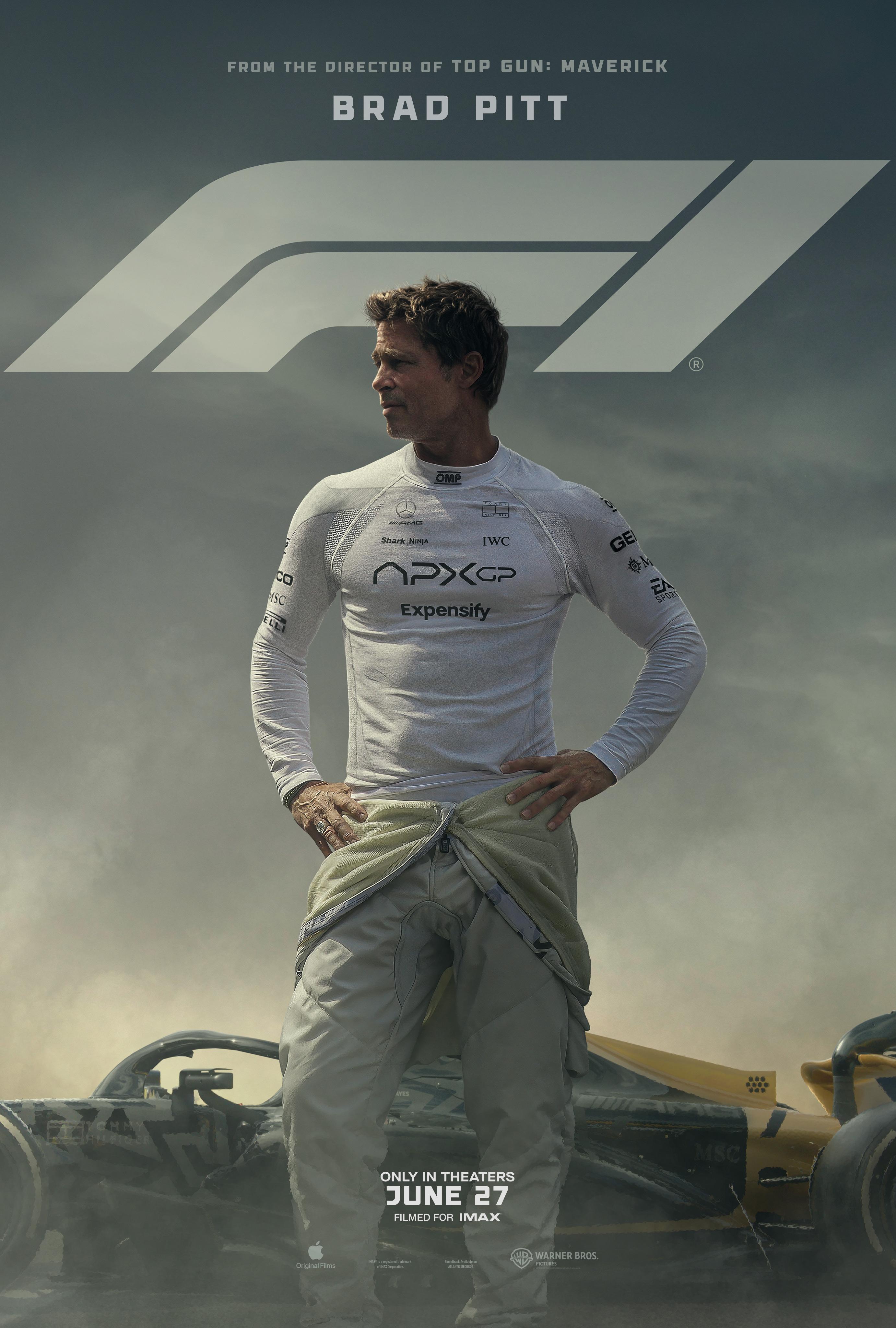
Quick thoughts:
- Grade – B+
- Brad Pitt uses every ounce of his A-list charisma. He is great
- Between Tron: Legacy, F1 and TG: Maverick, I want Joseph Kosinski to direct a Fast and Furious movie
- Claudio Miranda’s cinematography is wonderful. It puts you in the car and the speed is felt
- It’s a fun summer blockbuster that sticks to a familiar story
- Damson Idris, Kerry Condon and Javier Bardem are wonderful
- The racing sequences are a thing of beauty
- I want to watch Driven (2001) again…
The great thing about F1 is that it knows it’s a big summer blockbuster and does everything in its power to give audiences a sensory blasting experience. When you have Brad Pitt using every ounce of his A-list charisma and state-of-the-art camera equipment, it doesn’t matter that the simple plot about a veteran driver mentoring a younger driver does nothing new or original.
The plot revolves around a former F1 driver named Sonny Hayes (Brad Pitt) being recruited by his friend and former racer Ruben Cervantes (Javier Bardem) to drive for his Apex Grand Prix team (APXGP). The catch is that Hayes will need to mentor a rookie driver named Joshua Pearce (Damson Idris), who has worked hard to achieve his dream of becoming an F1 racer but needs a mentor to push him towards greatness. On top of mentoring Pearce, Cervantes needs Hayes to win a race so he won’t lose his ownership stake to an overzealous board of directors led by Banning (Tobias Menzies), a super-rich maniac who loves talking about Hail Marys. Hayes and Pearce are aided by technical director Kate McKenna (Kerry Condon), and team principal Kaspar Molinski (Kim Bodnia), who are simultaneously impressed and annoyed by Hayes and his racecourse shenanigans.
Sonny Hayes is the type of guy who could have been the greatest, but a near-fatal F1 crash and an overabundance of wanderlust have pushed him to enter pretty much every single major race around the world (Dakar Rally, 24 Hours of Le Mans). Since his F1 departure he’s been married several times, visited dozens of tattoo parlors (Pitt might be the movie tattoo king), and put many miles on his camper van. Since it’s Brad Pitt, you believe that he could be pulled from a laundromat and immediately be able to drive a modern-day F1 car. Pitt has always been charismatic, but it seems like he’s channeled his characters from Ocean’s 11, Once Upon a Time in Hollywood and Moneyball to create an uber-charismatic version of himself. Pitt owns the screen, and it was smart to bring in professionals like Kerry Condon, Javier Bardem, Shea Whigham, Tobias Menzie, Kim Bodnia, and Sarah Niles who can hold their own opposite him. The casting of Damson Idris (watch Snowfall) paid off as well as he matches Pitt’s likability and doesn’t get blown off the screen by Uber-Pitt.
F1 reminds me of 1990s summer blockbusters like Twister, Independence Day and Days of Thunder (also produced by Jerry Bruckheimer) in that it goes out of its way to test the limits of movie theater speakers. Whether it’s the roar of the car engines or Hans Zimmer’s bombastic score, F1 requires big speakers that make you feel each turn and crash. Its sole reason for existence is to entertain, and it’s the type of big-budget blockbuster that I want more of because it pushes the boundaries of technology and brings visual goods.
Between Tron: Legacy, Oblivion, Only the Brave, and Top Gun: Maverick (let’s forget Spiderhead) Joseph Kosinski has proven himself to be a director who makes obscenely good-looking films. Whether it’s the lightbike scenes in Tron: Legacy or the air battles in Top Gun: Maverick, Kosinski has a knack for coming up with set pieces that look amazing. Between Kosinski, cinematographer Claudio Miranda (who also shot Top Gun: Maverick), and a legion of amazing stunt drivers, they’ve created some of the most thrilling race sequences I’ve ever seen.
It’s no surprise that F1 cost somewhere around $200 million because it was filmed all over the world (during Grand Prix weekends) and the racing sequences cost millions to research and execute. Six F2 cars were purchased and rigged with camera gear (cameras, recorders, transmitters) so that audiences can see the faces of Pitt and Idris as they drive on the iconic racetracks. Pitt and Idris drove 6,000 miles during the two-year production and their hard (and fun) work paid off because their presence made the experience more credible. In a neat twist, Kosinski spent a year storyboarding the film because it was shot during live sporting events that didn’t allow for multiple setups or long takes. During the races, Pitt and Idris only had one or two takes to nail their lines during three-minute breaks in racing action – so the storyboards were important for everyone involved.
Kosinski and Miranda developed a brand new camera system with Sony to keep each camera as light as possible so they wouldn’t weigh down the F2 cars during their laps. They also added motorized mounts to each car so that the cameras could be operated by Miranda while they were driving around the tracks. On top of the technical achievements, Kosinski reached out to F1 legend Lewis Hamilton and asked him to be his partner on the production. Hamilton ended up becoming a producer on the film because he hooked up the production with drivers, team principals and much-needed credibility. The result is gorgeous to look at and feels credible due to the wild amount of cameos from F1 drivers, team owners and engineers.
Final Thoughts – F1 is big, fun and respects theatergoers who want to watch a loud summer blockbuster.


 Movies, Films & Flix