The Spinosaurus From Jurassic Park 3 Was A Real Jerk
The triumphant return of the Spinosaurus in the Jurassic World Rebirth trailer made us reminisce about its rather comical predecessor from Jurassic Park 3.
By Erik Hofmeyer
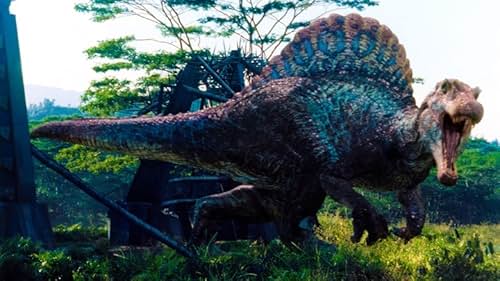
Something in particular caught our eye in the new Jurassic World Rebirth trailer, which was a trio of Spinosauruses (or Spinosauri?). It was fun to see the Spinosaurus return after more than two decades in cinematic exile after its interesting lead role in Jurassic Park back in 2001.
You’re probably thinking “There was a Jurassic Park 3?” And yes, there was a largely forgotten third movie in 2001 to cap the original trilogy prior to the Jurassic World reboot starring Chris Pratt.
The franchise was moving away from character- and narrative-driven stories and marketing deadlier dinosaurs and more action in the sequels. Roger Ebert nailed it by writing how it’s “not as awe-inspiring as the first film or as elaborate as the second, but in its own B-movie way, it’s a nice little thrill machine.” It accomplished its summer blockbuster objective by clearing $368 million in theaters even though it was one of the lowest rated of all the Jurassic movies.
The third installment is basically a monster movie featuring a disgruntled Spinosaurus that chomped its way into the lead villainous role. It was a legit choice. The Spinosaurus had a unique set of capabilities. It was larger than the T-Rex and had arms long enough to be useful. Furthermore, it had a crocodilian-shaped head, a sweet looking sail on its back, and higher bone density for submerging into water as it enjoyed a semi-aquatic lifestyle and more avenues to attack prey.
JP3 stripped out much of what we loved in the original. For example, The OG T-Rex and velociraptors in the first Jurassic Park were legit movie stars and all-time film characters. They exhibited instinctual predator behavior that was relatively more grounded as they roamed around the island seeking sustenance. The dinosaurs were also key to the narrative as the movie was rich in symbolism. On the other hand, this particular Spinosaurus was a one-dimensional terminator that went above and beyond to be a campy horror movie villain.
Here’s a quick chronology of events:
- 3:03 We assume it was the Spino that attacked the boat in the opening scene.
- 22:01 Eats a security guard and takes out a plane on takeoff.
- 23:17 Was annoyed about being hit by the plane, follows the path of wreckage, and yoinks out the pilot with its pointy snout.
- 24:03 Roars so loudly the soundwaves push the plane out of the canopy.
- 24: 29 Unnecessarily rolls the wreckage on its side for about 10 rotations.
- 25:05 Crushes the middle of the plane to try and squish the dizzy characters.
- 26:54 Runs into a beloved T-Rex mascot and dethrones it.
- 55:34 Struck a Jason Voorhees-Esque pose after sneaking out of the dense forest without anyone noticing.
- 56:01 Narrowly missed chomping the characters as they slipped through a hole in a fence, which reminded us of near misses in the Scream movies.
- 58:15 Decided to just run through the fence like the troll from Ernest Scared Stupid.
- 1:12:57 Stalked the river boat as it traversed the island (the trip literally went from day to night) and recreated a Jaws moment with its sail emerging from the water as it attacked the boat.
After consuming more than our fair share of creature features, there’s a checklist of sorts for excessive and distracting behavior, and this Spinosaurus seems to check all the boxes:
- Pursuit across unnatural distances
- Ignoring easier or more logical prey
- Accelerated learning abilities
- Malice over instinct
- Holding a grudge against specific individuals, unless it’s Land of the Lost and the T-Rex is upset with Danny McBride for saying it had a walnut-sized brain
This got us thinking how this antagonist could have been so much better. Creature features either need to go as accurate as possible under the circumstances because more grounded threats tend to create the best tension or at least have some sliver of depth and/or personality. If this doesn’t work with the story, then just go straight-up over-the-top.
Audiences generally suspend belief as long as it’s clearly fantasy. For example, the Indominus Rex in Jurassic World was less distracting because it was a man-made hybrid dinosaur from a variety of species, which made us buy into the heightened threats. Other examples include the pure, juicy fiction of the megalodons on the loose in The Meg or the genetically modified sharks in the classic Deep Blue Sea. The JP3 writers probably should have given the Spinosaurus some kind of genetic cocktail or super soldier serum so audiences could buy-in and really enjoy the ride.
In summary
A gigantic Spinosaurus running around is pretty awesome and the CGI was impressive back in 2001. This apex predator and its jerky demeanor didn’t quite fit with the bigger Jurassic Park themes surrounding it at first, but we hope it finally earns its place in Jurassic lore.
Share this post:

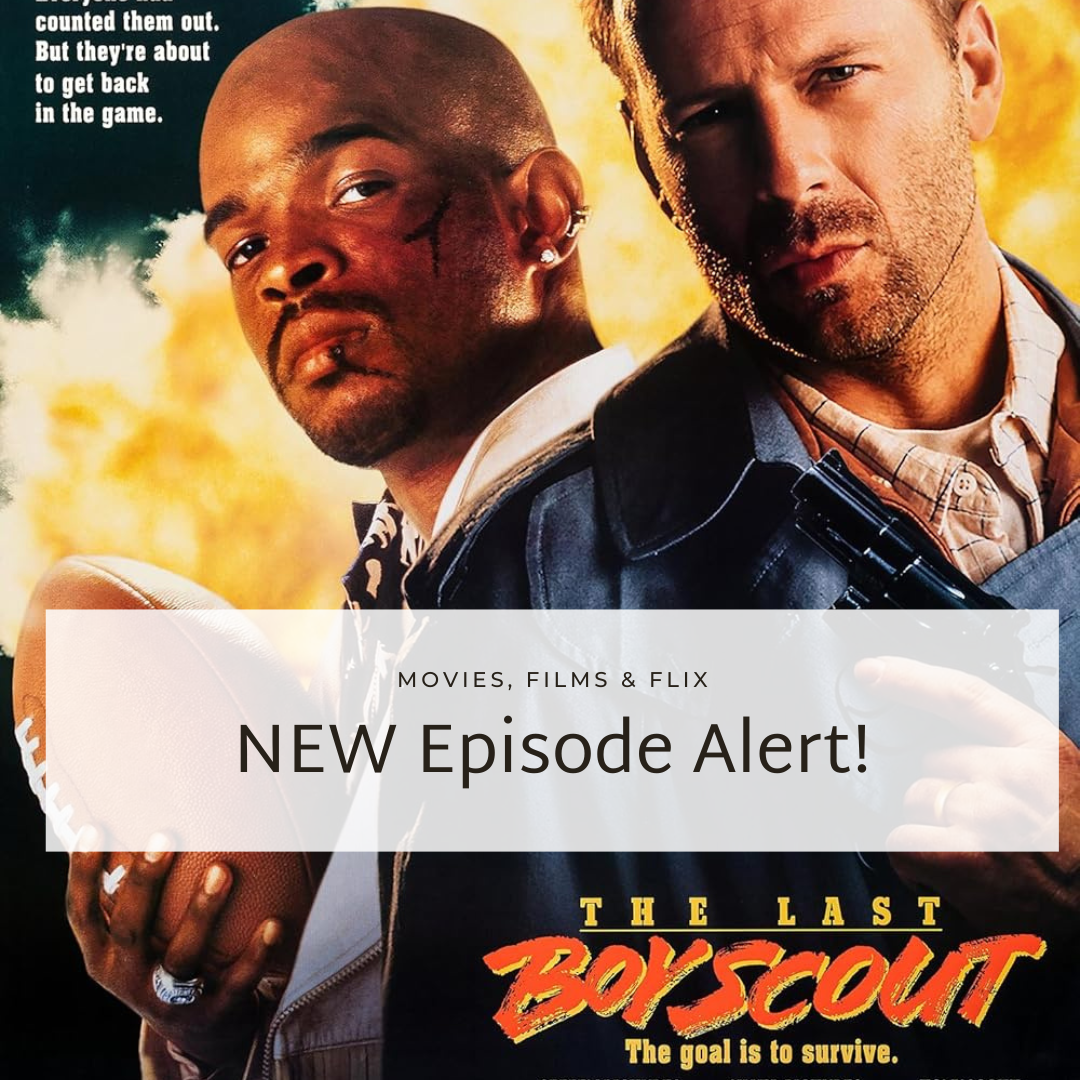
The Movies, Films and Flix Podcast – Episode 631: The Last Boy Scout (1991), Shane Black and Tony Scott
You can download or stream the pod on Apple Podcasts, Tune In, Podbean, or Spreaker (or wherever you listen to podcasts…..we’re almost everywhere).
If you get a chance please make sure to review, rate and share. You are awesome.
Mark and Tom discuss the 1991 action comedy The Last Boy Scout. Directed by Tony Scott, and starring Bruce Willis, Damon Wayans, and Halle Berry, the movie focuses on what happens when two washed up guys get into some Shane Black written shenanigans. In this episode, they also talk about Shane Black, grimy buddy comedies, and Tony Scott’s filmography. Enjoy!
If you are a fan of the podcast, make sure to send in some random listener questions (we love random questions). We thank you for listening, and hope you enjoy the episode!
You can download the pod on Apple Podcasts, Tune In, Podbean, or Spreaker.
Share this post:

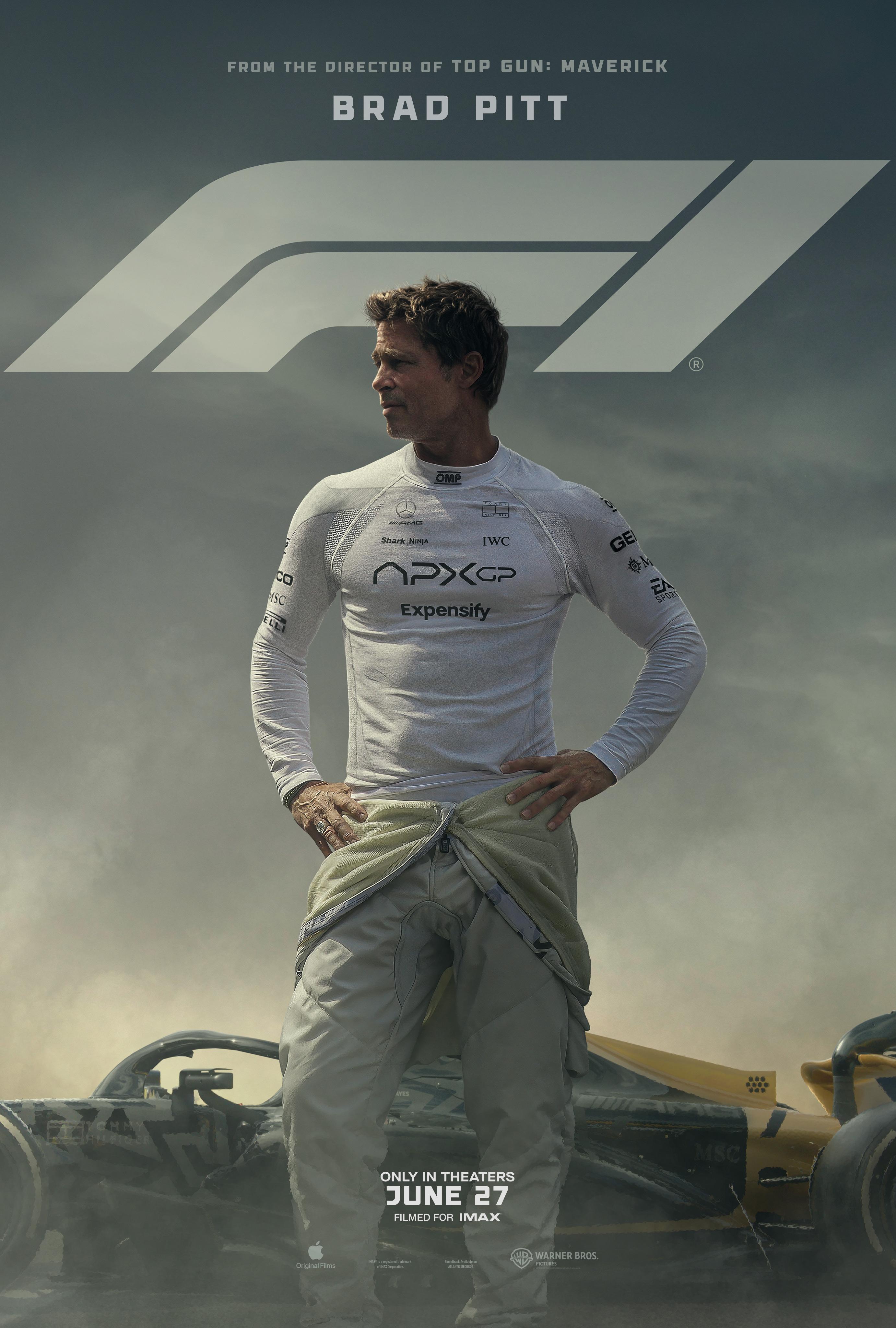
F1® The Movie (2025) – Review
Quick thoughts:
- Grade – B+
- Brad Pitt uses every ounce of his A-list charisma. He is great
- Between Tron: Legacy, F1 and TG: Maverick, I want Joseph Kosinski to direct a Fast and Furious movie
- Claudio Miranda’s cinematography is wonderful. It puts you in the car and the speed is felt
- It’s a fun summer blockbuster that sticks to a familiar story
- Damson Idris, Kerry Condon and Javier Bardem are wonderful
- The racing sequences are a thing of beauty
- I want to watch Driven (2001) again…
The great thing about F1 is that it knows it’s a big summer blockbuster and does everything in its power to give audiences a sensory blasting experience. When you have Brad Pitt using every ounce of his A-list charisma and state-of-the-art camera equipment, it doesn’t matter that the simple plot about a veteran driver mentoring a younger driver does nothing new or original.
The plot revolves around a former F1 driver named Sonny Hayes (Brad Pitt) being recruited by his friend and former racer Ruben Cervantes (Javier Bardem) to drive for his Apex Grand Prix team (APXGP). The catch is that Hayes will need to mentor a rookie driver named Joshua Pearce (Damson Idris), who has worked hard to achieve his dream of becoming an F1 racer but needs a mentor to push him towards greatness. On top of mentoring Pearce, Cervantes needs Hayes to win a race so he won’t lose his ownership stake to an overzealous board of directors led by Banning (Tobias Menzies), a super-rich maniac who loves talking about Hail Marys. Hayes and Pearce are aided by technical director Kate McKenna (Kerry Condon), and team principal Kaspar Molinski (Kim Bodnia), who are simultaneously impressed and annoyed by Hayes and his racecourse shenanigans.
Sonny Hayes is the type of guy who could have been the greatest, but a near-fatal F1 crash and an overabundance of wanderlust have pushed him to enter pretty much every single major race around the world (Dakar Rally, 24 Hours of Le Mans). Since his F1 departure he’s been married several times, visited dozens of tattoo parlors (Pitt might be the movie tattoo king), and put many miles on his camper van. Since it’s Brad Pitt, you believe that he could be pulled from a laundromat and immediately be able to drive a modern-day F1 car. Pitt has always been charismatic, but it seems like he’s channeled his characters from Ocean’s 11, Once Upon a Time in Hollywood and Moneyball to create an uber-charismatic version of himself. Pitt owns the screen, and it was smart to bring in professionals like Kerry Condon, Javier Bardem, Shea Whigham, Tobias Menzie, Kim Bodnia, and Sarah Niles who can hold their own opposite him. The casting of Damson Idris (watch Snowfall) paid off as well as he matches Pitt’s likability and doesn’t get blown off the screen by Uber-Pitt.
F1 reminds me of 1990s summer blockbusters like Twister, Independence Day and Days of Thunder (also produced by Jerry Bruckheimer) in that it goes out of its way to test the limits of movie theater speakers. Whether it’s the roar of the car engines or Hans Zimmer’s bombastic score, F1 requires big speakers that make you feel each turn and crash. Its sole reason for existence is to entertain, and it’s the type of big-budget blockbuster that I want more of because it pushes the boundaries of technology and brings visual goods.
Between Tron: Legacy, Oblivion, Only the Brave, and Top Gun: Maverick (let’s forget Spiderhead) Joseph Kosinski has proven himself to be a director who makes obscenely good-looking films. Whether it’s the lightbike scenes in Tron: Legacy or the air battles in Top Gun: Maverick, Kosinski has a knack for coming up with set pieces that look amazing. Between Kosinski, cinematographer Claudio Miranda (who also shot Top Gun: Maverick), and a legion of amazing stunt drivers, they’ve created some of the most thrilling race sequences I’ve ever seen.
It’s no surprise that F1 cost somewhere around $200 million because it was filmed all over the world (during Grand Prix weekends) and the racing sequences cost millions to research and execute. Six F2 cars were purchased and rigged with camera gear (cameras, recorders, transmitters) so that audiences can see the faces of Pitt and Idris as they drive on the iconic racetracks. Pitt and Idris drove 6,000 miles during the two-year production and their hard (and fun) work paid off because their presence made the experience more credible. In a neat twist, Kosinski spent a year storyboarding the film because it was shot during live sporting events that didn’t allow for multiple setups or long takes. During the races, Pitt and Idris only had one or two takes to nail their lines during three-minute breaks in racing action – so the storyboards were important for everyone involved.
Kosinski and Miranda developed a brand new camera system with Sony to keep each camera as light as possible so they wouldn’t weigh down the F2 cars during their laps. They also added motorized mounts to each car so that the cameras could be operated by Miranda while they were driving around the tracks. On top of the technical achievements, Kosinski reached out to F1 legend Lewis Hamilton and asked him to be his partner on the production. Hamilton ended up becoming a producer on the film because he hooked up the production with drivers, team principals and much-needed credibility. The result is gorgeous to look at and feels credible due to the wild amount of cameos from F1 drivers, team owners and engineers.
Final Thoughts – F1 is big, fun and respects theatergoers who want to watch a loud summer blockbuster.
Share this post:

The Movies, Films and Flix Podcast – Episode 630 – Abigail (2024), Dan Stevens, and Onions
You can download or stream the pod on Apple Podcasts, Tune In, Podbean, or Spreaker (or wherever you listen to podcasts…..we’re almost everywhere).
If you get a chance please make sure to review, rate and share. You are awesome.
Mark and Zanandi discuss the 2024 horror comedy Abigail. Directed by Tyler Gillett and Matt Bettinelli-Olpin, and starring Melissa Barrera, Dan Stevens, Alisha Weir and a bag of onions, the movie focuses on what happens when a group of criminals have a really bad night. In this episode, they also talk about blood pools, Dan Stevens and the excellence of Kathryn Newton. Enjoy!
If you are a fan of the podcast, make sure to send in some random listener questions (we love random questions). We thank you for listening, and hope you enjoy the episode!
You can download the pod on Apple Podcasts, Tune In, Podbean, or Spreaker.

Share this post:

28 Years Later (2025) – Review

Quick Thoughts
- I love it when Danny Boyle and Alex Garland embrace chaos
- It’s filled with some of the most visceral and gnarly visuals of 2025
- Jodie Comer, Aaron Taylor-Johnson, Ralph Fiennes, Jack O’Connell, and Alfie Williams understand the assignment
- Don’t expect a tidy three-act experience. Like 28 Days Later, Sunshine, and Annihilation (which Garland directed), 28 Years Later has its own agenda.
- It’s intense
- Top 10 of the year (so far)
- 28 Weeks Later rules btw
The best thing that can be said about 28 Years Later is that it’s unpredictable. The fact that it’s unpredictable shouldn’t be surprising considering director Danny Boyle and writer Alex Garland have always had chaotic streaks, but the unique plotting choices keep things off-kilter, which in turn makes things stressful because there’s no way to predict what’s coming next (most of the time it’s something terrible). Danny Boyle’s films have always been visually interesting and successful, however, while watching 28 Years Later I kept thinking “This guy is really cooking.” Boyle uses everything in his storied arsenal to create a visually-interesting and propulsive film that hits on all cylinders. Also, Garland and Boyle know that audiences have been watching “fast zombies” for 20+ years, so they evolved the pissed-off infected horde to make them more intelligent and industrious.
This time, the pissed-off infected hordes are mostly substituted for “slow-low” infected who scour the forest floor looking for worms, and super-fast infected who are led by an Alpha reminiscent of Zeus from Army of the Dead. If you haven’t watched the Zack Snyder-directed Army of the Dead, the “Alphas” are physically imposing behemoths who have above-average intelligence and enough strength to easily rip skulls (and spines) from bodies. The evolved “zombies” make sense considering they’ve had 28 years to adapt to their surroundings, and the lack of viable food options has forced them to adapt other methods of feeding.
The original rage-infected are still around as the film opens up with an attack the features child murder, mad sprints, and a young child watching his father becoming an infected maniac. It then moves to an idyllic island where the residents have managed to create a barrier between themselves and the infected mainland. They’re protected by a naturally made bridge that can only be crossed during low tides and any attempt to swim across the channel would result in drowning due to strong tides. After all the setup is out of the way, we’re introduced to a 12-year-old named Spike (Alfie Williams) who is contemplating whether he should bring his favorite action figure with him during his first journey to the mainlaind with his father Jamie (Aaron Taylor-Johnson). Spike decides to leave the toy on his bed stand, and it’s a nice way to showcase that despite his maturity, he’s still a toy-loving kid.
Shortly after leaving the safety of the island things go sideways when Jamie and Spike come across an “Alpha” and his horde. While hiding out in an abandoned farmhouse, Spike notices a large fire and learns about a doctor named Ian Kelson (Ralph Fiennes) who lives on his own in the wilderness and has managed to avoid becoming a rage zombie This plants an idea in Spike’s head because he wants to get treatment for his sick mom Isla (Jodie Comer) – who suffers from headaches, memory loss and bloody noses. When the pair get back to the island, Spike hatches a plan and it wouldn’t be cool to spoil anything else.
On the technical front, Danny Boyle’s longtime cinematographer Anthony Dod Mantle (who also shot Antichrist, Dredd, and Dogville) is able to recreate the 2002 aesthetic without making it seem like a more expensive recreation. The 2002 film was shot on a Canon XL1 miniDV camera, whereas the 2025 sequel used the iPhone 15 Pro Max (with a variety of cool attachments, cages, adapters and lenses). Between the low resolution (480p) and bumped-up gain settings, 28 Days Later has a grainy look that adds to the gorgeous lo-fi visuals. With the iPhones, Dod Mantle and Boyle were able to create startling visuals that make the picturesque British locations seem hellish. Also, the production design by Mark Tildesley (Sunshine, Phantom Thread, 28 Days Later) is top-notch and his creations (skull tower!) have been used all over the promotional materials (they are great). Overall, the technical aspects of the production are fantastic and you’re able to see every cent of the $75 million budget on-screen.
Between Slumdog Millionaire, Millions, 28 Days Later, and now 28 Years Later, Boyle has always known how to get the best out of his kid actors, and he gets a wonderful performance out of Alfie Williams. It helps that he shares the screen with Jodie Comer, Ralph Fiennes and Aaron Taylor-Johnson, who all work their magic by creating lived-in characters and having solid chemistry with the 14-year old first-time actor. Also, between Killing Eve, The Bikeriders, and The Last Duel, it’s hard to not be in awe of Jodie Comer. She spends the first third of the film bedridden (and very sweaty), but when she gets moving she’s able to do a lot with her character.
Movies like 28 Years Later are wonderful because they aren’t content with playing things safe. Boyle loads the film with inventive camerawork, unique narration and footage from old movies and actual events. Editor Jon Harris (Snatch, Layer Cake, 127 Hours) had his work cut out for him and he crafted an intense and intelligible final product that’s exciting and vibrant.
Final thoughts – Watch it on the biggest screen possible and enjoy the insanity.
Share this post:

You can download or stream the pod on Apple Podcasts, Tune In, Podbean, or Spreaker (or wherever you listen to podcasts…..we’re almost everywhere).
If you get a chance please make sure to review, rate and share. You are awesome.
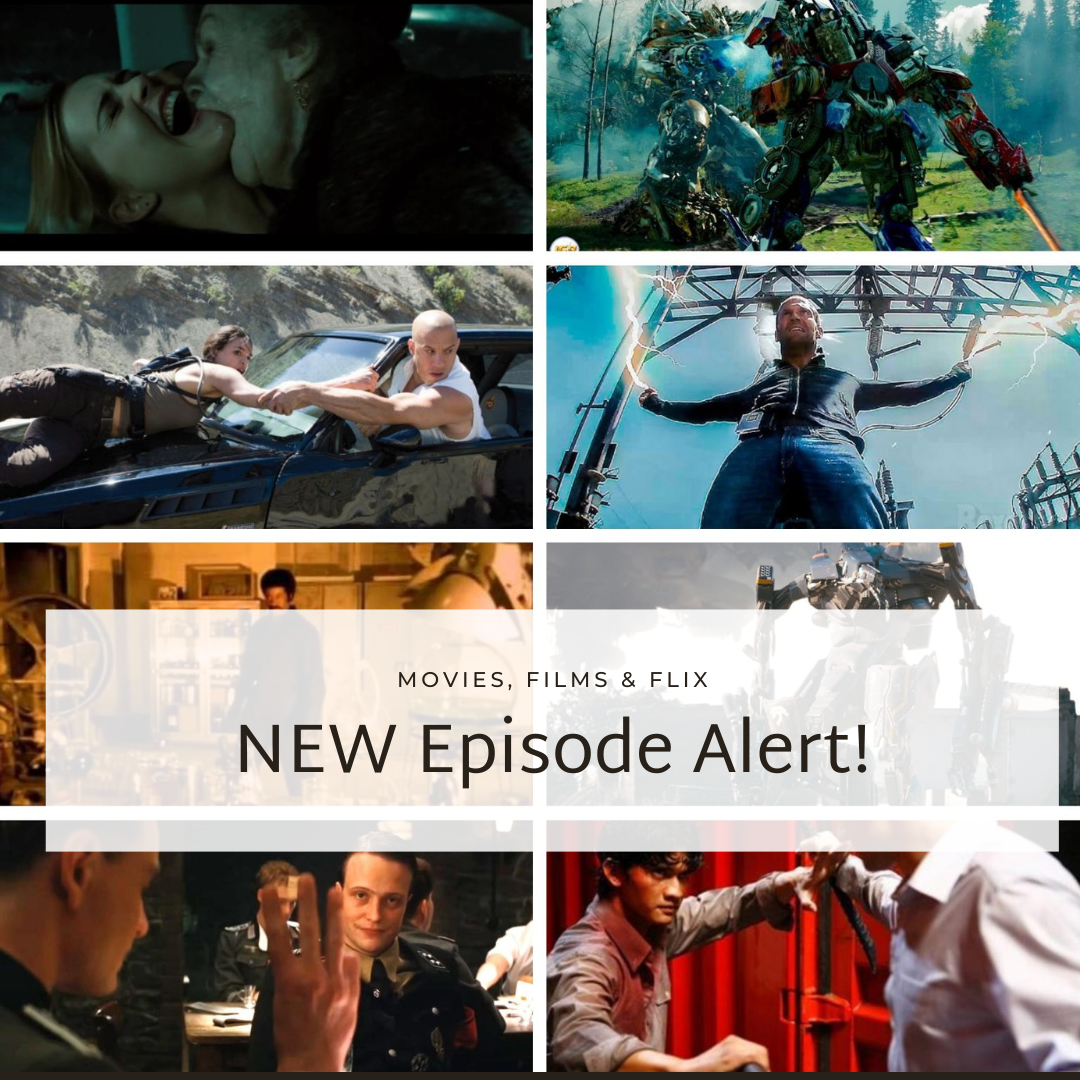
Mark and Aaron Neuwirth (@AaronsPS4 on X) draft their favorite scenes from 2009 action movies. In this episode, they talk about the neat action scenes in Drag me to Hell, Avatar, Crank: High Voltage, Merantu, Fast & Furious, District 9, Inglourious Basterds, Black Dynamite, Thirst and Transformers: Revenge of the Fallen.
If you are a fan of the podcast, make sure to send in some random listener questions (we love random questions). We thank you for listening, and hope you enjoy the episode!
You can download the pod on Apple Podcasts, Tune In, Podbean, or Spreaker.
Share this post:

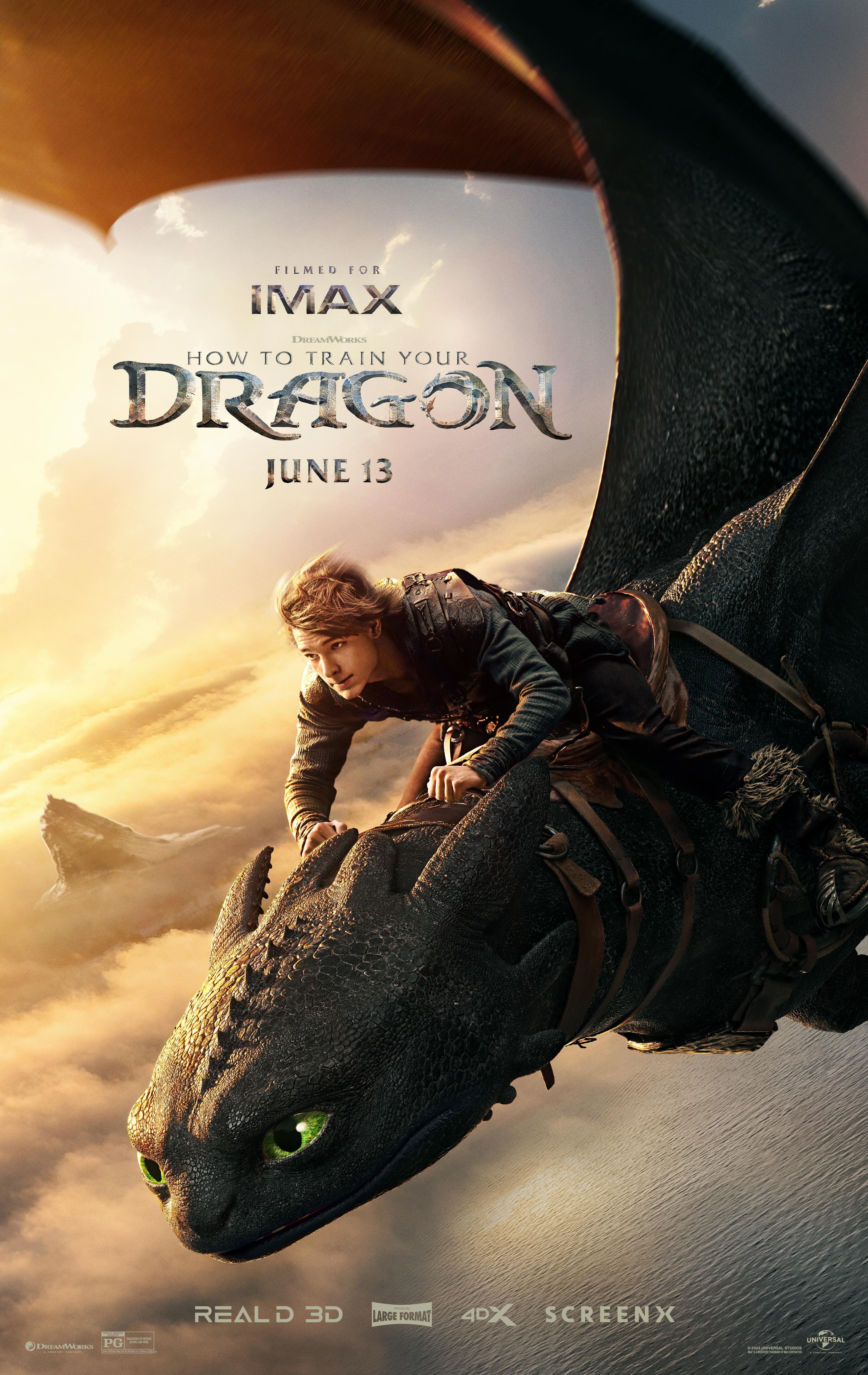
How to Train Your Dragon (2025) – Review
Quick Thoughts
Grade – C+
- For better or worse, How to Train Your Dragon (2025) is a live-action remake that doesn’t stray too far from the original.
- Roger Deakins’ visual consultant work is missing (he worked on the three HTTYD animated films). Cinematographer Bill Pope does a fine job, but it’s pretty close to a shot-for-shot remake, which doesn’t allow Pope to do anything other than shoot a professional-looking film.
- Mason Thames and Nico Parker are solid.
- Aside from money, merchandising, theme park promotion, and licensing (and competing with Disney), I’m not sure why it exists.
I don’t mind remakes. They’ve always been around and won’t stop being produced because they are easy to finance and make decent money. When done right, remakes like Fright Night (2011), Let Me In (2010), The Crazies (2010), Dawn of the Dead (2004) and The Fly (1986), work as companion pieces that hit familiar beats and offer something new and fresh. However, for every standout, it seems like there are double the amount of remakes like Martyrs (2015), Inside (2016), Speak No Evil (2024) and Psycho (1998), that pull their punches and have zero reason to exist other than making money. In the case of How to Train Your Dragon, it’s somewhere in the middle. Director Dean Dublois is back, Gerald Butler is back, and a lot of money was spent making something serviceable.
If you aren’t familiar with the How to Train Your Dragon world, it focuses on a teenage Viking named Hiccup (Mason Thames), who desperately wants to follow in the footsteps of his legendary dragon-killing father Stoick the Vast (Gerard Butler). They live on an island named Burk, which is home to a collection of wannabe dragon killers from all over the world. They spend their days rebuilding their village (after dragon attacks), protecting livestock (from dragons), and prepping for more attacks (from dragons). It’s an ugly cycle that is unwinnable for the stubborn denizens of the isolated island. Basically, Vikings don’t like dragons, Hiccup befriends a dragon, and things get crazy when Stoick decides to attack the home of the dragons – which doesn’t end well for his fleet of wooden ships. During all of this, there are training montages, chaotic flights, and a budding relationship between Hiccup and Astrid (Nico Parker), the town’s most promising dragon slayer.
What’s nice about the remake is that it respects its source material. However, by appeasing diehard fans, DeBlois has made a boring film for people who have watched the animated movies. In an interview with The Wrap, DeBlois admitted that for “better or worse” he stuck close to the plot lines of the first film (which was adapted from a book) and he made the correct (AKA boring) decision. He clearly loves his characters, but by sticking to the playbook, he’s delivered a safe and borderline meaningless remake that he directed because he didn’t want anybody else to take the reins (makes sense). An interesting fact is that DeBlois was given full creative control and he decided to not gamble by keeping the story the same and expanding upon the world a little bit more. As a first-time live-action film director it’s smart that he kept things simple and safe, and the additions he made make sense. He’s given more backstory to Astrid, which allows Nico Parker to showcase her skills (she’ll be a big star soon). Also, Burk is no longer the exclusive home of burley Scandinavian Vikings, as it’s become home to people from all over the world who want to kill dragons.
The biggest problem with the movie is that there are no “whoa” or “holy moly” moments. The VFX is fine and the production design by Dominic Watkins feels lived-in, but the movie never soars. Being familiar with the animated films understandably makes things less surprising, but I’ve watched plenty of remakes that have caught my attention (For example, the opening attack in 2004’s Daw of the Dead). I distinctly remember holding my breath and feeling the wind during the first flying scene in the OG HTTYD. I never once felt any emotions during the flying scenes in the live-action film – which comes down to familiarity and the fact that they aren’t exciting.
When the credits started rolling the remake was met with loud cheers and applause, so it seems like Dreamworks has a hit on their hands. From a business perspective, the producers made wise decisions, but It would’ve been nice if they made a film that was a little less familiar. Dreamworks must’ve learned from recent Disney live-action films and decided to avoid controversy, so they gave remake/rebootquel-loving audiences a faithful remake that won’t ruffle any feathers. It’s smart, but it’s quite cynical in a landscape of cynical money-making exercises.
Share this post:

You can download or stream the pod on Apple Podcasts, Tune In, Podbean, or Spreaker (or wherever you listen to podcasts…..we’re almost everywhere).
If you get a chance please make sure to review, rate and share. You are awesome.
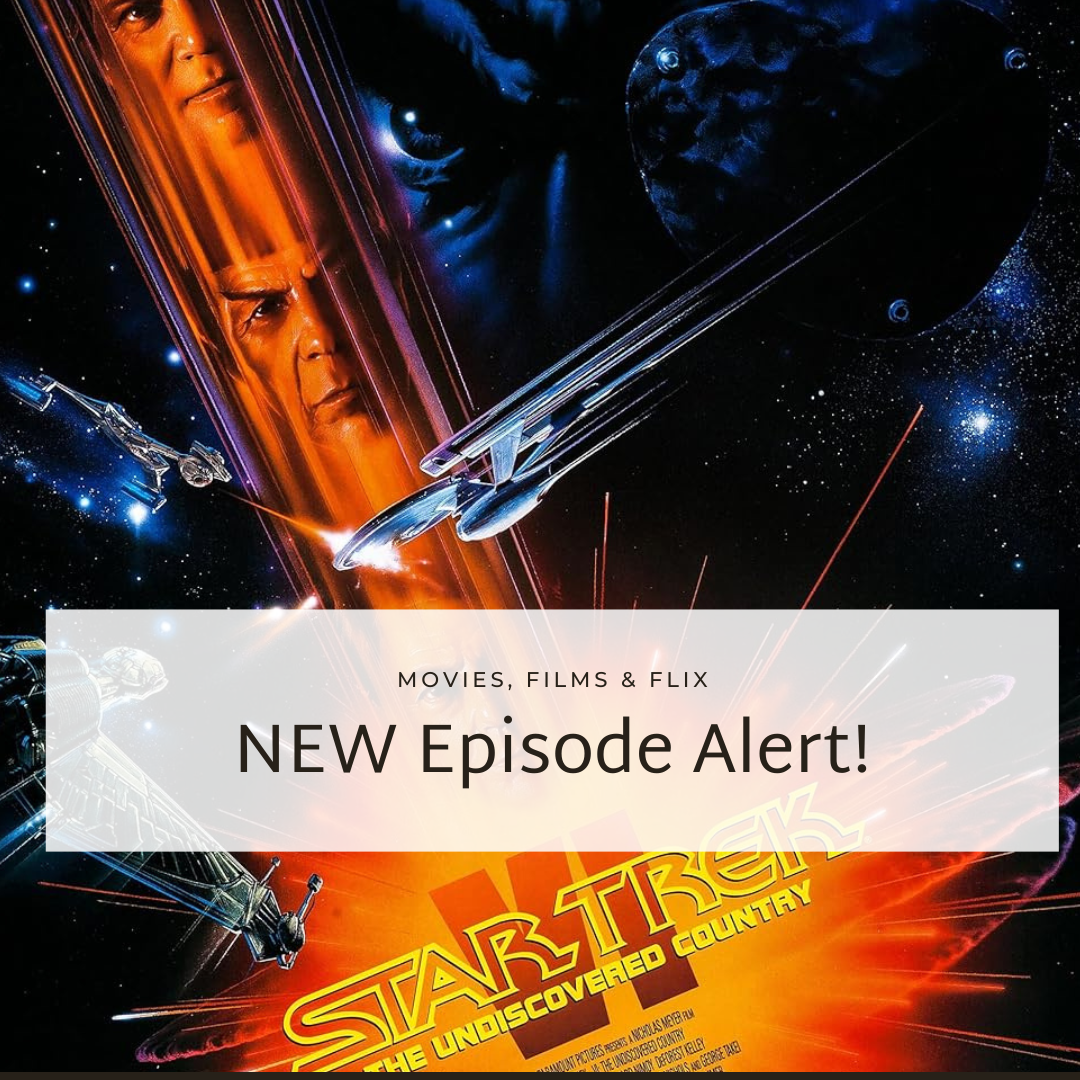
Mark and Niall discuss the 1991 sequel Star Trek VI: The Undiscovered Country. Directed by Nicholas Meyer, and starring William Shatner, Leonard Nimoy, Christopher Plummer and a gnarly mind-meld, the even-numbered sequel is easily one of the best Star Trek films. In this episode, they also talk about angry Kirk, magnetic boots, and shapeshifters. Enjoy!
If you are a fan of the podcast, make sure to send in some random listener questions (we love random questions). We thank you for listening, and hope you enjoy the episode!
You can download the pod on Apple Podcasts, Tune In, Podbean, or Spreaker.
Share this post:

You can download or stream the pod on Apple Podcasts, Tune In, Podbean, or Spreaker (or wherever you listen to podcasts…..we’re almost everywhere).
If you get a chance please make sure to review, rate and share. You are awesome.
Mark and DJ Valentine (@TryingToBeDJV on X) talk about their favorite moments from the second season of Andor. They also talk about Star Wars television, dance parties, and excellent eyebrow raising. Enjoy!
If you are a fan of the podcast, make sure to send in some random listener questions (we love random questions). We thank you for listening, and hope you enjoy the episode!
You can download the pod on Apple Podcasts, Tune In, Podbean, or Spreaker.

Share this post:

Bored? Feeling nice? Please write a review for the Movies, Films and Flix podcast. Thanks!

Hello! Mark here. I’ve never done this before, but I’m asking for help. If you have a few spare minutes it would be awesome if you wrote a review for the podcast. The reviews help improve our visibility and give potential listeners more reasons to check out the show. If you don’t feel like writing a review (it’s totally cool), please give us a rating on the platform where you listen to the show. Ratings help too!
Thank you! Have a nice day.
Mark
Here’s the new episode.


 Movies, Films & Flix