Wicker (2026) – Review
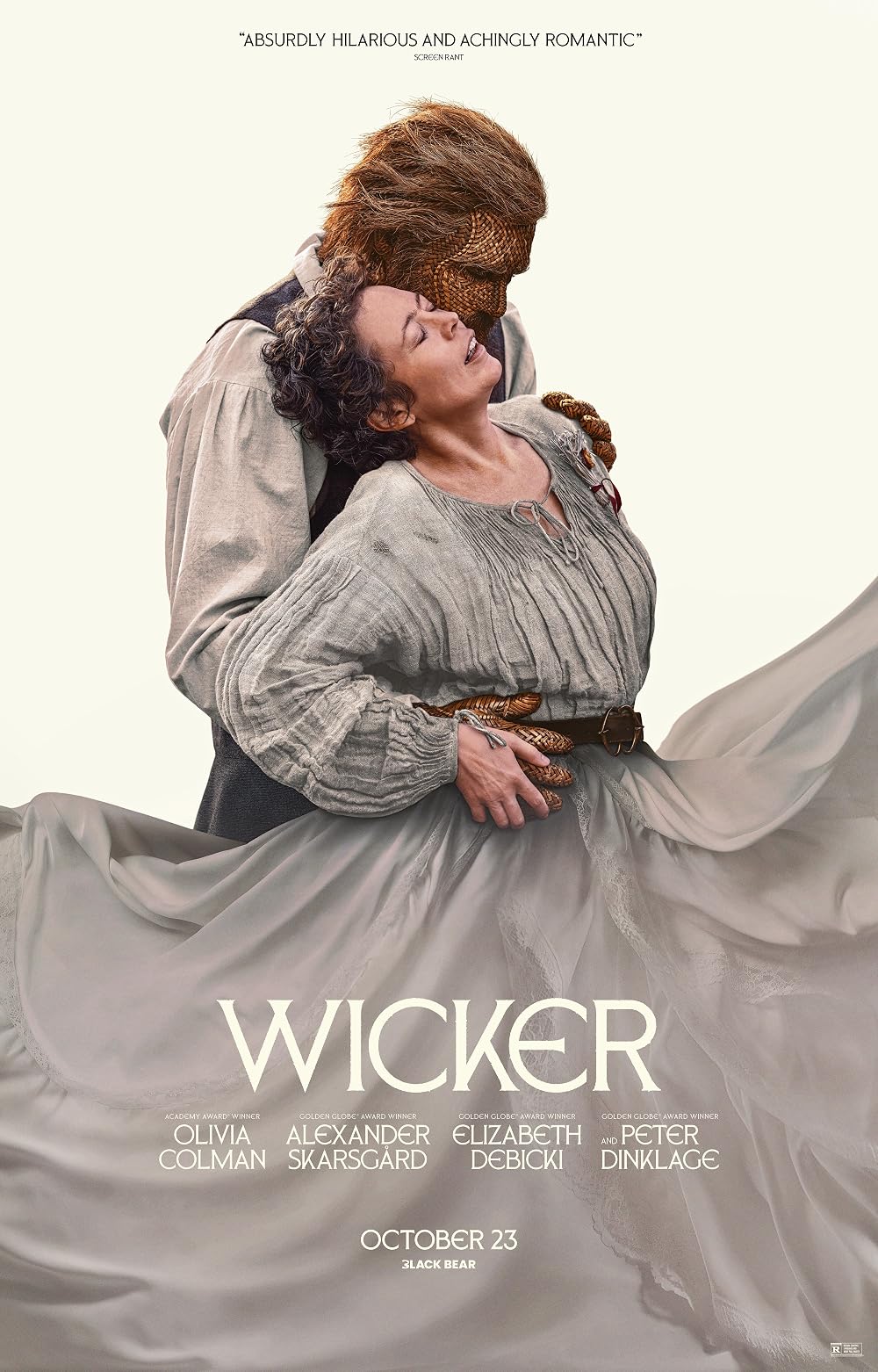
Quick Thoughts:
- Wicker is a delightful romance that takes a high-concept idea and creates a neat world.
- Director/writers Eleanor Wilson and Alex Huston Fischer have created something special.
- Alexander Skarsgård’s physicality is perfect. You believe he’s made of wicker (the sound design is great too).
- Olivia Colman can sell anything. You legitimately believe she’s in love with a wicker man.
- Between Cyrano and Wicker, I really like a romantic period piece featuring Peter Dinklage.
- Once again, it’s impressive that Wilson and Fischer took a short story and expanded it into an endearing, fully fleshed-out screenplay. It’s harder than it seems.
Based on “The Wicker Husband,” a short story by Ursula Wills, Wicker focuses on what happens when a Fisherwoman (Olivia Colman) asks a Basketmaker (Peter Dinklage) to make her a Wicker Husband (Alexander Skarsgård). The film is funny, mature, and intelligently written by Eleanor Wilson and Alex Huston Fischer (who also directed and are married). The best thing about the experience, aside from the wonderful casting and absurd premise, is how it explores new love, jealousy, and opening yourself up after a decade of building walls. It makes you wish more rom-coms were written by married couples who add different perspectives and insights into their high-concept screenplays. Many people will watch Wicker because it’s about Alexander Skarsgård having sex with Oscar-winner Olivia Colman, but hopefully they’ll leave the theater thinking about how to be a better partner (or scheming how to create a wicker spouse).
Wilson and Fischer’s first film, Save Yourselves! tells the story of a couple saving themselves during an alien invasion, so between it and Wicker, the duo enjoy high-concept love stories with a fantasy or sci-fi twist. Wicker takes place in a 17th-century (ish) fantasy village by an unknown sea, and opens with a wedding ceremony in which a man named Bottlewasher places a collar around the neck of a soon-to-be-dissatisfied young woman. During the afterparty, we’re introduced to Fisherwoman (Colman), the village fisherperson who lives on the outskirts of town, and seems happy she never married a mediocre husband and lost her autonomy. During the festivities, she comes across Tailor’s Wife (Elizabeth Debicki), the beautiful local mean-woman who in another world could’ve run the village, but instead is a walking advertisement for her tailor husband. After being casually (and cruelly) told that she’ll live out her days alone, the Fisherwoman picks up an exploding wicker basket that predicts she’ll be the next to marry. That night, she travels to the village’s somewhat mystical basketmaker and asks him to make her a husband.
The following day, a naked wicker man walks around the town getting ready for his marriage to the Fisherwoman. In a neat coincidence, the two have a nice marriage as they have bed-destroying sex (which he promptly and often repairs), comfortable quiet moments, and intimate dances at wedding receptions. As she works, he repairs her home, and their comfortable existence begins to infect the town with jealousy as locals start noticing their inadequacies. It’s all very funny (and true), and made better by Olivia Colman, Peter Dinklage, Elizabeth Debicki, and a committed Alexander Skarsgård, the first WHILF in cinema history.
Cinematographer Lol Crawley (The Brutalist, The Devil All the Time, Vox Lux, The OA) was instructed to make the film look like a 17th-century Dutch painting, and he succeeds in making the village designed by Renátó Cseh (production designer) look wonderful. The 1:85 aspect ratio works well for the romantic fantasy (and making Skarsgård look huge), and his idea to use three Arri Alexa Mini LF cameras for the crowd scenes creates welcome naturalism (the extras are really good). The magicians at Wētā Workshop created a flammable work of art that retrains Skarsgård’s looks (and hair). Joe Dunckley and his crew spent 18 months researching and developing the look to create a stoic, handsome, imposing, and strangely sexy creation (according to the press notes).
Shot in Hungary over 30 days, the handsome production takes a simple idea and expands into something fun and true. I can’t wait to see what the directors do next.


