Fatherland (2026) – Review
Quick Thoughts:
- Sandra Hüller is the best.
- Excellent slap.
- Between Ida, Cold War, The Zone of Interest, Hamnet, and Fatherland, Łukasz Żal is one of the best working cinematographers.
- Paweł Pawlikowski sure can stage a scene.
- What’s lovely about Fatherland is how it can be watched on multiple levels. You can enjoy the road trip, or appreciate what Pawlikowski says about isolation, depression, art, lack of roots, and family.
- 6. Top five endings of the year. It’s beautiful.
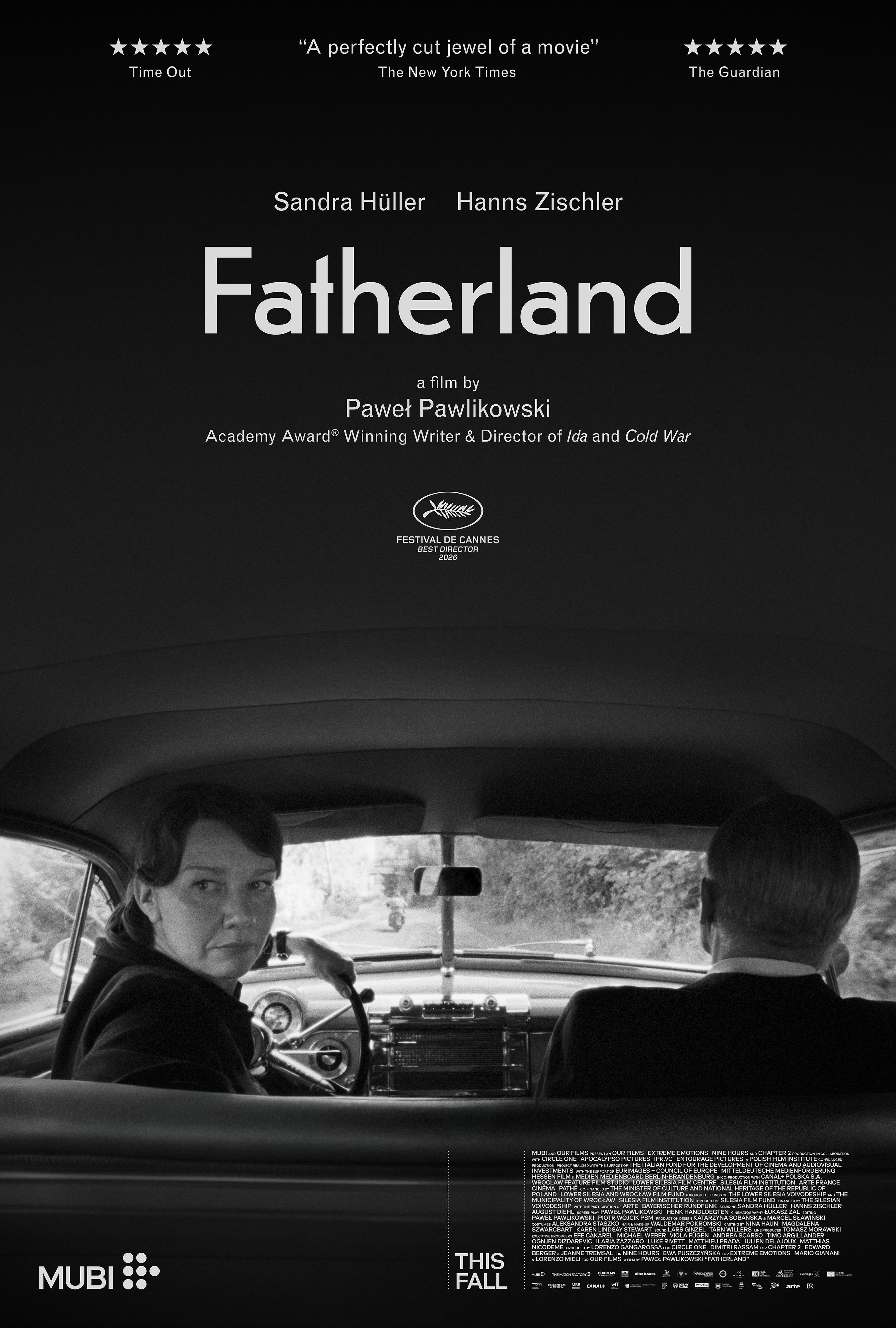
2026 has been a solid year for biographies that focus on a specific moment in time. Tony lasered in on Anthony Bourdain’s formative summer in 1975. The Sian Heder-directed Being Heumann narrowed its focus to a 28-day takeover of the San Francisco federal building led by disability rights activist Judy Heumann. Fatherland looks at five days in the life of author Thomas Mann (Hanns Zischler), who, after a self-exile from Germany between 1993 and 1949, returns to Germany to receive a Goethe Prize in both East and West Germany. He’s accompanied by his daughter Erika (Sandra Hüller), who works as his driver (she drives a gorgeous 1948 Buick Super), interpreter, and speech editor. The original plan was for their son/brother Klaus (August Diehl) to join them, but he overdosed on sleeping pills the night before the trip. With the weight of the world on their shoulders, Thomas and Erika navigate a political minefield between West/East Germany, while grieving over the loss of their beloved family member.
For viewers unfamiliar with post-war Germany in the 1940s, the movie offers insight into a country split in two by the US/UK/France (West) and the Soviet Union (East). Both want the famous German author to side with them, but he meets resistance everywhere and still delivers his message to the masses, hoping to reunite and reform Germany. For people unfamiliar with Thomas Mann’s career, the movie provides enough information to explain why he and his family matter to German politics. In one of 2026’s best scenes, the audience gets insight into Erika’s life when she runs into her ex-husband Gustaf Gründgens (Joachim Meyerhoff). After a brutal conversation in which the word “nepo baby” is mentioned, she delivers the best slap of 2026. The film will inspire you to learn more about Erika and Klaus Mann, because they lived interesting lives fueled by adventure, sadness, FBI investigations, rumors, rally cars, persecution, and writing. The easiest/smartiest casting decision was hiring Sandra Hüller to play Erika, because the Oscar-nominated actor speaks three languages and exudes intelligence. Also, there’s no other actor on the planet who can match Hüller’s physicality when it comes to inhabiting a role.
Łukasz Żal’s cinematography is gorgeous as the 1.37:1 Academy ratio brings welcome vertical height to the film. The shots are composed to place the subjects in the lower frame, making the characters feel small in their high-ceilinged hotel rooms. The symmetry of the shots is fantastic, and the movie opens with a memorable locked-off five-minute deep-focus shot of a naked Klaus being asked (by Erika) to come along for the trip. He’s centered in the foreground (on the floor), his unnamed lover keeps up the middle ground, and the background is the wall of the room that makes Klaus seem very small (which makes sense narratively). Overall, it’s a gorgeous production, and it’s only 82 minutes!


