Possible Love (2026) – Review
Quick Thoughts:
- Jeon Do-yeon has charisma for days.
- Possible Love is a thoughtful examination of class, depression, and possible love.
- Best 2026 private beach.
- I hope it will be remembered during awards season.
- The 164 minutes fly by.
- Best unused marble picnic table.
Much like last year’s Sentimental Value, Possible Love is an emotionally mature film written by a wordsmith who loves his characters. Director Lee Chang-dong (Burning, Secret Sunshine) spent 10+ years building Possible Love, and he and co-writer Oh Jung-mi wrote a movie filled with memorable moments, real feelings, and confident patience. The 164 minutes fly by and build towards a lovely ending that showcases earned character development. It’s already an awards contender, and I hope its momentum builds throughout the year.
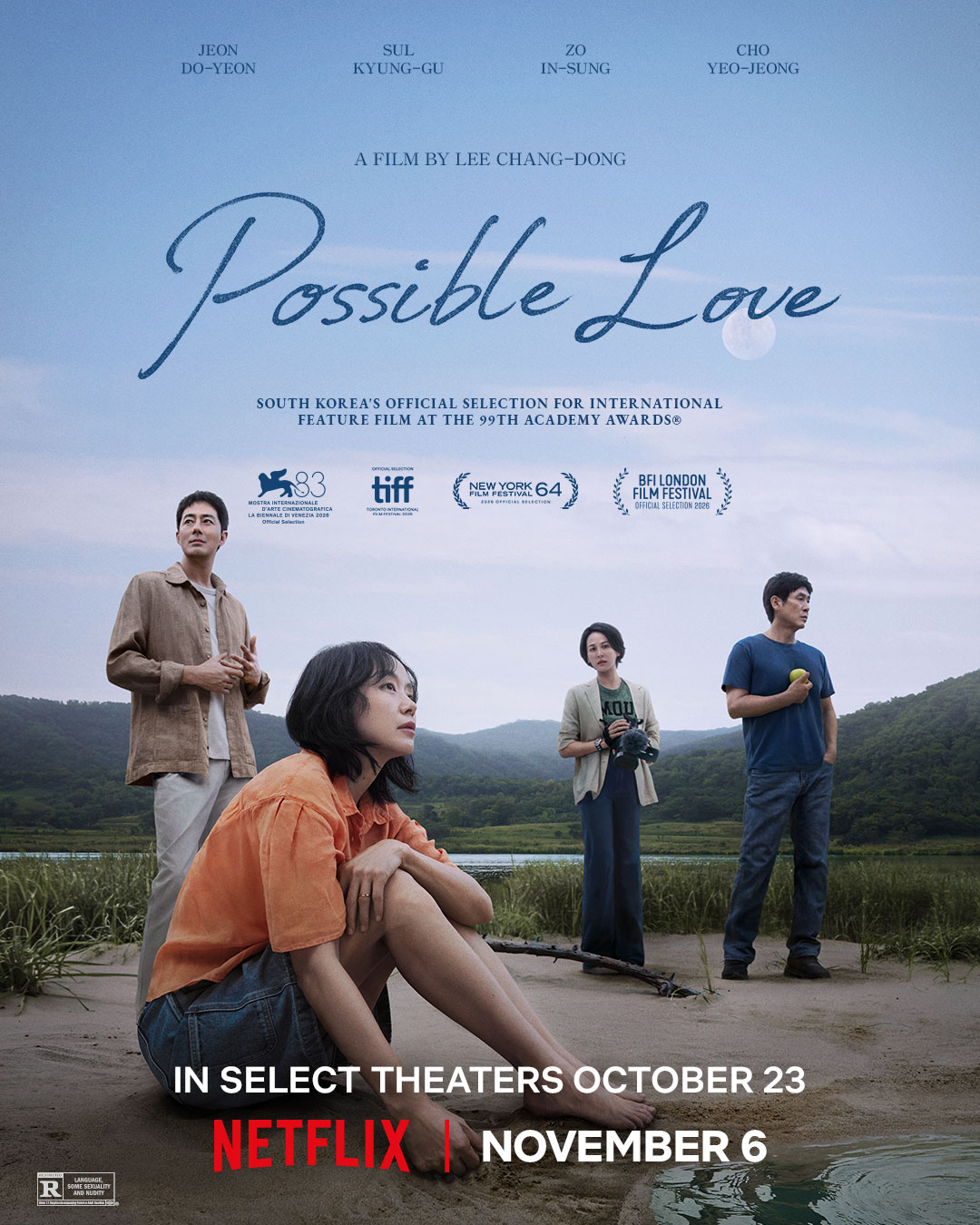
The story follows two couples; the first is a blue-collar couple led by Ahn Mi-ok (Jeon Do-yeon, perfect), her unemployed (and deeply depressed) husband Choi Ho-seok (Sul Kyung-gu), and their son Choel. We first meet them as they are attending the funeral of one of Ho-seok’s coworkers who killed himself after losing his job at the local plant named SP Heavy Industries. It seems like half of the city’s denizens (including Ho-seok) lost their jobs to “restructuring,” and their attempt to get their jobs back led to a brutal beatdown by the cops. At the funeral, they meet Lee Ye-ji (Cho Yeo-jeong), a wealthy wannabe filmmaker who is filming the funeral for a documentary she is working on. Ye-ji is married to a super-rich tall guy named Sang-woo (Zo In-sung, who is great in Hope), who thinks her dalliance with blue-collar workers is a charming distraction. After hitting it off at the funeral, the always well-dressed Ye-ji starts filming the family and eventually makes them the lead characters of her documentary about laid-off workers. From there, the couple learns more about each other, and it leads to a weekend at a beautiful house (with a private beach) on the west coast of South Korea
Lee Chang-dong wrote novels and short stories before becoming a filmmaker, and his writing experience pays dividends when crafting characters. During a conversation, Mik-ok tells Ye-ji that when she was little, she wanted to wash cars because she loved the rainbows that appeared when light caught the hose water spraying onto a car. Her ambitions may seem small, but her social class never let her be a wannabe documentarian, so she found joy in small moments. Ye-ji is an interesting character in that she’s wildly beautiful and married to a wildly rich businessman, so it seems she’s documenting blue-collar people for charity. However, her expensive clothes (which Mik-ok tells her not to wear while interviewing blue-collar people) and handbags mask the fact that she has an eye for filmmaking (except for recording sound), and her interactions with Ho-seok prove she can get emotions out of deeply depressed men who need to unload their burdens. There’s a bit when her assistants mention that she doesn’t use Sang-woo’s money for her films; instead, she applies for and receives grants for her projects. This is met with skepticism because she’s taking money from people who need the grants, when she could’ve just asked her rich husband for a blank check.
The actors bring something unique (and real) to the (marble) table. The last time Do-yeon worked with Chang-dong, she won Best Actress (for Secret Sunshine) at the 2007 Cannes Film Festival. You can tell the actors cherish playing three-dimensional humans who inhabit a real world. Whether it’s dangling empty potato chip bags outside car windows, drinking too much soju, or recounting life-changing injuries inflicted by cops, the actors all register as real people who have real endings.
Chang-dong didn’t make the film until he felt it had meaning, and the end result is a gorgeous character study. Kim Ji-young’s (Decision to Leave = one of my favorite films) cinematography is pitch-perfect, using natural lighting, well-timed close-ups, and patience to make the film look fantastic. The costume design by Choong-yeon Lee (Burning, Poetry, Return to Seoul) is solid as always, telling a tale of class disparity and leading to a very funny joke about “looking nice.”
Final thoughts: Try to catch it in theaters so you can immerse yourself in the world.


