The MFF Podcast #93: Manchester by the La La Land
Hello all. Mark here.

You can download the pod on Itunes or LISTEN TO THE POD ON BLOG TALK RADIO.
If you get a chance please make sure to review, rate and share. You are awesome!
The MFF podcast is back and we are talking about La La Land and Manchester by the Sea. These two monoliths of cinema have been dueling all year and have been responsible for many gloriously redundant debates. The only thing they have in common is they both fell to the deserving Moonlight for Best Picture but still managed to win copious awards. . In this pod you will hear us wax poetic about terrible drummers, empty calories and the brilliance of Michelle Williams.
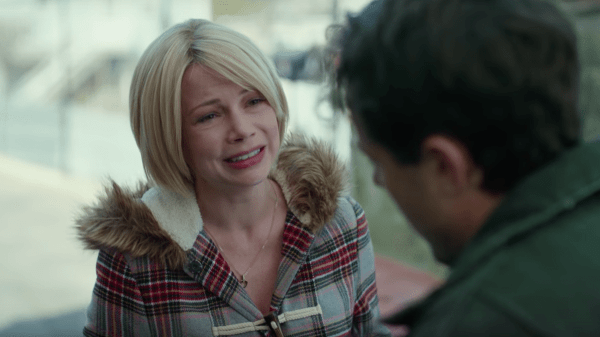
Williams is sooooooooooooooooooooo good.
As always we answer random listener questions and ponder if the questions need to be topical (doesn’t matter). If you a fan of the podcast make sure to send in some random listener questions so we can do our best to not answer them correctly. We thank you for listening and hope you enjoy the pod!
You can download the pod on Itunes or LISTEN TO THE POD ON BLOG TALK RADIO.
If you get a chance please make sure to review, rate and share. You are awesome!
Share this post:


Cinematic space travel seems terrible. Movies like Life, Prometheus, Event Horizon, Sunshine, Alien and many others have taught us exploring space is not fun. The poor space travelers always find themselves in incredibly dangerous situations that would never happen on earth. Whether it be aliens, space goo, super computers or more aliens something always goes wrong and people die.
The following post covers five moments where the main characters aren’t harassed, incinerated or lost while journeying through space.
.
1. Spaceballs – You Can Watch Movies, Drink Coffee and Check Out the Radar
Spaceballs is hilarious! I love the moment when Dark Helmet watches Spaceballs before it is even released. How weird/awesome would it be if you could watch a movie showing the now….right now! Just be careful of hot coffee and going so fast you turn plaid.
.
.
2. Guardians of the Galaxy – You Can Dance Your Way Around Gross Creatures
I love when Chris Pratt dances his way around gross creatures and dangerous crevasses while looking for bounty. Guardians of the Galaxy proves you can have fun while many things are trying to kill you. I have a feeling that terrible space travel wouldn’t be so bad if you had a bunch of entertaining A-holes around.
.
.
3. Star Trek 4: The Voyage Home – You Can Save Whales!
I love Star Trek 4! One of my favorite moments is when Captain Kirk is breaking down the mission to the save the whales. During the speech he mentions that people will be freaked out by Spock. What does Spock do? He wraps a cloth around his head and looks like a karate master. There are better Star Trek movies out there but I loved this movie as a kid and it doesn’t get old.
.
.
4. Star Wars: Episode Four – A New Hope — You Can Play Dejarik With a Wookie
I love the moments in the Star Wars films when the characters have downtime. When they aren’t saving the world or being chased by Darth Vader they are able to relax and play board games involving monsters killing each other. I’d love to play Dejarik with Chewbacca.
.
.
5. Flight of the Navigator – You Can Listen to The Beach Boys While Cruising Around in a Space Ship
I would love to fly around in a spaceship and jam out to The Beach Boys! When I was a kid I thought this scene was probably the coolest thing ever because the kid got to drive underage, teach aliens how to dance and listen to loud music. It would be the greatest day ever!
.
Share this post:

Logan: Old West, New Forms
LOGAN
Old West, New Forms
by Zachary Beckler
Logan is not a Western, though it looks and sounds like one. Characters wear windblown dusters straight out of a Sergio Leone film, and the score by Marco Beltrami uses themes and effects heavily influenced by Ennio Morricone. The characterizations also fit into certain classical genre archetypes, as ranchers feud with “cattle barons” and Professor Xavier taking on the role of the dying “pioneer.” However, there is no doubt the film is Superhero cinema through and through, from its aggressive (and violent) action scenes to the explicit comic-book nature of the nemesis (a clone who is Wolverine’s corporeal double and antithetical representation, essentially an sci-fi narrative device.) That is not to say that James Mangold, director of 3:10 To Yuma, does not utilize the Western aesthetic purposefully, as Logan makes a valid intertextual statement about Superhero cinema and, in turn, the vitality of myth-making in general using these genres. Its motive, however, is not to contrast, but to bridge.

.
What qualifies a film as a Western? In the most basic terms, it depicts a portion American culture during the 19th century, as settlers progress west across a “wild” frontier to establish a Euro-centric idea of civilization and justice. The stories of the “Frontier Myth” in all media forms are usually framed as the exploits of nomadic heroes with vague codes of honor as they confront the savagery of both the natives and the lawless criminals bent on stifling the order of civilized society. In the early days of cinema, the Western emerged as a conduit to exploit the moving image form. What is a Western if not about the movement of subjects contrasted against the stillness of an uninhabited environment? Chase scenes, screen direction, and continuity editing techniques all materialized during the proliferation of this genre in the 1910’s through the 1930’s. It was myth re-making, and movement was essential to its effectiveness. But these myths were regressive to reality, neglecting to show the true horrors of this progression west or the racism and genocide that dominated the culture. The X-Men comics and films have classically appropriated these themes into a kind of futuristic racial commentary (the fact that these “mutants” are different species has always made this metaphor problematic.)
Logan does fit into some of these Western criteria, and not by accident. However, this film, and more explicitly The Wolverine, are informed just as much, if not more, by the Samurai film. Even in the most superficial ways, Wolverine has more in common with Toshiro Mifune than John Wayne as an element of design, with his unbreakable bladed weapons, stylized hair, and kubuto inspired face mask (in his comic-book form). As a cinematic genre, Samurai films of the 1950’s countered the Western aesthetic; instead of portraying a genesis, they depict the conclusion of a way of life. If Westerns showed the movement of subjects (using wide-angle lensing and tracking shots), Samurai films, in particular those of Kurosawa, display the movement of environment against the stillness of its subjects. The frame is always active with rain, wind, or fire while the masterless ronin are poised in contemplation. Even when Mifune moves in a film like Yojimbo, the long lens pans with him and compresses the spaces, parallaxing the the background movement from the foreground. The world appears to fly by this seemingly stationary object.
“The fact that movies are a technology of motion makes them uniquely suited to capturing stillness.” – Ignatiy Vishnevetsky
It is not that Westerns didn’t practice this kind of stillness, as can be seen in iconic gun duels and quick-drawl suspense sequences. And Samurai films did also render moving bodies in space, like the sieges of Seven Samurai (Kurosawa was known for his full body character gestures to express internal emotion.) Genre can ultimately only be defined ostensibly, as each new work adds to its definition. The content and characteristics of genre, though, aides in the understanding of its aesthetic forms. Logan can fit into both genre categories, as it depicts a kind of samurai at the end of his life but uses the deserts of Mexico and the woods of North Dakota to portray this. First and foremost, however, Logan is a Superhero film. What aesthetically defines such a genre?
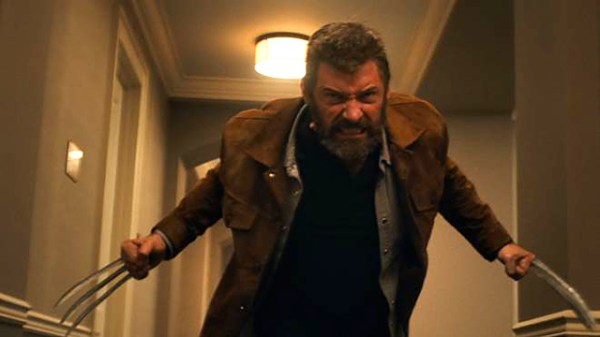
Superhero cinema takes its cues from sci-fi, modern action cinema, and, of course, the comic book panels from which it was birthed. It is not hard to find an overriding formal motif between films, because the stories share similar plots; a modern society destabilized by ideological discordance, selfish interests, or other devious motives of terror. The quality of movement in these films mimic this destabilization, be it the fast-cut handheld frames of Captain America, or the crosscutting partition of actions and moments in Nolan’s Dark Knight Trilogy. In Logan, we see many aggressively staged action sequences, but the film also portrays this instability within the narrative, as Xavier’s brain is prone to seizures that are transmitted to everyone within his range. This is formally conveyed by vibrating the digital camera with an open shutter, creating more ghosting of the motion blur (likely combined with some kind of post-processing). Within these destabilized images, the viewers’ eyes hone in on the most vivid design elements in the frame for balance and relief, usually the posed, costumed superhero.
.
The process of character development is vital to the understanding of this form. Unlike Westerns, there are no real-world “facts” to create “legend” from. The inception of comic book characters nearly always start with vivid physical design, followed thereafter by a detailed emotional history, perhaps as a justification of such bold visual strokes. Batman, for example, started simply with the name, from which they created a design. It took six issues before his backstory and motivation was developed. Wolverine was no different; the design of his costume and weapons in his 1975 debut were so compelling to readers, it compelled Marvel to develop the character further. Within nearly 20 years of passive development, he was given the power of regeneration, immortality, and a backstory revealing bones underneath his implanted “adamantium” claws (the Weapon X backstory was first published in 1991). The myths these superheroes inhabit always seem to play catch-up to their design, and as such are subject to the easy commonalities and platitudes of the history of storytelling.

.
The superhero film is as prolific in mainstream cinema as the Western was in the 30’s and 40’s. Both genres use iconic central figures put through messianic trials to create new mythologies. (Wolverine is impaled horribly in his side late in the film, which becomes a kind of symbolic stigmata). Logan is one of the first superhero films to embrace this idea and make it part of the narrative drive. In doing so, the film acts as a thesis on the necessity of these forms from generation to generation. Hugh Jackman, giving a sublime physical performance, shows Logan disintegrating before our very eyes in a country that turns its back. It is the bleakest of worldviews, showing a culture so far gone it has banished its heroes and accepted destabilization as permanence.
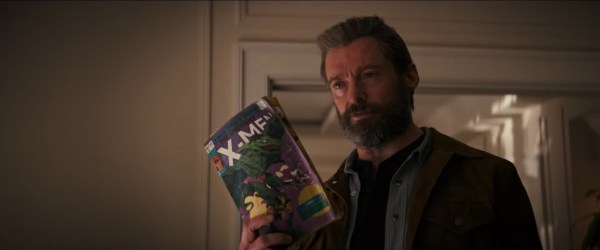
The film can be divided into three key sections: Mexico, (the world and scenario building early scenes which mimic Western aesthetics most), the road (which transitions north from Mexico to North Dakota), and “Eden”, in which young mutants born in labs from the DNA of established mutants (again, this is not a western) have created a sanctuary based on the only religion they have ever known: comic books. A nurse from the cloning facility enlists Logan’s help to get Laura, revealed later to be Logan’s clone/daughter, to the coordinates of Eden. When Logan discovers the destination was copied from a comic book of his own exploits, he dismisses Laura’s quest. “Where we’re going, ‘Eden…’ It doesn’t exist. The nurse got it from a comic book. You understand? It’s not real.” Xavier, the wise and charitable savior of mutant kind, responds simply, “It is for Laura… It is for Laura.” When Logan arrives, hoisted into a literal makeshift ascension, he discovers they have made an Eden for themselves. The structure of Logan frames what has come before (Logan’s world) within the aesthetics of an accepted form in order to bridge into what is here now (the new mutants/Superhero cinema.) This is made explicit during a scene of the children trimming Logan’s beard as he recovers, literally grooming him into the image they worship in comics.
.
The studio has made no secret that this is Jackman’s final outing as Wolverine, so it should come as no surprise that Logan ends with Laura and the the other young mutants standing over the grave of The Wolverine. She eulogizes Logan by quoting the ending to a film she saw days earlier, the classic western Shane. This is not appropriation, but a farewell to a mythic form and an additional layer of commentary.
“Joey, there’s no living with a killing. There’s no going back from one. Right or wrong, it’s a brand. A brand sticks. There’s no going back. Now you run on home to your mother, and tell her everything’s all right. And there aren’t any more guns in the valley.”
One of the children caresses an action figure of Wolverine’s comic book form like a rosary. As the new generation disperses, headed to the sanctuary of Canada, Laura stays behind, pulling the large burial crucifix from the ground and turning it on its side, refashioning it into an X. What meaning is there in the image of a cross to children who have never read a bible or seen any kind of Christian iconography? This is the film’s final and most definitive statement, delivered simply as a gesture of affection and tribute. This final shot could become as essential to the Superhero film as the ending of The Searchers is to the Western.
Logan is not a Western hero. He is a Superhero, one whose story morphed over the years into a parable that has been refashioned and artistically appropriated throughout the history of media forms from one generation to the next. Logan understands this better than any Superhero film before it, and in doing so gives the genre the respectability it has earned. But respectability is meaningless. These films did not need that kind of older generation consideration. Superhero cinema may not be significant to some, but it is to today’s generation. It is for Laura.

Share this post:

MFF Special: A Closer Look at Movies That Feature the Words Best, Great, Perfect, Good and Fantastic in Their Titles
I love random data that has no real world importance for several reasons.
- I love the look on people’s faces when I tell them movies that feature jet ski action scenes have a 29% Rotten Tomatoes rating.
- The data can focus on pencils, movie poster explosions and Foghat.
- The stupid data puts a smile on people’s faces (or really annoys them because they just spent time reading about data with no real world importance).
When looking to further my journey into random film analysis I became inspired during a viewing of Best in Show. I began to wonder which group of movies that boasts big things had the best critic/user average. The following post averages out the Rotten Tomatoes Critic score and IMDB user score of 101 movies that feature Best, Perfect, Good, Fantastic and Great in their titles. For instance, The Fantastic Mr. Fox, The Great Gatsby, A Perfect Getaway, Good Burger and Best in Show.
The movies needed at least 20 reviews on Rotten Tomatoes and 2,500 ratings on IMDb. If I had to include every single movie it would’ve killed all my free time and the data would’ve been a sham.
Are movies that feature the word Perfect actually perfect? Are Good movies any good? Can something be the best and still take third place? Are dog shows really that competitive?
Sidenote: If a movie had a 7.6 IMDb user score, I switched it to 76.
5. Perfect
RT/IMDb Average – 53.56
Best: A Perfect World – 78
Worst: Perfect Holiday – 29.5
There are very few things that are perfect in this world (The Thing, Islay Scotch, JCVD spin kicks) so I wasn’t expecting a grouping of movies to equal out to 100%. However, I was kinda shocked that movies featuring the word Perfect had a 53.56 average. The Perfect Man (30.5), Perfect Stranger (34) and Perfect Holiday (29.5) hurt the average bigtime and negated the positive contributions of Pitch Perfect and A Perfect World.
John Carpenter’s The Thing is legit perfect.
.
4. Fantastic
RT/IMDB Average – 60.43
Best: Fantastic Mr. Fox – 85
Worst: Fantastic Four – 26
Going into this post I assumed Fantastic movies would have the highest average. Movies like The Fantastic Mr. Fox, Captain Fantastic and Fantastic Beasts and Where to Find Them have solid numbers and I figured they would buoy the low scorers. However, I forgot that the 2015 Fantastic Four had a 9% RT average. Since there were so few Fantastic movies the 9% dragged everything down and Fantastic movies took fourth place.
.
3. Good
RT/IMDb Average – 60.68
Best: The Good, The Bad & The Ugly – 96
Worst: Good Luck Chuck – 30.5
Third place isn’t great or bad. Third place is good, which is sorta perfect for Good movies. The 60.68 score narrowly edged out Fantastic movies and placed it in the middle of the pack. If it wasn’t for A Good Day to Die Hard, Good Luck Chuck and No Good Deed, Good movies would’ve overtaken Great movies. If you get a chance make sure to watch The Good, The Bad & The Weird and In Good Company because they are really good.
.
2. Great
RT/IMDb Average – 66.36
Best: Great Expectations – 90
Worst: Barney’s Great Adventure – 25.5
The Great movies did their best to take first place but they were hindered by Barney’s Great Adventure, The Great Raid and The Great Wall (AKA The Ponytail Epic). The 66.36 average was a decent jump over Good and Fantastic films and was almost enough for a first place finish (I blame the ponytail). If you haven’t already I totally recommend you watch The Great Dictator, World’s Greatest Dad, Great Expectations (1946) and The Great Beauty.
.
1. Best
RT/IMDb Average – 67.87
Best: The Best of Youth – 90
Worst: The Best of Me – 38
“Best” movies are the best. The Best movies blew away the competition and were propelled by We Are the Best, Best Worst Movie, The Best of Youth, The Best Years of Our Lives, Best in Show and The Best Exotic Marigold Hotel. The only weak link was the Nicholas Sparks written/produced The Best of Me (9% RT). The Best of Me is actually the worst of all the Sparks films (I’ve watched them all) and I think the 9% is generous.
In honor of the best here is another hilarious Best in Show clip.
There you have it! Best movies are the best!
Here are the movies by the way.
Share this post:

John’s Horror Corner: Siren (2016), the sexy demon movie based on V/H/S’ Amateur Night by the man behind Dante the Great.

MY CALL: If you’re in the mood for a sexy demon movie and have low to moderate expectations, this is for you! MORE MOVIES LIKE Siren: V/H/S (2012) and V/H/S Viral (2014) for reasons detailed in the review below. Also, note the Horror Romance Sidebar below for other suggestions.
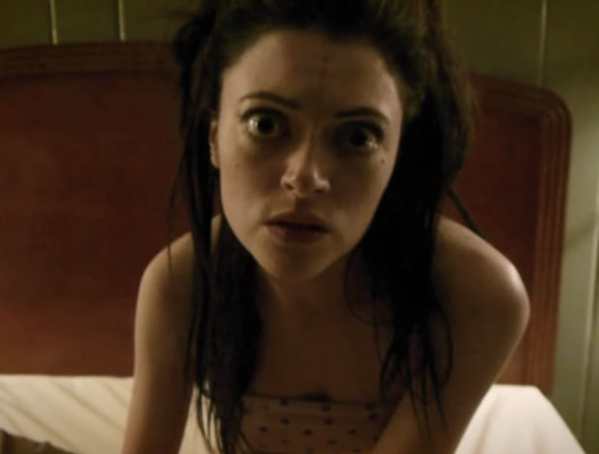
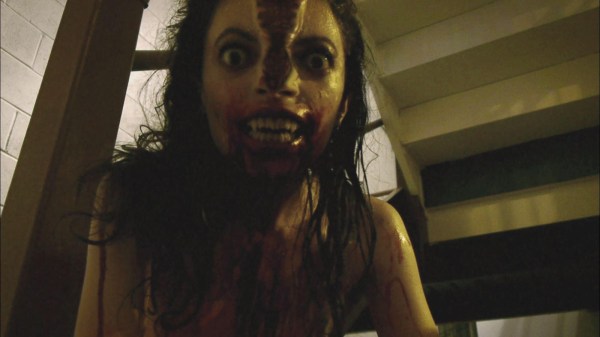
Images (above) from Amateur Night
Based on the wildly popular “Amateur Night” segment from V/H/S (2012), director Gregg Bishop (who directed V/H/S Viral’s popular segment Dante the Great) combines our favorite actors from Dante the Great and Amateur Night in this feature length spin-off. This is exactly what we hope will happen after seeing great short films in horror anthologies.
Jonah is a nice guy. Jonah (Chase Williamson; The Guest, John Dies at the End) is having his bachelor party and his hyper-active best man Mac (Michael Aaron Milligan; Shark Lake, V/H/S Viral segment Dante the Great) naturally goes overboard and makes it all about strippers and debauchery.

The feisty nature of the early scenes help make up for the writing and acting that just aren’t there. It’s introductory fun-spiritedness journeys us to a ho-hum strip club with unmotivated lap dances, some standard comedy set ups that might draw a smile (e.g., B-squad strippers fumbling about the stage), and some sophomoric bro chat. Mac encounters a slick stranger at the bar who invites them to a “more serious” and rather remote venue. And that’s when things get weird.
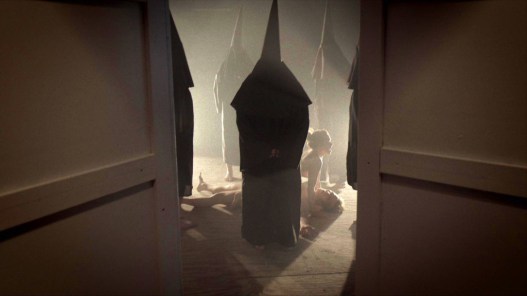
The opening scene brings a partial explanation of the supernatural being commandeered by Mr. Nyx (Justin Welborn; V/H/S Viral segment Dante the Great, The Final Destination, The Crazies, The Signal). Nyx is the proprietor of the secret strip club where we find Lily (Hannah Fierman; V/H/S segment Amateur Night), who has a “hint” of her true nature (harkening back to Amateur Night for those who have seen it). Her origin is suggestive that she is a demon from Hell—like a succubus. Only this seductress has a Siren’s song that will weaken the minds of men. It mashes up a couple different fabled temptress creatures (the succubus and the siren) and doesn’t really explain outside of a summoned infernal origin.

Now I liked this but I’m just gonna’ come out and say it: between the acting and writing quality this feels a lot like a direct-to-DVD movie with decent production value. I enjoyed the film, but it did little to impress and it just doesn’t seem to deserve a theatrical release (and I don’t think it got one). But despite these shortcomings the movie is enjoyable—to men anyway, I’m sure.
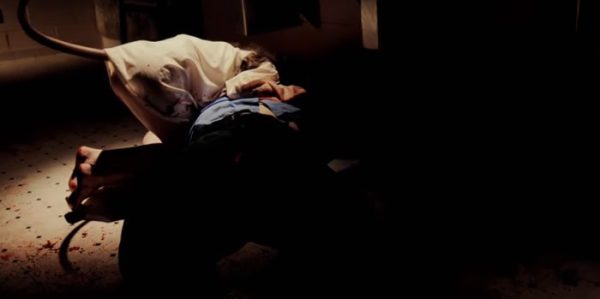
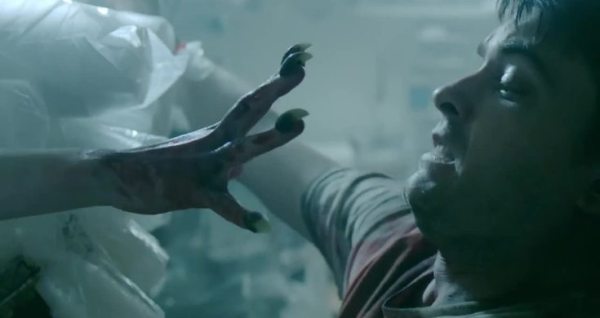
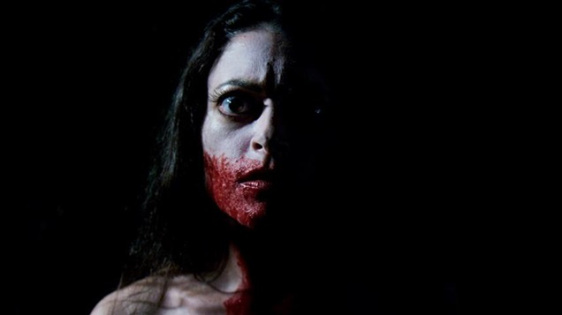
You see, Lily spends most of the movie naked. Like, 100% extremely don’t-watch-this-with-your-girlfriend naked. On top of that, and catering to my standard horror hound preferences, she ends up dowsed in the blood of her victims, her monster make-up looks cool (although the CGI bat wings and tail aren’t exactly top notch), and there is a demon sex scene. Bloody breasts and demon sex…isn’t that what horror is all about? LOL.

Horror Romance Sidebar: There’s also something satisfying about romantic connections in horror. In this movie and Bram Stoker’s Dracula (1992), the monster desires a protagonist; in An American Werewolf in Paris (1997), Spring (2014) and Return of the Living Dead Part 3 (1993) the romantic connection is mutual; and Bride of Frankenstein (1935) is considered by many to be the greatest horror sequel of all time.
Look, this film isn’t awesome. It’s not as good as Dante the Great or Amateur Night. But here’s what it is: a satisfying movie for horror hounds with simple taste. People can criticize the “quality of the film.” But that doesn’t strike me as what this was all about. This movie serviced the demand for the story behind Amateur Night’s adorable monster. And in that, it succeeded.
Share this post:

Dazed and Confused and Jim Carrey are responsible for my love of Foghat. To be totally honest, I love the idea of Foghat more than their music. However, it hasn’t stopped me from doggedly pushing the Foghat agenda on everyone I know. The only thing better than listening to about 30 seconds of a Foghat song is hearing 30 seconds of a Foghat song on a soundtrack. When condensed down from its original eight minute form “Slow Ride” is perfect for movie trailers and the occasional movie scenes that can’t afford Led Zeppelin (AKA Dazed and Confused).
.
In an effort to inundate the world with cinematic data of little importance I decided to follow up my jet ski action scene and pencil as a weapon pieces with some Foghat data.The following post looks at the IMDb user scores, Rotten Tomatoes critical averages and inflated domestic box office of films that feature the song ‘Slow Ride.”
Here are the films: Bad Moms, Nighthawks, Dazed and Confused, Jack Frost, Wild Hogs and I Love You Phillip Morris,
- The Average Rotten Tomatoes critic score is 55%
If it wasn’t for Wild Hog’s 14% and Jack Frost’s 20% movies that feature “Slow Ride” would be bonafide fresh. However, the two films didn’t take it easy and ended up hurting the score. The good news is “Slow Ride’ movies easily defeated the films that had Foghat’s “I Just Want to Make Love to You” on the soundtrack (49.3%). The 55% seems pretty perfect because I’d wager that 55% of music lovers have an appreciation of Foghat.
Sidenote: The 55% easily beat out the 29% RT score of movies that feature jet ski action scenes. That makes me happy.
Jet skis + narrow corridors = A slow, clunky and boring ride.
2. The Average IMDb score is 6.35
I have an amazing fact for you! Movies that feature “Slow Ride” average 6.35, whereas movies that feature Foghat’s “I Just Want to Make Love to You” average 6.28%. Mind blown! It seems like films that feature Foghat are all the same in the end! Audiences know what they like and if Foghat is featured 6.3% of them appreciate it.
3. The Average inflated domestic box office is $69,284,109
Wild Hogs may have hurt the critical score but it bolstered the box office big time. I was amazed to find out that it made $196 million domestically. That is a lot of money for a milquetoast film about four dudes riding around on motorcycles. Also, I love that Bad Moms cleared $100 million domestically because it proves that original comedies featuring likable people can still make money. The biggest tragedy (that has since been righted) is that Dazed and Confused flopped at the box office with a paltry $13 million.
Dazed and Confused keeps l-i-v-i-n’.
4. The Average inflated budget is $40,000,000
Did you know that Jack Frost cost $126,000,000 to make? That is crazy! Holy moly! It cost more than Bad Moms, Nighthawks, I Love You Phillip Morris and Wild Hogs combined. The massive budget jacked up the average and makes it seem like movies that feature Foghat have legit budgets. When you get a moment make sure to check out the How Did This Get Made? podcast where they break down Jack Frost because it is a really weird movie.
There you have it! Everything you need to know about movies that feature “Slow Ride!”Make sure to listen to the jet ski action scene podcast and read all about pencils used as weapons! Thanks!
Share this post:

MY CALL: This is a witty approach to the kinds of people drawn to gambling, their hot streaks and the lulls, and what happens when those two cross paths. As their relationships and superstitions unfold we find equal parts warmth and desperation in this film. I enjoyed it a lot. MORE MOVIES LIKE Mississippi Grind: Some other movies about people who find themselves dangerously in debt from gambling, and then gamble to pay their debts include Rounders (1998), 21 (2008) and The Gambler (2014).
Written and directed by Ryan Fleck (Half Nelson) and Anna Boden (Half Nelson), this is the kind of film that I am never really excited to see, but always satisfied after seeing it. If you’re a fan of Ryan Reynolds or Ben Mendelsohn, that should be reason enough for you.

From their opening scenes we quickly come to understand our two unlikely cohorts. Gerry (Ben Mendelsohn; Rogue One, Bloodline, Slow West, Animal Kingdom) is a student of the inner workings of the hustle, and the silver-tongued drifter Curtis (Ryan Reynolds; Deadpool, The Change-Up) enjoys a glib luckiness that draws Gerry’s interest. After meeting at a poker table and enjoying a pretty damn clever joke revolving around Bourbon, Curtis and Gerry hit it off.

But Curtis seems less interested in actually winning than simply being entertained, and Gerry leans compulsively to the game. And whereas Curtis strikes the match to make things edgy and interesting, Gerry is the powder keg for whom we worry. You see good things always seem to happen to Curtis–but not Gerry, especially not when Curtis is gone. But Gerry is our storyteller and we know a lot more about him than our mysterious charming drifter.
Knowing little about each other, the two embark on a journey. We discover more about them as they do within each other. Meanwhile we, as outsiders, gain perspective on what makes gamblers tick. This film enjoys the superstitions of gamblers who pick winners at the dog track based on recent coincidences and desperately look for signs and lucky charms from their surroundings.

Ryan Reynolds is a more mature version of his last decade’s self. He channels all the cutting charm that earned him our favor from Waiting (2005), Van Wilder (2002) and Buying the Cow (2002), but has now grown up…somewhat. His charismatic drifter exudes occasional glimmers that smack of his touching performance in The Woman in Gold (2015); but most of the time he’s just Ryan being Ryan outside of the confines of his typical raunchy comedy.
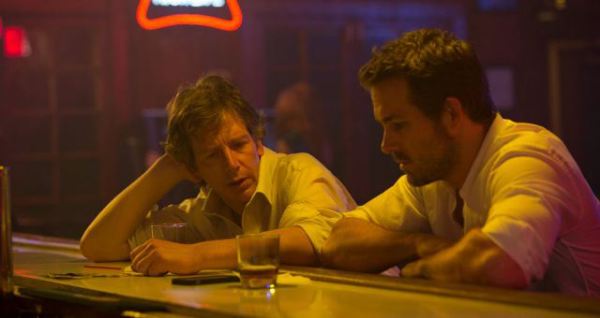
Much as the temptation to stay and try your luck with one more hand, this film has a slow but powerful draw. I’d recommend it for a quiet Sunday afternoon.
Share this post:

John’s Horror Corner: Pet (2016), a decent so-called psychological thriller about obsession and manipulation.
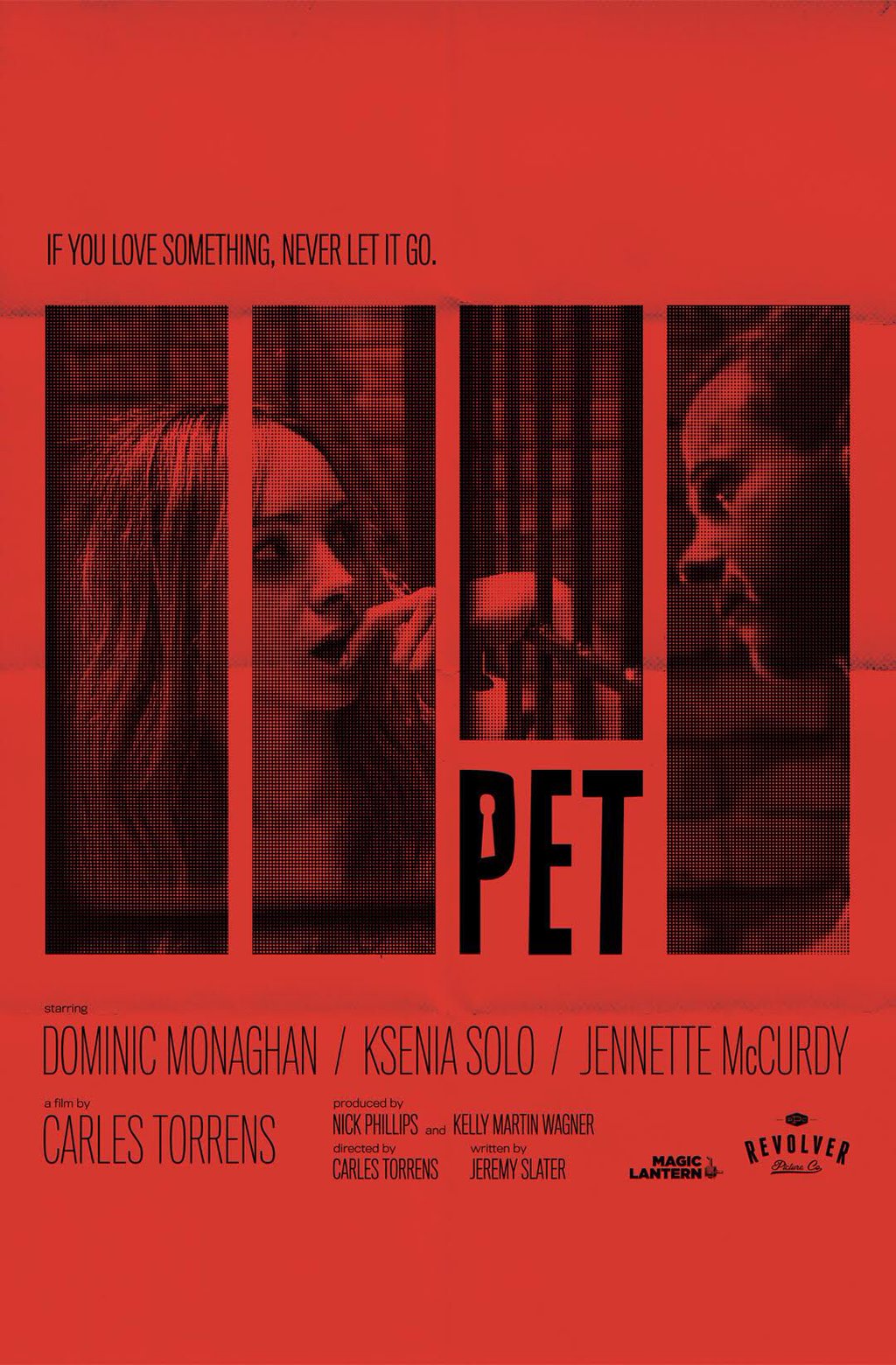
MY CALL: Maybe nothing special, but still worth a watch. This captivity-based psychological horror takes some unexpected and satisfying turns, but won’t wow you with reveals. MORE MOVIES LIKE Pet: The Gift (2015), Swimfan (2002), Dread (2009), Hunger (2009).
Rigidly awkward yet seemingly well-mannered and kind-hearted, Seth (Dominic Monaghan; Lost, The Day) works at an animal shelter and enjoys the dogs’ company as if they were his only taste of friendship. He happens upon Holly (Ksenia Solo; Black Swan, Lost Girl, Orphan Black), an old high school crush of his, and shines an interest which goes completed unreciprocated.
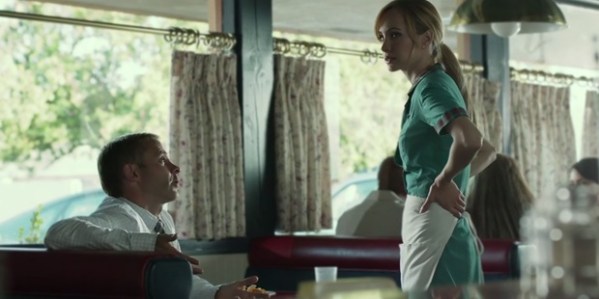
Unfortunately for Holly, Seth is one to fixate. It’s a bit endearing at first as he rehearses asking her out on a date in front of the mirror, but more than a bit troubling when he studies her social media as if her affection were a test he could pass. Seth becomes a bit obsessive, things get weird…you know how it goes.
What caught my attention was the very credible obsession that overcame Seth, who remained completely unable to understand how the object of his interest didn’t share his feelings. I’ve seen it. I feel, at some point, we all probably saw this happen to (or with) someone we knew.
As if Seth prayed to the Gods of Cliché Horror Convenience, the animal shelter has an abandoned wing with a cellar. A little anesthesia and some online welding tutorials and presto—Seth has himself a caged pet he can visit during his lunch break. He keeps Holly captive and systematically starves and conditions her to psychologically breaking her. Here’s the thing…Seth may not be the only sick person in this relationship. As the story progresses, the lines get a little blurred as to who is manipulating whom, who is using whom, who is torturing whom.
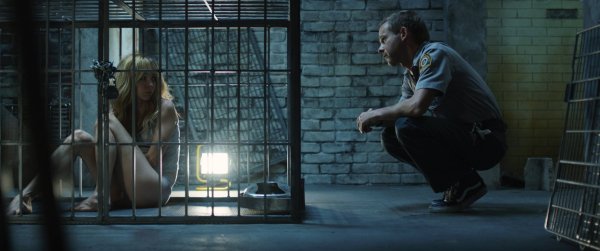
As director Carles Torrens (Apartment 143) guides us on our journey in this psychological thriller we find some brutal and gory scenes, some plot turns I wouldn’t have expected, and a lot of manipulation.
This film may not be anything special but it highly succeeded at entertaining me. It started a bit slow and plainly formulaic, but developed into something worthy of my time—even if I’ll never see it again since it’s more “neat” than “good.” I also enjoyed the ending—far from perfect, but endings are where most horror movies fall apart anyway, right? So let’s give credit where it’s due.

Share this post:

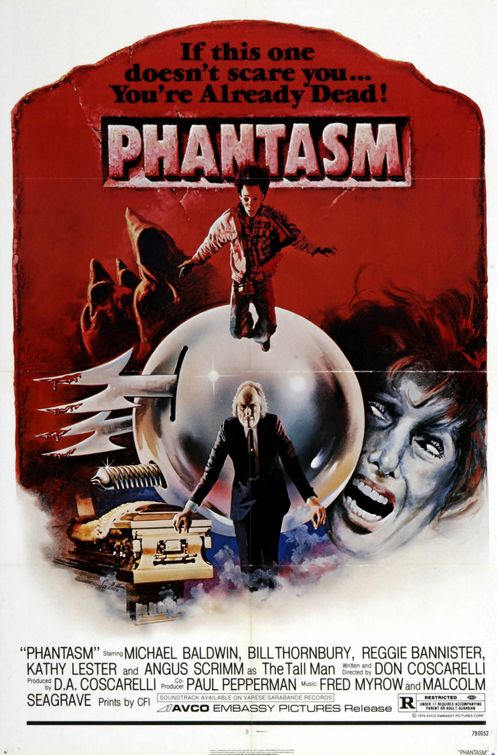
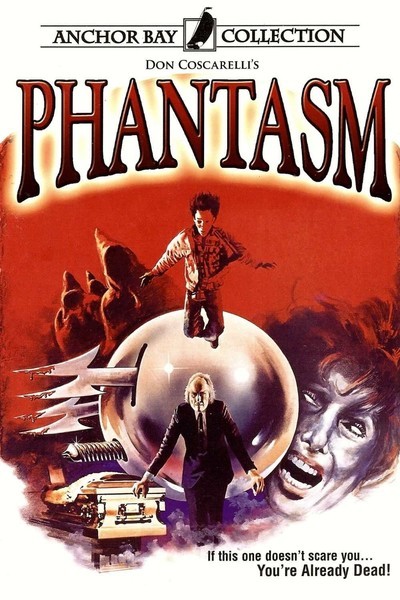
MY CALL: Complete, awesome absurdity is what we have here in this highly ambitious horror classic. Here’s my take on the plot: a supernatural funeral director who occasionally seduces men (in the form of a young woman) employs bladed flying murder balls to kill people who interfere with his mission to create undead midgets whom he outsources as slave labor on an ultra-high gravity planet. I shouldn’t need to explain who will like this film. You know who you are. MORE MOVIES LIKE Phantasm: There is little out there that compares to this film, so I’ll just suggest Phantasm II (1988) and perhaps the subsequent sequels up to part 5.
Writer/director Don Coscarelli (The Beastmaster, Bubba Ho-Tep) sets an admirably uneasy mood. We are thrown off guard right away with a smorgasbord of weird; dead calm shots of the mausoleum are striking and dire while beautiful and well-lit, but the marble chamber and the nearby funeral parlor are populated by diminutive evil beings (they look like Jawas) disturbing our sense of calm.

Pallbearers at his brother’s funeral, Jody (Bill Thornbury; Phantasm 2-5) and ice cream man Reggie (Reggie Bannister; Phantasm 2-5, Wishmaster) rekindle an old friendship while Jody stays in town taking care of now-orphaned teenager Michael (A. Michael Baldwin; Phantasm 2-5).
Perhaps for witnessing something he shouldn’t have seen, Michael finds himself followed by the skulking evil midgets that inhabit the funeral home and cemetery. These malevolent sprites lead Jody and Reggie to greater other-worldly threats. This threat and the Tall Man’s motives go largely unexplained. He’s simply the tall, evil old man who runs the Morningside Funeral Parlor.
The Tall Man (Angus Scrimm; Phantasm 2-5, Subspecies, Wishmaster) is sufficiently gruff, supernaturally strong, and shapeshifts into a lady dressed in lavender (Kathy Lester; Phantasm III, Phantasm: Ravager) to seduce men or serve as disguise. While we never witness them interact directly, it is implied that the evil dwarves work with him.
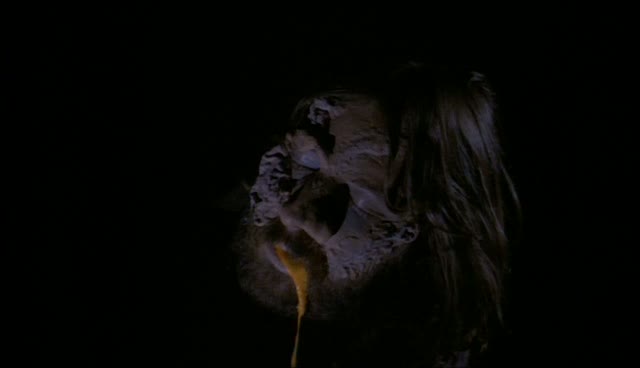
You can’t discuss Phantasm without mentioning the balls. The effects were great, with the murderous chrome spheres flying throw the air (excellent and seamless rotoscoping, by the way), unsheathing blades, impaling victims, and drilling into their heads! The gore is sufficient as blood gushes in bright red and mustard yellow. More silly than scary and an example of a cheap effect, a severed finger transforms into a furry monster beetle (for apparently no real reason at all).
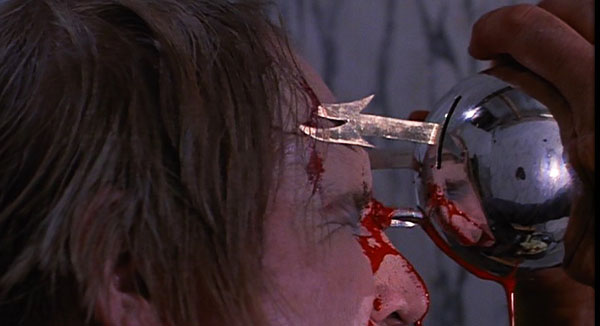
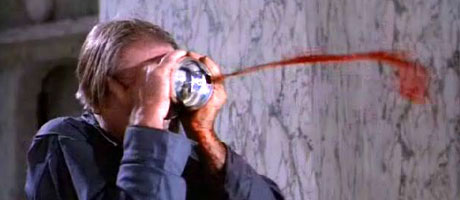
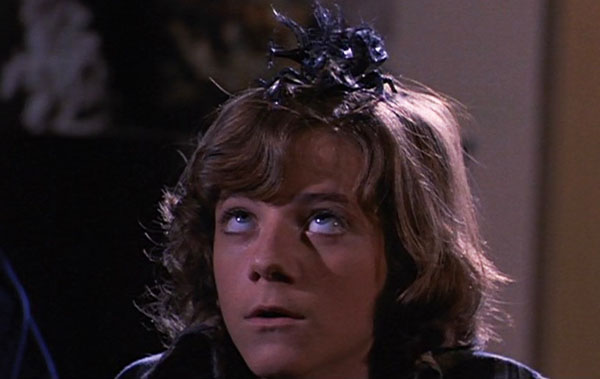
If this all sounds weird, please understand we’re just getting started. Apparently, the Tall Man is transforming dead people into his growling hooded dwarf servants and there is a portal to another dimension, to which he apparently outsources this labor force…to do…something. Don’t expect any explanations.
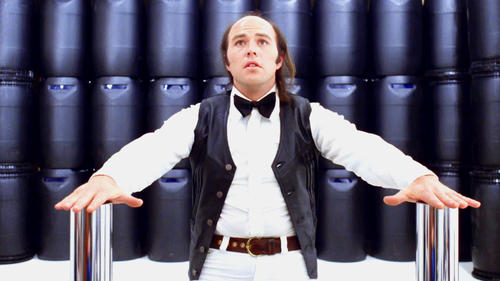

These somewhat sci-fi concepts are introducing us to a greater theme that is only partially realized in this film. As if world-building, Coscarelli is setting the stage for something of grander scale by letting us know that these things exist, without getting into the why’s. At one point Michael visits a creepy fortune-teller and her telepathically linked granddaughter who subject him to a Dune-like “fear box” test. But why? Why are there truly supernatural diviners and why do they “prepare” young Michael for his future challenges (i.e., the Tall Man)? Why does the Tall Man turn into a young woman, why always in a lavender dress, and why not someone else?
SIDEBAR with SPOILERS: There’s a lot going on here. The Tall Man is reanimating human corpses as evil compact dwarves so that their now denser bodies can handle the greater gravity of another planet, in which the dwarves serve as slaves. We don’t know why, or to do what, or exactly where or for whom. This is all somehow revealed to Michael (through a telepathic link perhaps) when he momentarily passes the portal and witnesses the harsh world on the other side. Is it Hell, or another planet in a nearby solar system? Are there other portals? Is the Tall Man the head bad guy, or the equivalent of a Vegas pit boss or regional salesman/recruiter? Who knows? After watching this, we sure don’t! As far as ambitious stories go, Phantasm is like the horror Avatar (2009) of the 1970s. Unfortunately, only so much can be revealed with 88 minutes and a humble budget.
In the end, Reggie is consoling Michael that all of this (i.e., the entire movie’s events) was a bad dream, that Jody died in a car accident and that he would take care of him. Then it ends much as A Nightmare on Elm Street (1984) subsequently would, with the Tall Man inexplicably and randomly getting his due. “Booooooooooooy!”
This film felt scary when I saw it 20 years ago, but unlike The Texas Chainsaw Massacre (1974) and A Nightmare on Elm Street (1984) the scares definitely didn’t survive the test of time. However, the eerie atmosphere, intriguing original story and special effects continue to impress me. Also, as satisfyingly unusual as this story is, by today’s standards it feels sloppily told and haphazardly stitched together. That said, I remain quite impressed with this original product. This film may not feel organized, but it still has a lot of good to offer the genre and its story stands out even today.
Share this post:

John’s Horror Corner: The Autopsy of Jane Doe (2016), so creepy and worth it just for the outstanding premise.
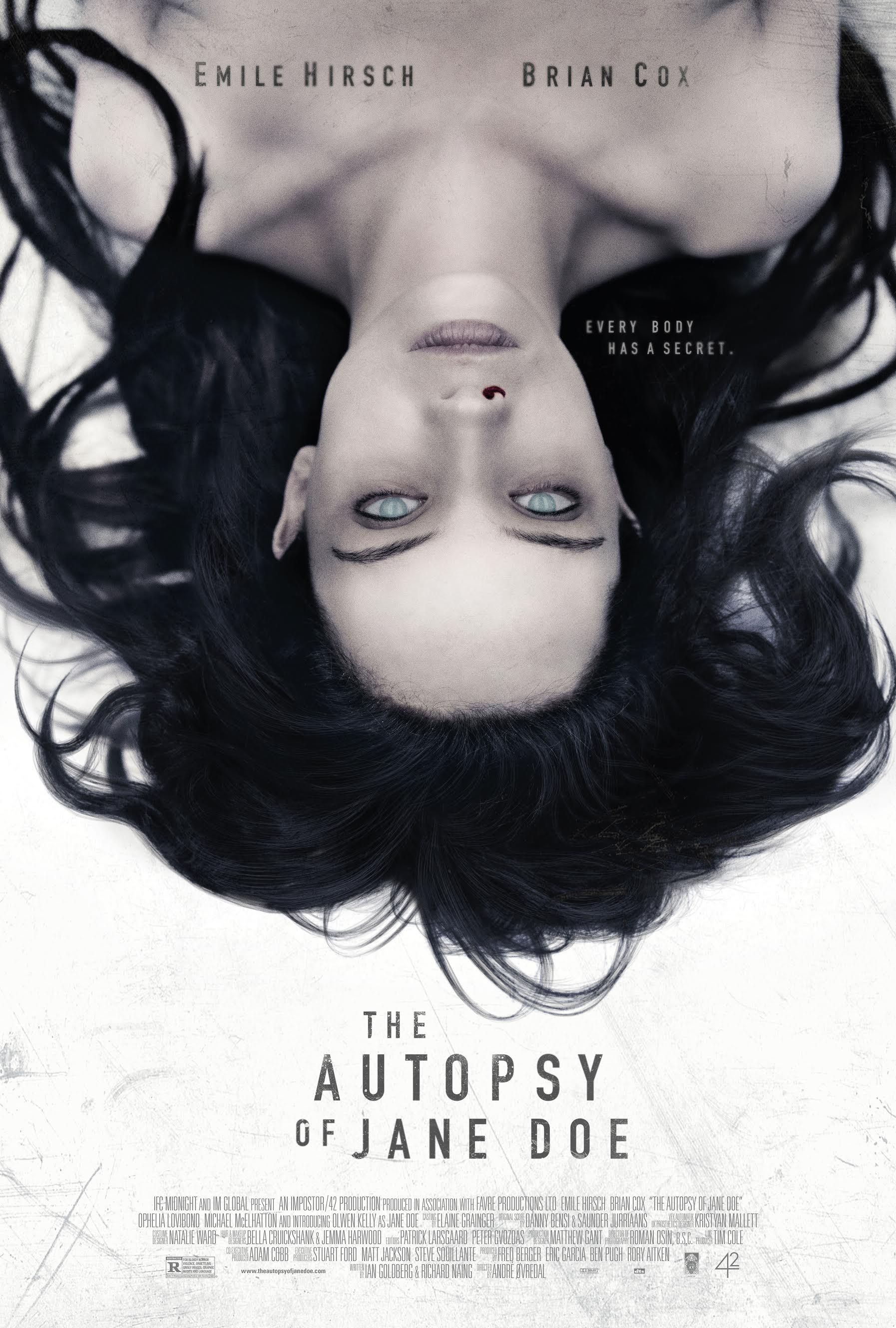
MY CALL: This intellectualized mysterious autopsy film procures an outstanding premise in the first half, followed by a somewhat random second half that doesn’t measure up. Take that for what it is, watch it anyway, and temper your expectations. It’s pretty damn neat. MORE MOVIES LIKE The Autopsy of Jane Doe: After.Life (2009), Unrest (2006), Deadgirl (2008).
After the mysterious body of a dead girl is found half-buried but otherwise unscathed in the basement of a brutally murdered elderly couple, the cadaver is passed to the care of father and son coroners Austin (Emile Hirsch; The Darkest Hour, Into the Wild) and Tommy (Brian Cox; Troy, Trick ‘r Treat, The Ring).
Director André Øvredal (Trollhunter) is a master of atmosphere and characters—and it shows. The opening murder scene is calm yet dire, and we are transitioned to the playfully light-hearted father-son apprenticeship, complete with endearingly quizzical learning experiences cast over a gory burnt corpse. These two are very close and it’s obvious. I love that. They bring a positive and dynamic energy enhanced by the film’s soundtrack.

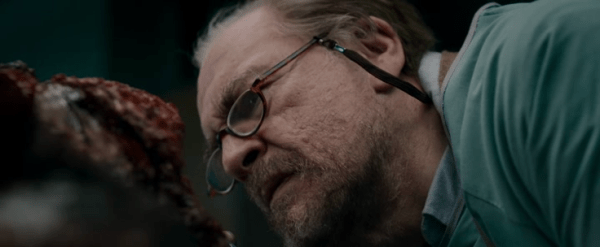
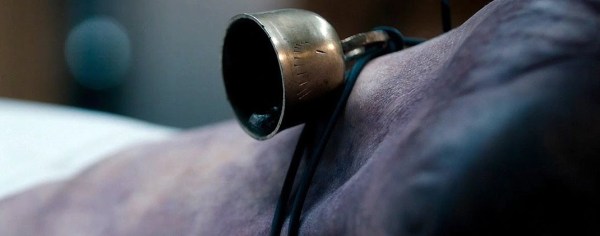
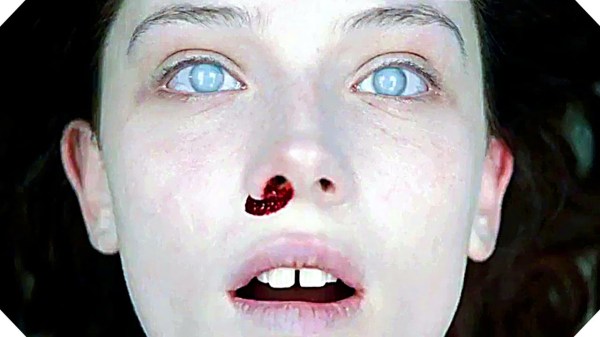
As they begin the autopsy of their Jane Doe (Olwen Catherine Kelly), there are numerous medical anomalies; oddly small waist, curiously cloudy eyes, cold body temp but no rigor mortis, a severed tongue, bleeding… But that’s hardly the beginning. The weirdness continues to be laid on thick as Tommy provides fleetingly thin hypotheses to explain one extremely rare oddity after another—any one of which alone would give a cadaver quite an unusual story to tell. So, what story does Jane Doe’s body have to tell? And why does her seemingly fresh body not externally match what is internally suggested?
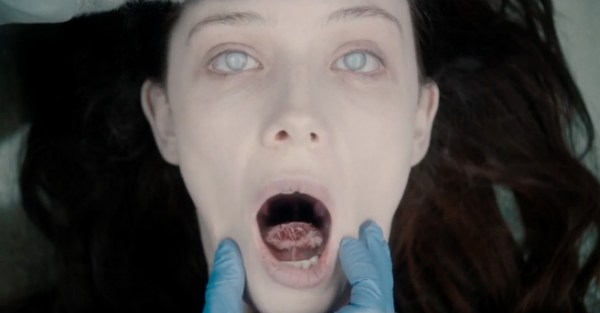
There is a lot of nudity but it is not at all sultry. This is about an autopsy, after all—it’s not like they do these with the body clothed. And not to such extent as, perhaps, a Saw film, but the gore was medically visceral. As strange internal tissue trauma is discovered we have a front row seat to lacerated organs, flaps of tissue, and the crunching sound of cutting through a ribcage. It might make you moderately uncomfortable, but in a good way.
Theories will fire wildly in your head as you watch this. Is she a vampire, a victim of some torture or ritual, a demon or undead thing, a vessel containing a demon…something else entirely? You’ll wonder even more as strange things begin to happen inside the mortuary. They are not subtle, and rouse unease.
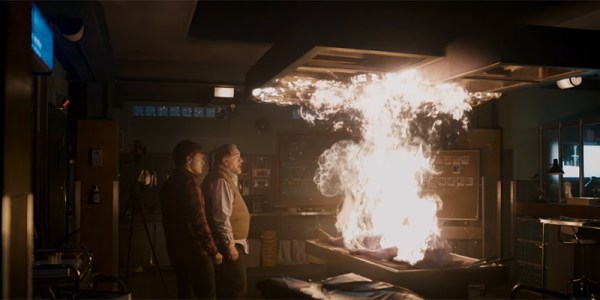
When in doubt: burn it.
I was very entertained by this film and found the first 30-40 minutes to be absolutely outstanding. However, I cannot say the same for the ensuing hour, which felt like a very different and completely inferior film. Our once thoughtful and rational characters, all of a sudden, lost their intellect and wisdom and don’t even bat an eye at the most alarming things; they were basically written like dummies for the last 40 minutes. Not scared people who, thus, stopped thinking straight—but dummies. I’m not really sure what happened. Don’t get me wrong, I didn’t hate the second half…but if you told me that an entirely different (and far less capable) director and writer did the second half of the film, I’d completely believe it. It’s like the first 30-40 minutes was written as an exquisitely mysterious short story with a cliff hanger…and then it was forced into a feature length script that had to build another 60 pages to try and explain everything.
But for the fantastic novelty and mystery of the first half, I remain overall quite pleased and still highly recommend this. Just temper your expectations accordingly.


 Movies, Films & Flix