John’s Horror Corner: Biohazard (1985), a goofy schlocky B-movie Alien (1979) rip-off about a busty psychic and a crab-clawed monster.
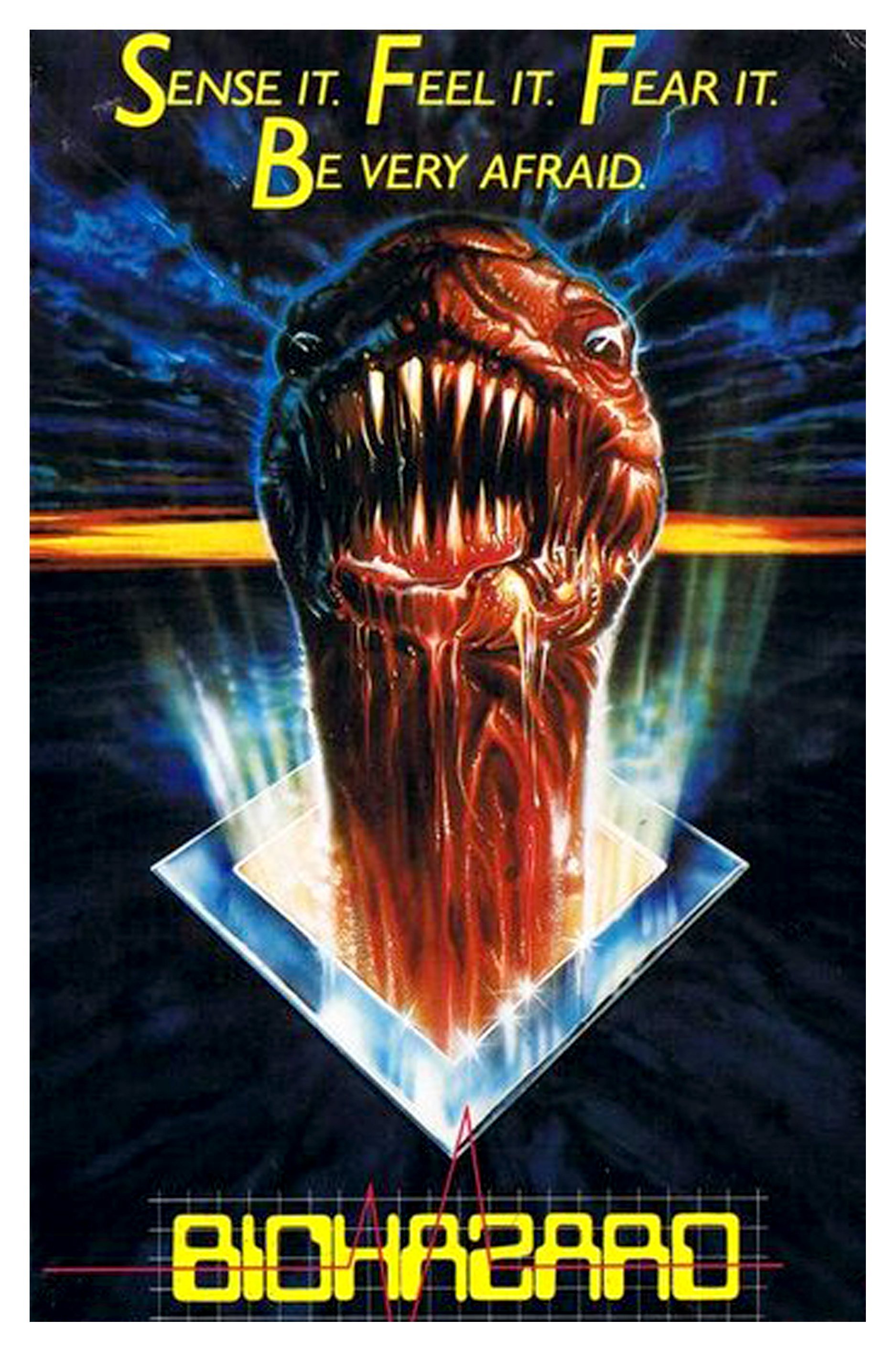 MY CALL: Among the lesser Alien (1979) rip-offs in the 80s marketplace, but not undeserving of your schlocky B-movie-loving attention. MOVIES LIKE Biohazard: For more low budget Alien (1979) rip-offs, check out Contamination (1980; aka Alien Contamination), Alien 2: On Earth (1980), Scared to Death (1980; aka Syngenor), Galaxy of Terror (1981), Forbidden World (1982; aka Mutant), Inseminoid (1982; aka Horror Planet), Parasite (1982), Creature (1985; aka Titan Find), Star Crystal (1986), Creepazoids (1987), Blue Monkey (1987), Nightflyers (1987), Deep Space (1988), Transformations (1988; aka Alien Transformations), The Terror Within (1989), Shocking Dark (1989; aka Terminator 2, aka Aliennators), The Rift (1990), Syngenor (1990), Xtro 2: The Second Encounter (1991), Dark Universe (1993) and Zombies: The Beginning (2007).
Written (in part) and directed by Fred Olen Ray (The Alien Dead, Scalps, Deep Space), this Sci-Horror opens in very familiar territory with a guy in a biohazard suit and a Geiger counter. The writing is pretty basic (yet not exactly horrible, although the acting comes close), but the content is actually suggestive of some care and effort. When we meet Lisa, a particularly busty psychic (Angelique Pettyjohn) whose skills are tested at some secret underground government facility, generals and scientists and politicians brainstorm as to how her cosmic powers might benefit the military.
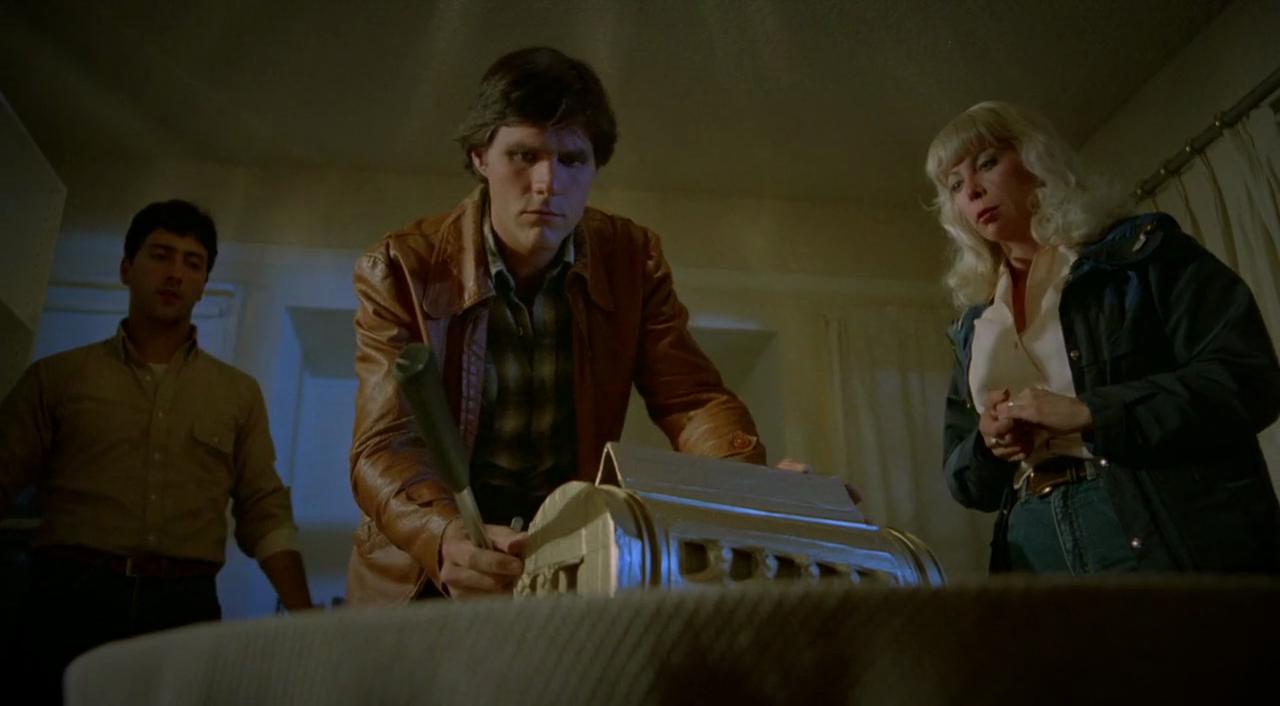
After conducting a psychic experiment, an interstellar container is summoned and transported to yet another special government facility… probably just to create the opportunity for something to go wrong in transit. And wrong it goes when an alien monster with crab claws maims one of the soldiers and escapes! So, Carter (William Fair; Deep Space) and Lisa team up to track the creature.

The latex wound effects and dead bodies are satisfyingly gory. But the rubber monster suit leaves much to be desired. When we see an on-screen death scene, it’s laughably disappointing in that hokey 1960s style of “aaaargh I’m the monster and I just grabbed you so clearly you’re dying now.” Oh well, at least we see a lot of boobs to make up for it. However, this movie isn’t the smutty film the poster suggests. The nudity may be as gratuitous as nudity gets. But still, to be fair, this is not smut.

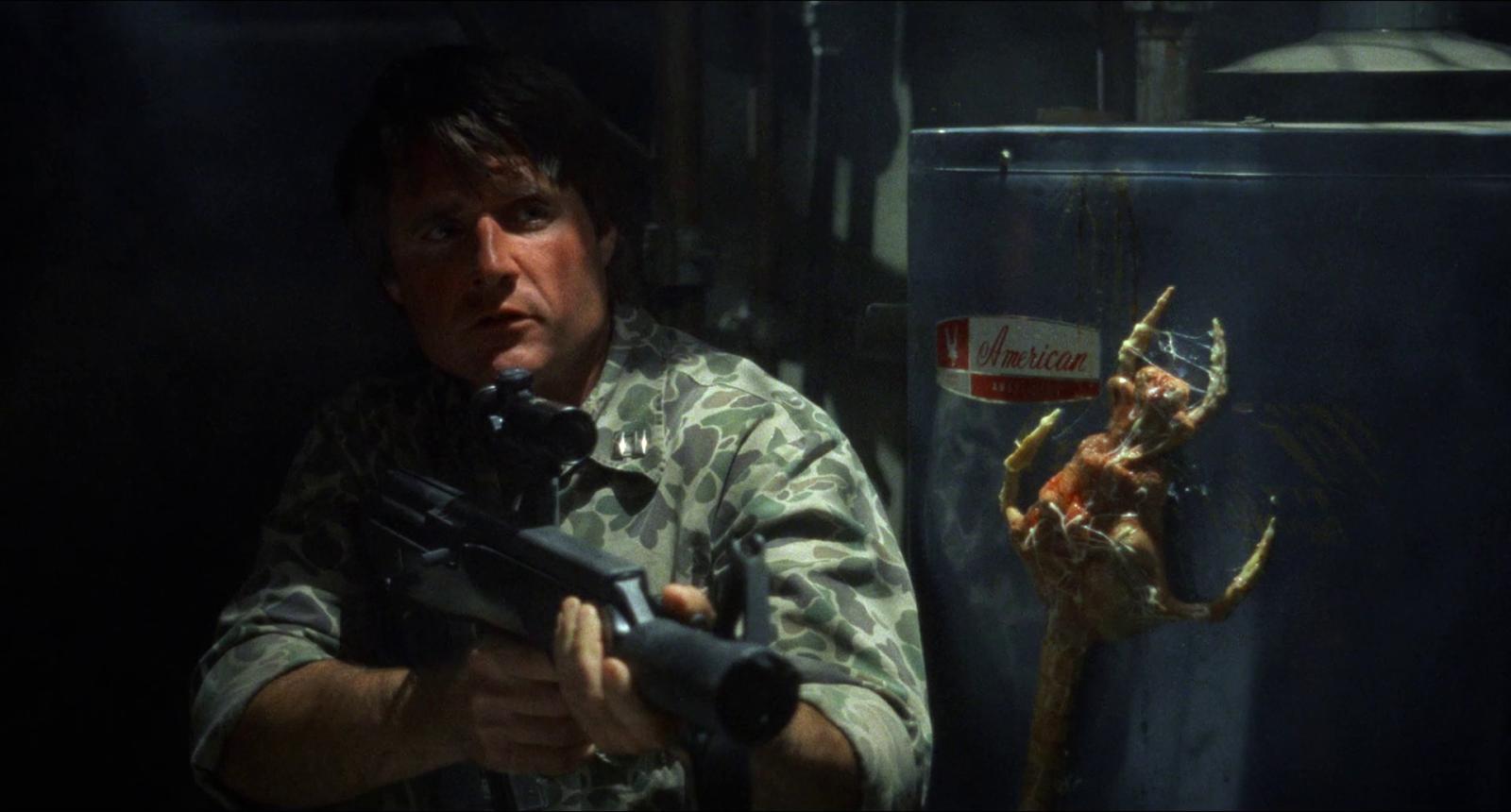
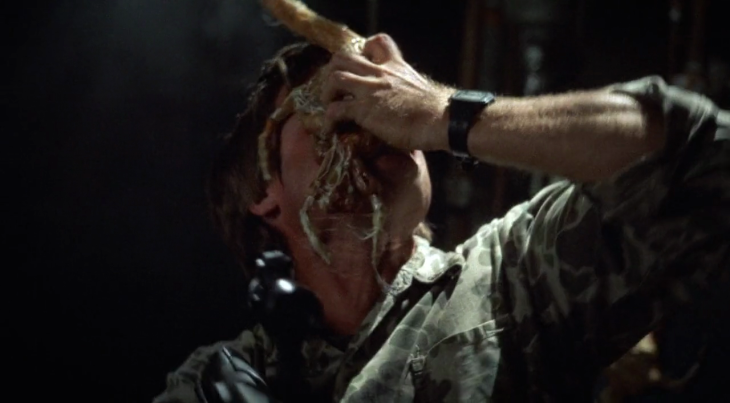
This movie wanders into the deep end of Alien (1979) rip-off territory when our clawed monster slimily drools on a victim from above, a slimy growling chestburster-like critter emerges from a space canister and rips out a guy’s throat, and a facehugger-like creature chokes and blatantly “facehugs” a guy! When Carter kills the clawed “xenomorph” it’s about as anticlimactic as it gets. But fret not, there’s a gory schlocky “booby” extra-cheesy finale complete with boobs and rending latex flesh.
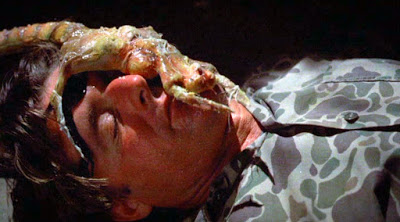
Watch the credits. They’re full of silly outtakes showing how self-aware Fred Olen Ray was of his goofy product. It makes the entire film feel more forgivable and light-hearted. The outtakes even include, you guessed it, more boobs. But even without nudity, this bad film might be the right kind of bad enough to be a good B-movie choice.

Share this post:

The MFF Podcast #182: Friday the 13th: The Final Chapter and Jason Goes to Hell: The Final Friday
You can download or stream the pod on Spotify, Itunes, Stitcher, Tune In, Podbean, or LISTEN TO THE POD ON SPREAKER
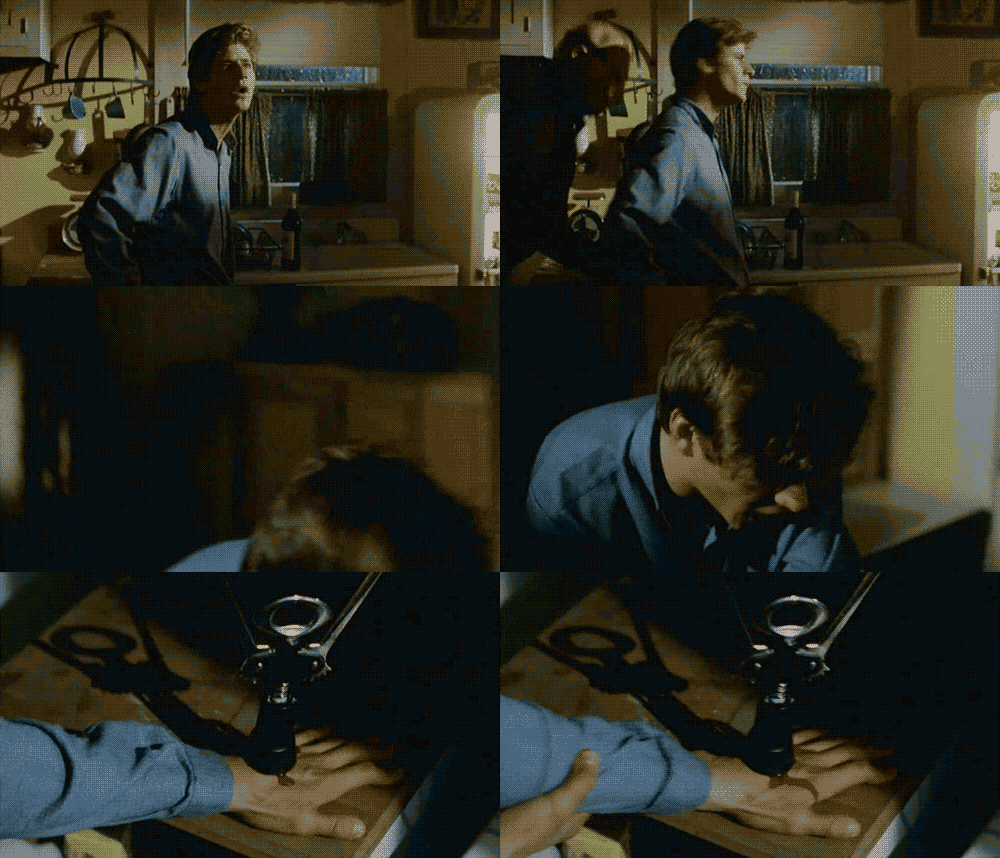
The MFF podcast is back, and this week we’re talking about Friday the 13th: The Final Chapter and Jason Goes to Hell: The Final Friday. We love these movies because they are incredibly weird and feature some of the most random moments of the franchise (Corkscrew!). In this podcast, you will hear us talk about random side characters, inventive dancing, and a guy named Mahoney having to clean up an exploded Jason Voorhees. If you are a fan of the Friday the 13th franchise, you will love this podcast.

Jason is about to meet Freddy Krueger.
If you are a fan of the podcast make sure to send in some random listener questions so we can do our best to not answer them correctly. We thank you for listening and hope you enjoy the pod!
You can download or stream the pod on Spotify, Itunes, Stitcher, Tune In, Podbean, or LISTEN TO THE POD ON SPREAKER
If you get a chance please make sure to review, rate and share. You are awesome!
Share this post:

The MFF Podcast #181: They Live

If you get a chance please make sure to review, rate and share. You are awesome!
The MFF podcast is back, and this week we’re talking about the John Carpenter directed They Live. It’s one of our favorite movies and we loved talking the glasses, bubblegum and epic fights featured in the film. With They Live, John Carpenter delivered a timeless tale of yuppie aliens infiltrating earth and bombarding humans with messages about consumerism. They are stopped when a plaid-clothed man rises up (with his buddy Frank) and goes to war with the yuppie aliens (who would never be caught wearing plaid). If you are a fan of They Live you will love this episode.

Who makes the Hoffman lenses? Are they made of plastic?
If you are a fan of the podcast make sure to send in some random listener questions so we can do our best to not answer them correctly. We thank you for listening and hope you enjoy the pod!
You can download the pod on Itunes, Stitcher, Tune In, Podbean, or Spreaker.
If you get a chance please make sure to review, rate and share. You are awesome!
Share this post:

John’s Horror Corner: The Golem (2018), the intersection of kids in horror, folk horror and Jewish folklore.

MY CALL: Highly recommended as a rental, and perhaps a good purchase for fans of folk horror. Creepy but not jumpy, gory but not gooey, gorgeously and well-concepted. MOVIES LIKE The Golem: For more recent folk horror try Apostle (2018; podcast discussion), The Ritual (2017; podcast discussion), The Witch (2016; podcast discussion), The Village (2004), The Shrine (2010), or Salem (2014-2017).

Assessing this film is a challenge. The trailer struck me as that of a serious film, yet the poster could be something you deliberately never watch called “Apocalypse Child.” Some scenes scream over-the-top potential with mangled bloodied bodies and body parts scattered across a church as a hulking menace grumbles and growls in a dark corner obscured from sight; others are crisp and gorgeous and classy more to the tune of The Village (2004) or The Witch (2016) as we meet Hanna (Hani Furstenberg; American Gods), whose fair skin and bright hair appealingly contrast lovely shots of her drably palleted 1763 Lithuanian village. In general, I find the photography immersive and graceful. The acting, writing and wardrobe are okay—but do no justice to the quality of the shots encapsulating them.
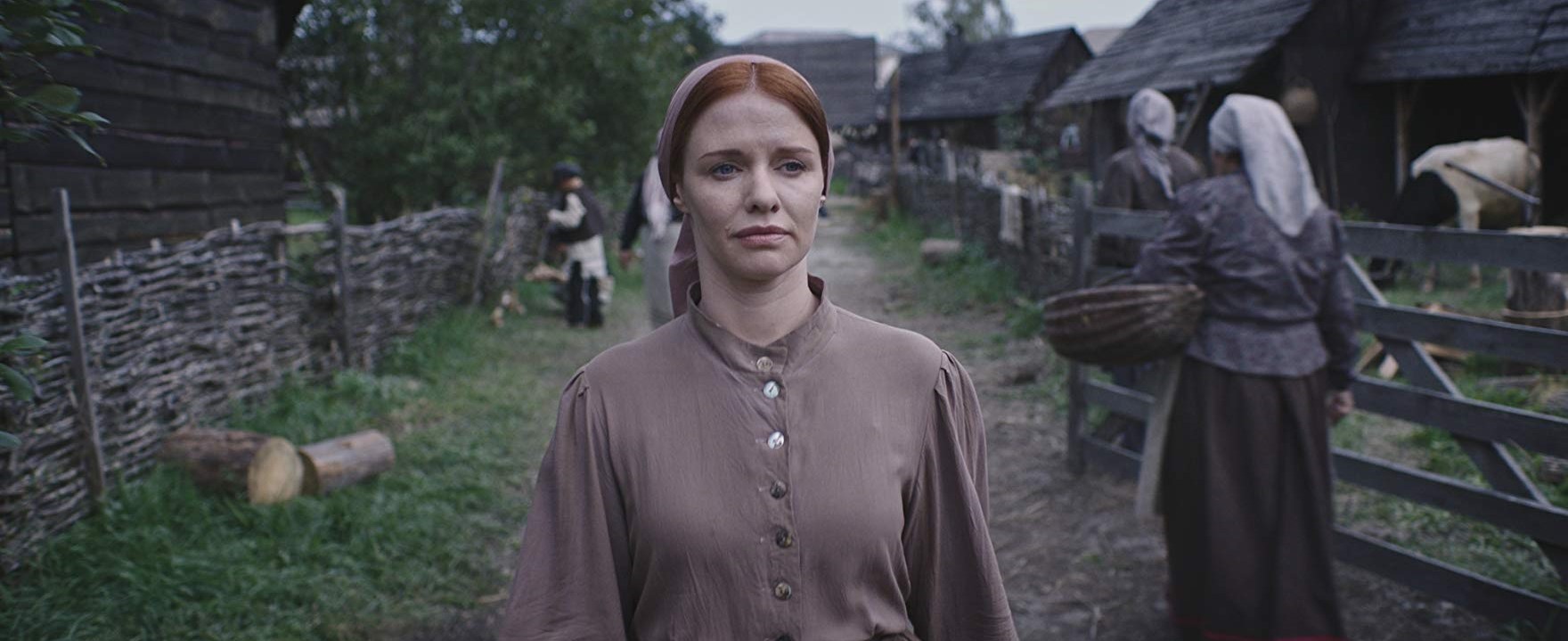
When superstitious gentiles blame Jewish curses for their losses to a deadly plague, Hanna turns to a long-forbidden mystical ritual to create a Golem to protect her village. But Hanna does not understand the dangerous power of the magic she has conjured in the form of a seemingly innocent boy.

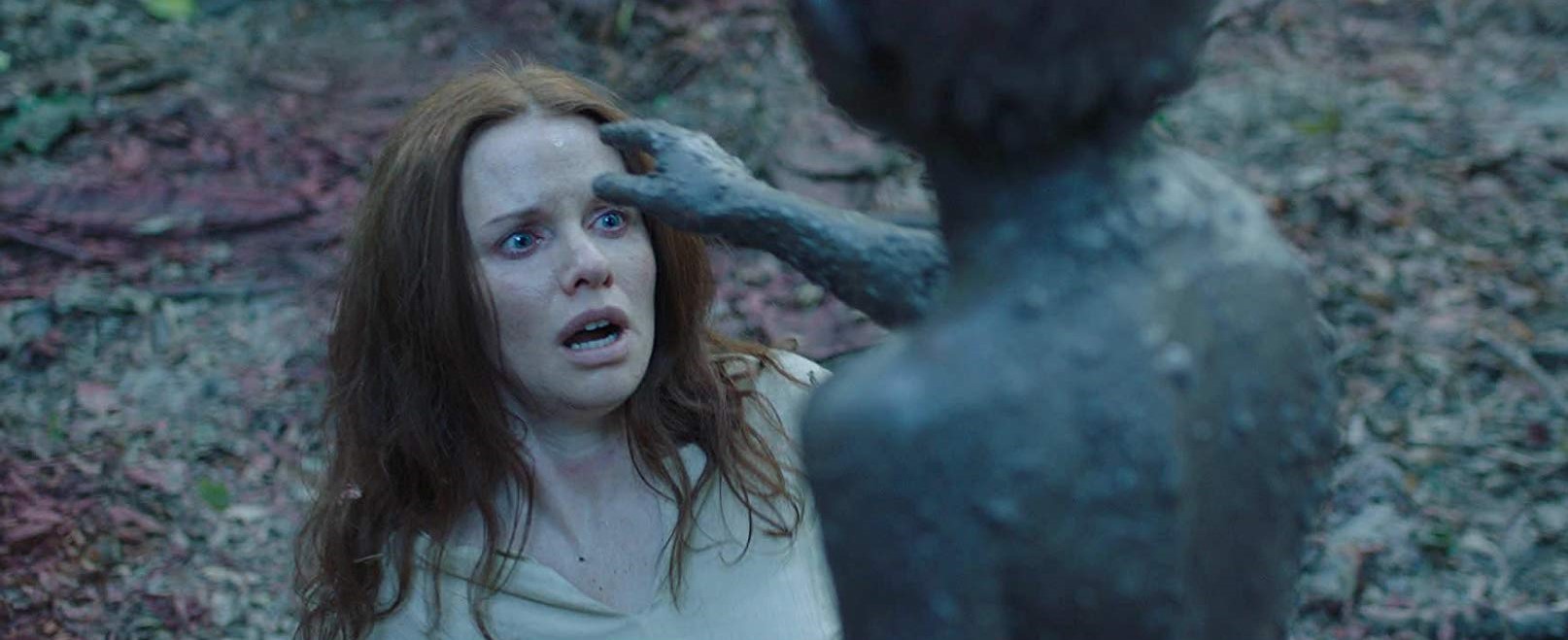
The child has an obvious darkness about him, and his supernatural power is no secret when he feels threatened. This puts this film on the verge of “evil children” horror. We don’t see much on-screen, but this little boy tears people apart leaving brutally severed limbs in his bloody wake. And the gore is satisfying. We don’t see everything I’d like to see, but we still see plenty including some visceral head exploding and heart rips.

Directors Yoav and Doron Paz (Jeruzalem) have great vision behind the camera and excellent ideas. But the writing really stood out as a weakness amid this otherwise gorgeous film. I feel the Paz brothers would benefit from teaming up with other writers. Whereas “kids in horror” pose certain expected tropes, this film doesn’t seem snagged upon them. The concepts exploring Jewish folklore find both the classically monstrous Golem, as well as the “Omen child” for us to realize it is not the large body behind the Golem’s strength, but the dark magic. And giving this power such a familiar face perhaps enables characters to recognize their mistakes in summoning this entity, which seems not to care whom it kills.
Share this post:

Movie Math: Here’s How Long it Took Batman to Set Up The Flaming Bat Symbol on the Bridge in ‘The Dark Knight Rises’
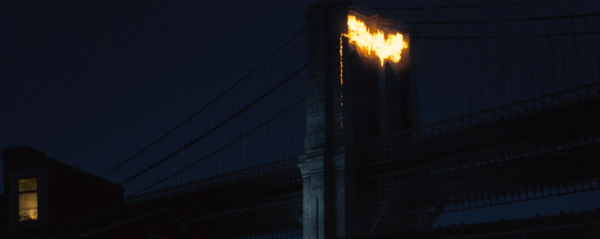
My naive original goal for this piece was to only focus on how long it took Batman to create the bat fire on the bridge in The Dark Knight Rises. I thought it wouldn’t be difficult due to the countless maps of Gotham, and insane amount of nit-picky articles (here is another one) to help me make an educated guess. However, unlike It Follows, which makes sense geographically, Nolan’s Gotham is all over the place, and I learned I’d have to expand my scope to establish a timeline for the bridge fire because of the multiple filming locations (NYC, Chicago, Los Angeles, Pittsburgh, London) and evolution of Gotham (two Wayne enterprises etc..) throughout the Dark Knight trilogy. So, I used Eliot R. Brown’s maps, and the one used in the movie, then, I mostly relied on visual cues based on my repeat viewings of Batman Begins, The Dark Knight and The Dark Knight Rises. These visual cues helped me piece together the timeline for the 12 hours Batman needed to stop Bane’s bomb from destroying Gotham, which in turn, helped me figure out how long it took to create the massive bat signal on the bridge.
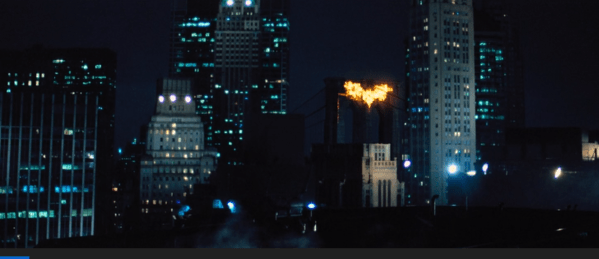
Bane can see the fire from City Hall. City Hall is in Downtown Gotham.
Quicknote: There is no correct answer. As always, I’ve made my best educated guess which is most likely wrong. Also, to answer your questions in advance:
- I know it’s just a movie
- I don’t have THAT much free time
- Yes, Deep Blue Sea is underrated
- No, I’m not Batman
- Yes, If I had the chance I would be Batman
- Yes, I looked at the official map
- Jack Burton by a landslide
- Who?
Here are some assumptions before I get into the timeline:
- The action at the end takes place in the Downtown area of Gotham. Why? Based on the location of the bridges, and proximity to City Hall (which is downtown) I feel safe saying it’s downtown Gotham. This is important because it helps narrow down the action.
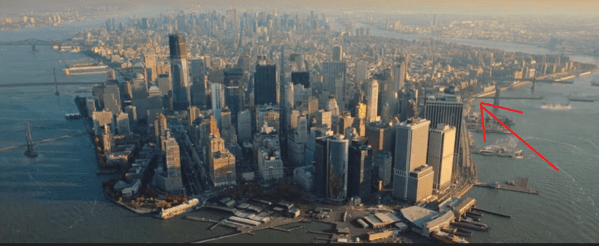
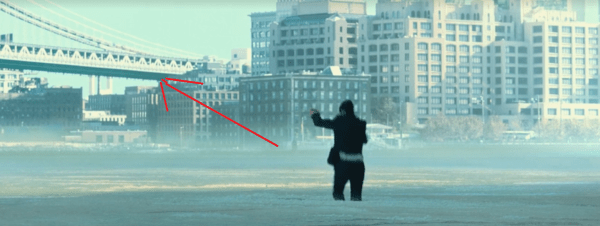
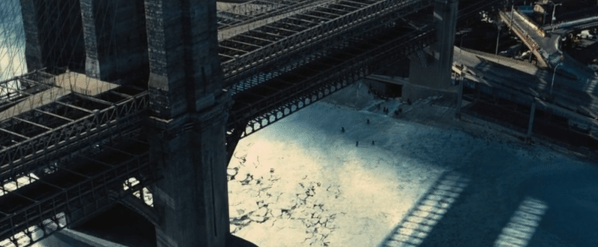
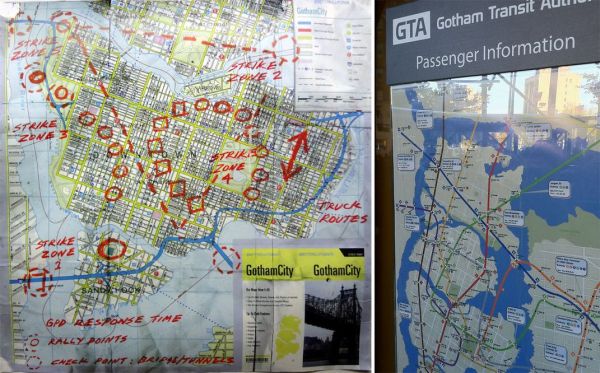
I’m 97.3% certain that I picked the correct bridge. It is the only one with another bridge nearby, and it leads into downtown. Also, the “strikezone” map infers that everything takes place downtown as well.
- There are only 8 hours of actual night during winter in Gotham. Why? Due to the 12-hour ticking clock, I learned the events started unfolding around 7:00 PM.
- The 12 hour ticking clock is exact. I trust Fox, and there is a handy countdown clock which helps out later on.
- The random daylight patterns prove the fictional Gotham has some weird things going on. This helps explain why darkness happens so quickly in The Dark Knight and The Dark Knight Rises.
- I don’t think Batman used gasoline to create the bat fire. He most likely used a special flammable “yada yada yada” substance developed by Lucius Fox.
- The locations that the characters walk to aren’t far apart. If they were, the amount of walking would be insane.
7:00 PM – Wayne arrives at city hall – Downtown – (AKA Bane’s headquarters) – Bruce Wayne and Selina Kyle meet up with Lucius Fox and Miranda Tate around 7:00PM. We learn the bomb will be going off in exactly 12 hours. How do I know it’s Bane’s HQ? Later on at the bridge, Gordon says “Bane is holed up at city hall.” So, I’m assuming this is where they’re having the kangaroo court as well. It also makes sense that it is close to the water because they walk the unlucky exiled folks to their icy death from city hall.

Unlucky Gotham citizens are walked up the stairs and into Scarecrow’s court.
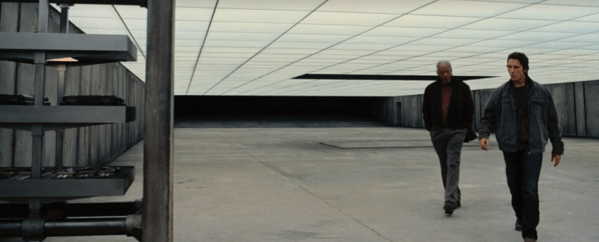
8:15 PM – Wayne arrives at the underground bunker located at the Gotham docks (introduced in Dark Knight) – Wayne grabs his batsuit and gear needed to battle Bane. I’m thinking it took 45 minutes because of the location to the docks. It took them longer than usual, because they are wanted men, and they had to sneak around the city instead of brazenly walking around Gotham.
.
9:30 PM – Wayne arrives at the top of a random building in downtown Gotham (STILL NOT DARK) – It probably took 30 minutes to bag all the gear and bat suit. I feel safe saying The Bat location is close to the docks (it’s somewhat near the water). Also, it is walking distance to the tunnels which Bane inhabited under the downtown area. I’d love to see their journey to the top of the building (also the water in the background isn’t frozen, Gotham is a weird place).
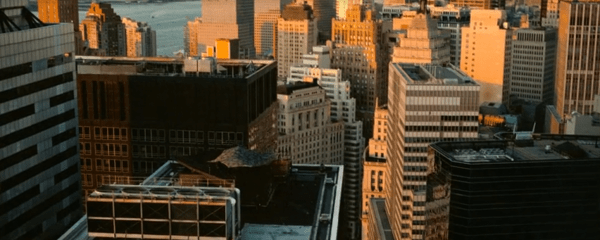
I’ve read online that this is Wayne Enterprises. The buildings don’t match. So I’m thinking it’s another building. The picture below proves it isn’t Wayne Enterprises.
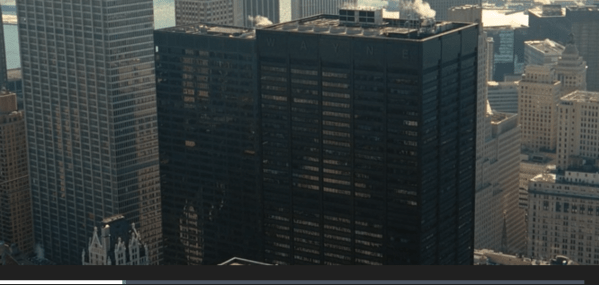
This is Wayne Enterprises.
.
10:30 PM – Wayne takes The Bat to the bridge – Wayne and Fox are in no hurry (despite Gordon being found guilty hours earlier) while they are at The Bat, Fox grabs the gear for the micro-burst while Wayne says “there is no autopilot.” I’m guessing Fox goes immediately back to the docks, while Wayne waits for dark, gets into his suit and parks near the tunnel where the cops are trapped. He hides The Bat, this makes sense because Bane’s soldiers walk by and don’t see it.
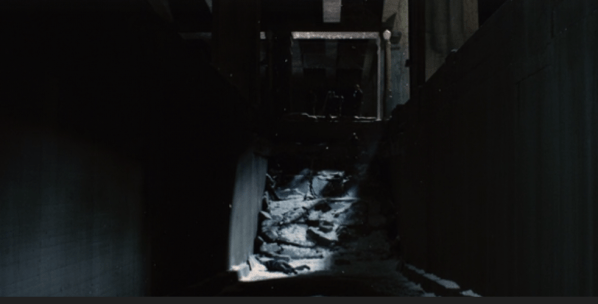
He parked The Bat close to this bridge. It’s wild that Bane’s henchmen didn’t see it.
11:00 PM – Wayne Scouts the Bridge, and Gets to Work on the Bat Signal – Before working on the bat fire, he had to make sure there were no guards around. I’m thinking Wayne also set up a camera so he’d know if Gordon was being brought to the ice while he was working on the bridge. This may sound crazy, but I’m 100% certain he set up some kind of automated weapon that expertly darts the henchmen (you’ll understand later). Then, he uses his incredibly accurate grappling hooks (think catching The Joker during his fall in The Dark Knight) to pull himself up to the top of the bridge. He doesn’t use gasoline because there is no spillover, and the liquid does not spill down the bridge. I’m thinking he uses multiple cans of some kind of flammable spray to cover the 85-feet (Width of the bridge). This makes the job difficult because he has to cover every inch of the symbol with the spray. Also, since it’s so cold, he most likely has to go heavy with the flammable substance. Then, he has to spray a perfectly straight line down the bridge and onto the ice below.
The bat isn’t perfect, but it’s not bad at all.
3:00 AM – Waits for Gordon to be brought out onto the ice, knocks out the bad guys, and has Gordon light the bat fire – It’s worth noting that the villains waited over 10 hours to bring Gordon and crew out to the ice. Did they get a final meal? What I love the most about this scene is how Wayne placed a flair in a perfect spot on the ice for Gordon to see. The biggest question mark for me during the research is how Wayne was able to knock out the henchmen from behind, then, magically appear in front of Gordon seconds later. That is why I think he set up the automated dart machine. It’s a controversial opinion but I don’t see another option.
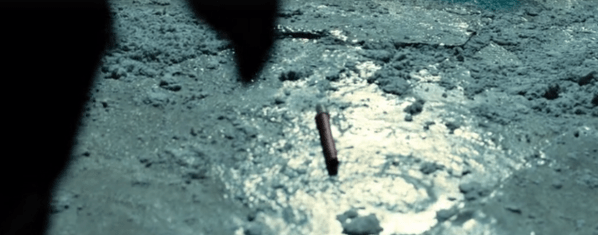
After saving Gordon, Wayne explains the plan and gives him the piece of machinery that Fox pulled from The Bat.
.
4:30 AM – Wayne saves Blake at the nearby bridge – In another weird occurrence, we learn the armed guards have been interrogating Blake for several hours. I believe Wayne had no clue that Blake would be there, and luckily appeared just before Blake was shot. Wayne knocks out the guards, then blows a hole in the blockage with The Bat. He waits until all the cops come out of the tunnel, which would take at least 25 minutes because there are several thousand of them. After they are all out of the tunnel, he informs them of the plan, and gets them going towards battle.

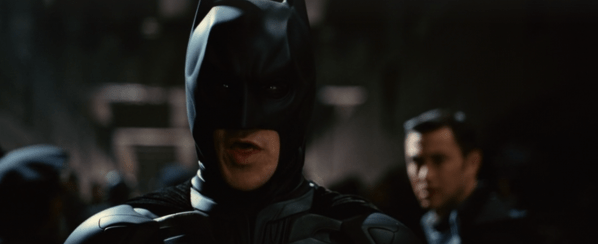
He is about to make a great speech to these cops.
6:15 AM – Wayne arrives at the cargo container holding the Bat Pod.
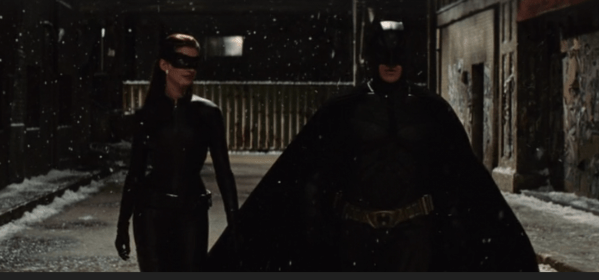
After all the cops head towards city hall, Batman moves The Bat to a location closer to the battle. After hiding The Bat, he meets up with Kyle and they walk towards the docks again towards a storage container. While he gets her setup with the Bat pod, Wayne conveniently says “there are 45 minutes left,” to Kyle.
.
7:00AM – Kablooey.

.
There you have it! Batman needed around three hours to prepare the bat symbol on the bridge. I know the answer isn’t exact, but, due to the timeline and width of the bridge, I’m thinking the number is correct.
If you like this data make sure to check out my other stuff!
- Jet Ski Action Scenes Are the Worst
- Analyzing the Unsuccessful Trap in Predators
- How Far Did the Shark Travel in Jaws: The Revenge?
- How Many Calories Did Shaggy and Scooby Ingest When They Are The Cotton Candy Glob?
- The Dolph Lundgren Front Kick Spectacular
- How Far Did the Creature From It Follows Travel?
- How Many Bullets Missed John Matrix in Commando?
- Kevin Bacon’s College Degrees
- How Fast Does the Great White Swim in Shark Night?
- Zara the Assistant and Jurassic World Had a Bad Day
- A Look at Elektra’s sandbag trainer in Daredevil
- How Far Did Nic Cage Run While Dressed as a Bear In The Wicker Man Remake?
- Breaking Down The Mariner vs. Sea Beast Battle in Waterworld
- How Long Did it Take The Joker to Setup the Weapon Circle in Suicide Squad?
- Michael Myers Hates Blinkers
- How Much Blood Dropped During the Blood Rave in Blade?
- Jason Voorhees Can’t Teleport?
- Michael Myers Loves Laundry
- How Far Did the Merman Travel in The Cabin in the Woods?
- How Far Did Matthew McConaughey Jump in Reign of Fire?
- How Fast can Leatherface Run?
- Deep Blue Sea and Stellan Skarsgard
- How Far Did Michael Myers Drive in Halloween H20: 20 Years Later
- How Did the Geologist Get Lost in Prometheus?
- People Love a Bearded Kurt Russell
- A Closer Look at Movies That Feature the Words Great, Good, Best, Perfect and Fantastic
- An In-Depth Look At Movies That Feature Pencils Used as Weapons
- Cinematic Foghat Data
- Explosions and Movie Posters
- The Fast & Furious & Corona
- Nicolas Sparks Movie Posters Are Weird
- How Do You Make the Perfect Kevin Smith Movie?
- Predicting the RT score of Baywatch
- The Cinematic Dumb Data Podcast
- What is the best horror movie franchise?
- How Fast Can the Fisherman Clean a Trunk in I Know What You Did Last Summer?
- It’s Expensive to Feature Characters Being Eaten Alive and Surviving Without a Scratch
- How Long Does it Take Your Favorite Horror Movie Characters to Travel From NYC to San Francisco?
- What was the Guy’s Blood Pressure in Dawn of the Dead?
- Why Were There So Many Lemons in National Treasure?
- How Far Does The Rock Jump in the Skyscraper Poster?
Share this post:

The MFF Podcast #180: Idle Hands

You can download or stream the pod on Spotify, Itunes, Stitcher, Tune In, Podbean, or LISTEN TO THE POD ON BLOG TALK RADIO.
The MFF podcast is back, and this week we’re talking about the 1999 horror comedy Idle Hands. We hadn’t watched this movie since 1999, so it was fun to see it again and realize we liked it much more when we were teenagers. In this podcast, you will hear us talk about the fantastic special effects, severed limbs and soundtrack that blasted our favorite 1990s songs (Offspring!). If you are a fan of Idle Hands, you will love this podcast.
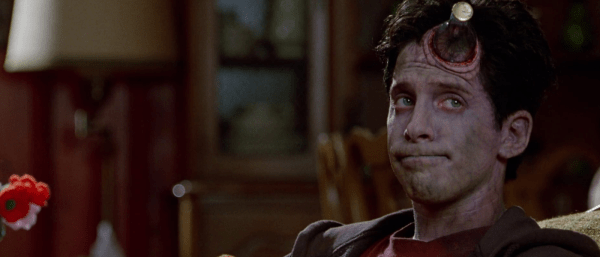
The special effects makeup is legit.
If you are a fan of the podcast make sure to send in some random listener questions so we can do our best to not answer them correctly. We thank you for listening and hope you enjoy the pod!
You can download or stream the pod on Spotify, Itunes, Stitcher, Tune In, Podbean, or LISTEN TO THE POD ON BLOG TALK RADIO.
If you get a chance please make sure to review, rate and share. You are awesome!
Share this post:

John’s Horror Corner: It’s Alive II: It Lives Again (1978), the dawn of the mutant monster baby epidemic.
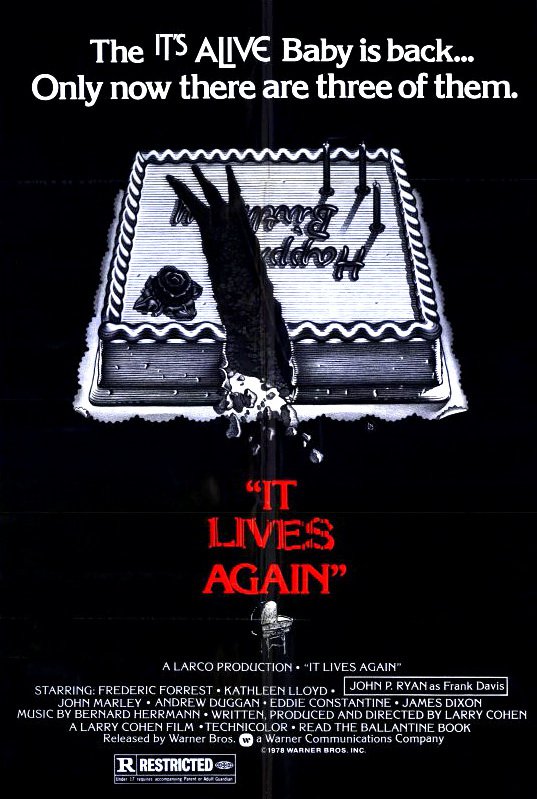
MY CALL: Entertaining and there’s certainly effort behind it, but lacking the emotional impact and powerful allegory of It’s Alive (1974). MOVIES LIKE It’s Alive: We assume you’ve already It’s Alive (1974). So for more pregnancy/baby horror, try Rosemary’s Baby (1968), The Unborn (1991), The Unborn II (1994), Grace (2009), The Night Feeder (1988), It’s Alive III: Island of the Alive (1987), the remake of It’s Alive (2009), Inside (2016), Inside (2007), Still/Born (2017) and Good Manners (2017; As Boas Maneiras).
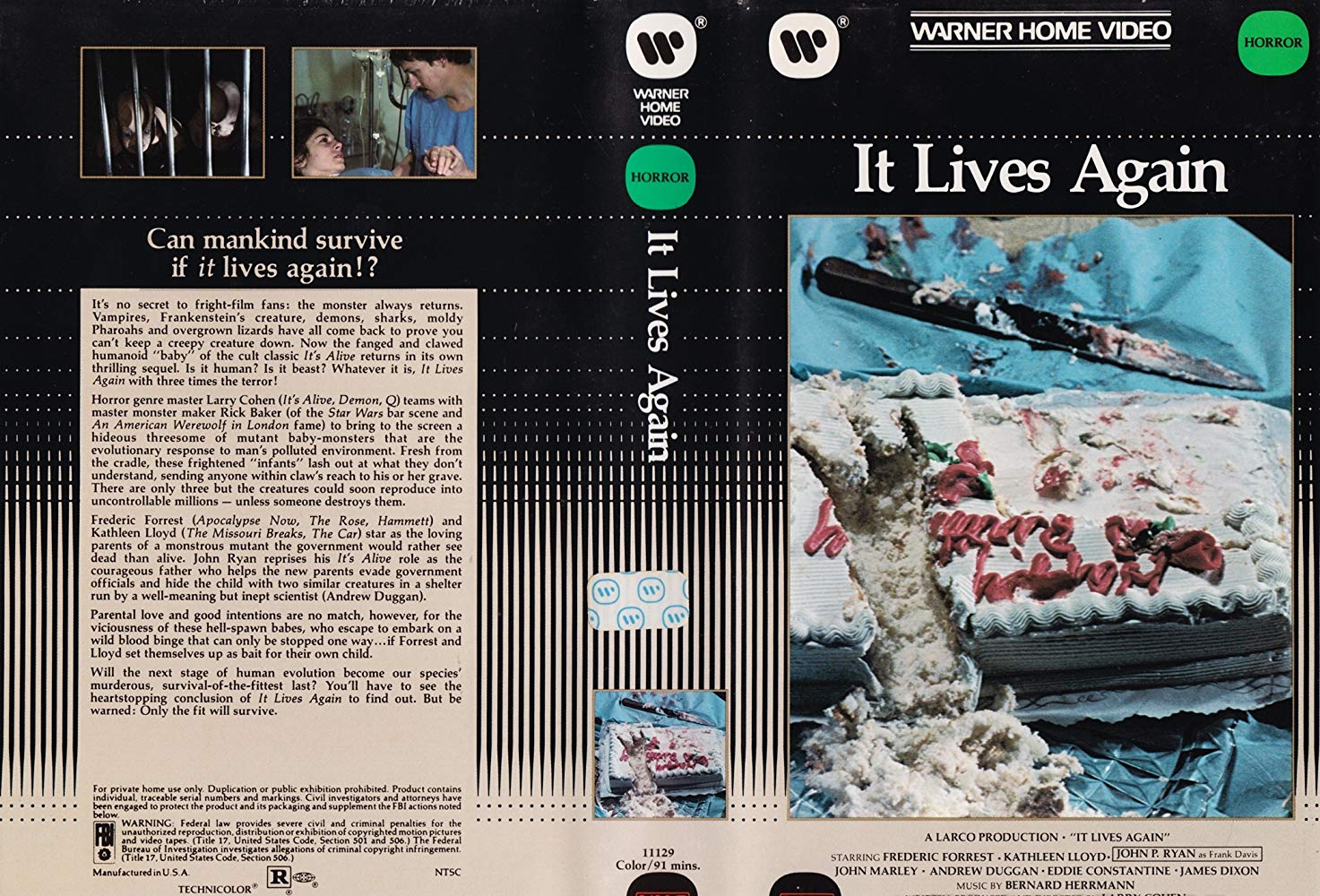
Part 1 left the door wide open for a sequel: “Another one’s been born in Seattle.”
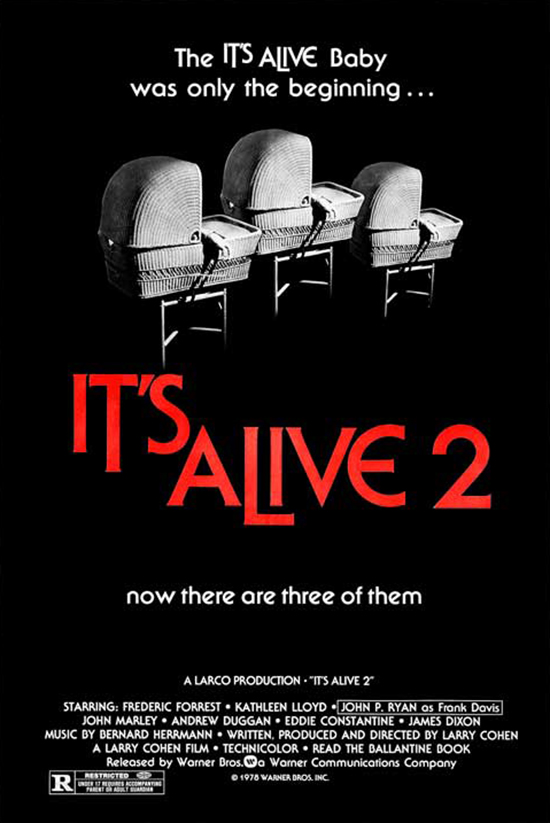
Eugene (Frederic Forrest; Trauma) and Jody Scott (Kathleen Lloyd; The Car) are expecting, and Frank Davis (John P. Ryan; Class of 1999, It’s Alive) crashes their baby shower with grave news about their unborn child. Wanting to help them protect their atypical child, Frank recounts the events of the original movie (It’s Alive) and warns the Scotts that specialized teams have been killing monstrous babies at birth across the nation.

With the help of Dr. Perry (Andrew Duggan; It’s Alive, A Return to Salem’s Lot, Frankenstein Island), Frank heists the Scotts’ baby to a safehouse facility where Dr. Perry has been studying and caring for other such monstrous babies. Meanwhile, because of his experience with the Davis baby, Lt. Perkins (James Dixon; It’s Alive, The Stuff, Maniac Cop 1-2) is assigned the new Scott baby case.

The special effects haven’t come very far since 1974. The babies are rubber dolls (some puppeted clawed hands) and their faces look just as they did in the original. They behave like predecessors to Gremlins (1984) or Ghoulies (1985) or even Critters (1986), as rigid rubber monsters are held by the actors to their necks as they thrash back and forth as if being ravaged and overpowered by the diminutive aberrations.
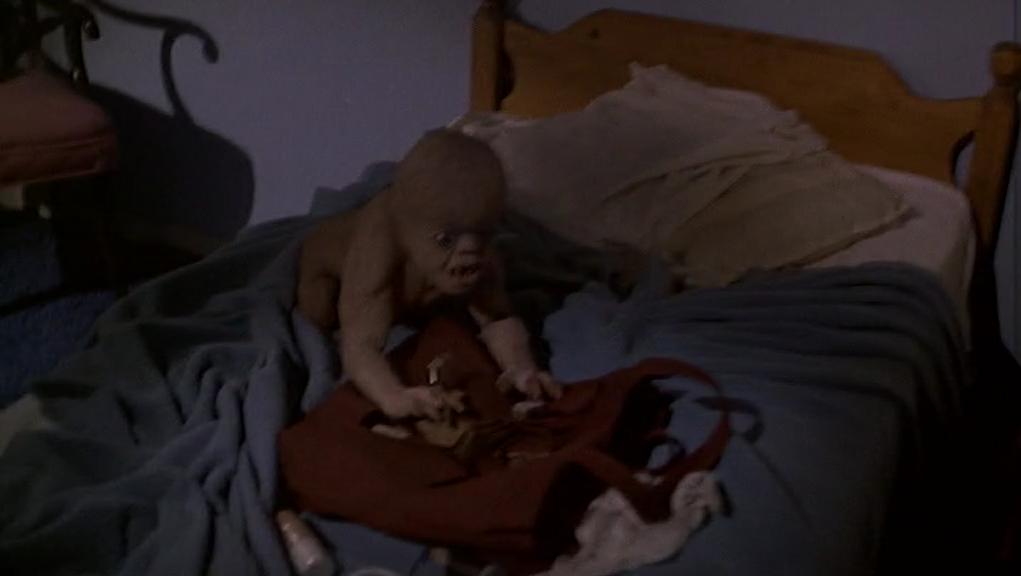
This sequel feels less like a horror movie and more like a medical Sci-Fi thriller. The first half boasts minimal blood or violence and just one baby attack that pales to anything in part 1 (e.g., the bloody operating room scene). Of course, later in the film these mutant babies will start to get out of hand. But the attacks, violence and blood remain no more spectacular than this film’s PG-rated predecessor despite this sequel being rated R (for reasons I cannot begin to explain). Even the “scares” and suspense feel minimal compared to the drama enacted by the Scott couple and Frank Davis.
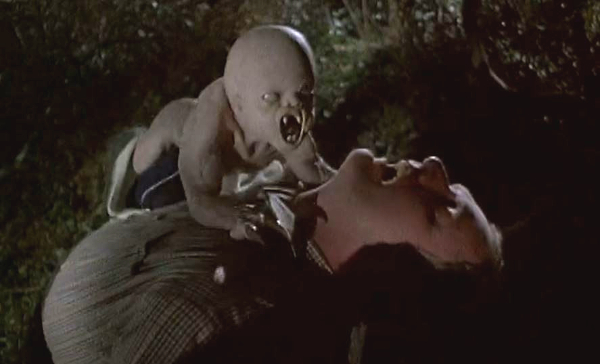
This sequel lacks the powerful allegory of Larry Cohen’s (It’s Alive, Q, A Return to Salem’s Lot) 1974 classic. Instead we continue to reinforce that the fear of parenthood is the greatest enemy of parenthood. Exactly as the original, the only thing scary in this film is the premise and none of the execution packs any impact until the emotional revelations in the end.
This movie is serviceably entertaining and broadens the theme left tangling at the end of part 1. However, it is not worthy of the reverence of It’s Alive (1974).
Share this post:

John’s Horror Corner: 31 (2016), Rob Zombie’s least impressive film, but that Nazi dwarf was great!

MY CALL: If a gun was to Rob Zombie’s head and he had to make a Grindhouse film in under a month, this is LESS than I’d expect from him. It’s his only film that I specifically dislike, and as a big fan of his, I didn’t enjoy writing this review. MORE MOVIES LIKE 31: The Devil’s Rejects (2005) and House of 1000 Corpses (2003) fall right in line with 31. Lords of Salem (2013) for a major change in pace and artistic approach. Halloween (2007) and Halloween II (2009) for more of his brutal filmmaking.

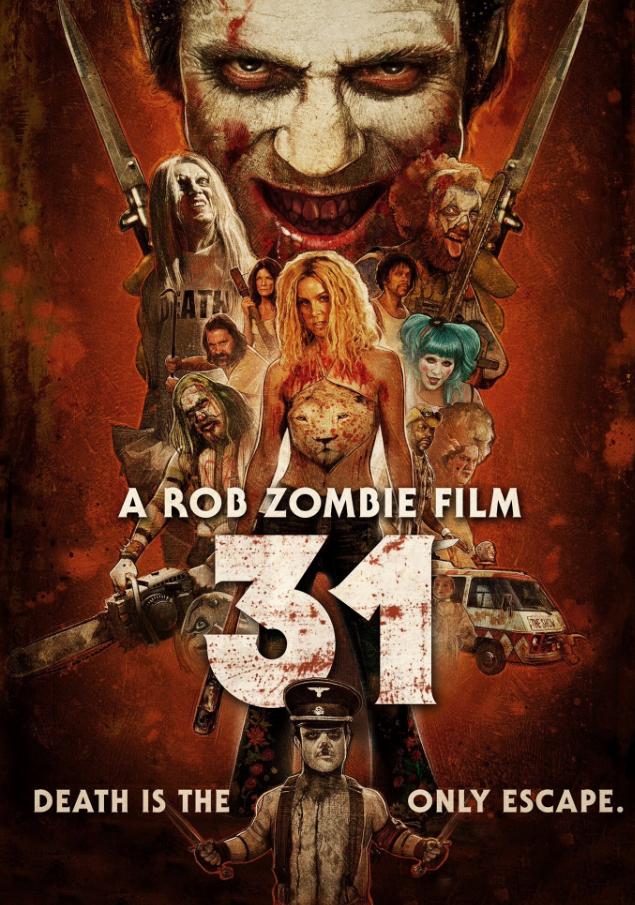
During a 1970s nostalgically scored road trip montage, we meet Charly (Sheri Moon Zombie; House of 1000 Corpses, Lords of Salem, Halloween), Roscoe (Jeff Daniel Phillips; Freaks of Nature, Halloween II), Panda (Lawrence-Hilton Jacobs; The Annihilators, Alien Nation), Venus (Meg Foster; Jeepers Creepers III, They Live, Leviathan, Stepfather II, Lords of Salem) and Levon (Kevin Jackson; 3 From Hell). Uplifting music and imagery embracing close friendships reveal the care Rob Zombie took in introducing us to these victims. Unfortunately, our care of the characters basically stops there.
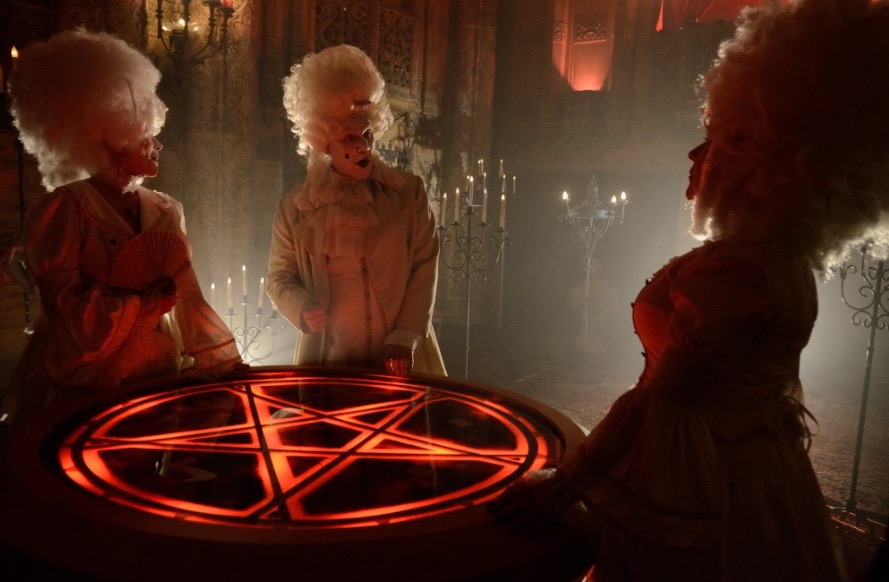
The five of them are kidnapped and face the Victorian theatrics Father Murder (Malcolm McDowell; Halloween I-II, Antiviral), who explains the rules of his homicidal game of survival “31.” If they can survive 12 hours, they are free. But trying to kill them are a sassy Nazi dwarf (Pancho Moler; American Horror Story, 3 From Hell), a laughable pair of chainsaw clowns and other white-faced killers, all introduced to us in similar over-the-top fashion as hunters of The Running Man (1987). The game’s playing field is a huge factory rigged with locked gates and electric barriers to herd and control their movement in favor of the killers.
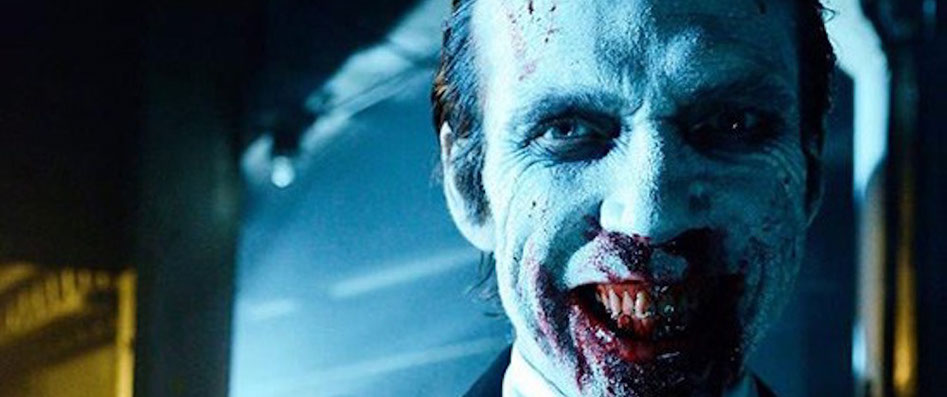
This film is a lot of things, none of which include a conquest in acting or writing. And whereas I rather enjoyed Zombie’s approach to Halloween I-II (2007, 2009), 31 feels more like a movie that was made for the sake of making a modern grindhouse flick in a short period of time on a drunk dare.
In reference to this shallow filmmaking, fellow MFF writer and Rotten Tomatoes writer Mark Hofmeyer wrote “31 is Rob Zombie going full “Rob Zombie” and turning everything to 11. He came up with the idea in a few seconds and the 20-day production schedule felt rushed and unnecessary. Nothing is fleshed out (except the exploding flesh) and it feels like a study in style over substance.” To read Mark’s full review, CLICK HERE.

The strongest elements of the film would be the set design and the evil Nazi dwarf character (easily the best and most “appropriately” over-the-top performance of the film), who had the best line delivery and acting by far. That murderous little man chewed the scenery and I want to see more of that actor. My greatest disappointment was how flat the brutality was delivered. Zombie has a natural gift for pushing his audiences with cruel brutality, but here I somehow just never cared (about the victims or the killers or the dire circumstances). Sure, the chainsaw clown fight had good energy. But the killers were so dumb, ill-written and uninspired I was just waiting for them to be dead and done.

In summary, and as a Rob Zombie Rob Zombie (Lords of Salem, House of 1000 Corpses, Halloween I-II) film fan, this is the first of Zombie’s films I can say I didn’t enjoy. It’s not simply my least favorite, it’s just not good and it even failed to scratch my itch for mean gory death scenes since I was never invested. I have trouble believing Zombie himself was invested—there was no heart in this (or, to be fair to Zombie, I just didn’t feel it). Were it not for Pancho Moler, this would have been a complete waste of time for me.
Share this post:

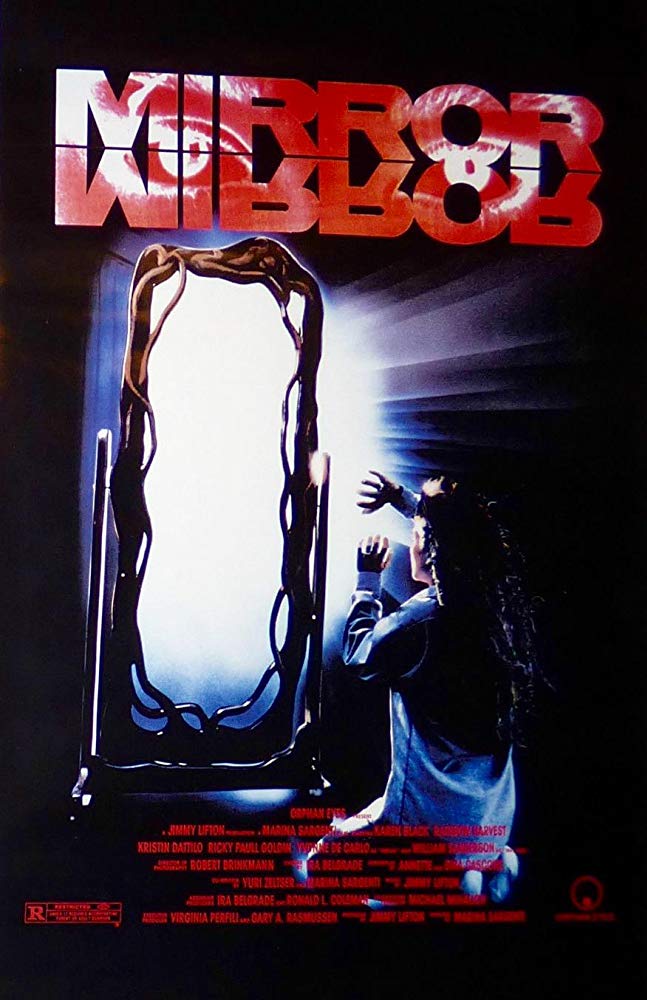
John’s Horror Corner: Mirror Mirror (1990), an incredibly boring evil mirror movie about high school temptations.
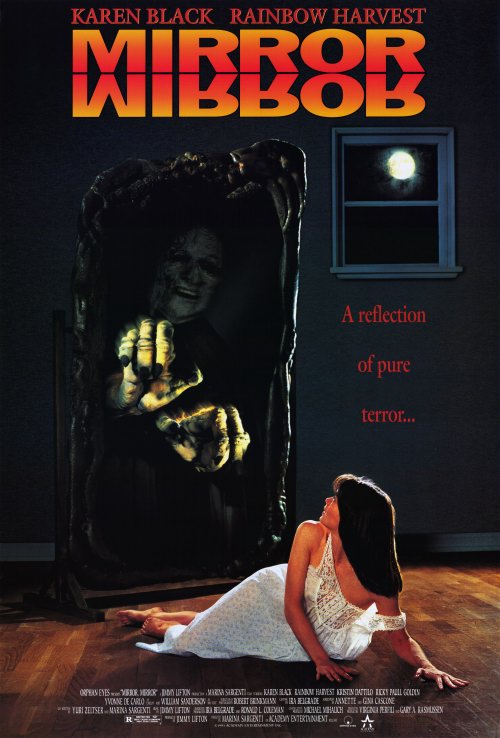
MY CALL: A boring, uneventful movie misfiring the concepts that would later be much better presented in Wishmaster (1997) and The Craft (1996). Just go watch them instead. MOVIES LIKE Mirror Mirror: For more evil mirror movies try Oculus (2014) or Mirrors (2008). But I’d maybe skip Mirror (2014), even though it’s way better than Mirror Mirror. And let’s definitely avoid the three sequels (1994, 1995, 2000) to this movie. Yes, three!

Opening scenes in horror movies offer a chance for filmmakers and special effects artists to tease our horrific taste buds with a sort of amuse-bouche in the form of a gory death scene, transformation scene or creature effect. More often than not, it will stand out as one of the best scenes of the entire film. Disappointingly to the contrary, this movie opens with the kind of mostly off-screen death scene that you’d hope wouldn’t set such a standard (but it does), as it fit the low budget random and incomprehensible style oft-encountered in less-inspired horror.


Decades after a woman murders another, Susan Gordon (Karen Black; House of 1000 Corpses, Night Angel, It’s Alive III, Burnt Offerings) and her high school daughter Megan (Rainbow Harvest) buy the house in which the vile deed was committed. The moment we see Megan and her mother, there’s nothing subtle of the Delia-Lydia Beetlejuice (1988) dynamic being copied. Meanwhile, an antique dealer (Yvonne De Carlo; American Gothic, Cellar Dweller) handling the estate of the previous homeowner snoops through an old diary for an exposition dump explaining the magical, evil and indestructible qualities of an old mirror left behind… which, naturally, caught Megan’s fancy. Apparently, the demon within the mirror acts like an evil genie, granting its possessor wishes as it influences them.


The supernatural events that follow are haphazardly executed at best. Megan is terrorized by a manifestation of her recently deceased father’s meltingly rotten corpse (among the better scenes of the movie, but I wasn’t exactly impressed). I wasn’t really feeling the tension or horror when a classmate stupidly suffered a bad bloody nose, when another nearly drowned, or when Megan’s teacher (Stephen Tobolowsky; Single White Female) suffered an asthma attack. And when Megan uses the power of the mirror to seduce a rival Mean Girl’s boyfriend and the demon within the mirror kills him, I was right then wishing I was watching almost anything else.

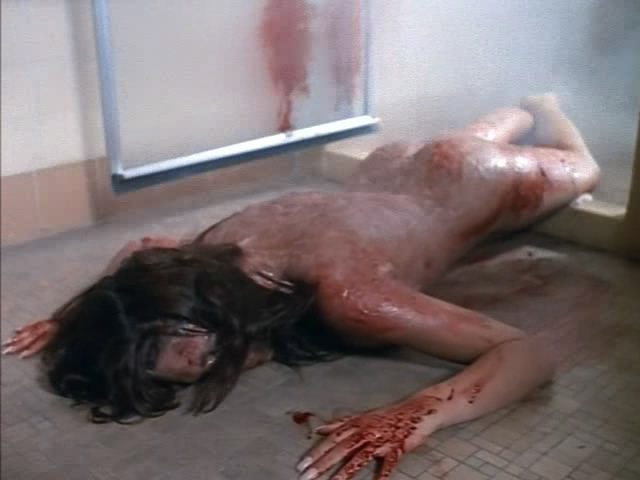
This movie’s idea of a death scene is having cheap FX clawed hands shake someone’s head while spraying fake blood over no latex wounds to be found. All of the death scenes are terrible, but the “least” bad is the blistering shower scene. But the “horror” aspects aren’t all that’s bad here. The writing is painfully dry, the acting is rigid, and even the movie’s greatest efforts to be interesting feel stale. It’s nowhere near “Girlfriend from Hell (1989) bad”, but it’s pretty boring.
I see no reason to recommend this to anyone for any reason—other than punishment. For what it was trying to accomplish, I’d recommend horror fans instead explore Wishmaster (1997) and The Craft (1996), the pair of which encapsulate so much better the concepts misfired in Mirror Mirror.
Share this post:

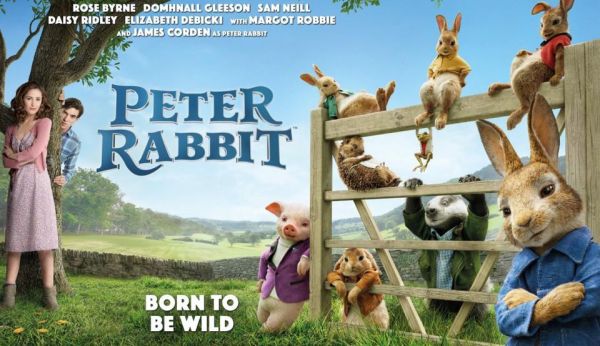
The MFF Podcast #179: An Epic Peter Rabbit Discussion
You can download or stream the pod on Spotify, Itunes, Stitcher, Tune In, Podbean, or LISTEN TO THE POD ON SPREAKER
The MFF podcast is back, and this week we’re bringing you a massive episode about the 2018 film Peter Rabbit. This might be the most MFF podcast ever as we talk about talking pigs, rabbits with jackets, and saving an event centered around pottery. We also answer a lot of Peter Rabbit themed questions and put together an animated animals crew that get into some dark shenanigans. If you are a fan of Peter Rabbit and side discussions you will love this episode.

The CGI is legit.
If you are a fan of the podcast make sure to send in some random listener questions so we can do our best to not answer them correctly. We thank you for listening and hope you enjoy the pod!
You can download or stream the pod on Spotify, Itunes, Stitcher, Tune In, Podbean, or LISTEN TO THE POD ON SPREAKER
If you get a chance please make sure to review, rate and share. You are awesome!


 Movies, Films & Flix