Colony (2026) – Review
Quick Thoughts:
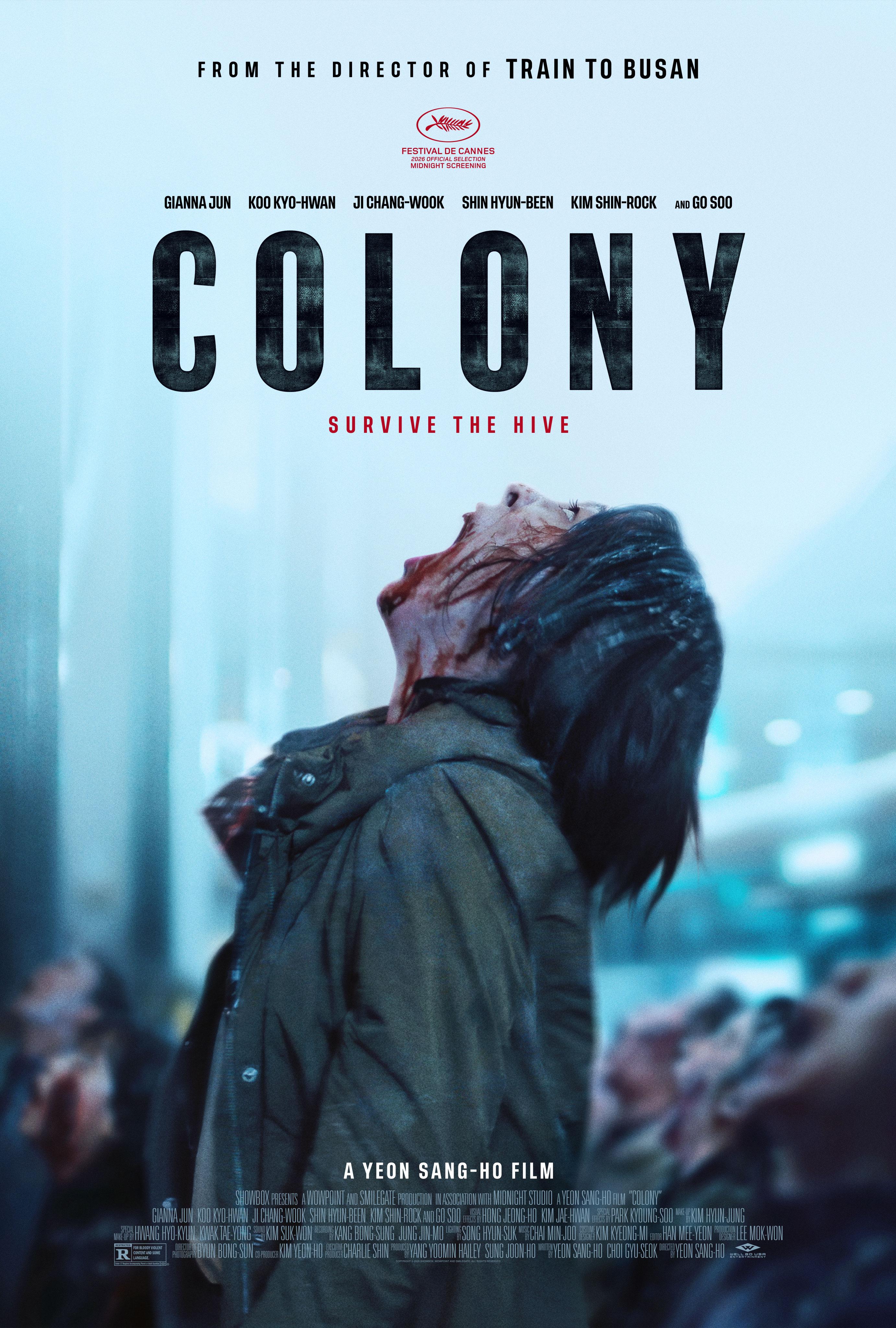
- Director/writer Yeon Sang-ho (Train to Busan) tackles AI, rapid information exchange, and collective consciousness by creating zombies who work as one horrifying unit.
- The plot is familiar, but the “upgrading” zombies who share information through a hive mind bring a fun new element to the genre.
- Gianna Jun (My Sassy Girl, Windstruck, My Love from Another Star) is a solid lead. She is intelligent, sassy, and capable.
- It might be the goo-iest movie of 2026.
- South Korean actors go all-in when playing zombies. I don’t think another country can match their skills.
- Ant mill!
In a bit of a Catch-22, director/writer Yeon Sang-ho probably didn’t have a hard time finding funding for his latest zombie film, Colony. However, since he directed Train to Busan, an all-time zombie film, every zombie film he makes will be compared to the propulsive classic. Doors were opened because of Train to Busan, but matching the lighting-in-a-bottle qualities of the fast-paced zombie film is a tough task. The good news is that Colony is a big step up from Peninsula (2020), and while it doesn’t come close to Train to Busan’s excellence, it proves Sang-ho can still bring the zombie goods.
In the press notes, it’s mentioned that the “zombie genre will be rebooted” by Colony, which is a bold prediction considering director Sang-ho already rebooted the genre. Colony isn’t a game changer, but it’s an ambitious film that goes out of its way to tackle collective consciousness and create new variations of undead angry people. What makes these zombies unique is that they’re created by a biologist named Suh Young-chul (Koo Kyo-hwan) who believes “imperfect communication” needs to be eradicated by creating an information-sharing hive mind. He unleashes his zombies during a biotech conference located inside the Doongwoori Building, a high-rise filled with long corridors, vast parking garages, and a shopping mall. When people get bitten, they almost immediately become zombies who walk on all fours as they hunt for people to chomp on. What’s interesting is that they communicate through a gooey hive mind, and every time they learn something, they share the information during a reboot phase, which halts their movement as they download new information. Whether it’s how to open doors, learning new scents, or realizing that cardboard cutouts aren’t humans, the constantly evolving zombies add a ticking clock to the proceedings because humans like the industrious Professor Kwon Se-jeong (Gianna Jun) and security guard Choi Hyun-seok (Ji Chang-wook) need to stay proactive to avoid the evolving undead.
Like in Train to Busan and Peninsula, Yeong Sang-ho and motion choreographer Jeon Young worked together to make the zombie movements distinctive and unique to the film. They hired some of Korea’s best contemporary dancers to perform the twisting movements of the newly created zombies (who might remind you of the evil dancers in Smile 2) as they bond together to create a gooey blob of violence. The “zombies” in Colony are simultaneously more vulnerable and dangerous than traditional zombies because they can be killed with relative ease (headshots aren’t necessary), and their problem-solving skills mean people can’t hold up safely in a shopping mall for months (they will find a way in).
Action director Heo Myeong-haeng (Badlands Hunters, The Roundup: Punishment) does a fine job choreographing the action, which evolves as the characters traverse the high-rise. Fights happen in hallways, clothing stores, elevators, parking garages, and other unique locations, which makes them feel fresh. Most of the fighting scenes belong to Choi Hyun-seok, who batters zombies with metal rods, hard elbows, and various knives. What’s really impressive is that Hyun-seok does most of his fighting while carrying his paraplegic sister Choi Hyun-hee (Kim Shin-rock) on his back. It’s a fun twist and great advertisement for camping stretchers.
Production designer Lee Mok-won does a fine job of recreating the high-rise shopping mall and various interiors. It would’ve been impractical to shoot on location, but the sets look and feel real, which adds a lot to the production. Mok-won also designed the train sets in Train to Busan, so his shorthand with Sang-ho paid dividends as they worked together to create a labyrinth of corridors and rooms to make up the Doongwoori Building.
The 123-minute film won’t break big like Train to Busan, but it’s a worthwhile exploration of collective consciousness and communication. The technically polished film will put a smile on your face, but won’t linger in your memory, which is totally fine. The world needs ambitious genre filmmakers who aren’t content with stock carnage and destruction, and it’s neat that Sang-ho keeps pushing the genre forward.


