John’s Horror Corner: Hagazussa (2017), a gorgeously shot German folk horror and a REALLY odd witch movie.

MY CALL: Not sure how to describe this one… the film isn’t pretentious, but pretentious cinephiles are gonna’ love it. More arthouse than horror, more style than substance, and more gorgeous photography than dialogue. MOVIES LIKE Hagazussa: For more recent folk horror try The Golem (2018), Apostle (2018; podcast discussion), The Ritual (2017; podcast discussion), The Witch (2016; podcast discussion), The Shrine (2010), The Village (2004), or Salem (2014-2017).

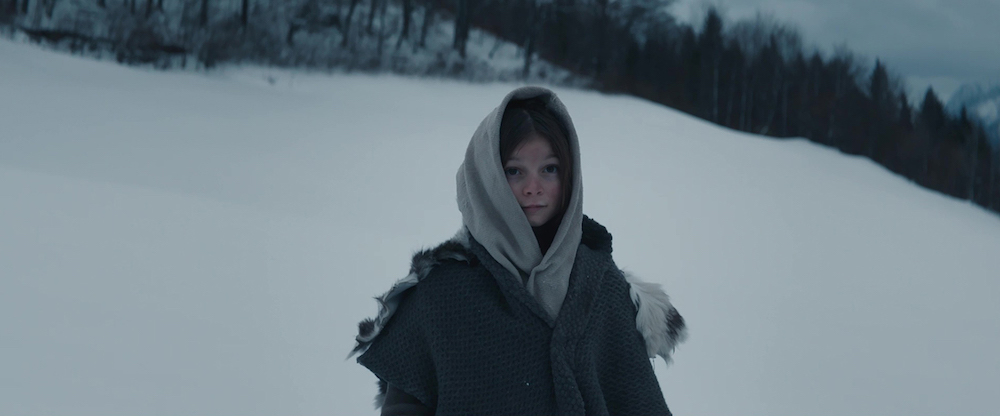
Writer and director Lukas Feigelfeld—in his first feature length horror—brings stark white beauty to the screen with shots of wintery wilderness. The dark trees silhouetted in contrast to the barren snow are illustrative of hardship. But scenes of snow-covered cabins and sunset mountains maintain a soft beauty behind the powerfully fearful superstition of the locals in 15th century Europe.

After tending her mother through illness and death as a preteen, Albrun (Aleksandra Cwen) now has a baby of her own as she continues to live in the secluded cabin of her youth, just out of reach of the local townsfolk and the priesthood. The peasantry fancy her a witch, and she endures their enmity.

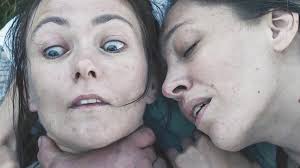
Before watching a film like this, it’s important to know what you’re getting into in terms of tone. Very much like The Witch (2016), this film is heavily atmospheric and slow-paced. There is nothing in the way of action, scares or special effects. It’s truly a visual spectacle and I find it deeply intriguing. But anyone seeking the next Deathgasm (2015) will be sorely disappointed.

In terms of how I felt watching this, if The Witch (2016) and a brutality-stricken Antichrist (2009) had a baby, this would be that film… only with even less dialogue and exposition.
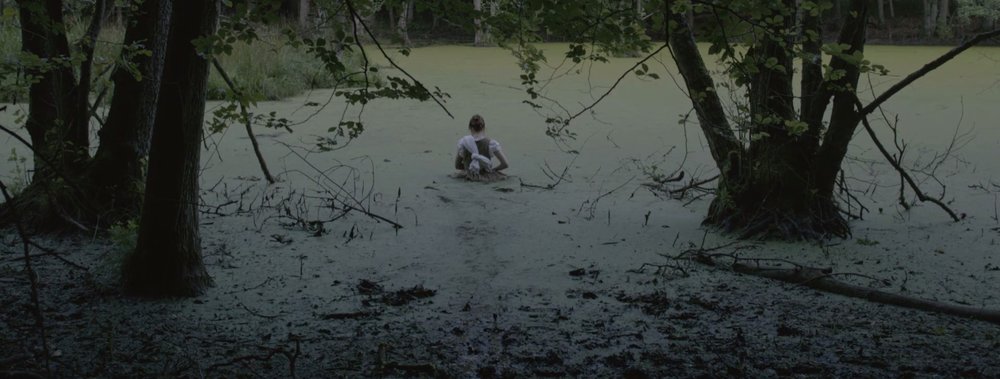
Tonally, this film is such a curiosity—from the well-meaning local priest and the unusual dynamic between Albrun and her dying mother, to a sensual scene involving a goat and some perhaps drugs-induced mania. Was her mother a witch, bewitched herself, or simply superstitious and increasingly delusional with plague? Adding to its mystery is the general paucity of dialogue.
Overall, I find great difficulty recommending this film. It’s not fun or gory or exciting… but it’s clearly inspired and gorgeous and rich. I think films students and aficionados will notice and appreciate much more in this than most viewers.

Share this post:

You can download the pod on Itunes, Stitcher, Tune In, Podbean, or Spreaker.
If you get a chance please make sure to review, rate and share. You are awesome!

.
The MFF podcast is back for the 200th time! In honor of our 200th episode we’re talking about Soldier, the 1998 Blade Runner-sidequel directed by Paul W.S. Anderson (listen to our Resident Evil podcast episodes now), that featured Kurt Russell beating many people up. What we love about Soldier is how it tells the story of an outdated soldier defeating upgraded soldiers — who don’t realize they are fighting Kurt Russell. In this episode, you will hear us talk about homemade scarves, broken ankles and chain fights. If you are a fan of Soldier, you will love this episode.

If you are a fan of the podcast make sure to send in some random listener questions so we can do our best to not answer them correctly. We thank you for listening and hope you enjoy the pod!
You can download the pod on Itunes, Stitcher, Tune In, Podbean, or Spreaker.
If you get a chance please make sure to review, rate and share. You are awesome!
Share this post:

John’s Horror Corner: Splinter (2008), delivering twitchy plant zombies and outstandingly gory practical creature effects.

MY CALL: Brutal, gory, well-paced and well-acted, this practical effects-driven monster movie was an absolute pleasure! MORE MOVIES LIKE Splinter: The style of the gore reminds me strongly of Cabin Fever (2002, 2016). For more killer plant movies, try Seed People (1992), The Happening (2008), The Ruins (2008), The Girl with All the Gifts (2016), and for something really bad go for The Crawlers (1993). And for a great twitchy zombie film, you want Train to Busan (2016)!!
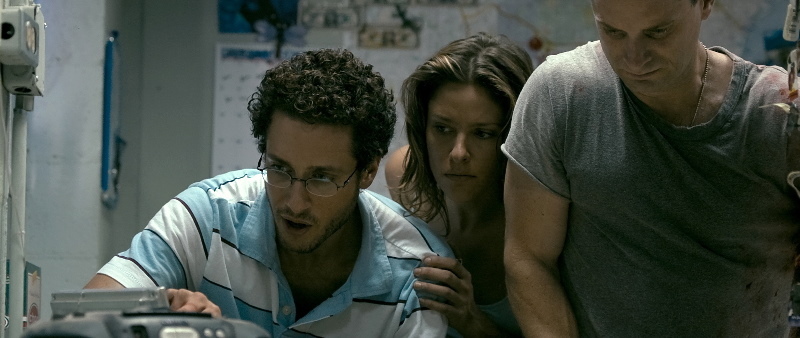
Hoping to enjoy a romantic anniversary camping trip together, Polly (Jill Wagner; Blade: The Series, Teen Wolf) and her biologist boyfriend Seth (Paulo Costanzo; The Expanse) are carjacked by on-the-run criminals Dennis (Shea Whigham; Death Note) and Lacey (Rachel Kerbs). In transit a roadkill event causes a flat tire, and a curious splinter sets an interesting tone as they find themselves stranded at a remote gas station.

If you’re gonna’ make a not-so-big budget one-set horror movie, a remote gas station strikes me as a good frugal choice. But how nice is it that gas stations are a classic harbinger check point in so many films? From Wrong Turn (2003) and Tucker and Dale versus Evil (2010) to The Cabin in the Woods (2012), the gas station is usually where victims have the opportunity to heed the harbinger’s warning and avoid the evils ahead. Yet here, it is upon arrival that they are doomed… because the harbinger was already a victim!

Our monster is a botanical parasite that metastasizes in the blood stream to induce twitchy zombiism. The first victim is the gas station attendant (Charles Baker; The Neon Demon), who thrashes and contorts his mangled limbs, a marionetted host to the splinter monster.

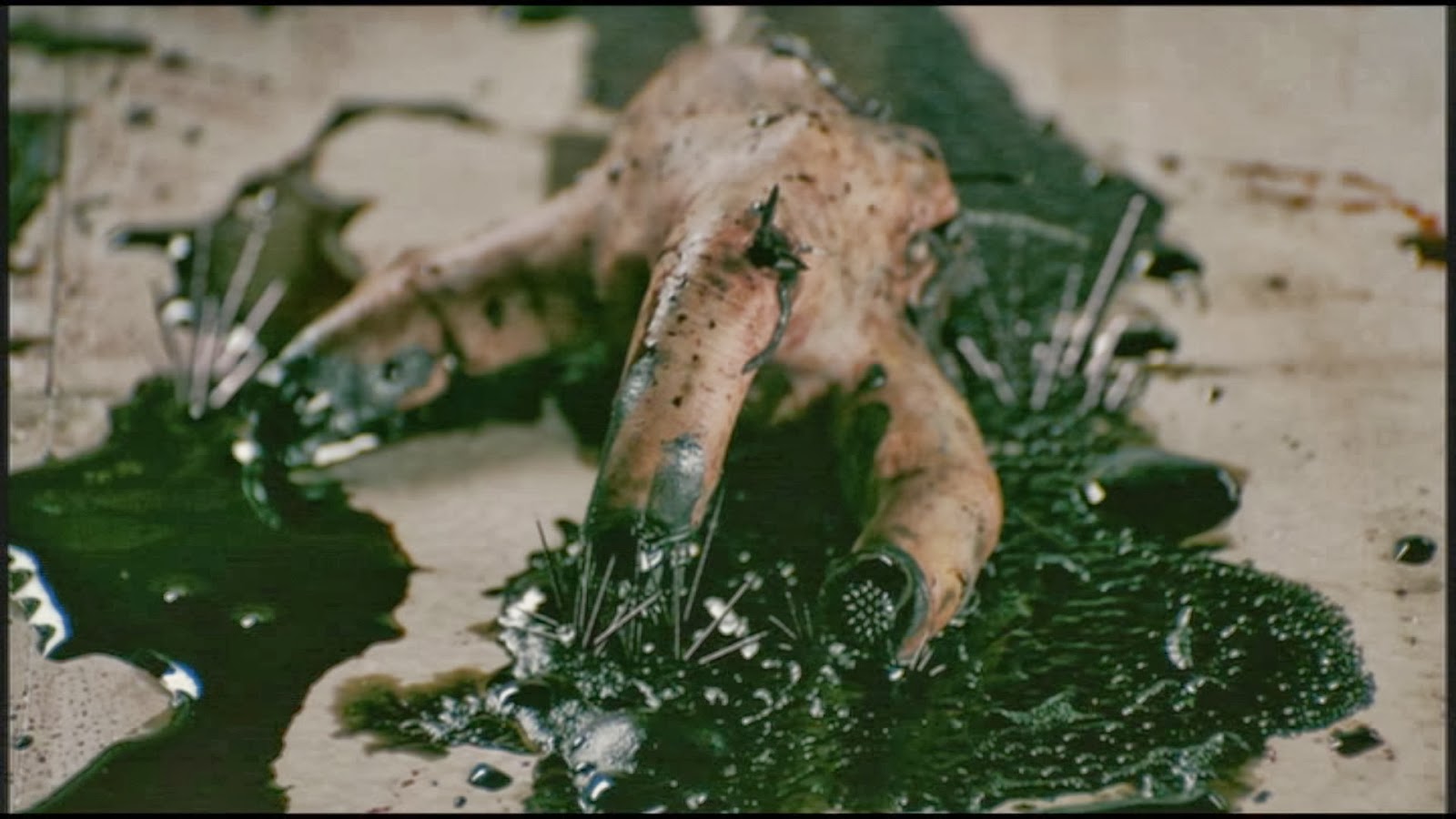
Early encounters with the monster are deliciously macabre as a freshly flattened roadkill slug-crawls towards an intended victim. We see the infectious splinters probe about like the prongs of a sea urchin. It’s REALLY cool. Infected zombie-like animated bodies flailing undexterous limbs, and disembodied hands twitch like something out of Bride of Re-Animator (1989). Everything looks great and, given the premise, the delivery is shockingly credible.

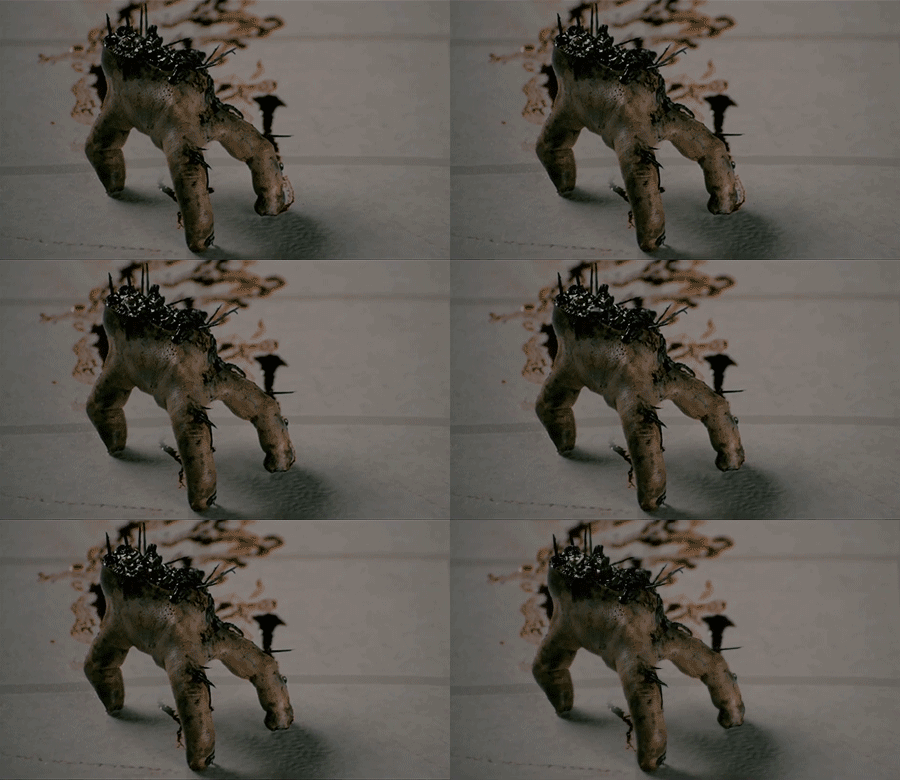
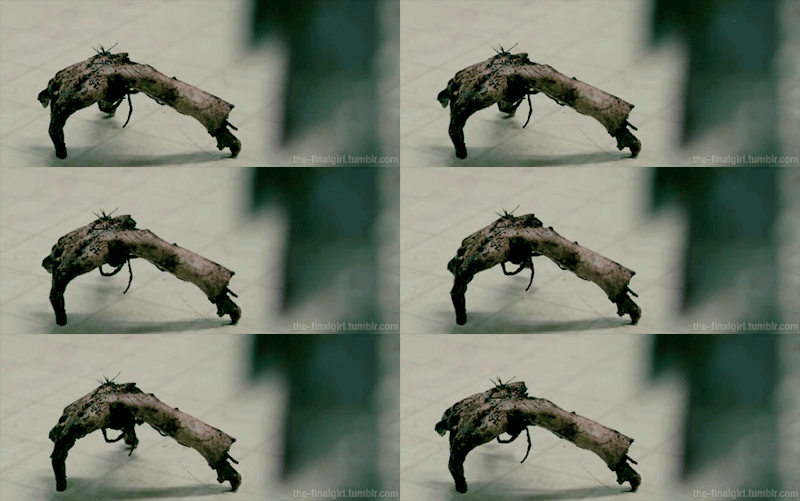
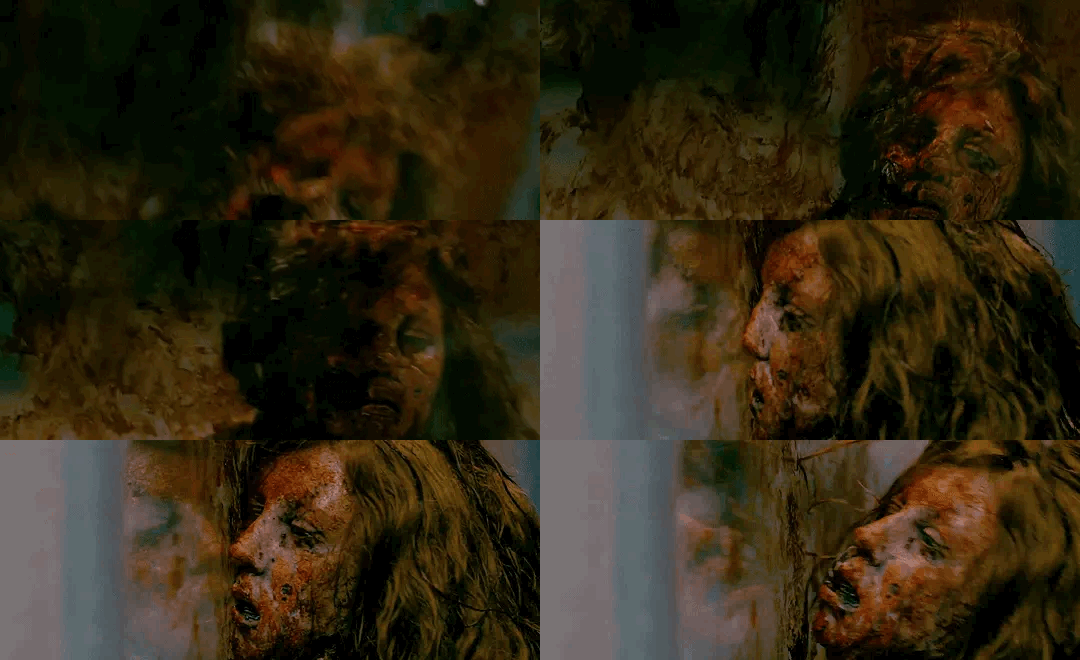
Despite the often choppy editing—most likely to disguise any flaws in the practical monster suit—this remained goretastically effective, engaging and exciting. These special effects are nothing to scoff at… actually, I was quite impressed. The blood work is excellent—and the blood splattering is kinda’ chunky! The animated bodies are disturbing, the stop-motion severed hands are a joy, and the brutal limb breaks will catch you off-guard.
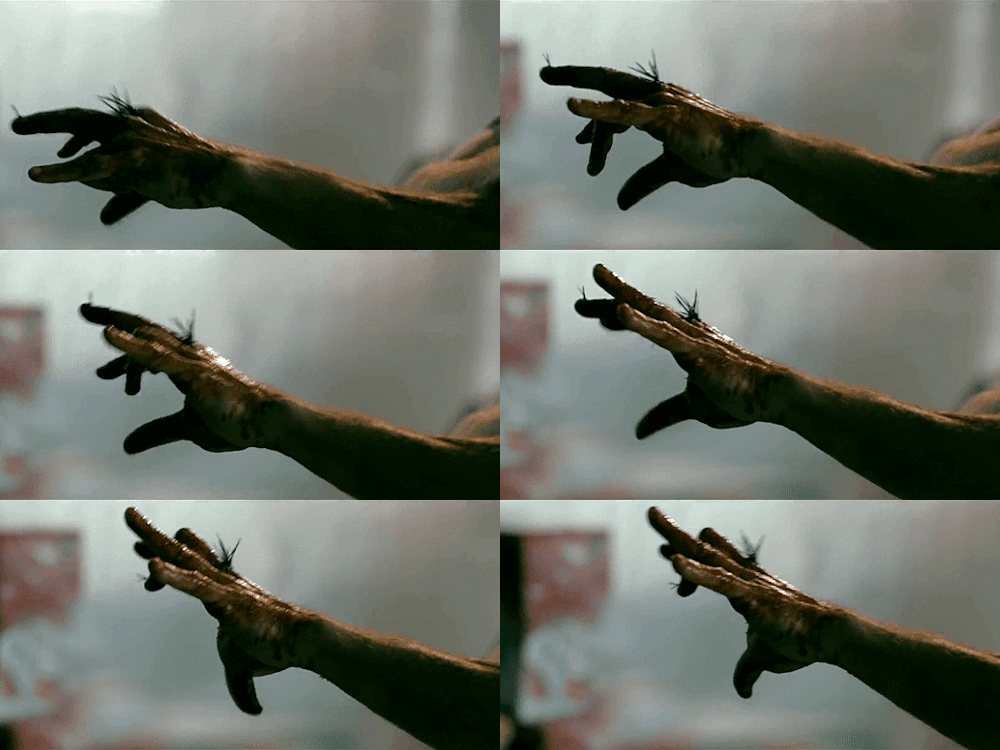
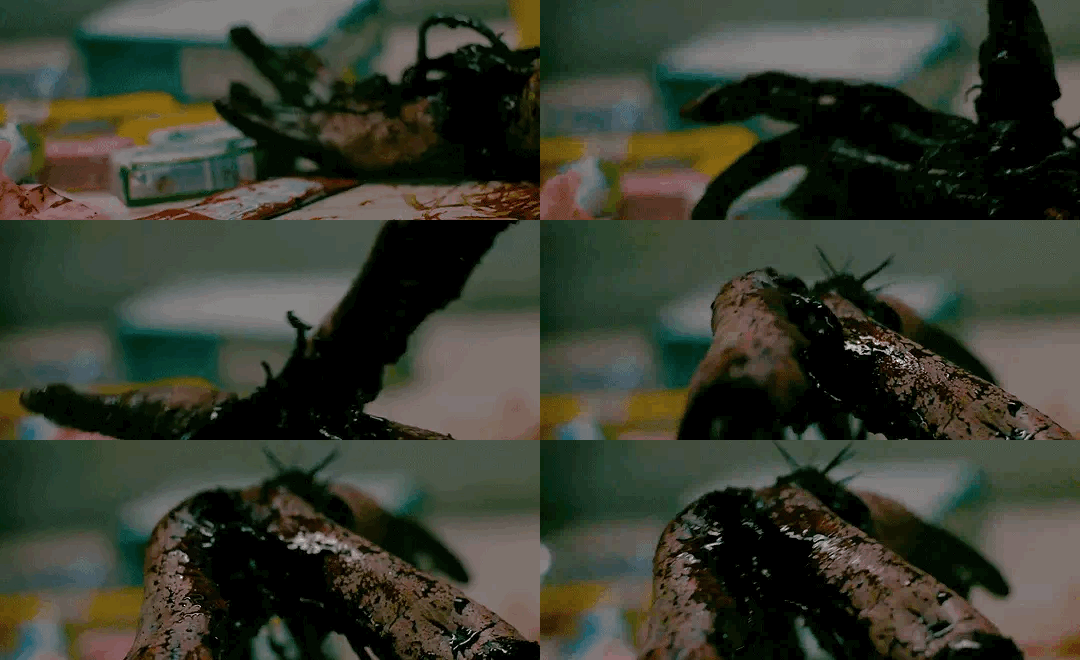
When we see the “final monster” it’s only for a second at a time; we see it often, but only in these glimpses. It’s a macabre amalgam of randomly attached bodies/parts similar to the new The Thing (2011), the end of Terrified (2017),the final queen roach monster in The Nest (1988) or Zygote (2017).
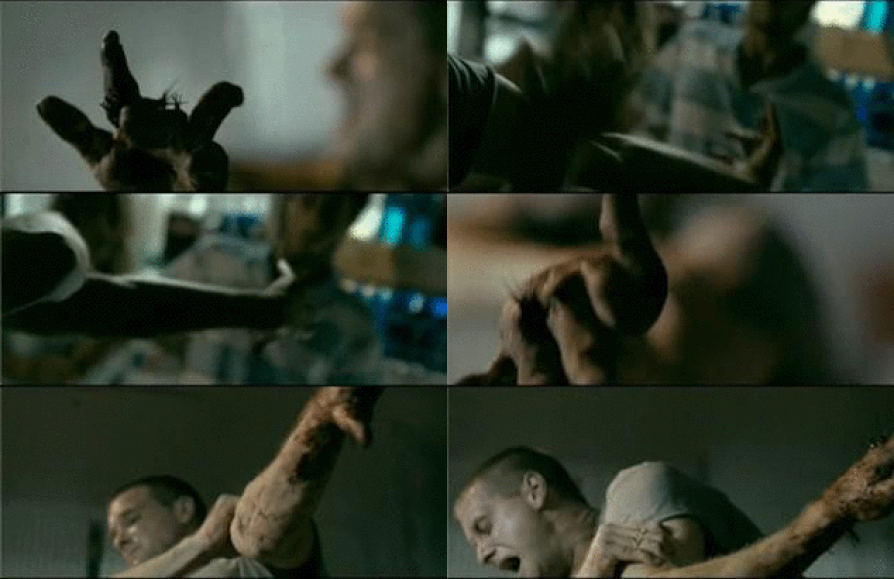
When films put all their eggs in the monster basket, we tend not to expect much overall. Perhaps a few obscure creature sightings and a gory death scene in the first hour, followed by a hopefully redeeming monster-rich finale—all surrounded by weak writing and acting. Director Toby Wilkins (The Grudge 3) delivers a very respectable film. His characters are well-written and performed affably yet credibly. I don’t think I have a single negative criticism of this film! I just… loved it!

Share this post:

John’s Horror Corner: Lake Mungo (2008), an Australian documentary-style “ghost” film exploring guilt and loss.

MY CALL: Not to be confused with found footage, this documentary-style horror film is completely objective and circumvents the jumpy, silly and annoying tropes of the genre. This would best be described as interesting and spooky, and easy viewing even for those who would otherwise dislike horror movies. MORE MOVIES LIKE Lake Mungo: Not that it’s similar in nature (but more in tone and style), fans of this film should look into Searching (2018). For more mockumentary-esque or documentary-gone-wrong horror I’d strongly recommend The Last Exorcism (2010), Grave Encounters (2011), Grave Encounters 2 (2012), The Taking of Deborah Logan (2014), Demonic (2015), Ghost Stories (2017) and Butterfly Kisses (2018). For more Australian horror movies, try Razorback (1984), Wolf Creek (2005), The Howling III: Marsupials (1987), Dark Age (1987), Rogue (2007), Black Water (2007), Wyrmwood (2014), Charlie’s Farm (2014), Cargo (2017) and Boar (2017).
It’s rather common to find documentary films being made by the main characters “within” found footage horror films. Such docu-style horror tends to present (found) footage of the process by which the filmmakers produce their documentary (such as B-reel, outtakes, or “the making of” segments), in addition to the common components typical of the documentary itself. In doing so, we generally get to know the filmmakers in the introductory footage before their investigations are deep underway.
Quite to the contrary, this docu-style film is not a found footage film at all. In fact, it feels like an actual documentary you could watch on your TruTV or Crime-themed cable channel. The film quality varies from TV news clips to witness interviews/testimonials or reenactments like an episode of Unsolved Mysteries (1987-2010). To that end, it also feels more like a mystery/thriller than it does horror, despite the citation of probably supernatural events during explorations in their own grief. But rather than jettisoning all attention down a rabbit hole of suspicion over a ghostly image or such, this documentary remains 100% straight-faced and objective.

After the tragic loss of their daughter Alice, the grieving Palmer family begins to experience unusual events around the house. More subtle things like sounds from Alice’s room, nightmares and artefacts in photographs, develop into greater oddities such as inexplicable bruising and visions of their deceased daughter in the house. Their observations even lead them doubt their daughter’s death months after identifying the body themselves!
The family eventually turns to a psychic, performing a séance, and subsequent investigations that all begin to reveal more about their dear departed Alice than they ever knew… or cared to know.

The discovery of Alice’s drowned body is accompanied by some mildly disturbing The Ring–esque imagery. But there is little horrific or disturbing content in this film. Instead it relies on excellent intrigue, writing, style and mystery as its driving force. Writer and director Joel Anderson (his only feature film) leads us down an untrodden path in which the “horror” takes the backseat in its own genre, but not necessarily to its own detriment. However, viewers should know what they’re getting into—something of a slower pace, yet boasting excellent pacing in terms of cultivating intrigue.
This would best be described as interesting and spooky, and easy viewing even for those who would otherwise dislike horror movies.
Share this post:


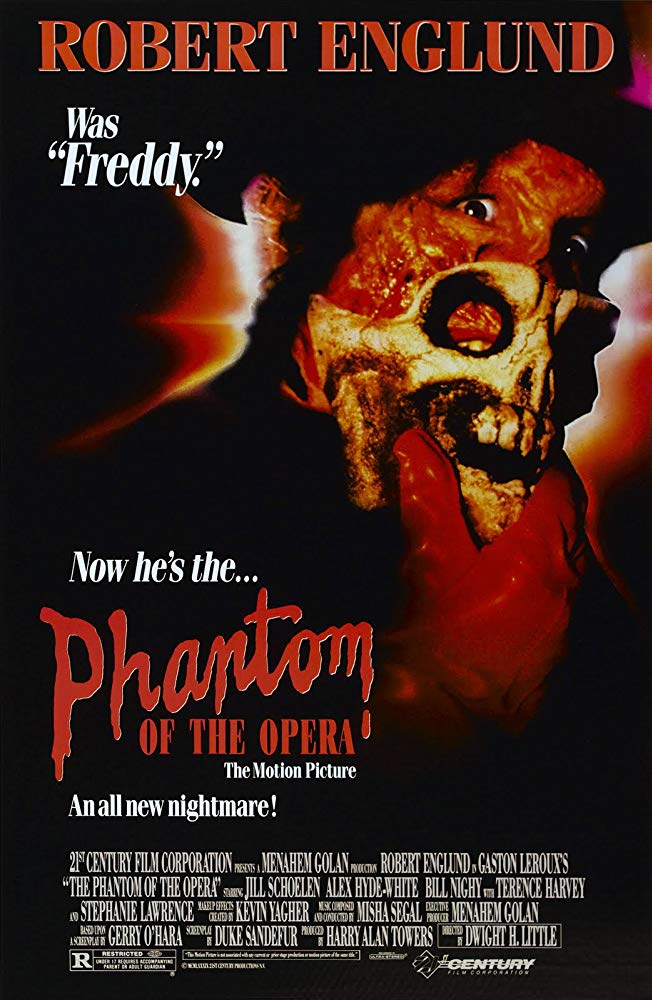
MY CALL: If someone used a more serious Freddy Krueger to ambitiously reimagine Gaston Leroux’s classic… and it’s actually pretty decent. MORE MOVIES LIKE The Phantom of the Opera: Easily A Cure for Wellness (1994) is the closest match, and packing the budget to support its grandiose vision.
Far before her Saturday Night Live days and in her first role ever we find Molly Shannon (Lawnmower Man II, Scary Movie 4), who discovers a time-forgotten page of music composed by the serial killer Erik Destler in a book that looks like a cross between the Necronomicon and Hellraiser’s (1987) puzzle box. And just in case the book’s appearance wasn’t warning enough, visions of musical notes on the pages seeping blood foretell misfortune.
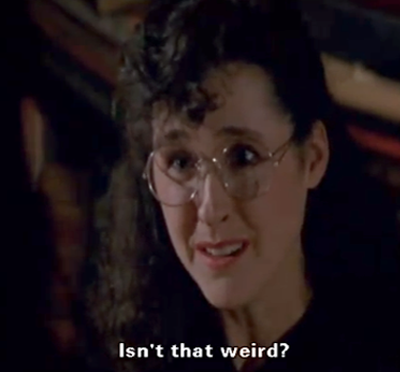
A lovely young Julliard singer Christine (Jill Schoelen; Curse II: The Bite, The Stepfather) sings the piece and is transported through time to London (in a similar past life), where she finds herself the fixation of The Phantom (Robert Englund; A Nightmare on Elm Street, Galaxy of Terror, Hatchet II). The Phantom is a horribly disfigured composer introduced to us as he sutures flaps of flesh over his own gaping facial wounds. It’s pretty awesomely gross.

At this point with five NOES films under his belt as Freddy, Englund breathes strong personality into The Phantom, and the make-up department followed suit accordingly. So it comes as no surprise that his reverence for his murders and impassioned charismatic flair smack of familiarity.

The latex and gore work are effective. Skinned victims, rat-eaten flesh-gnawed faces and severed heads are just the basics. But what’ll make you wince is the flesh-suturing and slimy gooey suture removal scenes with sticky skin flaps being peeled off.

Fresh on the set of his second horror film, director Dwight H. Little (Halloween 4) swings for the fences in this semi-contemporary approach to The Phantom of the Opera. Englund is hammed up to fans’ satisfaction and expectations, the special effects are splendid (budget permitting), and with all the operatic music, do I call some scenes in this a pseudo-musical? The music takes no part in the narrative, but it is (in concept) linked to the story. I’d simply call this a film much more stylistic for its era regarding its inclusion/utility of music. This film also seems especially ambitious with respect to the set design (lots of sewers and caverns, theaters and London streets) and the wardrobe. Also, watch out for Bill Nighy (Underworld, Shaun of the Dead).
This film may have been a tad over-the-top at times, but less so than Freddy’s sequels and impressive for my honestly low gorehound expectations. No, this is more seriously approached and produced than I had imagined. I’m maybe a bit impressed. I thought I was wandering into hokey B-movie territory, when really this is more in the B+ zone.
Share this post:

You can download the pod on Itunes, Stitcher, Tune In, Podbean, or Spreaker.
If you get a chance please make sure to review, rate and share. You are awesome!
.
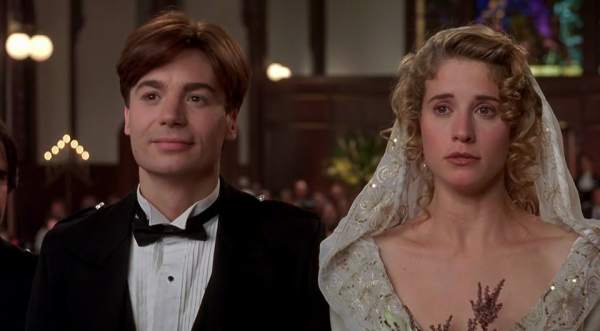
The MFF podcast is back, and this week we’re talking about the 1993 cult classic So I Married an Axe Murderer. The Mike Myer’s starrring movie underperformed at the box office, but has since built a loyal audience who quote the movie frequently (Heed! Pants! Now!) and love extremely large cappuccinos. In this podcast, you will hear us talk about Froot Loops, Scottish accents and cinematographers who never walk. If you are a fan of So I Married an Axe Murderer, you will love this episode.

I want this cappuccino.
If you are a fan of the podcast make sure to send in some random listener questions so we can do our best to not answer them correctly. We thank you for listening and hope you enjoy the pod!
You can download the pod on Itunes, Stitcher, Tune In, Podbean, or Spreaker.
If you get a chance please make sure to review, rate and share. You are awesome!
Share this post:


MY CALL: After a worrisome slow start, this developed into the kind of B-movie that I not only enjoy, but that I love. This is the “B+” movie I want to own and add to my well-curated collection of giant killer boar movies. Come for Nathan Jones, stay for the giant animals brutally turning on man and the excellent creature effects. MORE MOVIES LIKE Boar: For more giant killer boar films, try Razorback (1984), Pig Hunt (2008) and, Chaw (2009, aka Chawu). For more Australian horror, try Razorback (1984), Wolf Creek (2005), The Howling III: Marsupials (1987), Dark Age (1987), Rogue (2007), Black Water (2007), Wyrmwood (2014), Charlie’s Farm (2014) and Cargo (2017).

I’ve been waiting to see this for almost two years and, in fact, it was the release of the first teasers of this film that provoked me to revisit Razorback (1984), Pig Hunt (2008) and Chaw (2009) as an amuse-bouche for my recent taste for killer boar cinema.
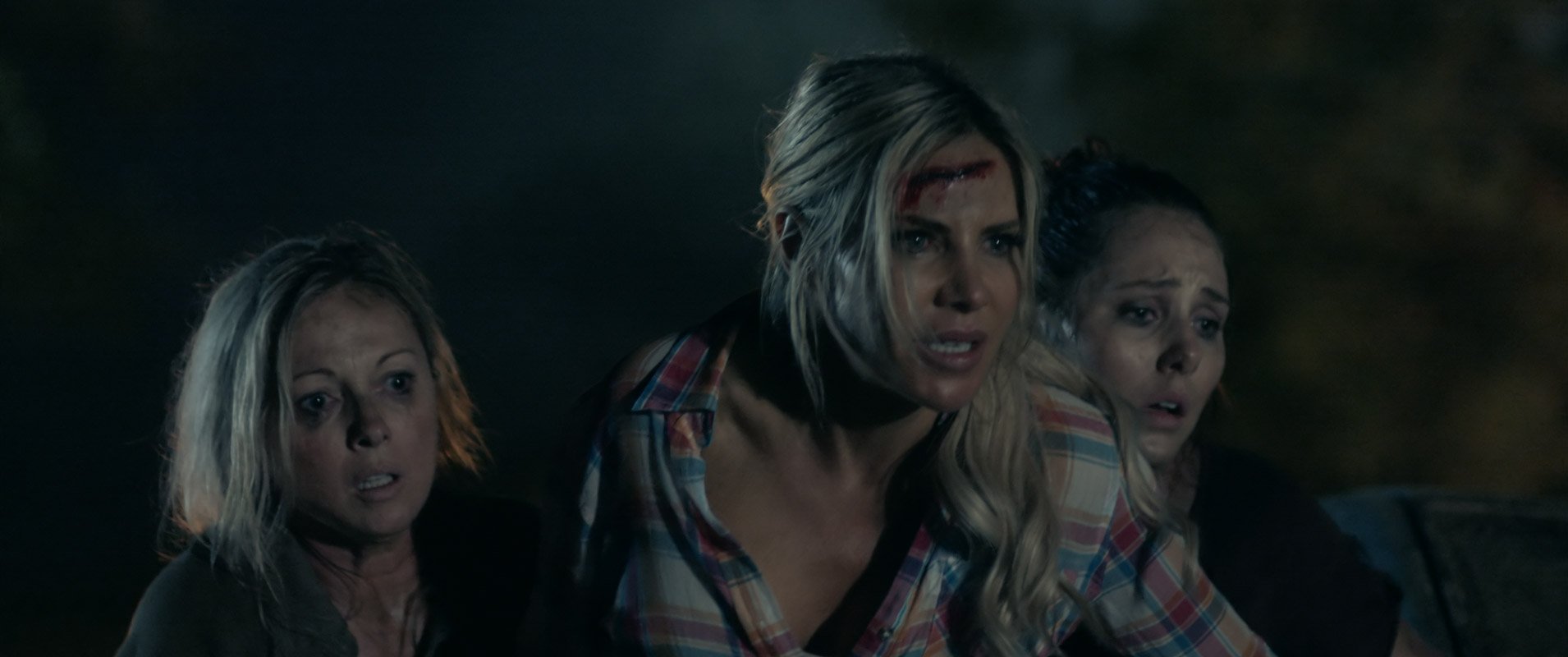
Bruce (Bill Moseley; The Texas Chainsaw Massacre 2, House of 1000 Corpses, Texas Chainsaw 3-D, The Blob, Smothered), Debbie (Simone Buchanan; Patrick) and family head out to Debbie’s family farm in the Australian countryside where they meet her gentle giant brother Bernie (Nathan Jones; Charlie’s Farm, Troy, Mad Max: Fury Road). Shortly after their family vacation begins, they come to realize they are sharing the outback with a man-eating monster. That’s basically the movie.

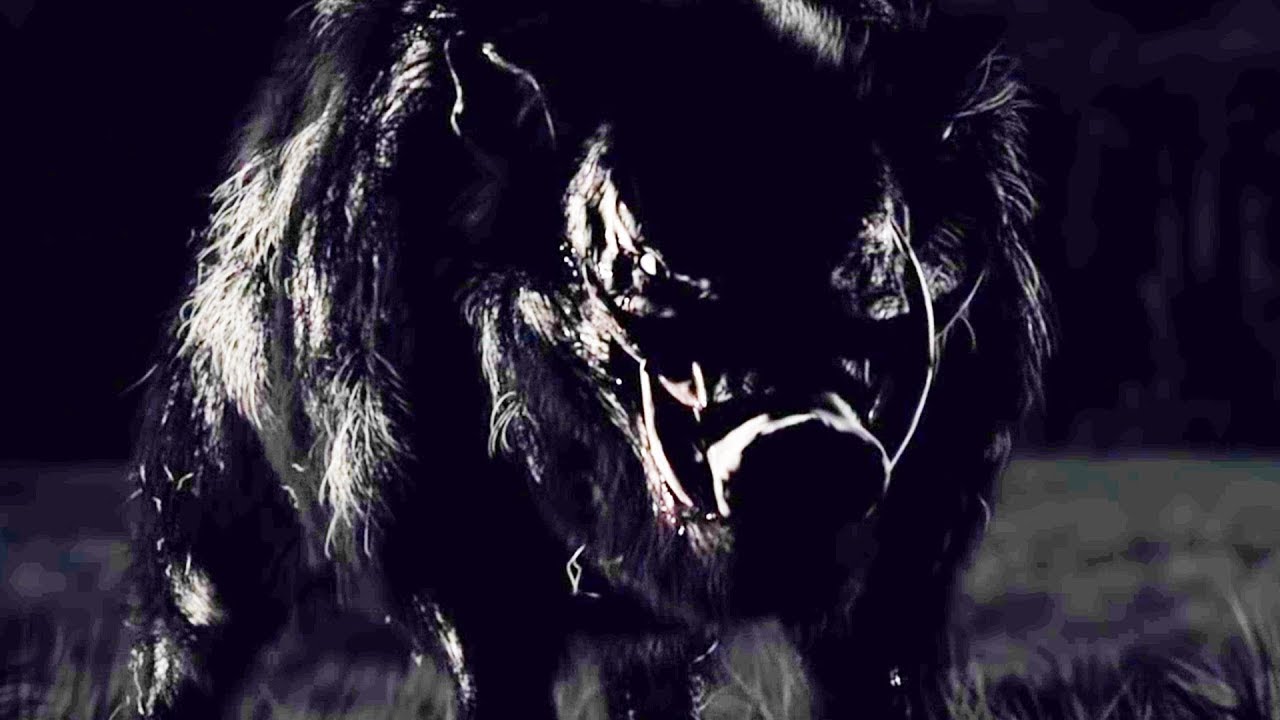
Right away this feels like a moderately-budgeted B-movie, and I was more than a bit worried. The early gore gags are grimy and mean (e.g., the razor wire tangle), but certainly could have been more graphic for my taste. But the moment we first see the non-CGI boar’s slobber-soaked gnarly mouth, blood-stained tusks and jagged teeth, I was awash with a sense of comfort that this wasn’t a mistake.

The death scene “action” is sort of simple, but also sort of wild in execution. There’s enough sloshy splish-splashing of blood and, for all its hokiness, it tries really hard and I appreciated that. Rounding out the special effects are mangled flesh-eaten corpses (complete with rended-flesh nudity and torn-off faces) getting plenty of screen time. They look great and boast a diversity of make-ups and horrid injuries. We also see the beast worrying a dead body with its limbs gangling about on more than one occasion and it is delightful.
This tusked beast is covered with open wounds as if it were a zombie and I love the practical creature effects as it goads and roars at its victims. It’s funny how this boar, which looks great by the way, looks just like the giant killer boar from Pig Hunt (2008) because of the massive facial lacerations and the dead white eye.
Director Chris Sun (Charlie’s Farm, Daddy’s Little Girl, Come and Get Me) reached deep into a line-up of Aussie actors for this. Watch out for the feisty old bogan Ken (John Jarratt; Wolf Creek 1-3, Rogue) and his crotchety beer buddy Blue (Roger Ward; Mad Max, Turkey Shoot), Steve Bisley (Mad Max), and Madeleine Kennedy (Charlie’s Farm) as a promiscuous camping victim. Ken is an unsung hero, taking every opportunity to challenge the boar. But Bernie (Nathan Jones)—well, let’s just say that I seldom smile as big as I did when I saw Nathan Jones emphatically singing along to Ice Ice Baby. But, oh, it gets better…
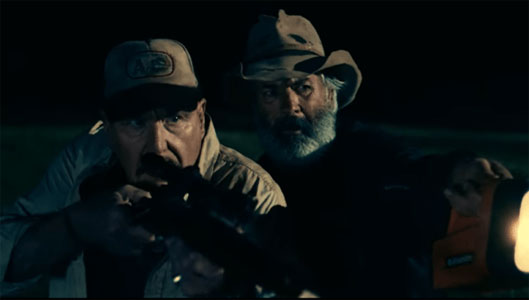
When the snarling giant rabid Hell-Muppet is completely in-frame in non-action shots it’s fully animatronic—which is so cool. When it’s in-frame and getting shot up, it’s ScyFy movie-of-the-week CGI. But it’s awesome anyway. I really don’t care because I like the way it moves, jerks, snaps its jaws and reacts.
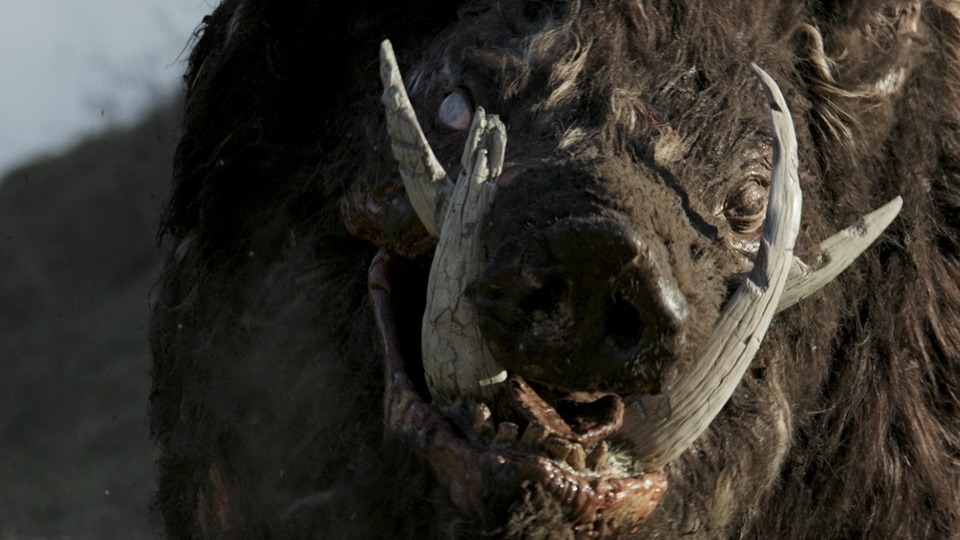
As we get deeper into the film, the action progresses. We finally see an on-screen kill. Despite being cheap CGI, it was handled well enough and I joyfully cackled at the violent thrashing of the body. Yes it’s fun and feisty… and it’s stupid. Somehow, in broad daylight and out in the open meadows, a full throttle charging two-ton boar “sneaks” up on several victims as if the ground wouldn’t be pounding under its massive frame and as if no one would notice something the size of a van plowing across the plains at them. This thing teleports like Jason Takes Manhattan (1989).
But once I saw Nathan Jones fighting a boar ten times his already huge size with a knife and his fists—all flaws are given. Even after he was nearly gored to death, he continued to taunt the boar like it was some barfight or Monday Night RAW. I was SCREAMING at the screen rooting for him even when it was clearly futile. I’m pretty sure I love this movie. And it’s great that Nathan Jones got to play a good guy!

After a worrisome slow start, this developed into the kind of B-movie that I not only enjoy, but that I love. This is the “B+” movie I want to own and add to my well-curated collection of giant killer boar movies. Whether you love Nathan Jones or giant animals brutally turning on man, this is probably for you.

Share this post:


MY CALL: After a terrible hour, this managed to turn into something I actually enjoyed. The gore and creature effects are great, even if limited to the last 20 minutes. MORE MOVIES LIKE Pig Hunt: For more (and considerably better) killer pig films, try Razorback (1984), Chaw (2009, aka Chawu) and the upcoming Australian film Boar (2017).
Opening scenes in horror movies are significant. We may not get into major reveals of our monster’s appearance or nature, but we often get glimpses of its capabilities or motives. And if the “I’ll be right back” red-shirt and his intestines are the paint, then the screen is our canvas. Based on the first few minutes of Pig Hunt, I’m immediately disappointed with my movie decision this evening. We see neither claw nor tusk nor tooth nor silhouette of our monster, and not one laceration of any sort is presented. Just someone screaming as something presumably horribly happens to him off-screen until he eventually silences and blood flows into frame. Yes, we know it was a giant boar because we read the movie title; and yes, we know this movie is probably gonna’ suck now.
BUT… for those patient viewers among you, this B-movie will indeed eventually pay-off in the end.
Heading out on a hunting retreat, John (Travis Aaron Wade; Living Among Us, Supernatural) takes his girlfriend (Tina Huang; Arrow) and his buddies to his newly inherited family cabin. They get directions from some strange folks at a gas station who warn them of The Ripper, a 3000-pound boar that wanders the woods. Sounds legit.
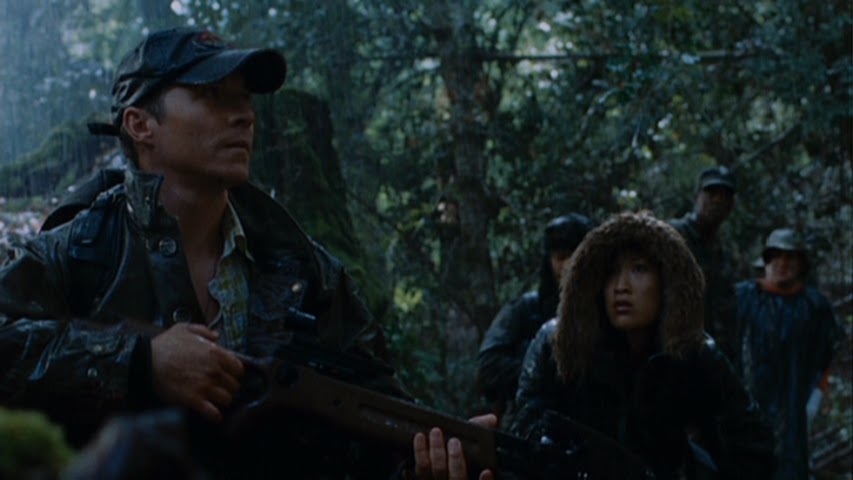
The writing is every bit as terrible as off-the-street-amateur acting, and both the editing and camera work are wretched. Director James Isaac (The Horror Show, Skinwalkers, Jason X) really hits below his weight class here. Knowing his other work, I am forced to wonder how this movie was so phoned-in compared to Jason X (2001)—and say what you want about that movie, but it was REALLY fun to watch and it knew exactly what it was. And while Pig Hunt will eventually wander into entertaining territory, it’s not until after we’ve wandered the boring woods for about 75-80 minutes! BUT… again, this movie will “eventually” pay-off.
The first 60 minutes feel like a porn screenplay got adapted into a super-low budget horror. The special effects department must have called in sick because the gore was generally absent for the first two acts. Our first two deaths are 100% off-screen and when we see a severed horse head it is completely uninspired. For those who care, there’s some dude-butt, hippie Xena Warrior Princess cultists living in a van, and a lot of toxic masculinity.

Eventually there’s a really brutal bone-protruding leg break and a boar is sloppily-gorily gutted, giving us some minor sense of hope that this DVD isn’t going to turn into a coaster or a frisbee in the near future. But it’s not until the second half of the final act that we come across reasons to actually support this film.
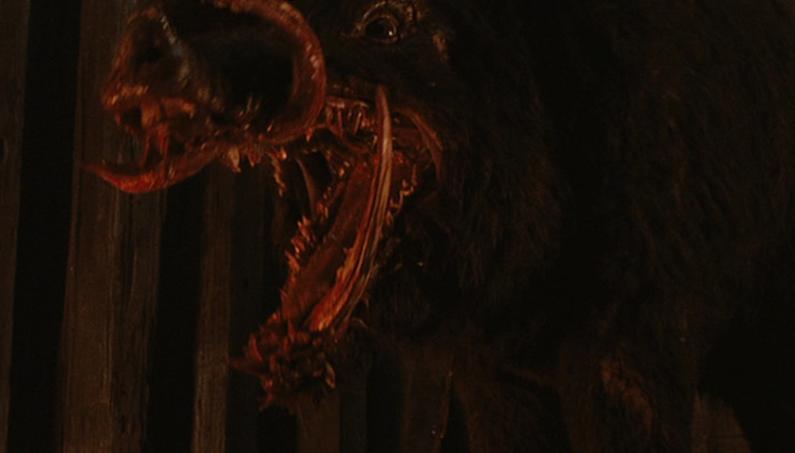
A half-dead chomped-alive dude is missing chunks from his arms and legs, and it is deliciously bloody. In these final 15-20 minutes, we FINALLY see our giant boar monster and, you know what, it’s awesome! I loved the practical effects. Its snotty skin covered in sparse thick hairs and horrible gashes; its big dead white eye wanders and blinks; its big animatronic mouth is littered with crooked chipped nightmare teeth… it’s a Hellbeast for sure. The thick opaque snot on this thing is unreal! Where has this thing been all movie!?!?!
How you know you’re watching a bad movie…
-
There’s this one sex scene that’s a little too raunchy, suspiciously over-written, and lasts a little too long despite the lack of nudity… I felt dirty.
-
Flower-power boar-worshiping cultists with sickles and kukris that farm marijuana and look like a group of porn stars took up LARPing.
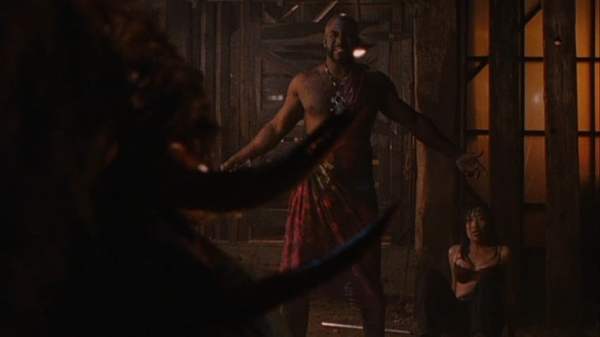
-
If the biggest boars in the area are 350 lbs and this one is 3000 lbs, isn’t that a bit extreme?
-
Gnarly-toothed, coke-snorting rednecks cracking a racist joke referring to a scantily clad Tina Huang as “takeout.”
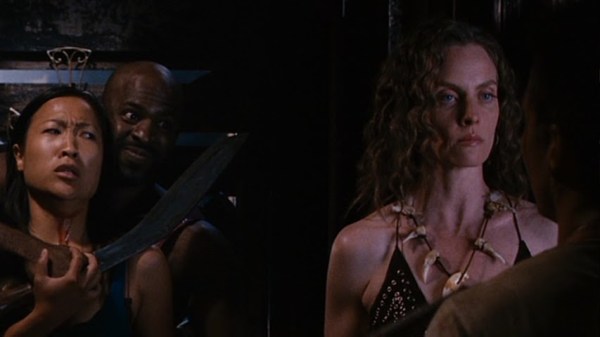
-
A vengeful family of rednecks led by a pappy priest in overalls.
-
Lots of boobs in hot springs. Lots of them!

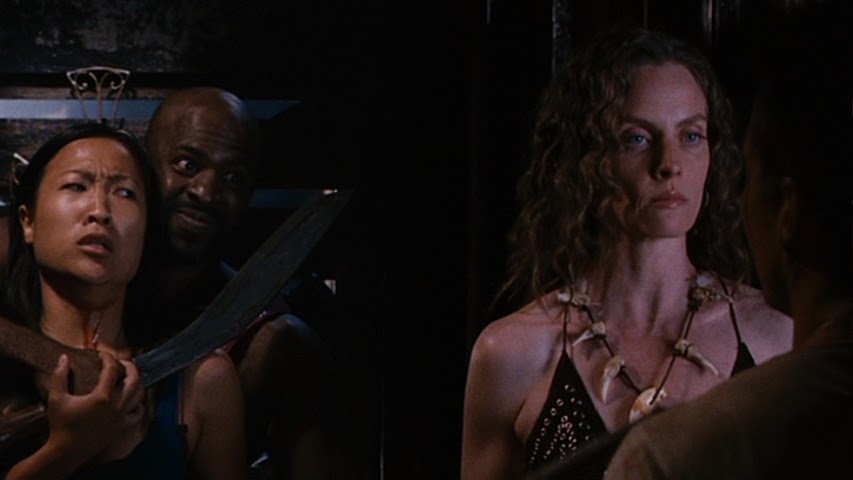

I spent an hour making the best of this weak flick until everything thankfully came to gory fruition in the end. I bought this blind and, against all odds, I do not regret it. My recent obsession with giant killer boar films did not lead me astray. Now on to the Australian movie Boar (2017)!
Share this post:


MY CALL: Seasons 1-3 were spectacular. Season 4 certainly has its share of impressive moments and remains a favorite and high-quality series—but it just doesn’t measure up to the previous seasons in my opinion. If you enjoy thoughtful cautionary morality tales, social commentary and science fiction, then this should be your favorite show ever. MORE SCI-FI ANTHOLOGIES: The Twilight Zone (1959-1964, 1985-1989, 2002-2003, 2019), The Outer Limits (1963-1965, 1995-2002), Amazing Stories (1985-1987), Oats Studios, Vol. 1 (2017), Electric Dreams (2017-2018) and Love, Death & Robots (2019). Also check out Dust on YouTube!

I’m a big fan of Black Mirror (2011-17; 4 seasons), an anthology series which focuses its allegory on our potential trajectories misusing, overusing, or addicting to technology and/or social media and the stories all seem take place somewhere in the near to distant future, once such technologies have developed beyond their present-day capabilities.
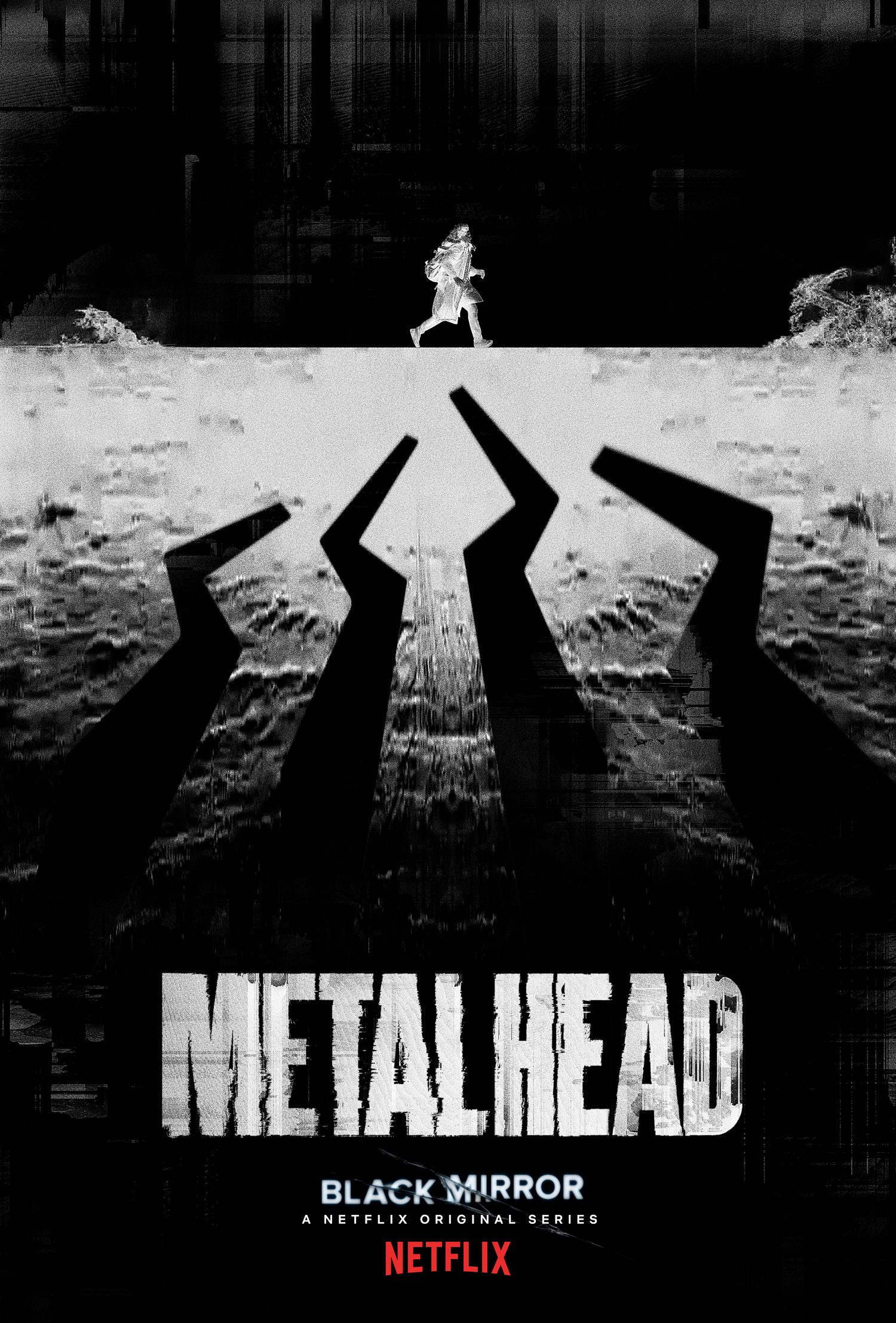
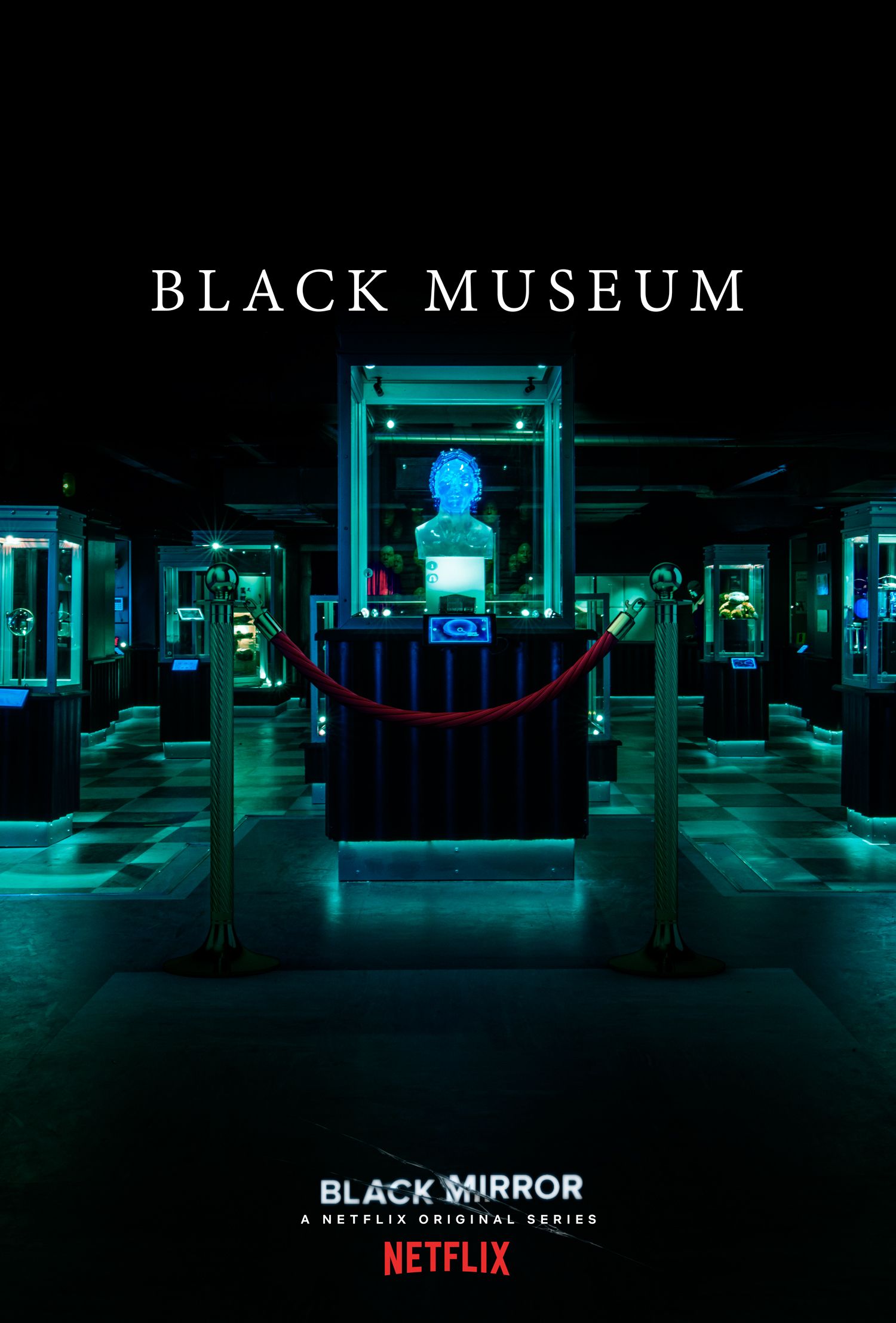
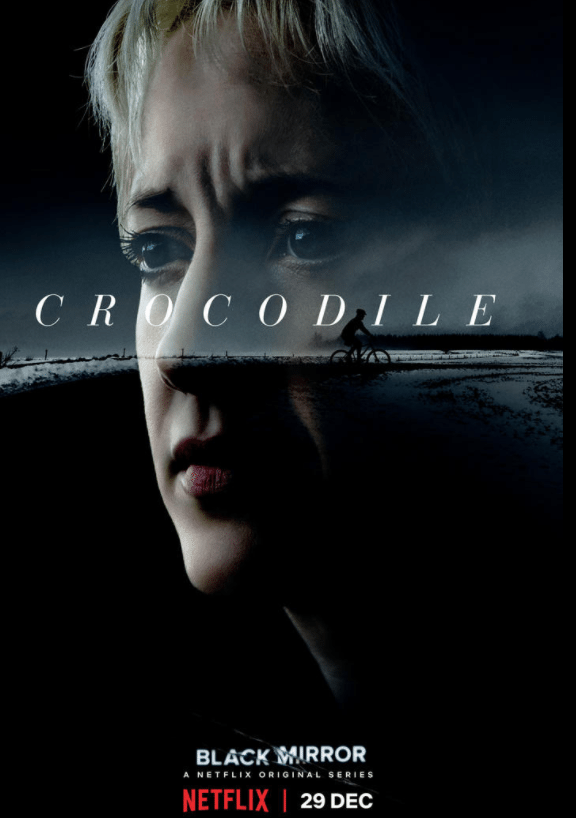
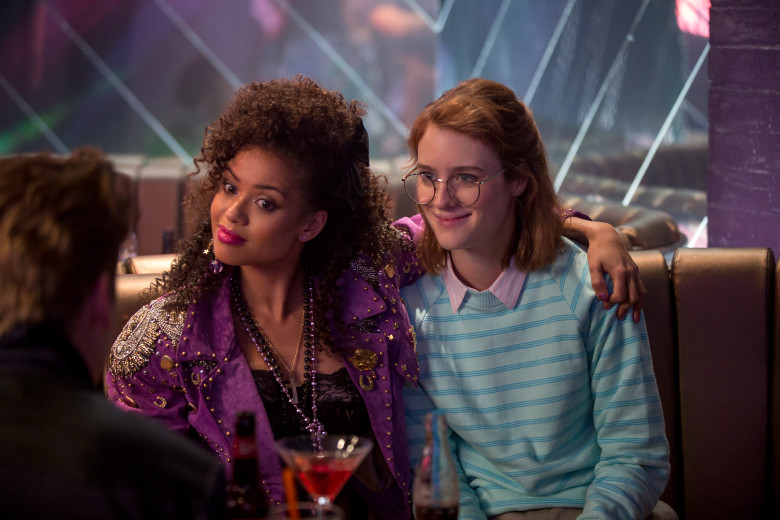
But most interesting is that some episodes feel more like thrillers (on the verge of horror-ish), deep science fiction (USS Callister), more dramatic (The Waldo Moment), crime thriller (Crocodile), action (Metalhead), romantic (San Junipero), and still others are almost like dramedies (e.g., Nosedive). So, whereas some cling to their science fictionality, others embrace sci-fi elements as simply a backdrop (or a “given”) in their films.
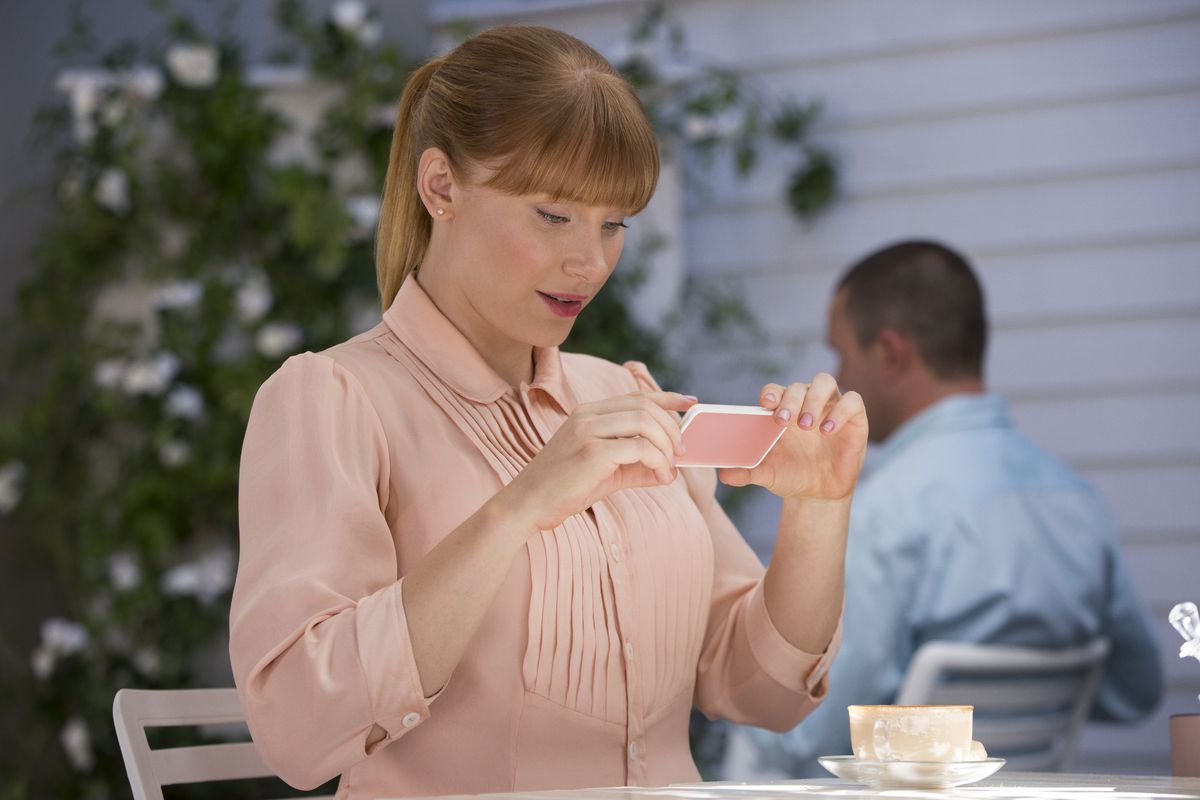
I’ll be the first to admit that the quality of the episodes can vary quite a bit, but each season still has its great segments/episodes. Season 3’s Nosedive was among the best of the entire series, with Bryce Dallas Howard (Jurassic World, The Village) starring in this social commentary on tracking rankings/ratings of everything—even individuals. Likewise, Domhnall Gleeson (Ex Machina, Dredd, Star Wars: The Last Jedi) shifted our sentiments from hope to harrowing in Season 2’s Be Right Back, which was about reconfiguring one’s consciousness from the sum of their electronic correspondence… and then the “next step.” San Junipero and White Christmas definitely share a powerful fanfare as well. These “episodes” were outstanding films all on their own.
Season 4 boasts a 6 episodes—compared to Season 1 with 3 episodes, Season 2 with 4, and Season 3 with 6. For me, the standout episode was the very first: USS Callister.
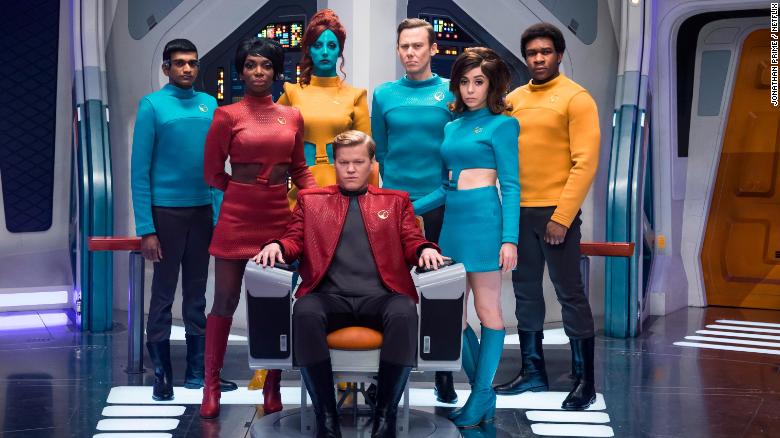
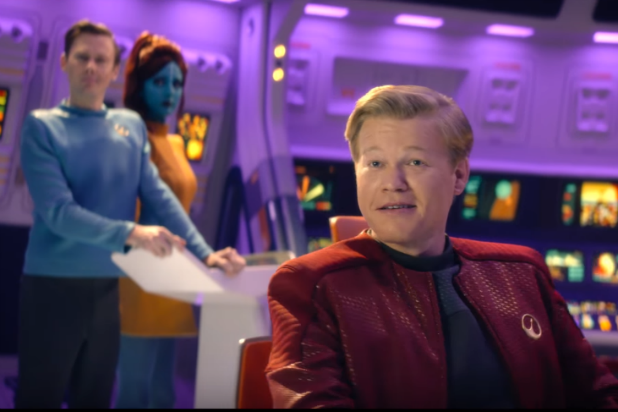
Wow, I adored USS Callister (director Toby Haynes; Doctor Who, Sherlock, Being Human) so much. Kind of twisted yet occasionally light-hearted and loaded with veeeery Trekkie-esque fun. The story is about the psychological tyranny of a starship captain (Jesse Plemons; Battleship, Paul, Fargo) and it will remind you of the little boy that always got his way in Twilight Zone: The Movie (1983). Among the crewman, Jimmi Simpson (Westworld, Abraham Lincoln: Vampire Hunter, Stay Alive) provides some of the comic relief, but everyone gets their moment to shine.
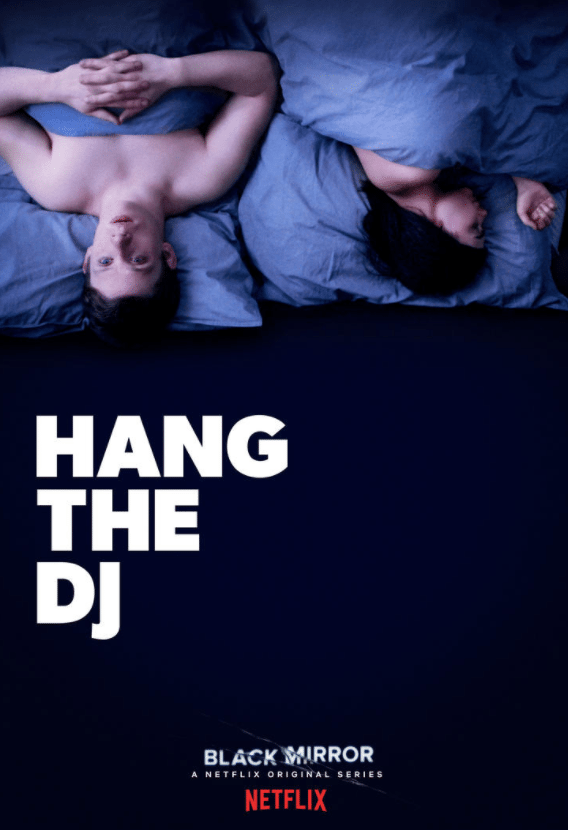
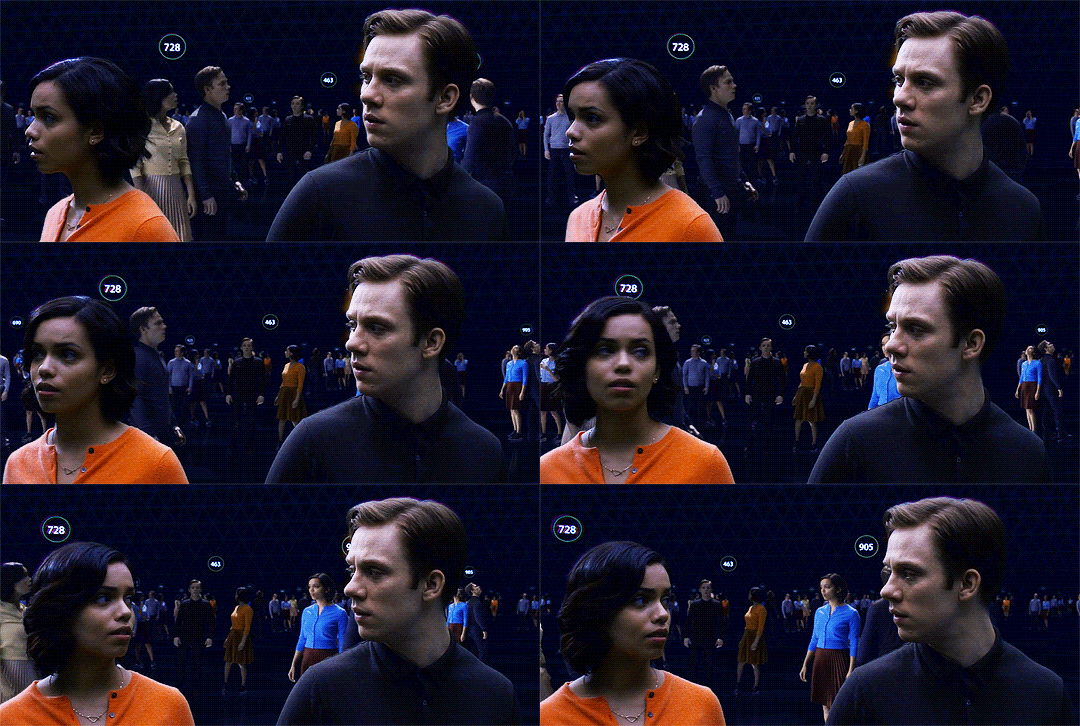
Still pleasant, but not even in the same league was the likewise lighter-hearted Hang the DJ—lightER for Black Mirror at least—which issues commentary on our young dating app-driven society.
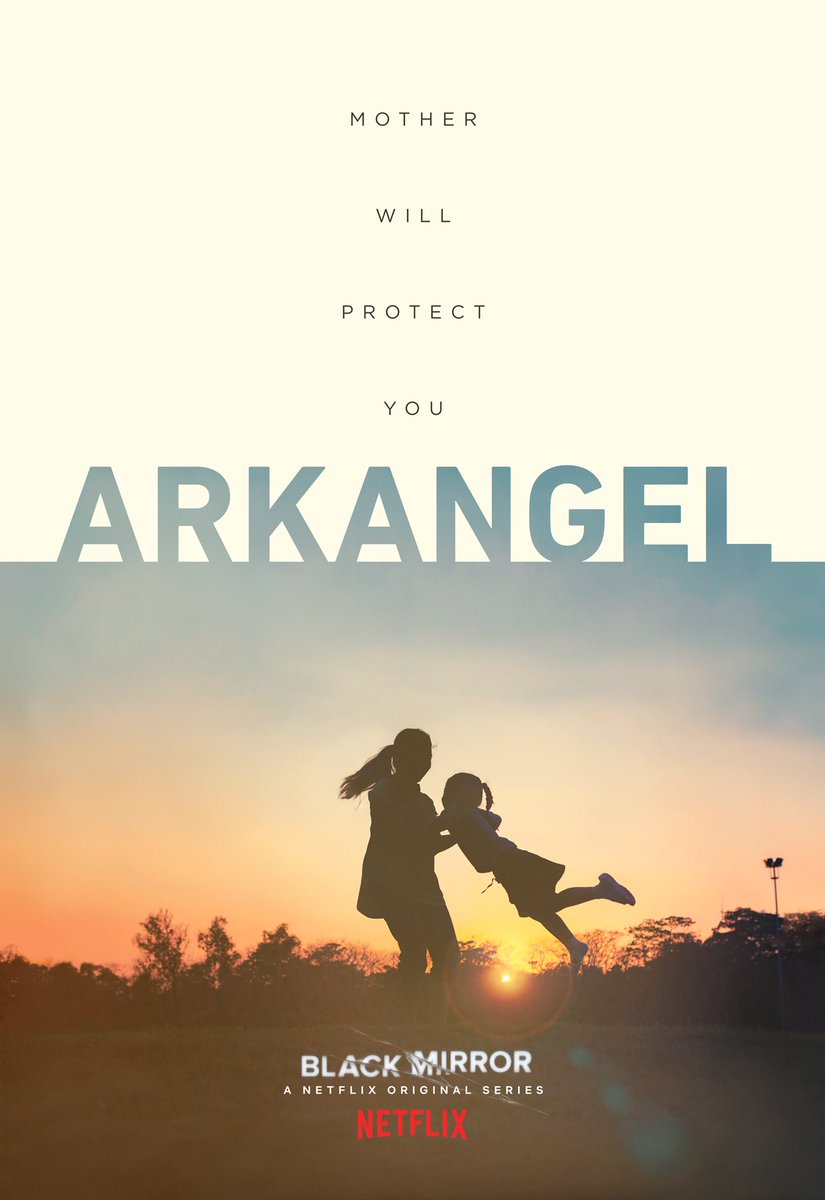
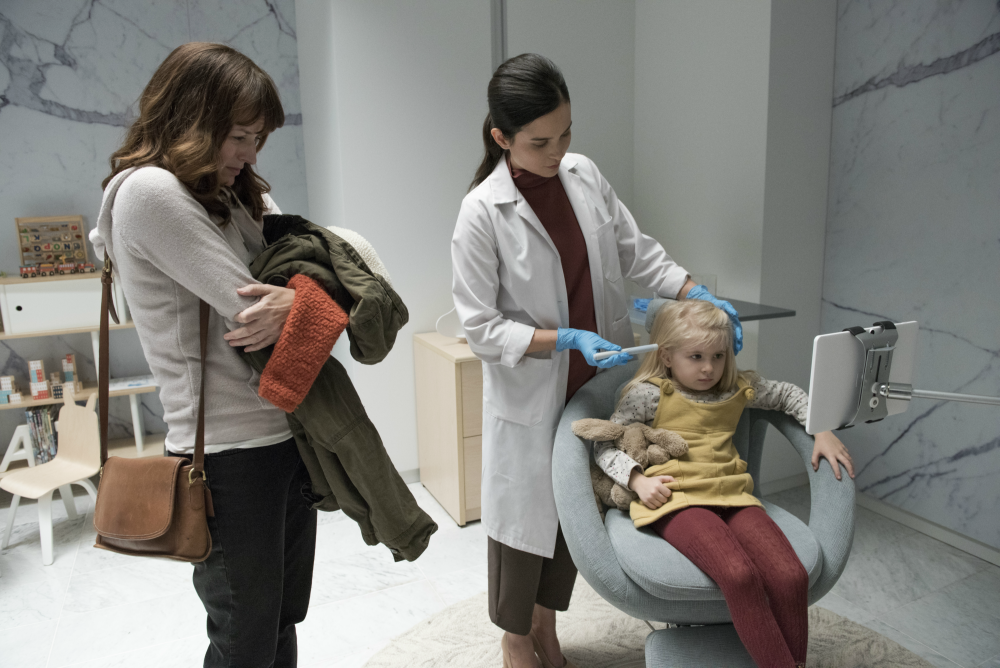
Getting more emotionally heavy is Arkangel (directed by Jodie Foster). “Mother will protect you” is the morally over-reaching cautionary aspect of this segment. The theme here is protection versus invasiveness between a mother (Rosemarie DeWitt; Poltergeist) and daughter. This started out so interesting—addressing issues of privacy and surveillance between parent and child—then fizzled to an intriguing yet sluggish pace. Still emotionally powerful, I found myself questioning the limits of what is okay and when to let go.
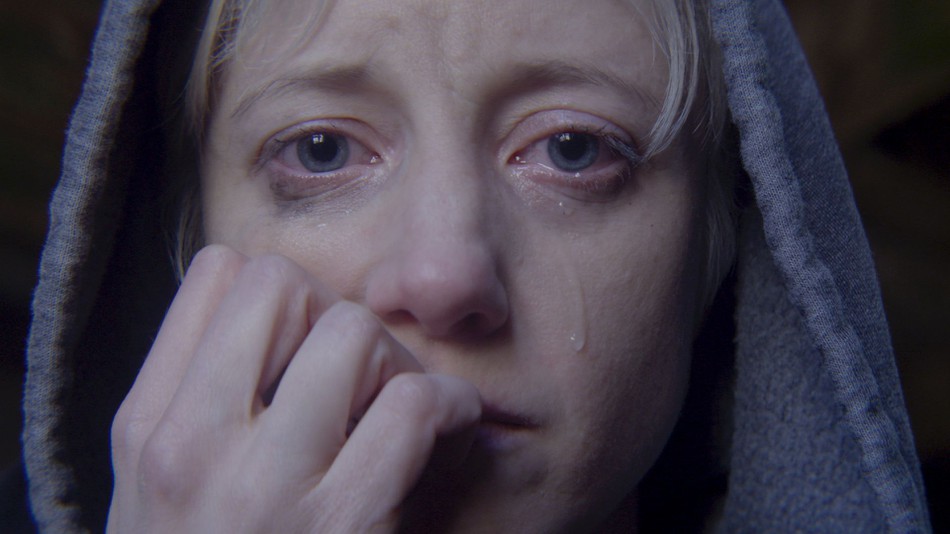
Outside of delivering the typical allegory on where a certain technology may lead us and how we’ll respond to it, Crocodile packed little punch for me (in the context of the Black Mirror series). Well-acted, but more vague in its intentions compared to the other rich episodes. This completely lacked any clear moral compass. On its own it’s a great (and intense) short film with solid allegory and wonderfully clever allusions in the title. But our murderous perp never learned any lesson outside of the commonality that we should be good and honest and moral people. She behaved like a sociopath with little reflection outside of her aversion to getting caught. Again, it just left me with an empty feeling. But… perhaps that was the goal.
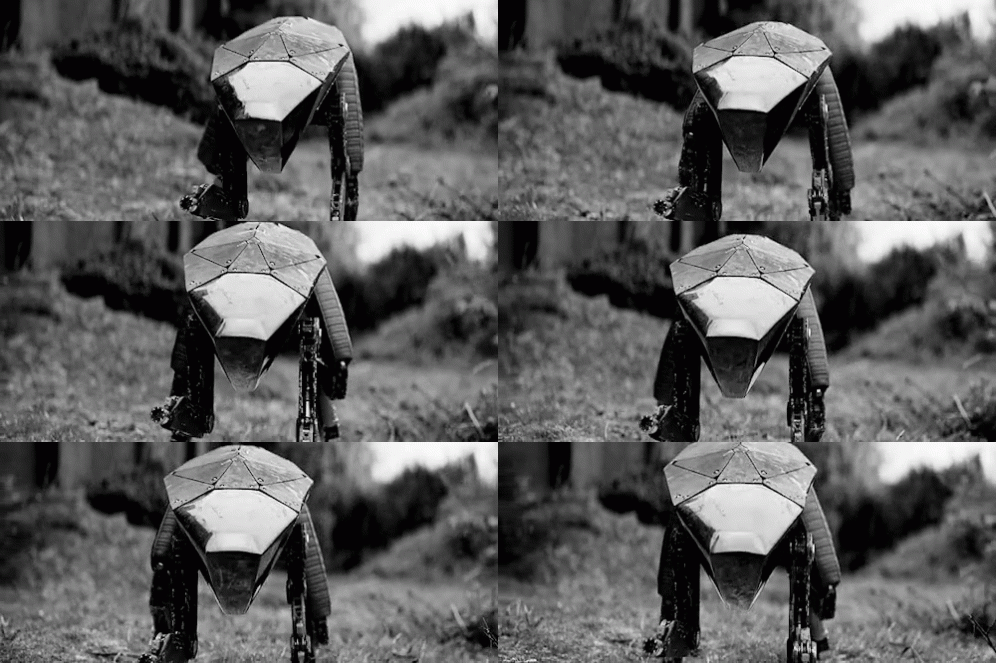
Metalhead was an odd killer robot film with an odd (if not obscured) message of morality. Good film… but wouldn’t have expected to find this in a Black Mirror season—but more likely Dust on YouTube. The filmmaking and writing are near Black Mirror S1-3’s “quality,” but the style is not what we’ve come to love in the series. This is more… mean. Almost mean like S1E1 (i.e., pig-banging prime minister).
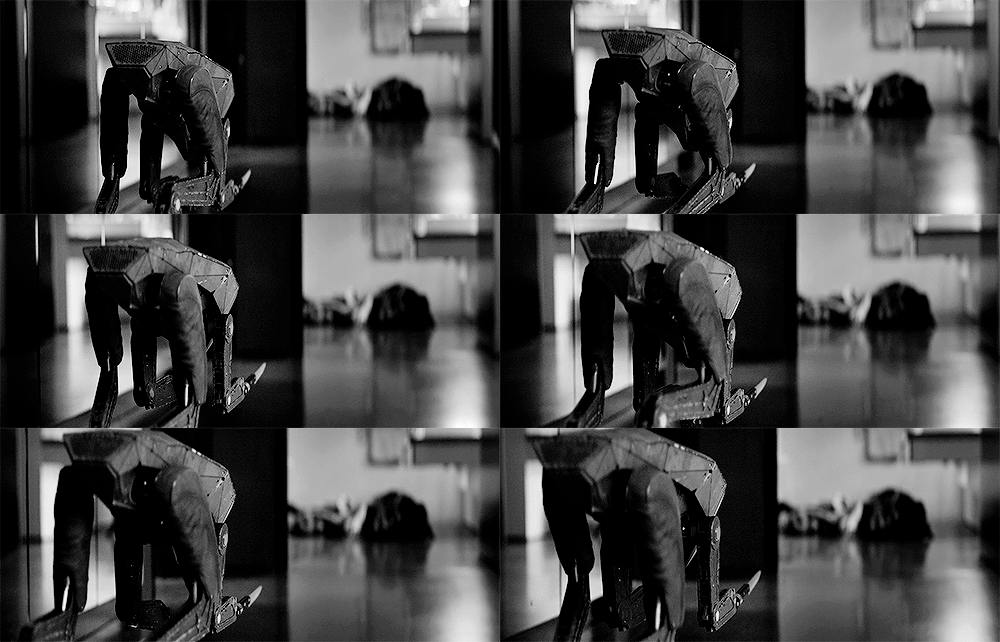
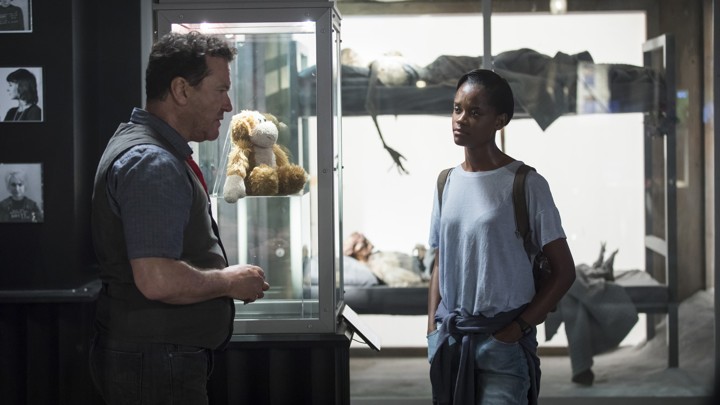
And remaining askew of my expectations in style, I feel like a few “okay” ideas too minor to develop into an entire film resulted in Black Museum, an abbreviated anthology film in itself. Cool in concept, poor in execution, but not a good way to close a season in my opinion.
Overall, I feel that with each passing season, Black Mirror drops a bit in quality. But even with such criticism, I continue to love this series and the notions it chooses to explore. Very much looking forward to Season 5 (June 2019).
Share this post:

You can download the pod on Itunes, Stitcher, Tune In, Podbean, or Spreaker.
If you get a chance please make sure to review, rate and share. You are awesome!

.
The MFF podcast is back, and this week we’re talking about Judge Dredd (1995) and Dredd (2012). These two movies about the same character couldn’t be more different, and we love that. Both movies had behind the scenes issues, and the end results were either fantastic or uneven (guess which is which). However, they are both entertaining in their own way and if they were combined, would make for a fun Dredd movie. In this podcast, you will hear us talk about flying cars, Armand Assante’s line delivery, and the training regime of rookie Judges. If you are a fan of Dredd, you will love this episode.
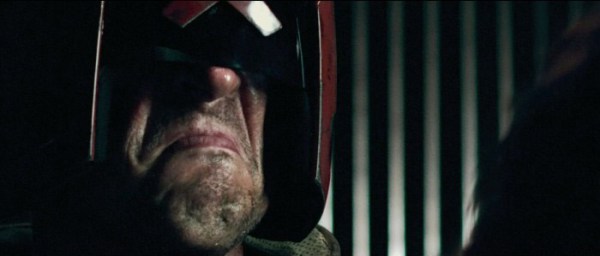
Karl Urban’s chin does some great work in Dredd.
If you are a fan of the podcast make sure to send in some random listener questions so we can do our best to not answer them correctly. We thank you for listening and hope you enjoy the pod!
You can download the pod on Itunes, Stitcher, Tune In, Podbean, or Spreaker.
If you get a chance please make sure to review, rate and share. You are awesome!


 Movies, Films & Flix