Cheap Thrills: A Most Dangerous Game

Cheap Thrills is the story of a down on his luck man who is drawn into a night of insanity. Pleasant it ain’t but it has an organic nastiness that doesn’t feel forced. It is a confidently directed trip down a rabbit hole of twisted human nature.
I was drawn to Cheap Thrills because of its distributor. Drafthouse films is a Texas theater company who’ve been releasing risky films and documentaries like The Act of Killing, Bullhead, Miami Connection, The FP, Four Lions, A Field in England, Klown and The ABCs of Death. Their films have an indie pedigree that I enjoy so I knew Cheap Thrills had something to offer.
Cheap Thrills carries the Alamo flag (89% RT) successfully and it is the epitome of the Drafthouse motto:
Destroying the barriers between grindhouse and art-house
The barriers are coming down as this violent little film is beginning to collect widespread media attention (Grantland loved Cheap Thrills). Recently, it won the midnighter madness award at SXSW and has been making the rounds around the big media outlets such as EW and Forbes.
Director E.L. Katz who formerly wrote for Fangoria does a great job of capturing the claustrophobia, humor and horror of the situation. He draws strong performances from the cast and elevates the material to where even the most conservative of critic appreciates the work. The film can be frustrating and vague but I think that will only further discussion and leave more to the imagination of the viewer. It leaves you with questions in which there are no easy answers.
The film centers around a man having a very bad day. Pat Healy (Innkeepers) is drinking away his problems one night after losing his job. He is close to eviction and has to figure out how to provide for his family. He is about to leave when he bumps into an old friend played by Ethan Embry (Empire Records, Can’t Hardly Wait). The two catch up and their dialogue does a good job of defining the two soon to be hurting characters.

Eventually, they are invited to join up with David Koechner (Anchorman) and his trophy wife Sara Paxton (Innkeepers, Shark Night) and it all gets weird. The husband and wife are celebrating her birthday and they start throwing money away like nothing. They bring the two men into their betting games and the wheels of doom are set in motion.
It starts with a tequila drinking contest for $50. Then, whoever gets slapped first by a woman gets $200. The dares escalate (holding breath, revenge on neighbors, peeing on shoes) and it all culminates to a doozy of a final shot.
The movie has a nasty streak that will alienate many but capture a solid cult following. It wears you out but it doesn’t drain you with depravity. It walks a tight rope of gore and despair but manages to not fall into a nothingness abyss. David Koechner and Sara Paxton remain mysterious throughout as we never get any revelations about them. Are they really a couple? Have they done this before? The questions are welcome because it leaves you to come up with the answers.
Cheap Thrills is not for everyone. However, it is a fantastic genre piece that will garner a huge cult audience and push Alamo films to the next level of art-house grindhouse.
Share this post:

John’s Horror Corner: They Live (1988), featuring bubble gum, kicking ass, cheese dip and corporate alien takeovers

MY CALL: This sort of hilarious yet smart social commentary is like if a budgetless comedic The Matrix came out in 1988…oh, and there was no “matrix” or kung fu. Okay, fine! It’s nothing like The Matrix! MORE MOVIES LIKE They Live: The Hidden (1987), The Stuff (1985), The Invasion of the Body Snatchers (1978) and, on a microcosmic level The Thing(1982, 2011), all provide stories in which trust and conspiracy are tested during surreptitious alien takeovers.

Because the then-famous then-WWF wrestler Roddy Piper is playing a nameless drifter hero he is cast as “Nada” in the film–even though no one ever refers to him by this nonsense casting name. With this role Piper joins such nameless hero ranks with Kurt Russell (Soldier), Kevin Costner (Waterworld, The Postman), Antonio Banderas (Desperado), Scott Adkins (El Gringo), Dwayne Johnson (Faster) and Ryan Gosling (Drive).
Nada (Roddy Piper; Hell Comes to Frogtown) is new in town, strangely homeless, and looking for honest work. He and his sculpted pre-WWE body find work at a construction site where he meets Frank (Keith David; The Thing, Smiley), who has also fallen on hard times. These two tough guys get along immediately and we get the strong sense this will be a buddy movie.
Visionary writer/director John Carpenter (The Thing, Prince of Darkness) paints a world that is not unlike where you may live today. Like mental addicts linked to an IV-drip of social media, he illustrates the human race as media-steered cattle even before the advent of Facebook, Twitter, iPhones and email made this task of technological submission even easier.

Wow…how Brave New World of them.
Loosely touched upon in Invasion of the Body Snatchers (1978; the “good” version) and The Matrix (1999), this film answers the age old question: “if the world was run by aliens would we know about it?”
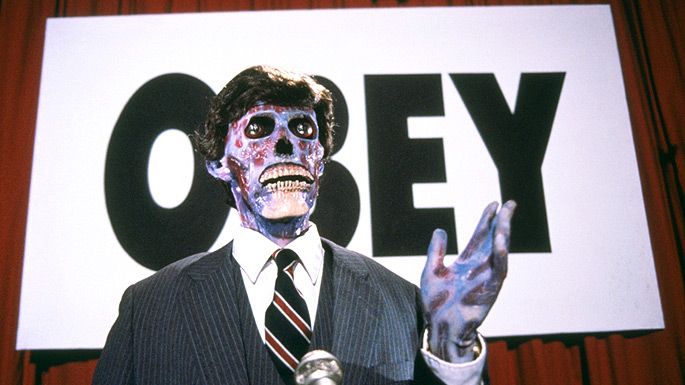
Well, lucky for us Nada stumbles upon a pair of sunglasses that reveal the truth about society; how we’re besieged with imperceptibly numerous subliminal messages guiding our every decision…and how there are aliens living among us who look like their “face fell in the cheese dip back in 1956.”

To quote Schwarzenegger: “You are on ugly mother…”

But how does Nada get Frank to believe his crazy aliens and magic sunglasses story? With a back alley WrestleMania streetfight of course. I should add that Roddy Piper and Keith David have the longest, funniest and most painfully awesome fist fight of the 80s. It goes first They Live (1988), then Rocky IV (1985), then Bloodsport (1988) and Cyborg (1989), then a bunch of Schwarzenegger movies, and then whatever else! This fight accounts for most of the violence in the movie and endures for a gloriously long running time.

Regarding his two-man alien resistance, Nada proclaims “I’ve come here to chew bubble gum and kick ass. And I’m all out of bubble gum.” I guess the human race is lucky the corner store was all out of Bubblicious. I can’t imagine these ETs-in-humans’-clothing will be too hard to fend off. The aliens enjoy idle small talk and gold watches, and their takeover plan involves a corporate buyout of the upper economic echelons of mankind to help control the poor. They don’t exactly sound like good fighters.
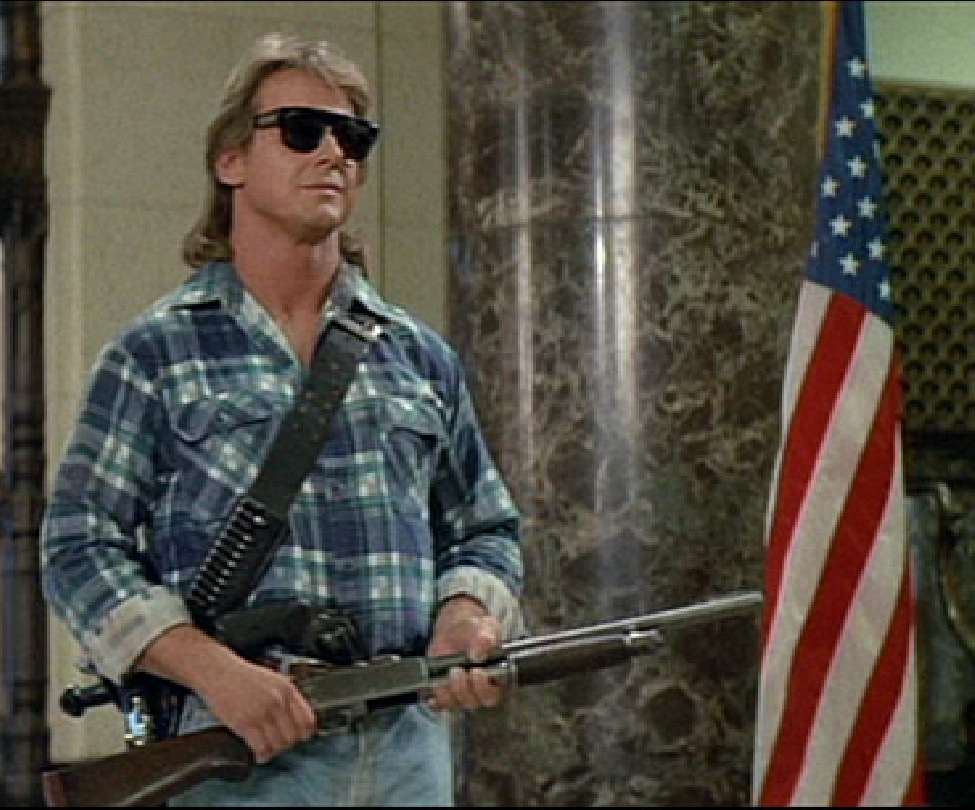
If you somehow missed this allegory-rich 80s horror staple, then get to it! It’s hilarious, it has the best fight of the 80s, and it has a lot to say about how we let ourselves be led.

Share this post:

The Retrial of The Counselor

Now that the dust has settled and the critical vitriol has dissipated I think it is a good time to look back at The Counselor. The movie received an unfair “guilty” verdict by the critics and general public upon its release. It was dubbed a failure (34% RT, $16 million total at box-office) and conversation mainly focused on Cameron Diaz’s car antics and dubbed accent. The problem I have is the populace wasn’t looking at the facts and their expectations were incorrect. The Counselor was a hard R-rated film written for the screen by the guy who wrote Blood Meridian and No Country for Old Men. It was never meant to be easy and the violent lyricism was bound to isolate cinephiles from the casual movie goer.
The movie was far from a failure. I appreciated the monologues and all-in cast who dove head first into the dialogue. The simplicity of the narrative and the reflection on crime made sense to me. I wasn’t expecting a crime thriller because I knew of McCarthy’s other works. However, I can understand how a studio would watch this and be absolutely stymied as how to market it. There are no easy outs or gun battles. The main characters don’t find solace or ease of mind. In the end, you are left with quotes like this:
When it comes to grief, the normal rules of wealth do not apply. Because grief transcends value. A man would give entire nations to lift grief off his heart and yet, you cannot buy anything with grief, because grief is worthless.
I love that a bleak, exposition free screenplay by Pulitzer Prize winning Cormac McCarthy made it into the mainstream Hollywood system. The movie is full of wonderful monologues and references to “catfish” that are pleasing to the literary ears. Alex Pappademas of Grantland sums it up perfectly:
The dialogue is often eccentrically beautiful and appears to have been typed with zero consideration of the fact that people would someday have to say all these words out loud
McCarthy’s other books All the Pretty Horses, No Country For Old Men and The Road had the luxury of screenwriters working them into a narrative structure. The Counselor skips the middle man (no saving of the cat) and allows McCarthy’s words to remain unhindered. The problem (to some people) with the unhindered script is it features really good-looking people waxing poetic via archaic words about diamonds, death, grief and women. Nothing goes boom and bodies found in barrels are treated as practical jokes and not horror.
The proceedings can be maddening but the result is a surprisingly effective film that is simple in nature and doesn’t pander to explanatory wormholes. The Counselor has some very funny moments as well. .
For instance, there is a scene where the Counselor is asked to bail a man out of prison. Rosie Perez’s character offers to pay off the $400 cost by giving him a blow job. The Counselor replies: “You’d still owe me $380.” The humor is dark but you appreciate that an 80-year-old writer and 76-year-old director can still bring the dirty laughs.
The lead characters are either in over their heads, willing to stay in the deep end or overly confident that their escape raft won’t sink. They all have Trojan horses and are the epitome of pride coming before the fall. They are playing in a world (Mexican drug cartels) that doesn’t respond well to failure and their success makes them feel bullet proof.
The Counselor should get a second chance. It gave the world something different and provides many memorable moments. It is a gritty glimpse into McCarthy’s world of seedy characters and deadly environments that was unfairly judged.
Share this post:

The Warrior and the Sorceress (1984), one of the better “bad” 80s Sword & Sorcery movies

See the four-breasted woman in the poster? LOL! Yeah, so that happens in this movie.
MY CALL: From tentacle monsters to four-breasted exotic dancers, this is definitely one of the better “bad” Sword and Sorcery movies of the 80s. MORE MOVIES LIKE The Warrior and the Sorceress: Like all the fantasy but don’t care for all the “bad”? Let’s try Legend (1985), Beastmaster (1982), Conan the Barbarian (1982), Conan the Destroyer (1984) or Willow (1988) on for size. Like the “bad”? How about Flash Gordon (1980), Kull the Conqueror (1997), Krull (1983), Conquest (1983), Deathstalker (1983) and Deathstalker II: Duel of the Titans (1987). All of these movies are better than Barbarian Queen (1985) in every possible way except for amply breast-filled minutes of screen time.

Representing the “warrior” of this movie title, the mysterious swordsman Kane (David Carradine; Kill Bill, Kung Fu: The Legend Continues) wanders into a small town, feels a bit parched, and frees the local well from hostile mercenary control, returning the water to the thirsty townsfolk. Naturally, they’re so happy that they celebrate with nude well-top pole-dancing. Yeah, it’s gonna’ be that kind of Sword and Sorcery flick.
The town is run by two criminal rulers: Zeg the Tyrant (Luke Askew; Frailty), the more calculating politico, and Bal Caz, an obese fool who accepts counsel from his monstrous pet lizard–reminding me of Jabba the Hut and Salacious Crumb. Kane behaves more as a manipulative rogue than a warrior, pitting Zeg and Bal Caz against one another for his own personal gain.
Setting the Sword & Sorcery mood, this world has two suns and scarce water (much like Dungeons & Dragons Dark Sun campaign setting), there is some mythically sharp magical Sword of Ura (Dungeons & Dragons’ Sword of Sharpness), and topless mystics and servants abound. The “sorceress” Naja (Maria Socas; Deathstalker II: Duel of the Titans, Wizards of the Lost Kingdom) is kept as Zeg’s slave and her only magical qualities are revealed by her wardrobe, or lack thereof. She pretty much just walks around topless all the time. I don’t think we ever don’t see her topless unless she’s altogether off-screen. Not only is she perpetually topless, but for some reason no one ever seems to notice…you know…because that’s totally normal. This would have been more appropriately titled The Warrior and the Topless Sorceress.

Carradine was 48 when this was released, but boy did he look worse for wear. He could have passed for his mid-50s easily. How about the muscled version of Carradine on the movie poster? Reminds me of the muscled, and equally unwarranted Clark Griswold from the National Lampoon’s Vacation (1983).

It turns out that as our hero, Carradine is about the least-muscled person in this whole movie, and I’m including the topless sorceress. Do some push-ups or something, man! Despite the skills we know Carradine possesses, the fights in this movie are laughably bad.

This was the single best moment of action–a severed limb. Had I blinked I’d have totally missed it.
The acting is pretty lame across the board, but the best performance was given by Bal Caz’ bipedal well-dressed pet lizard thing, which also served as the most interesting character in the movie. Was this reptile pulling the strings the whole time? Were Bal Caz and the lizard romantically involved? There was so much to explore there. At only 81 minutes, they certainly had room to expand on this little sideplot.

Don’t they look happy together?
What separates this movie from Deathstalker (1983) and the like is that the humble budget included a tentacle monster (much like a Roper or Otyugh from Dungeons & Dragons) to contribute to the fantasy element.

That, and of course a four-breasted exotic dancer. Yes. FOUR! Total Recall (1990, 2012) had a three-breasted prostitute, Necropolis (1987) had a six-breasted necromancer, but before any of that we had a four-breasted exotic dancer paving the way for the polymastia-gifted ancillary female characters film! God bless this movie!

As far as overall content and quality goes, this is a pretty good “bad” Sword and Sorcery movie. It has all of the nudity of the shameless contributions to the genre, yet it makes the effort to deliver more story (however poorly written) and fantasy elements as well.
Share this post:

Stargates, Websites and Meta-Horror: Seven Lesser-Known 1994 Films That Influenced Cinema
Twenty years ago I was standing in a movie theater ticket line with nothing to lose. When the box office opened up I asked for “one ticket to see Timecop.” I was a young kid who was tired of sneaking around theaters and I wanted to gamble. The guy looked at me, smiled and gave me a ticket to the R-rated JCVD action flick. That was my 1994. I watched every movie from Angels in the Outfield to The Last Seduction and became fully immersed in all cinema had to offer. It was a glorious year for movies that proved to be incredibly influential, eye-opening and a demolisher of preteen naivety (Thank you Snowballs, Gimps, Linda Fiorentino and Natural Born Killers).
The following post discusses the less discussed or forgotten films of 1994 that had a huge impact on today’s cinema. Their directing decisions, writing and marketing played a big part in molding careers, blockbusters and global advertising over the last 20 years.
Here is the list! Enjoy.
1. Heavenly Creatures
After Bad Taste, Meet the Feebles and Dead Alive Peter Jackson directed Heavenly Creatures. The Oscar nominated film proved Jackson had more cinematic prowess than creating spectacular splatter gore. Roger Ebert had this to say about it:
What makes Jackson’s film enthralling and frightening is the way it shows these two unhappy girls, creating an alternative world so safe and attractive they thought it was worth killing for.

Jackson had successfully blended fantasy/reality by casting fantastic leads (Kate Winslet’s first film), creating a beautiful alternate world (visual effect company Weta’s first film) and writing a fully realized friendship between the two girls. Jackson and writer Fran Walsh (Jackson’s partner) worked hard to forge the bond and have talked about the importance of the relationship that went awry.
The friendship was for the most part a rich and rewarding one, and we tried to honour that in the film. It was our intention to make a film about a friendship that went terribly wrong.
The stressing of friendship is evident in Jackson’s later film trilogy The Lord of the Rings. Jackson carefully crafted Tolkien’s work and created a beautiful middle earth inhabited by wonder, darkness and friendship. Jackson and crew made the fantasy palatable and the casting of the central roles was spot on. Jackson’s prior work in horror comedy and his careful crafting added an unthinkable layer to the film that helped get the small nuances right (Hobbit foot hair). The films went on to win Oscars, collect over a billion dollars in revenue and establish Jackson as an A-list power player.
2. Stargate
The story of wormholes, aliens and James Spader feeding hairy creatures candy bars spawned 350+ television episodes, copious novels and the shortly held belief that French Stewart was badass.
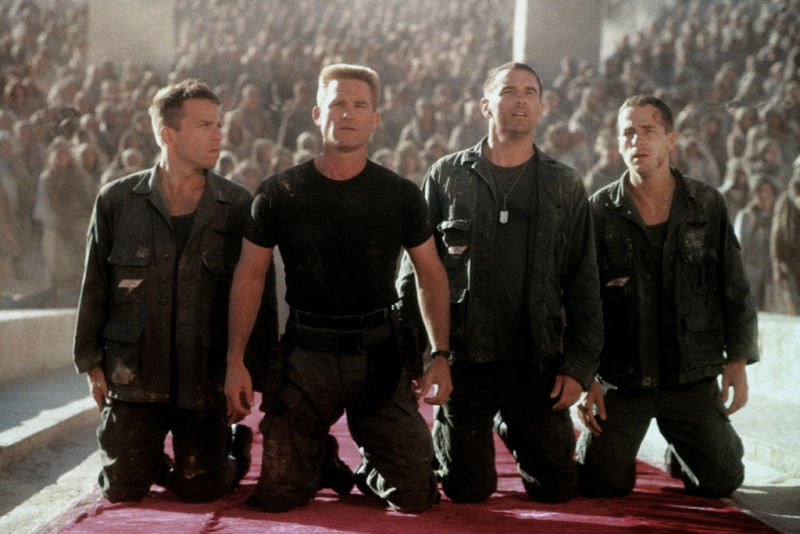
Stargate was a science fiction hit that made Roland Emmerich and Dean Devlin (writer, producer) household names. Shakespeare it wasn’t but it began the Emmerich/Devlin reign of huge dumb that is still taking place today.
Before Stargate Emmerich helmed the uber-violent JCVD/Lundgren vehicle Universal Soldier. The movie did well at the box-office and opened the door to Stargate. The film was originally planned as a trilogy but the sequels were scrapped when Roland decided to make the super blockbuster Independence Day. ID was a massive hit and was followed up by the critical dud Godzilla. Their success from Stargate and early buzz from ID allowed Emmerich and Devlin to make Godzilla “their way” (they’ve since apologized). The marketing famously involved highly secretive tactics that never gave the audience a glimpse of the monstrously large lizard.

Godzilla was everywhere and the world couldn’t wait (listen to the great HDTGM podcast about the film). It was an international hit but pretty much everyone disliked it. Scott Mendelson of Forbes wrote a restrospective on Godzilla and explained the effect it had on today’s financial projections.
In terms of its box office, it serves as a lesson about lowering expectations and a sober exhibit of declining attendance and inflation. Sony spent a year boasting that they had the unquestionable summer box office champion and thus they were smacked down when the film merely did ‘very good’ at the worldwide box office. Today the studios desperately try to spin opening weekend projections as low as possible so they can bask in ‘surprise’ when the film ‘over performs’. In the summer of 1998,Godzilla was considered an artistic failure and a box office loser. By today’s standards, they’d still be half-right
Stargate was the unassuming science fiction flick that opened the door to 2012, The Day After Tomorrow, 10,000 B.C. Anonymous, White House Down and the game changing Godzilla.
3. The Specialist
The Specialist was the last of a dying breed. It was an R-rated action film that was based around Sharon Stone and Sylvester Stallone having sex in a shower. Hal Hinson of the Washington Post had an interesting take on it:
With all the preening, posing and stretching, it’s hard to know if “The Specialist” is an action movie or an exercise video. Or a porn movie without the sex. Fit, trim and tanned to a luscious shade of gold, the stars offer their bodies to the camera as if they were contestants in a bodybuilding competition. And so entranced are they with their own smashing physiques that you half-expect them to burst into a rendition of “I Feel Pretty.”

The Specialist made a lot of money ($57 million domestic) but was killed by critics (4% RT) and did long-term damage to Sly’s action career. The annoyance was clear as Judge Dread, Assassins and Daylight all disappointed at the box office. In 1994 The action landscape was changing and Specialist was one of the catalysts.
Muscled men shooting guns whilst killing thousands was becoming a thing of the past. Action stars egos were getting too big and so were the paychecks. 1994’s action films were a changing of the guard. Keanu Reeves bulked up for Speed and had great chemistry with the soon to be famous Sandra Bullock. Also, The husband/wife/Tom Arnold dynamic in True Lies introduced male insecurity and female empowerment to the blockbuster dynamic.
1995 furthered the destruction of old action. Rumble in the Bronx, Heat, Goldeneye, Desperado and Bad Boys ushered in a new violent era. Big budget films flopped as Judge Dread, Waterworld, Batman Forever (successful but was followed up by Batman and Robin), Under Siege 2 and Sudden Death all lead to the revaluation and seismic shift of action featuring less ego, more style and Travolta as the overacting bad guy.
Hello short lived Nic Cage action era!

4. Shallow Grave
Danny Boyle’s cinematic debut won him the London Film Critics Circle “Best Newcomer Award” and was the highest grossing film in Britain. It established a long running partnership with writer John Hodges (Trainspotting, Trance) and was followed up by the iconic Trainspotting. Shallow Grave was a perfect springboard for Boyle who revolutionized zombies (rage-infected people), won an Oscar for Slumdog Millionaire and directed the underrated Sunshine.
The tiny budget of Shallow Grave forced dynamic shots and interesting camera angles that have become a staple of Boyle’s cinematic arsenal. He did an interview with Indiewire where he talked about his budgets:
We cap our budgets, nothing above 20 million dollars. You get more control. It’s very simple, you own all this. If you take 100 million dollars, you’ve got less control or its more of a battle to exercise that control. I find it liberating that when you’re trying to turn 100 million into 15 million, in that you’re trying to make it look like 100 million but have it cost 15 million. I love that discipline, it makes you very evangelical in the way you promote and sell the movie to the crew, when you’re asking them to do it without claiming overtime and you’re trying to persuade the actors to go a bit further with it. It becomes a mission all-together and I like that. I think it adds to a film.
The lessons Boyle learned from Shallow Grave helped mold one of the most interesting voices we have in cinema today. His focus on crime/money has been a reoccurring theme in his films and the yuppie wrongdoers ushered in a new wave of British crime cinema. He always tackles something different and has launched many careers (Ewan McGregor, Cillian Murphy, Kelly MacDonald). I’m glad Boyle has taken the road less traveled and that cinematic journey started at Shallow Grave.

5. Spanking the Monkey
Seth Stevenson of Slate summed up David O. Russell and Spanking the Monkey really well with this quote:
David O. Russell wrote his first feature-length film, Spanking the Monkey, while he was bored on jury duty. Though this coming-of-age story earnestly delved into incest, sexual assault, and attempted matricide, it somehow still got laughs—enough to win it the 1994 audience award at Sundance
David O. Russell is a fascinating director. I appreciate all of his movies and his career has been fun to follow. His set disposition may have changed but he has always had one common variable to his films. He has always coaxed wonderful performances from actors. Rolling Stone’s Peter Traver’s review of Spankingthe Monkey gives us an early glimpse.
Davies gives a poignant, emotive performance that tears at the heart. And Watson is magnificent; seductive and overwhelming without losing her character’s human scale.
David O’Russell made incest work and somehow garnered laughs. His decision to direct and write around such a tough topic forced him to create believable characters that sold the material.

His acting/director collaborations have made him a popular commodity. Mark Wahlberg made a name for himself with Boogie Nights but his highest rated Rotten Tomatoes film is Three Kings. Years later Wahlberg gave a career best performance in Russell’s I Heart Huckabeess and starred in The Fighter which won Melissa Leo and Christian Bale Oscars. The next year Silver Lining Playbook won Jennifer Lawrence an Oscar and proved Robert DeNiro still had it in him. O. Russell’s last film American Hustle was nominated in all of the acting categories.
His style has always been against the grain but Ebert summed him up in his review for Flirting With Disaster:
The writer and director is David O. Russell, whose first feature, the independently produced “Spanking the Monkey,” won him the financing for this more ambitious and very funny film. He seems to have used a lot of his budget on the cast, assembling a large group of mostly familiar faces, who project that special joy actors emanate when they know they have a great line coming up.
The success of Spanking the Monkey in 1994 has paid theatrical dividends for the past 20 years and hopefully prevented Christian Bale from drastically losing weight again.
6. Star Trek: Generations
Like it or loathe it Star Trek: Generations passed the torch to Patrick Stewart’s crew and inspired three sequels, extended television life and an eventual blockbuster remake. The most important aspect of Generations was its trendsetting internet presence. Generations boasted the first web site to promote the film. There was less than one million people with internet access in the US at the time. However, not surprisingly there was a large “Trekkie” presence of early adopters. The website boasts this fact:
The “Generations” site was an immediate success, quickly becoming one of the hottest destinations on the Web. Pages were viewed millions of times by fans around the world and when the movie opened three weeks later, it enjoyed the biggest weekend box-office total of any Star Trek movie to date.
Star Trek: Generations wasn’t without its faults and received only subpar reviews. There was controversy behind the scenes due to rewrites, budget restrictions and reshoots. Leonard Nemoy didn’t appear as Spock, Malcolm McDowell received death threats and Shatner ended up writing a book bringing his character back to life. However, despite the problems the movie was a worldwide success. It also became an inadvertent trendsetter and provided a glimpse into today’s Star Trek online culture (Just ask J.J. Abrams and crew who are still battling with the fans).
It seems only natural that Star Trek was the first to venture into the new “cyber frontier.”
7. Wes Craven’s New Nightmare
Timeout magazine summed up New Nightmare perfectly:
The climactic punch-up fails to match the power of the first film’s true ending, but in deconstructing his own bastardised creation, Craven redeems both the series and his own tarnished reputation.
Freddy Krueger had become a joke. A once scary nightmare machine became a one-lining stand up comedian who couldn’t garner laughs or scares. However, somewhere out of left field Wes Craven came up with New Nightmare. It played with convention and brought scary back. The film was critically respected (77% RT) and I believe it led Craven to the groundbreaking Scream.
New Nightmare only made $18 million because the series was so deflated. However, it has accrued a cult following and helped create the “meta-horror” dynamic. Wes Craven had found his footing and got his edge back (Sans Vampire in Brooklyn). Roger Ebert a notorious hater of horror liked the movie and eloquently wrote about it:
“Wes Craven’s New Nightmare” dances back and forth across the line separating fantasy from reality. This is the first horror movie that is actually about the question, “Don’t you people ever think about the effect your movies have on the people who watch them?”
Ebert’s question was answered several years later as young punks slashed and quipped their way to box office glory. New Nightmare refreshed Craven and this allowed him to give another generation a screaming new nightmare.

There you have it! Seven influential 1994 films. Comment. Reply. Share. Comment again. Share those comments and reply to other comments.
Share this post:

John’s Horror Corner: Bad Milo (2013), hands down the best movie about an ass monster I’ve ever seen!

MY CALL: More adorable than horrific, Milo put a big smile on my face. This is hands down the best movie I’ve ever seen about a butt monster. MORE MOVIES LIKE Bad Milo: Like a few laughs with your horror? Try Final Destination 5 (2011), Piranha 3D (2010), Piranha 3DD (2012), The Hazing (2004) Tucker and Dale vs Evil (2010), Drag Me to Hell (2009), Hatchet (2006) and The Cabin in the Woods (2012). If you love gory, exploitative, intensely inappropriate movies and can tolerate subtitles I’d suggest you pick a few movies from A Beginner’s Guide to Tokyo Gore Shock Cinema.
Duncan (Ken Marino; Eastbound & Down, Children’s Hospital) leads a stressful life which, consequently, led to the development of an anal polyp. His doctor’s prescription: avoid stress. Of course, right after receiving this advice, he encounters nothing but stress. His boss is pressuring him, his wife (Gillian Jacobs; Community) wants to start a family, his mother married someone younger than him, and his co-worker is making his work life Hell.

During an entertaining, gastrointestinally-scored bathroom scene, Duncan gives anal birth to Milo, the malevolent personification of his anal polyp which emerges from his ass to kill the source of his stress. What’s REALLY scary, though, is that after Milo kills he returns and climbs back into Duncan’s ass!
The jokes are funny, but not quite the over-the-top nature I expected. I thought this would be scripted more like Scary Movie. Instead this was played mildly straight-faced…for a butt monster movie. However, the physical comedy is HILARIOUS! As far as butt demons go, Milo is pretty cute…adorable at times…like a shaved Gizmo, cooing and cuddling. The creature effects were decent, too.

See? Just plain adorable!
A lot of inappropriate things happen in this movie beyond the plotline that an anal polyp demon emerges from a man’s ass for occasional killing sprees. A man falls face first into another man’s bare ass, a man’s face is eaten by Milo while Milo is still inside Duncan’s ass, a man’s penis is brutally bitten off…this is definitely the kind of flick you watch with a case of beer and some of your gore-loving bros.

Oh, and watch through the credits. There are some really funny b-reels.

Share this post:

Man of Tai Chi (2013), a so-so martial arts movie that probably shouldn’t have been directed by Keanu Reeves

MY CALL: The fights weren’t great and overall this was just okay. I feel it would have been better if Keanu didn’t direct it. This is one of those cases where following the classic kumite martial arts movie tropes would have paid off. MORE MOVIES LIKE Man of Tai Chi: If you want great fights that will leave you begging for more, then aim for Bloodsport (1988), The Quest (1996), The Rundown (2003), The Condemned (2007), The Protector (2005), Ong-Bak (2003), The Raid: Redemption (2011), Undisputed II (2006) and Ninja II: Shadow of a Tear (2013), to name a few.

Keanu Reeves plays the quintessential Jean-Claude Van Damme movie bad guy. Donaka Mark (Keanu Reeves; 47 Ronin, Constantine) drives a ridiculous car, lives in a ridiculous house and runs a ridiculous underground fighting syndicate simply to entertain himself. He’s mega-rich yet he conducts a wealth of felonious business.

Tiger Chen (Tiger Hu Chen; stunts for The Matrix movies) is a disciplined martial arts practitioner, but he can’t seem to harness his Chi (sort of like becoming enlightened or something). Donaka sees Chen win a kung fu tournament with his Tai Chi and wants him as a competitor. Chen is young, innocent, has a kind soul, and wants to change people’s skewed perspective towards Tai Chi as a legitimate fighting style. Tiger Chen brings us Tai Chi like we have never seen it before, a soft style done hard.

He comes to Donaka’s security agency for a job interview only to be attacked by a trained fighter. The fight is the interview. Chen is conflicted about using his fighting for personal gain, but accepts Donaka’s offer when his master’s 600 year old Tai Chi Temple is threatened.

The stunts are good when judged by themselves (out of the context of the fight scene). There’s more wire-work than I’d prefer–really, if I can tell you’re using wires then you’re doing it poorly. For me it was a little too much Matrix meets Hong Kong cinema, and not enough “practical yet amazing” stunts a la Undisputed II (2006). The martial arts choreography fell far short of my expectations. Bits here and there were great, but the parts in-between the occasional great few seconds failed to hold it all together as a credible fight of such caliber.

Did the action disappoint me? Yes. But did that mean that I couldn’t enjoy this movie? Not at all. This movie is presented with a straight face but has an over-the-top story that smacks of the 80s and 90s Van Damme movies that I loved so much. Needless to say, it brought about a few chuckles at times. Bloodsport (1988), Lionheart (1990), The Quest (1996)…these movies didn’t necessarily have “great” choreography throughout. No, no, no. But they had great fight scenes that entertained. Man of Tai Chi tries to follow the same trajectory. But a few showboat moments here and there to capture the oohs and aahs, glued together by “filler” choreography just didn’t do it for me. Another down-side was that this was presented with none of the tongue-in-cheek humor we’d find in JCVD’s roles between the fight scenes. This was maybe a teeny bit too serious. As director, I think Keanu needed to have a little more fun with it all.


This was a waste of a fight. Tiger Chen only fights this guy so that Keanu could show that he fought bigger, stronger opponents.

Same deal here.
Another thing the JCVD movies got right was that every opponent (and therefore every fight) had his own style. Not just fighting style, but personality. This film makes an attempt at this, but really fails to deliver. I found myself unimpressed with some of the fights, and the fighters were often devoid of any personality. The AMAZING Iko Uwais (The Raid: Redemption) gets a cameo, but it’s squandered. FAIL.
The final fight against Donaka wasn’t even good, verging on farcically bad. The choreography was poor, Keanu appeared to be moving very slowly yet somehow taking Tiger by surprise, the lines were hammed up, and there were no impressive moves. Adding to the nonsense, Tiger manages to attain enlightenment mid-fight and basically throws a Kameha-meha Haduken to defeat his wealthy oppressor who keeps repeating “you owe me a life” like a broken villainous record.

Did I think this movie could have been done much, much better. Absolutely. But I still enjoyed it…in the sense that it’s “so bad it’s good.” It was nothing powerful or wowing. I’ll probably never feel the urge to see it again. But it was okay. I was marginally entertained by the fights (but didn’t love them), I liked the over-the-top story of an eccentric billionaire running an illegal fighting circuit, and I liked watching Keanu play this over-the-top bad guy.

In all honesty, I feel this would have been far better if Keanu didn’t direct it. This is one of those cases where following the classic kumite martial arts movie tropes would have paid off.
Mark wrote a much more positive review of this film in case readers would like a second opinion.
Share this post:

John’s Old School Horror Corner: The Other Hell (1981), another incomprehensible Italian horror that doesn’t even deliver the gore

MY CALL: This Italian horror fails to deliver the gore we’ve come to expect and is directed so poorly it’s about unwatchable. But I won’t lie, I was somewhat entertained by its level of bonkers nonsense. SIDEBAR: Also marketed as Guardian of Hell, this Italian film was originally titled L’altro inferno.
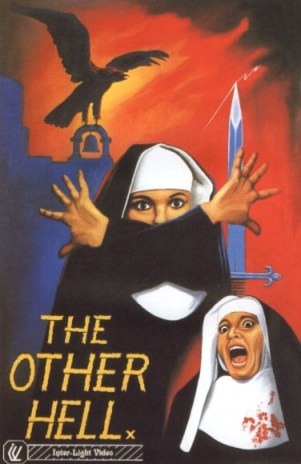
80s Italian horror has a way of catering to our inner perverted intoxicated teenager. It’s always so over-the-top. Not five minutes into this movie and we see a hot topless dead nun on an altar in some sort of alchemical laboratory. An overly sanctimonious nun mutilates the attractive body’s genitals while reciting zealous rantings about the Devil and the vagina being a gate to Hell. Normally this would serve as a reliable sign that this would be one of those so bad it’s good gory Italian sensations. Sadly, this submission falls short.

Nuns behaving badly.
“Bonkers” would best describe the storytelling style of this film. Nuns go crazy, randomly show up dead and kill people, a priest spontaneously combusts, house pets become evil, there are a few strangulations and stabbings, and there is hardly any sense of sound explanation or pacing. Put simply: weird shit happens, then we watch some filler scene that neither explains what happened nor establishes the events to come, then more weird shit happens…then just wash, rinse and repeat until you run out of running time, adding over-the-top acting, terrible writing and provocative imagery as necessary.

What’s with the large mannequin-esque dolls everywhere? What’s with the ninja-masked nun chick? WTF is going on in this movie!?!
After several inexplicable murders occur at a convent, the somewhat young Father Valerio (Carlo de Mejo; City of the Living Dead, The House by the Cemetery, Contamination, Manhattan Baby) is sent to investigate. His faith is tested with temptation and his sanity is tested by the chaotic script. I’d explain the plot more but…honestly, it was hard to keep track of what the Hell was going on.

Father Valerio and an evil nun.
Director Bruno Mattei (Hell of the Living Dead, Zombi 3) seems to try and fail to capture the off-the-cuff tangential stylings of Dario Argento and Lucio Fulci. Even though neither of them were terribly talented storytellers, their direction was slightly less erratic (most of the time, LOL). You practically could have randomly ordered the scenes of this movie without reducing the followability of this senseless plot. For all I know, that may be exactly what the editor did!

So…this guy is in the movie. I have no idea why. Really. No idea. And why he dies in a dog attack I also have no idea.

The effects are weak and the gore is minimal, especially for an installment in Italian horror. Not sure why. Maybe red paint and chicken livers weren’t on sale that week. Just to be clear, you all agree that 70s and 80s Italian horror appeared to simply use red paint and butcher’s trimmings as blood and guts, right? Super thick and bright red with a few random chunks. Normally crazy gore is what makes these Italian films fun and watchable. Perhaps that’s likewise why this film was so disappointing.

I enjoyed bits here and there and, I must admit, I was somewhat entertained. So while I’m not specifically going to recommend this to anyone, I won’t warn off any adventurous horror fans either.
Share this post:

John’s Horror Corner: C. H. U. D. (1984), cannibalistic humanoid underground dwellers

MY CALL: This throwback is slow-paced (until the fun-filled third act), not at all scary, and doesn’t pack a particularly gory punch, but it is fun and cheesy nonetheless and should be on every horror fan’s list. MOVIES LIKE C. H. U. D.: Return of the Living Dead (1985) and Alligator (1980).

This “it came from the 80s” classic presented the notion that we have more to fear than the shallow gene pools of Wrong Turn hillbillies from generations of inbreeding and the nuclear fallout-malformed denizens of The Hills Have Eyes. Here, we explore the fear of man’s impact on the planet with toxic waste-mutated monsters.

Homeless people are disappearing from the streets of New York City…so what exactly seems to be the problem? This would typically go entirely unnoticed and uninvestigated as local politicians high-five this inexplicable victory. However, when a local soup kitchen owner (Daniel Stern; Leviathan) reports that his dining hall has been a few vagrants short the police seem to drop everything to investigate these missing homeless people. Seems legit.

Bored with working on perfume commercial campaigns with his oft-half-naked model girlfriend, somehow a photographer (John Heard; Cat People) gets involved in investigating these hobo disappearances. Well that makes perfect sense. I can see how a successful, model-dating photographer would want to put his life on hold to go spelunking the feces-painted corridors of New York’s sewer system with a crusty bag lady.

It turns out that our missing hobos have come into contact with a toxic waste gas leak and subsequently mutated into cannibalistic humanoid underground dwellers instead of the more fun Ninja Turtle alternative.

Why do their eyes glow?
Our cannibalistic humanoid underground dwellers have glowing eyes and look like slimy, skinned Lord of the Rings orcs under Sauron’s command. The effects are decent for the time and will certainly bring about some chuckles. The mutants’ claws are clearly rubber monster gloves in lieu of more detail-oriented latex work. As campy as that may sound, this movie maintains a straight face and never verges on “deliberate” campiness. Doing so with no satirical allegory whatsoever, this movie pays more attention to the investigation and cover-up of the C. H. U. D. than it does on the monsters themselves. As such, you may notice that you see much less of the monsters than you’d prefer. It’s cheesiness is found in its poker face.

Speaking of campy, for no reason at all this CHUD’s neck elongates before our eyes as if in honor of the Evil Dead-possessed Henrietta.

The first hour of this movie is pretty slow. But in the third act we finally see regular doses of gore and CHUD screen time. Despite a slow start, I think this movie is worth it. It’s no founding father of horror tropes by any means, but today’s fans of horror should log it into their repertoire nonetheless.

Share this post:

MY CALL: Overall this movie failed at being interesting, scary or creepy, and it hardly maintained any sense of atmosphere or suspense at all. Another weak witch flick for young adults (despite the R-rating). MORE MOVIES LIKE The Woods: Want more movies about young witches? Try Beautiful Creatures (2013) or The Craft (1996), both of which were notably better than this.
“Set in 1965 New England, a troubled girl encounters mysterious happenings in the woods surrounding an isolated girls school that she was sent to by her estranged parents.” [–IMDB]
Heather Fasulo (Agnes Bruckner; The Pact, Venom, Blood and Chocolate) is delivered to an all-girls boarding school in the woods by her parents Alice (Emma Campbell; Feardotcom) and Joe Fasulo (Bruce Campbell; Oz the Great and Powerful, Evil Dead 2, Escape from L. A.), happy to be rid of her.
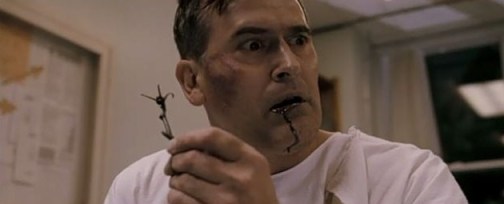
Don’t get excited about Bruce Campbell, he’s hardly in this movie. But, much to his confusion, he does vomit a twig.
The students of this school fear the surrounding woods because of a story about three witches who had taken over the school a century ago. This story is especially interesting because all of the school’s current teachers were once students.
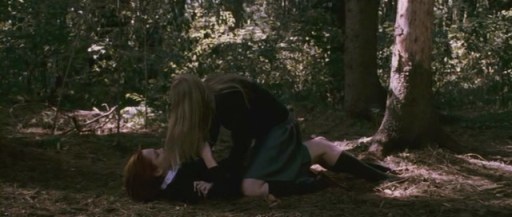
The girl fights in this have got nothing on The Craft!

The leader of the local Mean Girls troupe Samantha (Rachel Nichols; The Amityville Horror, Conan the Barbarian, P2) readily makes her influence known to newbie Heather with some bully-style flexing. But Heather resists showing the other students there’s a new tough chick on campus. Both actresses do a fine job despite their ill-directed and poorly developed surroundings.

Headmistress Traverse (Patricia Clarkson; Shutter Island) takes a special interest in Heather, giving her tests with strange symbols and discussing some special scholarship. A quiet, troubled student Anna (Kathleen Mackey; Apartment 1303, Gothika) suggests that Heather, like Anna, might be “special.” What does it all mean? I guess the ending sort of explains it…poorly.
Anna disappears and soon the students and faculty start behaving strangely around Heather… basically some attempts are made to add substance to the movie. Not to be mean, but I feel this was written for the PG/PG-13 young adult crowd, which makes the drama and tension feel really weak to the more mature viewers who came to see this R-rated release. Not that everything can be written by J. K. Rowling, but Harry Potter and the Sorcerer’s Stone (2001) felt far more credible, serious, tense and dramatic with its PG rating and this with its R, and that shouldn’t be.
The gore seems sufficient, I guess. The type, execution and amount may spark the interest of the inexperienced, but it didn’t do much for me. Mostly mist and aggressive plant life, the supernatural effects smack of Beautiful Creatures (2013) meets Evil Dead (2013). These vines, like the gore, are seen most in the finale and they’re done VERY WELL. In fact, the vines were the only creepy thing about the movie. I guess it’s trying to be scary, but I’m feeling none of it. Really…none. This is rated-R but it feels aimed at youth. The gore and the presentation of death must’ve pushed it to R, but I’m baffled nonetheless by the decision to present this story in this way to adults.
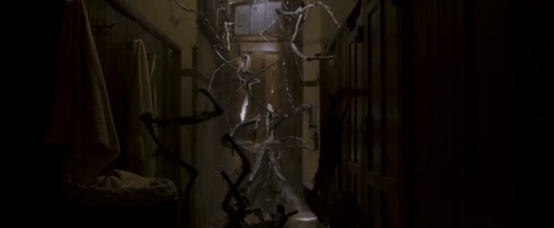
The ending was surprisingly pretty good and loaded with dark fantasy evil shrubbery effects and more gore. There were some other scenes that could’ve been cool, but they weren’t followed up or explained, just squandered.

Overall this failed at being interesting, scary or creepy and hardly maintained any sense of atmosphere or suspense at all.

Skip it.


 Movies, Films & Flix