MFF Data: Analyzing the Jet Ski Chase in ‘Halloween VIIII – Battle on the Bayou: Michael’s Final Halloween’
Halloween VIIII – Battle on the Bayou: Michael’s Final Halloween is what happens when you sneeze into a cheap tissue. Roger Ebert (1996)
Many of you remember Halloween VIIII – Battle on the Bayou: Michael’s Final Halloween as the film that ended the run of the Halloween franchise. In 1996, the series was reeling after the poor performance of Halloween: The Curse of Michael Myers, and it was given one last shot to stay relevant in the evolving horror market. Knowing that the series needed a change, the producers and executives at Dimension Films decided to send Michael Myers to Louisiana to hunt the brother he never knew he had. In a major casting coup, Jean-Claude Van Damme was cast as Police Detective Chance Strode, the long-lost older brother of Laurie Strode (Jamie Lee Curtis). JCVD’s career had hit a rough patch after Street Fighter, Sudden Death, Drop the Beat and Spin-Kick City failed to hit at the box office, so, desperate for a minor rebrand, he signed on to play the role for a lesser-fee with money promised on the back end.

You haven’t lived until you’ve seen JCVD spin kick Michael Myers.
The producers at Dimension couldn’t afford to pay an established director, so they brought in stuntman legend and first-time director Steve Balsawood (stunts for Lawrence of Arabia, Ghost, Fire 2: Too Hot To Handle, and Backslap: The Movie) to direct a script written by a young writer named Chuck Finley, who had written the well-received and commercially successful 1995 horror film Don’t Throw That Knife At Me!. If there was one concern, it was that the movie had to go from script-to-screen in a mere six months, which meant the filming would commence without a finished script and locations that were not fully scouted or vetted.
Desperate to bring in additional funding to beef up the $4 million budget. The folks at Dimension signed a partnership with Yamaha to feature their X45 jet skis for a sizable amount that would help pay for the 23-day shoot. All was good until JCVD told the producers that he wouldn’t partake in any night shoots, which forced Finley and director Balsawood to revamp the script to make it a “day-time horror picture.” After several sleepless nights, and many unforgivable insults flung at each other, the two nailed down a script that played like a Halloween movie met Nowhere to Run and Hard Target, then completely forgot the Halloween angle. The highlight of the script was a jet ski chase that featured JCVD chasing down Michael Myers to make sure he can’t obtain the Spear of Destiny, which would make him even more immortal.

Early concept art for Halloween VIIII.
Shooting began soon thereafter and everything quickly became a nightmare due to unreliable jet ski prototypes, infighting, terrible weather, rewrites, adultery, rampant drug use, scurvy, bad shellfish, impromptu crying sessions and budget cuts which you can read about in Balsawood’s book I Hated Directing That Movie. The rest is history, but one scene has always stuck with me and I finally decided to tackle it in hopes of making sense of it.

Michael goes in circles a lot!
The following breaks down the incredibly random jet ski chase during the climax of the movie. I read in Balsawood’s book that they only had one day to shoot the scene and no locations to film the actual chase. So, the director, JCVD and a masked stuntman went out to a tiny island on the last day of principal photography and shot several hours of footage near the island. During their shooting, JCVD and the stuntman were only able to drive around the island 12 times due to the unreliable Yamaha X45 prototypes. Thus, the climax of the movie is centered around two men driving around in circles.

This is a picture from earlier in the film. JCVD and his friend talk about how great the jet skis are for seven minutes.
Here are my assumptions:
- They averaged 45 MPH during the entire chase
- They covered 180 miles during the chase
- They circled the tiny Louisiana island an estimated 848 times during their chase

Enjoy the beautiful graphic that recreates the chase.
Here is what I know:
I know a lot because the movie tells us everything
- The movie has a 36% Tomatometer score, and it made $37 million at the international box office. Surprisingly, it has a 7.6 rating on IMDb.
- The X45 Yamaha prototypes have 20 gallon tanks and get 9 miles per gallon. We learn this when JCVD says “Wow, the X45 Yamaha prototypes have 20 gallon tanks and get 9 miles per gallon.”
- The rectangular island has a diameter of 360×160 feet and the best way to circle it on the jet ski is to stay 20 feet away from the shore (380×180 feet = 1,120 foot diameter). We learn this when Crazy Cajun Karl (Clint Howard) says “look for an island that is roughly equal to the size of a American foosball* field….including the endzone. Make sure to circle twenty feet around the shore.”
- The chase scene lasted four hours. I know this because during the scene JCVD yells “It’s almost been four hours and these X45 Yamahas are still running. What efficiency!”
- The only person who can grab the “Spear of Destiny” is the man who fulfills a very specific prophecy. We learn this when Crawdaddy Kat (Kathy Bates) says “Only the man whose Yamaha jet ski runs of gas may grab the spear of destiny. He only can be stopped by a man who has run out of gas while riding the same exact Yamaha jet ski.”
- The gas tanks were totally full. We know this because when Michael Myers and JCVD steal them, the gas station attendant says “Hey! I just filled them X45 Yamahas with gas!”
- I know they circled the island because of the movies theme song, which peaked at number #78 on Billboard’s Hot 100 Charts in 1996. The song “Going in Circles” by Lit, featured these lyrics “We’re going in circles, circles never stop because their infinite, much like Michael Myers.”
There you have it! JCVD and Michael Myers circled a tiny Louisiana island 848 times during their four-hour chase scene in Halloween VIIII – Battle on the Bayou: Michael’s Final Halloween.
If you like this dumb data, make sure to check out my other data pieces
- Analyzing the flag football game in Get Out
- Is the cheeseburger front kick scene in Dolph Lundgren’s 36 Again possible?
- Technically, Trantor the Troll from Ernest Scared Stupid is the Juiciest Monster Ever
- Could Freddy Kreuger really land a 747 Jumbo Jet?
- Is Jordan Peele’s Us a secret sequel to Multiplicity?
- Analyzing how Ethan Hawke was able to wear four cardigans at one time during Sinister
- First Reformed features a secret metaphor for laundry detergent
Share this post:

John’s Horror Corner: The Field Guide to Evil (2018), a horror anthology about folklore and mythology from around the world.
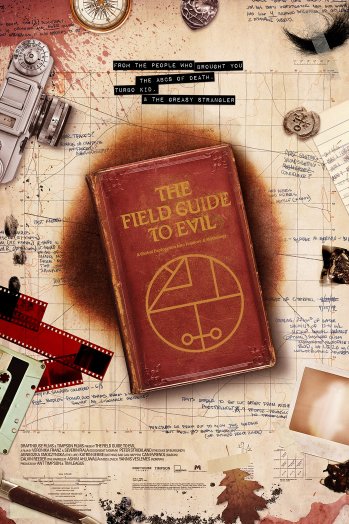
MY CALL: Not a bad way to spend two hours. Of course, there are better anthologies out there with better production value and tighter themes. But the exposure to lesser-known folklore fauna is something I find titillating and the very reason I go crazy for films like Trollhunter (2010), Thale (2012) and The Ritual (2017). With a theme so interesting, how you could you not want to see this regardless of the reviews? Of all the horror stories told a dozen times on screen, I vote for the mythology I’ve never heard of for my anthology.
MORE HORROR ANTHOLOGIES: Dead of Night (1945), Black Sabbath (1963), Tales from the Crypt (1972), The Vault of Horror (1973), The Uncanny (1977), Creepshow (1982), Twilight Zone: The Movie (1983), Stephen King’s Cat’s Eye (1985), Deadtime Stories (1986), Creepshow 2 (1987), After Midnight (1989), Tales from the Darkside: The Movie (1990), Two Evil Eyes (1990), Grimm Prairie Tales (1990), The Willies (1990), Necronomicon: Book of the Dead (1993), Hellraiser: Bloodline (1996), Campfire Tales (1997), 3 Extremes (2004), Creepshow 3 (2006), Trick ‘r Treat (2007), Chillerama (2011), Little Deaths (2011), V/H/S (2012), The Theater Bizarre (2012), The ABCs of Death (2013), V/H/S 2 (2013), The Profane Exhibit (2013), The ABCs of Death 2 (2014), V/H/S Viral (2014), Southbound (2015), Tales of Halloween (2015), A Christmas Horror Story (2015), The ABCs of Death 2.5 (2016), Holidays (2016), Terrified (2017; aka Aterrados, which is a pseudo-anthology), Oats Studios, Vol. 1 (2017), Ghost Stories (2017) and XX (2017).
This is not a big budget feature, and it shows (forgivably in some segments, less so in others). The opening credits feature dark Renaissance scoring and animation in the illustrative style of centuries-old theological texts hinting at the content of the eight short films to come. The tone is murderous yet festive, evoking a somewhat playful mood. Folklore, legends, myths; such are the origin of our most ancient dreams… and even nightmares. And that is the theme of this anthology: eight pieces of folklore from eight different directors representing eight countries.
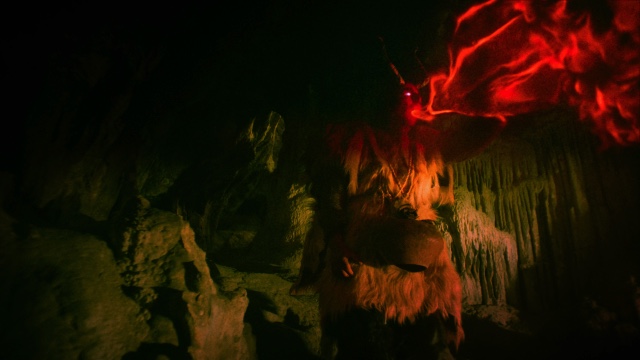
There really is no wraparound story. After the opening credits introduce us to our Field Guide to Evil book, each story is introduced with a brief description of the folklore in question (e.g., an explanation of a type of evil spirit) and the country of origin.
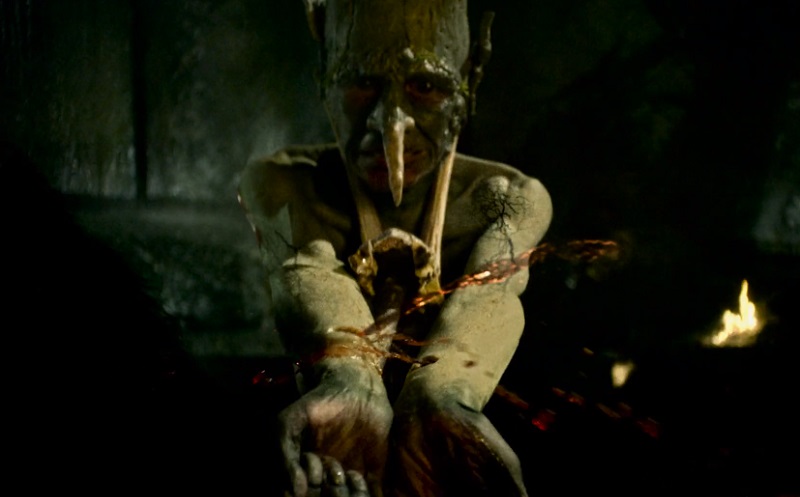
Like any multi-filmmaker anthology (e.g., V/H/S, The ABCs of Death), the quality of the eight stories vary wildly. I’d consider the first three segments worthy of adaptation into 30 to 90-minute films. Some take place in present day, but many are more folky. Journeying through this anthology we’ll find goblins, spirits, mutants and monsters. There are some rather viscerally gory images and disturbing imagery, whereas other stories are lighter in atmosphere.
———————————————————————————
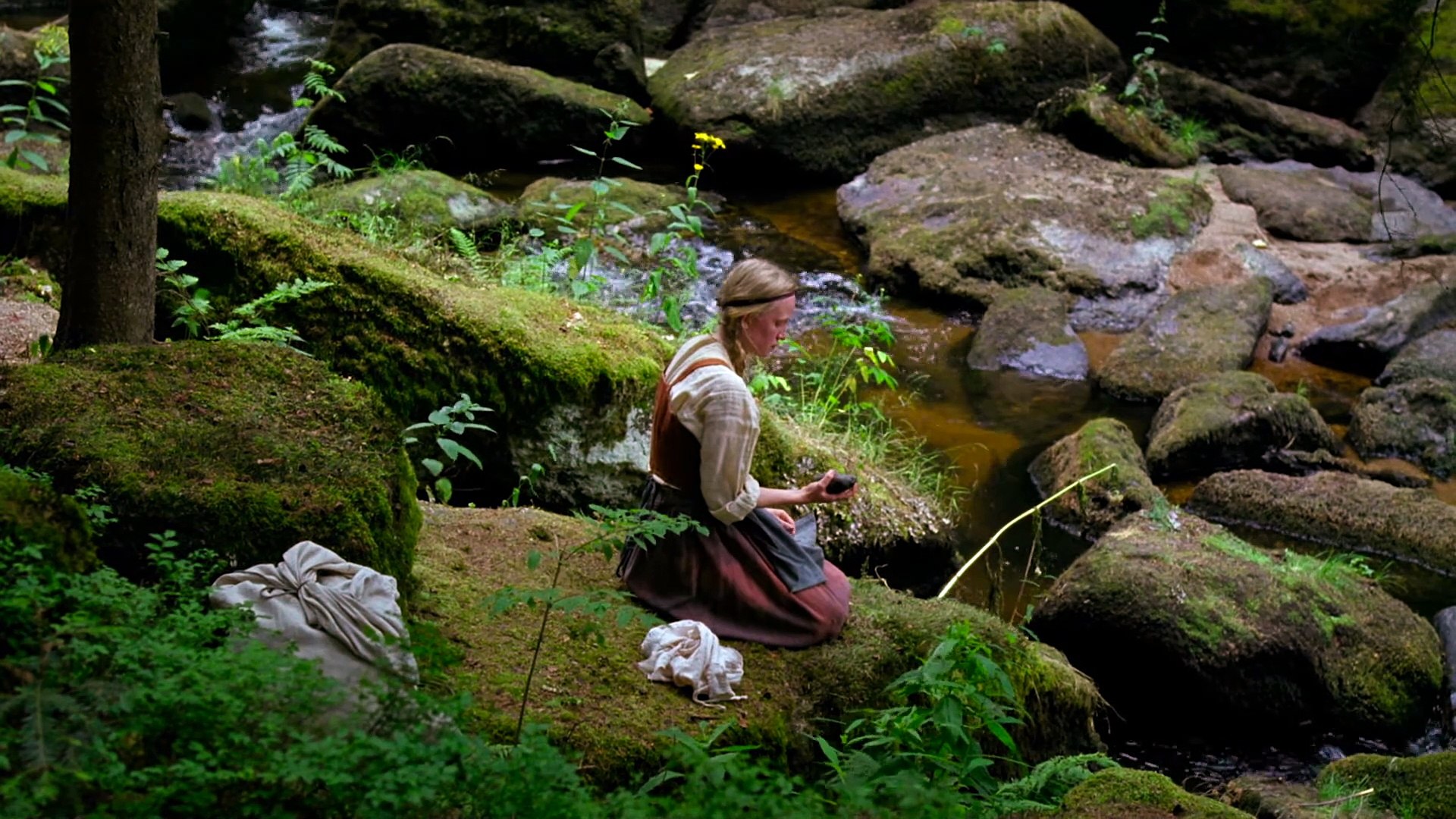
The Sinful Women of Hollfall, aka Die Trud (Austria)—Writing and directing team Veronika Franz and Severin Fiala (The Lodge, Goodnight Mommy) are strikingly effective storytellers. Theirs is the myth of the nighttime-visiting monsters (Truds) born of guilt. With wardrobes and antiquated superstition clearly depicting a folk horror period (e.g., The Witch, Apostle), this God-fearing story literally depicts desperate attempts to “wash” and “scrub” away one’s sins. Gorgeous woodland shots and general photography remind me of The Hallow (2015) and Hole in the Ground (2019), with the moss and cloverleaf greens aglow in pristine lighting. But some disturbing imagery contrasts this beauty. An excellent segment.
Haunted by Al Karisi, the Childbirth Djinn (Turkey)—Director Can Evrenol (Baskin, Housewife) delivers this gory, bloody, unnerving tale of the Al karisi—a child-stealing demon assuming the form of an old woman, cat or goat. As a young mother tends to her demented grandmother, we question the absence of the father, a strange wound on the mute old woman’s neck, and the young mother’s visions which bring her to fear for the life of her baby. Another very strong segment.
The Kindler and The Virgin (Poland)—Director Agnieszka Smoczynska (The Lure) spins a cautionary folk tale of the cost of the desire of wisdom which opens smacking of a much more seriously approached Viy (2014). A mystical (and perhaps undead) witch whispers the secrets of knowledge to a common man, who must eat the hearts of the recently deceased to claim his magical boon. While decently made, this is a less impressive segment that feels like a flashback vignette from The Brothers Grimm (2005).
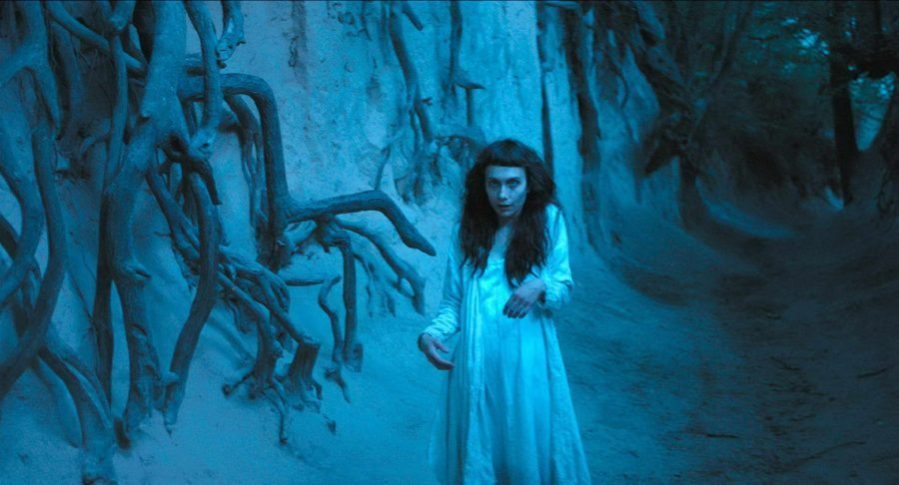
Beware the Melonheads (United States)—After reading the opening caption, all you can think about is Wrong Turn (2003) or The Hills Have Eyes (2006). Director Calvin Lee Reeder (The Rambler) explores the classic trope of northern woodland violent mongoloid people with large heads and a possible taste for cannibalism. Unfortunately the general writing is garbage, the revelation of the antagonist falls flat on its boring face, and the special effects (the melonhead latex work) are just plain stupid. This might be the worst segment of the anthology and, if I’m being honest, I find the bulbous heads laughable yet unforgivable.
What Ever Happened to Panagas the Pagan? (Greece)—Director Yannis Veslemes (Norway) spins the tale of the Kallikantzaros—the Devil’s trickster offspring and lowly goblin underground dwellers who thrive among humans during the Christmas season. Sadly, this is another weak entry with poor writing and execution. It’s odd, actually, how I found myself sympathizing with the so-called evil goblin. If the goal of the film was to reveal how they are misunderstood, I’d say it failed. And if not, it failed all the same.
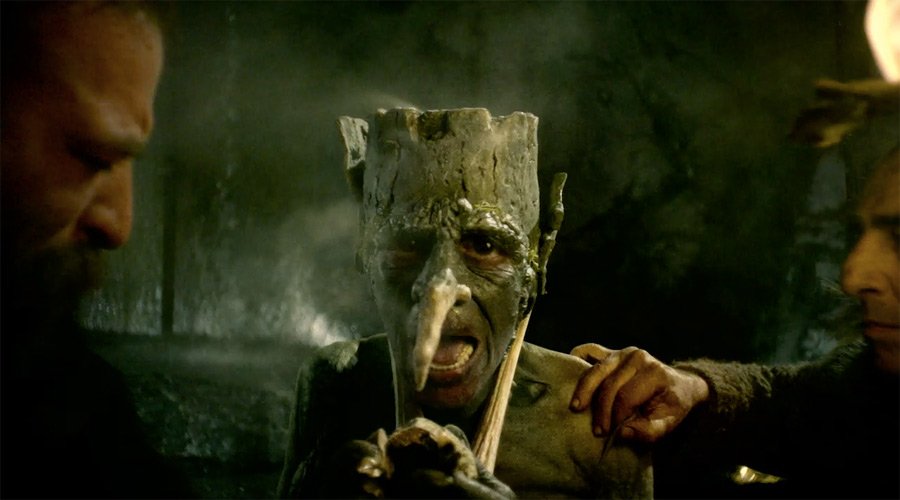
Palace of Horrors (India)—Like an Indian iteration of Freaks (1932), director Ashim Ahluwalia (Daddy, Miss Lovely) brings us a tale of a crumbling palace filled with deformed human curiosities in the early 1900s. Average “meh” style writing, weak photography and camerawork, but a neat concept presented just well enough to keep my interest until its hokey ending. But as one short story of eight, this was appropriately entertaining.
A Nocturnal Breath (Germany)—Director Katrin Gebbe (Nothing Bad Can Happen) provides a 1700s case study of the drude—an evil Bavarian spirit that possesses victims and spreads disease. Another case of a neat story that didn’t translate well to screen in its current presentation. The filmmaking was decent, I guess. It felt like a Masters of Horror series installation.

The Cobblers’ Lot (Hungary)—Based on the folktale The Princess’ Curse, two brothers compete for the affection of the princess. Director Peter Strickland (Berberian Sound Studio) employs a child’s storytelling whimsy through captions rather than dialogue. This lower budget entry manages to amuse more in the style of live theater than cinema, and feels like a poor man’s Tim Burton meets Grimm’s Bacchan fantasy. Kinda fun, but kinda more dumb; kinda hokey, but kinda okay with that.
———————————————————————————
All told, this isn’t a horrible way to spend two hours. But clearly there are better anthologies out there with better overall production value and/or tighter themes (e.g., Trick ‘r Treat). Sure, I’d have wished that the first three segments were spread out so the higher quality films wouldn’t be so front-heavy. But it was just so interesting for me to be exposed to lesser-known folklore fauna (like the Jötunn in The Ritual). With a theme so interesting, how you could you not want to see this? Of all the horror stories told a dozen times on screen, I vote for the mythology I’ve never heard of for my anthology.
Share this post:

John’s Horror Corner: The Oracle (1985), the boring Ouija-esque Christmas horror crime thriller you should be glad you never heard of.

MY CALL: This film is really trying to be good. So I feel badly saying it’s really, really, really boring and best left forgotten in an old dusty box of VHS in the basement. Only recommended for bad (really bad) B-movie night viewing. MORE MOVIES LIKE The Oracle: More Oujia-themed films include Witchboard (1986), Ouija (2014), Ouija: Origin of Evil (2016) and Veronica (2017). For more Christmas horror (that better ensnare the Christmas theme), try movies like Better Watch Out (2016), Black Christmas (1974, 2006 remake), A Christmas Horror Story (2015), Krampus (2015), Silent Night Deadly Night (1984), Rare Exports: A Christmas Tale (2010) and Gremlins (1984).

During her Christmas party, Jennifer (Caroline Capers Powers; who only ever acted in this one film) entertains her guests with a planchette to contact spirits like a Pictionary-Ouija board. After the game gets a bit awkward, the planchette communicates with Jennifer alone and, well, eventually slimy little squid monsters emerge from the planchette box. So now you think this is a weird little tentacled demon movie, right…? Wrong. We take a hard right into crime thriller territory with a psychic-medium angle and there is nothing good about it! Boy does it get dumb! But God help the filmmakers—I felt like they were really trying to make something good.

Emerging in the horror genre after a career in the adult film industry, director Roberta Findlay (Prime Evil, Lurkers, Blood Sisters) has generated typical B-movie fodder—although not really the kind I’d recommend. From its opening scenes it feels no different from any other one-(watch)-and-done throwaway horror flick from the 80s. Not as bad as Dark Tower (1987) or Things (1989), but definitely not as good as House (1986) either. And while it may transcend B-moviedom in its lack of utter silliness, it’s still silly in its lack of quality despite its best efforts.

Green hazy light indicates magic and supernatural occurrences, low budget gags have objects moving on their own, flicking lights on and off or knocking over some books indicates an evil presence—these are weak cues and weakly executed. It’s also juuuuust a bit raunchy even though there wasn’t any nudity.
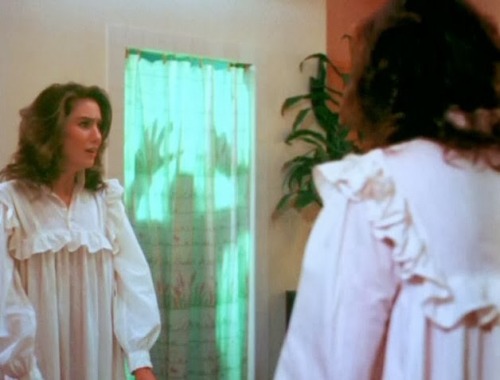
Christmas music and holiday themes decorate this cheap quirky film and I’m left wondering why since none of the story or concepts actually relate to Christmas—unless this is a far reach analogous to the “Murdered Ghost of Christmas Past.” But in the third act this theme is completely absent, and that certainly says something about the filmmaking.
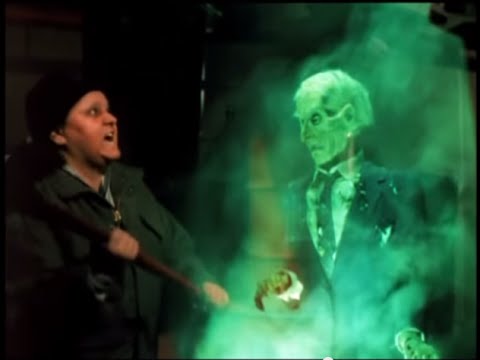
The blood and gore start out so weak you’d want to stop the film, but it does amp up to grosser and sillier levels that should conjure a few giggles. Especially the “self-murder” scene and the evil diminutive cephalopod-like creatures—just plain B-movie delight. Also watch out for the toxic waste melty face scene, which produced the online images that lured me into watching this film at all.

There’s really nothing redeeming in this film. It smacks just a little bit of The Sentinel (1977) in delivery and The Changeling (1980) in premise, but brings not even remote honor to either. I’d skip this and let it be forgotten in the VHS video vaults of pawn shops and basement storage.

Share this post:


Quicknote: There is no correct answer here. I’m just analyzing and hypothesizing my way to statistics and numbers that have no way of being correct. Also, I know this is bonkers.
While watching Us (which I really enjoyed) I couldn’t stop thinking about the logistics of tunnel living. How many people lived in the tunnels? Did they only eat rabbit? How do they wash their clothes? Do they travel from tunnel to tunnel? These questions were totally normal as I’m certain Jordan Peele intended his sophomore feature to raise a lot of questions. However, in his quest to raise questions he introduced tiny facets into a world that turned them into MAJOR operations that involved billions of rabbits, millions of towels and thousands of gallons of laundry detergent.
In an effort to gain some clarity of the under-explained fictional world I focused on only the rabbits and everything that comes with it.
Here are some guesses:
- The creating of the “Tethered” most likely started after World War 2. I’m saying this because they seem to age naturally, and in 1986, Adelaide’s (Lupita Nyong’o) parents are their 30s. Which means they were created in 1956 (at the earliest).
- The “Tethered” were eating rabbits in 1986. So, rabbit consumption has been going on for over 30 years.
- It’s unclear when the military (or the Cult from Get Out) left the operation. I’m going to guess 1985.
- The title card leads us to believe that the underground people are living all over America. Also, news reports claim that attacks are happening all over America.
- Let’s take a guess and say there are 6.5 million “Tethered” living across the United States. I say this because that’s how many people held hands during Hands Across America.
- 6.5 million rabbits are consumed each year (one a day, for each person. They look very healthy so they can’t be starving themselves).
- 221 million rabbits have possibly been eaten since 1985
- Towels would be needed to clean up after they eat. So, everyday thousands (at least) of hand towels would need washing. If 100 industrial washing machines were used in a 24/7 rotation (in each tunnel system) it would mean they would need 136 gallons of laundry detergent and use at least 31,200 gallons of water each day in each location.
- There is no way to calculate the energy cost. Somebody has to know what is going on.
- This is random but I’m guessing the scissors and jumpsuits were holdovers from the government agency that set everything up. Because, figuring out the costs of acquiring and purchasing everything would lead me down a major rabbit-hole.
- The Tethered don’t use forks or knives. Things get very messy (more laundry…)
Quick Thought: Even if there are only 100,000 Tethered in the United States. The cost of feeding, cleaning and breeding the rabbits would be a massive undertaking. Let’s say only 50,000 rabbits were eaten each day. That’s still 18,250,000 meat rabbits a year.
Here is what I know:
- They eat rabbits raw. They do not cook them. You see this during a flashback, they are tearing into the rabbits.
- The average meat rabbit weights 4-5 pounds. For this analysis I’m going with 4 pounds
- Meat rabbits should be fed 6 ounces of manufactured pellets a day
- This operation is very expensive
- The daily waste would be millions of pounds (not getting into specifics)
- The underground lair was very clean. This means the “Tethered” have cleaning supplies and towels.
- They have laundry machines
- They need water and electricity
- They need laundry detergent
- The Tethered eat
- Each rabbit consumes 136 pounds of food per year. So, 877,500,000 pounds of rabbit food is needed for the rabbits. It would cost millions to feed the rabbits.

So many rabbits to feed.
Conclusion: Jordan Peele included the rabbits because he is frightened of them and he wanted to show duality. However, by including them as the sole food source for the Tethered he created a multi-million operation that included wholesale rabbit food purchasing, maintenance of industrial washing machines and millions of pounds of waste. I LOVE IT!
Share this post:

The MFF Podcast #184: The Faculty

You can download or stream the pod on Spotify, Itunes, Stitcher, Tune In, Podbean, or LISTEN TO THE POD ON SPREAKER.
The MFF Podcast is back, and this week we’re talking about the 1998 cult classic The Faculty. Written by Kevin Williamson (Scream) and directed by Robert Rodriguez (Desperado, From Dusk Till Dawn), this film has aged-well because of its smart script, solid performances and original monster who loves water, and hates drugs called Scat. In this podcast, you will hear us talk about spitting monsters, water consumption and a creature named Jensen. If you are a fan of The Faculty you will love this episode.

I want a movie featuring Jordana Brewster’s character insulting Elijah Wood.
If you are a fan of the podcast make sure to send in some random listener questions so we can do our best to not answer them correctly. We thank you for listening and hope you enjoy the pod!
You can download or stream the pod on Spotify, Itunes, Stitcher, Tune In, Podbean, or LISTEN TO THE POD ON BLOG TALK RADIO.
If you get a chance please make sure to review, rate and share. You are awesome!
Share this post:

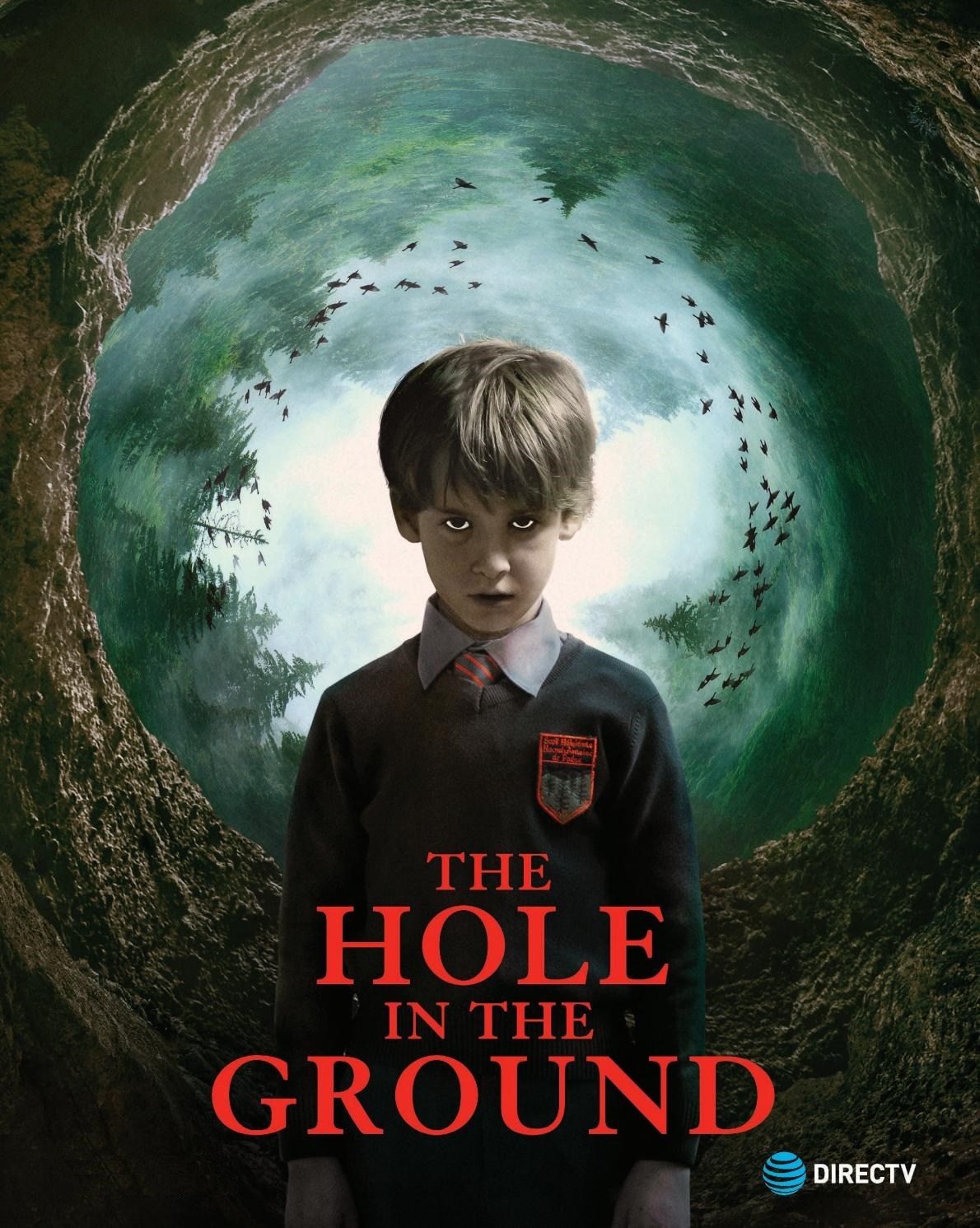
John’s Horror Corner: Hole in the Ground (2019), an Irish horror about a sinkhole, a cute and creepy kid, and a Doppelganger dilemma.
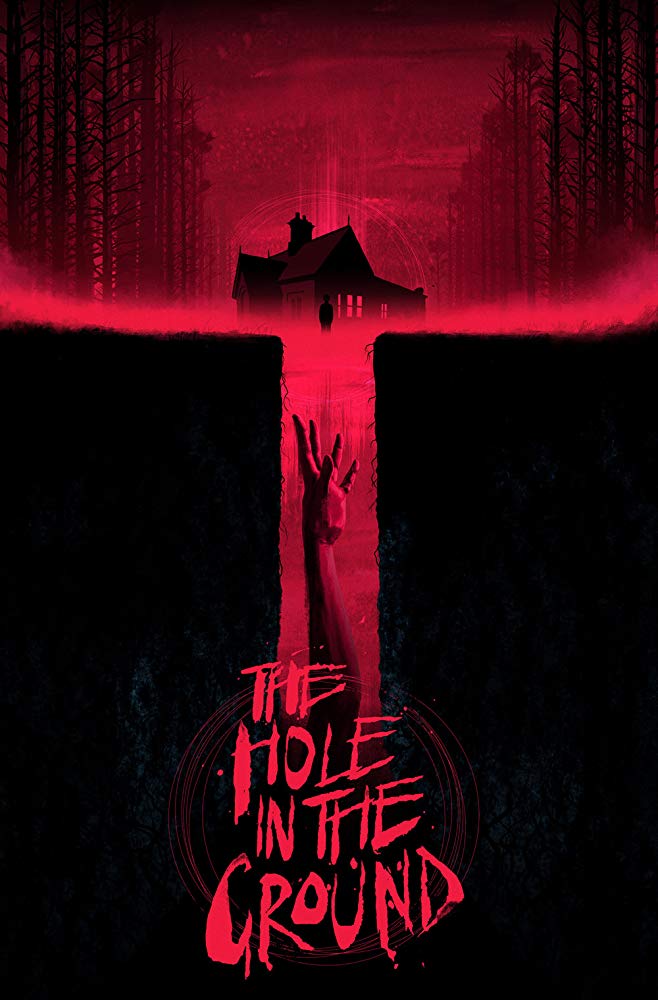
MY CALL: A familiar premise presented through a fresh lens with inspired filmmaking and featuring a few unexpected turns. Very pleasantly surprised and highly recommend it! MOVIES LIKE Hole in the Ground: For more Irish horror movies check out Leprechaun Origins (2014), Leprechaun 2 (1994), Leprechaun (1993), Rawhead Rex (1986), Grabbers (2012), Cherry Tree (2015), Holidays (2016; St. Patrick’s Day segment) and The Hallow (2015). For more imposter/Doppelganger horror consider Invasion of the Body Snatchers (1978), The Astronaut’s Wife (1999), Pet Sematary (1989), A Christmas Horror Story (2015), Impostor (2001), Godsend (2004), The Thing (1982), Honeymoon (2014), The Ring 2 (2005).
SYNOPSIS & SPOILER SIDEBAR: Yes, I know, I said “Doppelganger” in the review title. And before you all go screaming out SPOILERS, let’s clear the air. The trailers for this film spoiled that aspect of it. The trailers and even the Amazon synopsis: “A woman suspects that her son, who returned home after disappearing in the woods, is an imposter.” Oh, and the IMDB summary: “A young mother living in the Irish countryside with her son suspects his increasingly disturbing behavior is linked to a mysterious sinkhole in the forest, and fears he may not be her son at all.” So, whether or not there is a Doppelganger or imposter of sorts, we all already had the notion on our radar. Now let’s continue and enjoy the film…
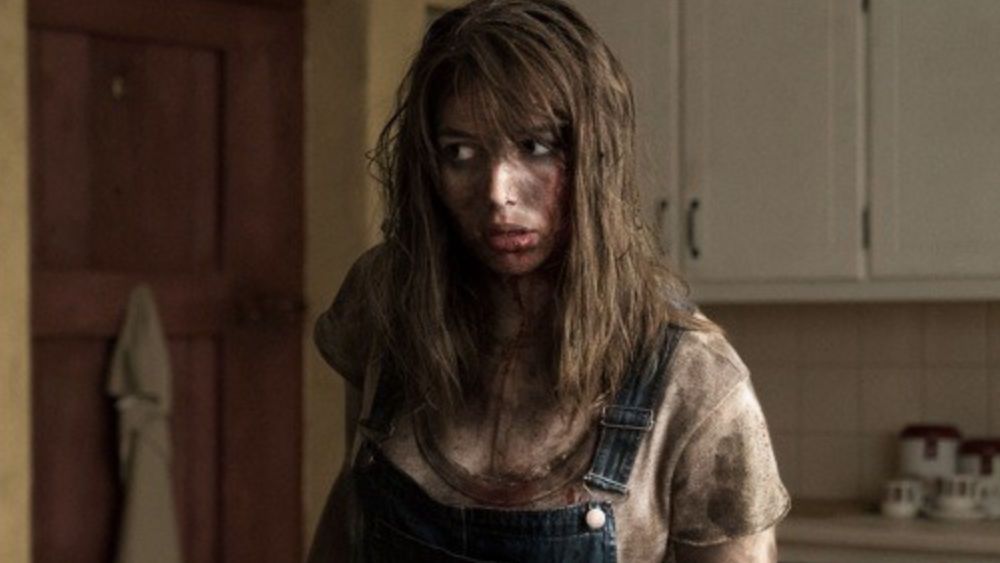
Losing track of her son in the woods behind their new home, Sarah (Seána Kerslake) stumbles across a startlingly massive chasm before locating her Chris (James Quinn Markey; Vikings). Lee Cronin’s first feature film opens with some effective, even gorgeous shots of the Irish woods. More drably lit and lacking the crisp palette of The Hallow (2015), the photography remains striking nonetheless. Shots of the gaping sinkhole and the primeval forest are harrowing and I half expected the monster from The Ritual (2017) to emerge and steal them both away.
After his brief but alarming disappearance, Sarah suffers from significant anxiety and Chris, well… Chris is behaving a bit oddly. Of course, Sarah begins to take notice of his strange behavior, and things escalate. Sarah watches Chris with suspicion, tests him in her own subtle ways, and understandably questions her own actions as well. The rabbit hole winds deeply from here as we learn of Sarah’s own recent hardships (that are never fully explored).
Playing a boldly-troped elderly and unnerving harbinger, Noreen Brady (Kati Outinen) is stolid, disturbing, and violently assertive that Chris IS NOT HER SON! Her mild-mannered husband Des (James Cosmo; Highlander, Malevolent) supplements her dosage of exposition later in the film and the two play well into the story—more than I can say for most harbinger or exposition-based characters.
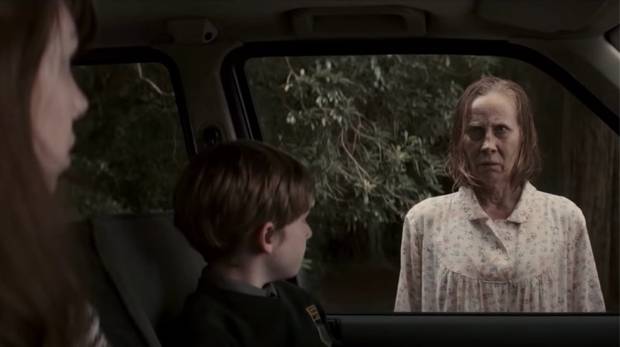
Acting and writing is where the least kindness typically befalls films in my reviews. And I had never heard of this first-time feature filmmaker nor either of his stars. Yet, I couldn’t have been more pleased with the general writing, staging of events, cultivation of tension, and the actors’ performances. James Quinn Markey commands our attention—he feels like an Irish incarnation of Haley Joel Osmont (Tusk) from The Sixth Sense (1999). And all of the exquisite shots and imagery and presentation style reminded me strongly of The Ring (2002) while the tension was occasionally lacerated by shocking imagery of violent bone breaks, mangled dead bodies and nightmares keeping us on edge.
For my taste, the final 20 minutes serve us a resolution that doesn’t quite do justice to the wonderful 60-70 minutes before them. I wouldn’t say it was “phoned in” or anything like that, but the writing and execution quality dropped notably (from consistently excellent) in the final act. But that’s not to say the ending was “bad” or the film wasn’t satisfying. Quite to the contrary, I very much enjoyed this film and even fancied the ending.
This is a familiar concept presented through a fresh lens, with inspired filmmaking, and featuring a few unexpected turns. I was more than a bit pleasantly surprised and highly recommend it!
Share this post:

The MFF Podcast #183: Thi13en Ghosts and Smooshed Spirits
You can download or stream the pod on Spotify, Itunes, Stitcher, Tune In, Podbean, or LISTEN TO THE POD ON SPREAKER
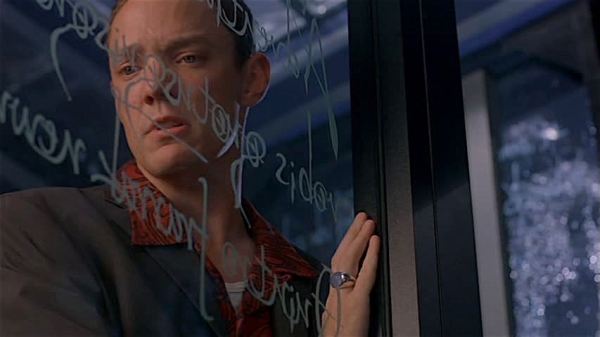
The MFF podcast is back, and this week we’re talking about the 2001 cult classic Thi13en Ghosts. It’s one of Roger Ebert’s most hated movies, however, we appreciate the production design, practical effects and Matthew Lillard going full action hero. This $42 million budgeted horror remake went out of its way to be innovative, and we think it’s aged-well because of the beautifully constructed glass set and “juicy” ghosts who were created by Greg Nicotero, Robert Kurtzman and their KNB effects house. If you are a fan of Thi13en Ghosts you will love this episode.

You don’t see many ghosts with baseball bats.
If you are a fan of the podcast make sure to send in some random listener questions so we can do our best to not answer them correctly. We thank you for listening and hope you enjoy the pod!
You can download or stream the pod on Spotify, Itunes, Stitcher, Tune In, Podbean, or LISTEN TO THE POD ON SPREAKER
If you get a chance please make sure to review, rate and share. You are awesome!
Share this post:

John’s Horror Corner: It’s Alive III: Island of the Alive (1987), the over-the-top monster baby sequel wandering into B-movie waters.

MY CALL: If part I was a horror film and part II was more medical Sci-Fi thriller, then part III is a drama that turns into a boring adventure movie and then closes as an escape thriller. I wasn’t a big fan, but this B-movie is watchable for the sake of finishing the franchise. MOVIES LIKE Island of the Alive: We assume you’ve already seen It’s Alive (1974) and It Lives Again (1978)… both of which were better in my opinion. Although I know some who favor part III over part II.
It’s Alive (1974) left the door wide open for a sequel, closing with “another one’s been born in Seattle.” Then It Lives Again (1978) broadened the scope of the story into a mutant baby epidemic as Frank Davis (John P. Ryan; Class of 1999, It’s Alive, It Lives Again) traveled the country trying to save these dangerous miscreants from execution at birth. I love that these sequels have been named in the spirit of old classic horror and Godzilla movies that include “Son of” or “Island of” or “Return of” subtitles.

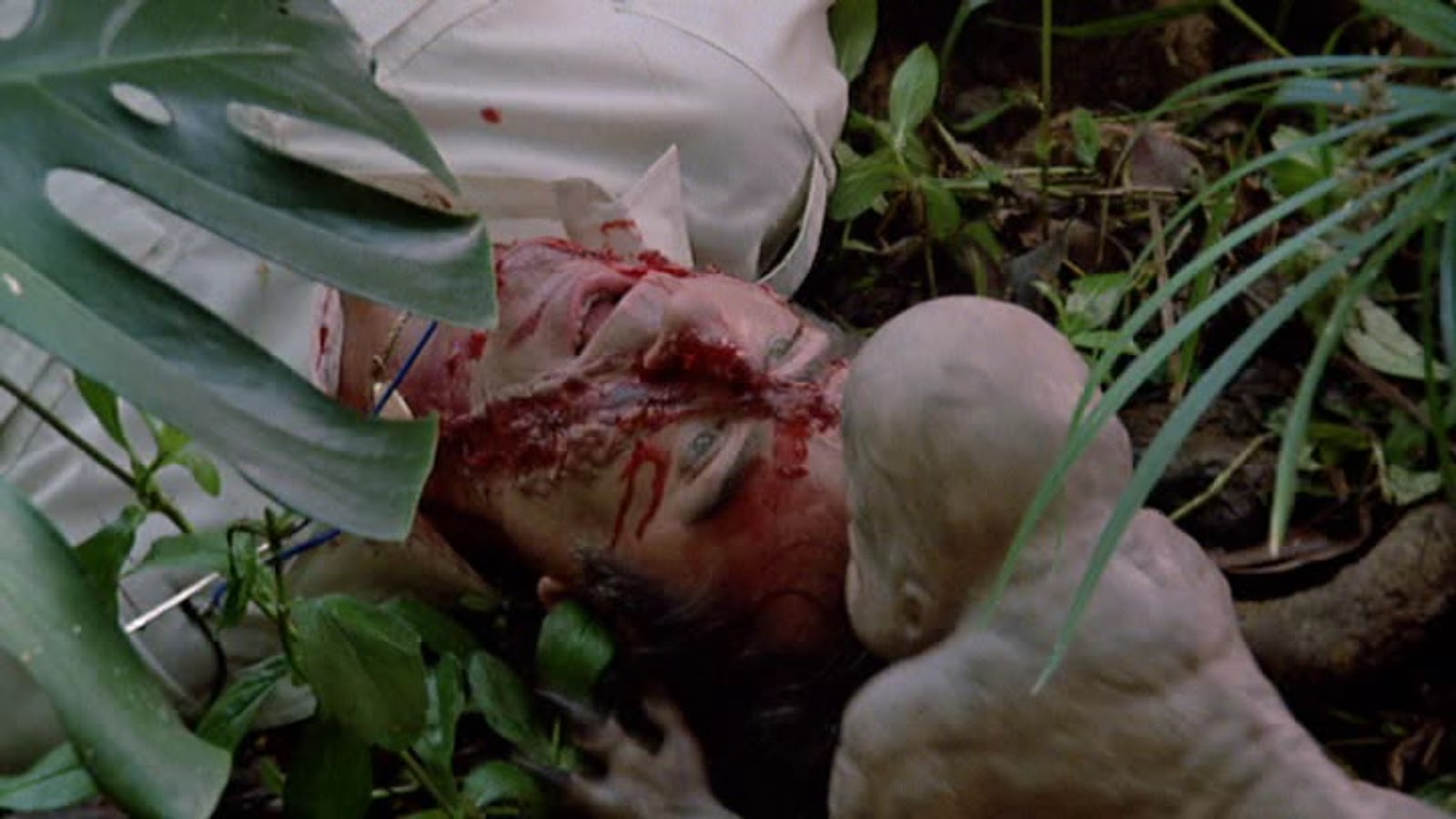
We have taken a journey from a strong original horror (1974) rich in allegory, to a somewhat campy sequel (1978) with a moral tale, and now (1987)—opening with a decidedly schlocky and gory taxicab birth scene—finally to something of a pure B-movie. The expecting mother’s belly convulses like a drunk puppet, followed by the screeching cries of the monster fetus and the screams of the unfortunate passerby aiding in the delivery whose hand is mangled before he is dragged into the cab to his doom by the newborn. Typical of the franchise, we don’t see all we’d like to on-screen. But in terms of gore and wounds, we’re seeing more than we did in the first two films—which is a definite plus. The latex wound special effects are the best we’ve seen.

Pleading the court to spare his baby, Stephen Jarvis (Michael Moriarty; The Stuff, Troll, Dark Tower) reluctantly watches as his child and all like it quarantined on an uninhabited island. Far before dinosaurs were reared on Isla Sorna and Isla Nubar, there was the Island of the Alive! However, challenging its originality in terms of monstrous archipelago status, The Island of Dr. Moreau (1977) was released a decade earlier (among numerous others from the 50s and 60s).

This sequel skips the allegory and jumps right into some strong religious concepts when a monster baby is found dead in a cathedral apparently crawling its way to salvation via self-Baptism. The monstrous baby is now stop-motion animated (instead of a rigid rubber puppet) making it extra creepy and, frankly, more fun to watch even if a bit cheesy. And speaking of fun, this sequel is embracing some deliberate humor as well—perhaps inspired by the popularly silly Nightmare on Elm Street sequels speckled with Freddy’s humor.

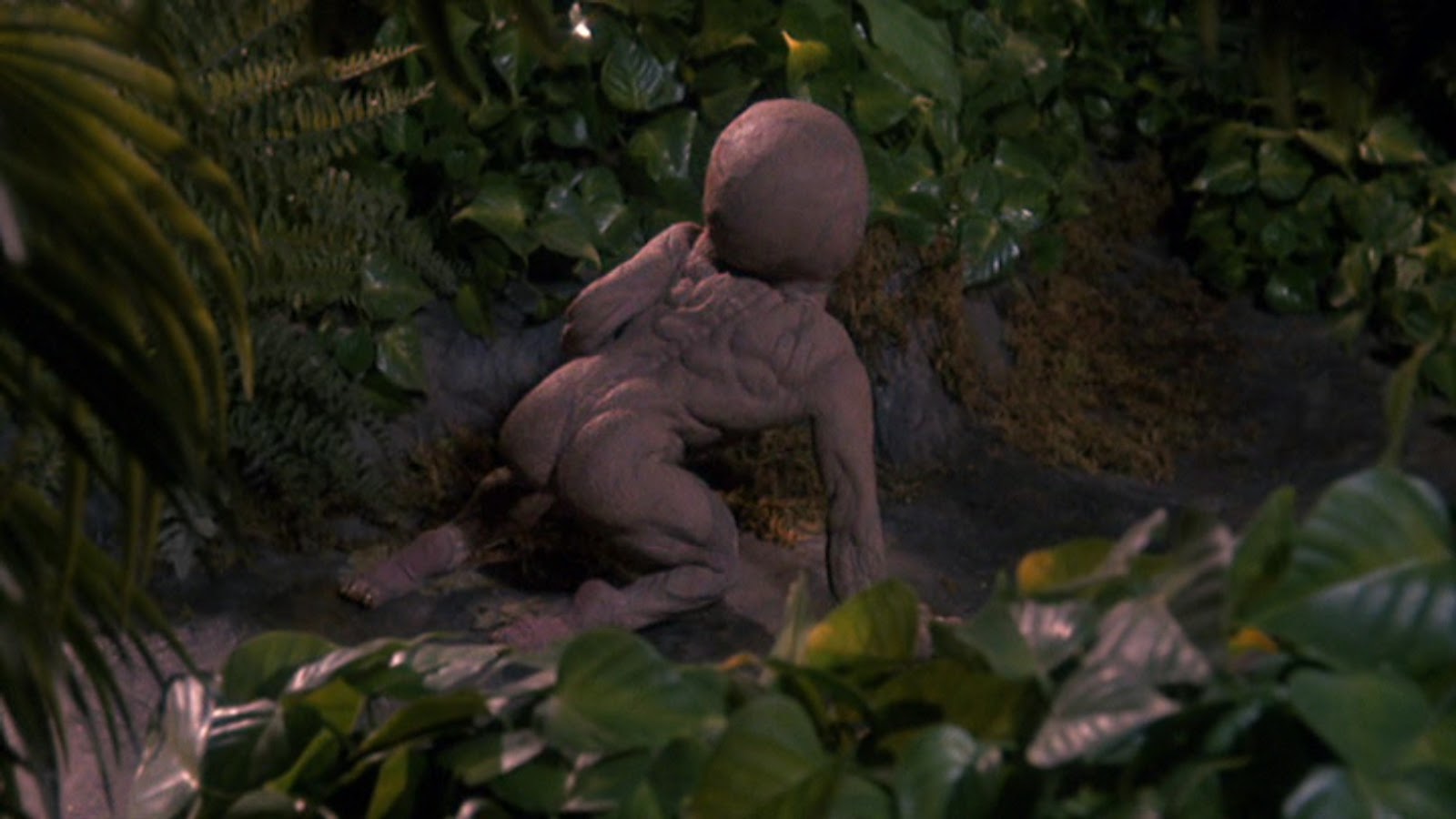
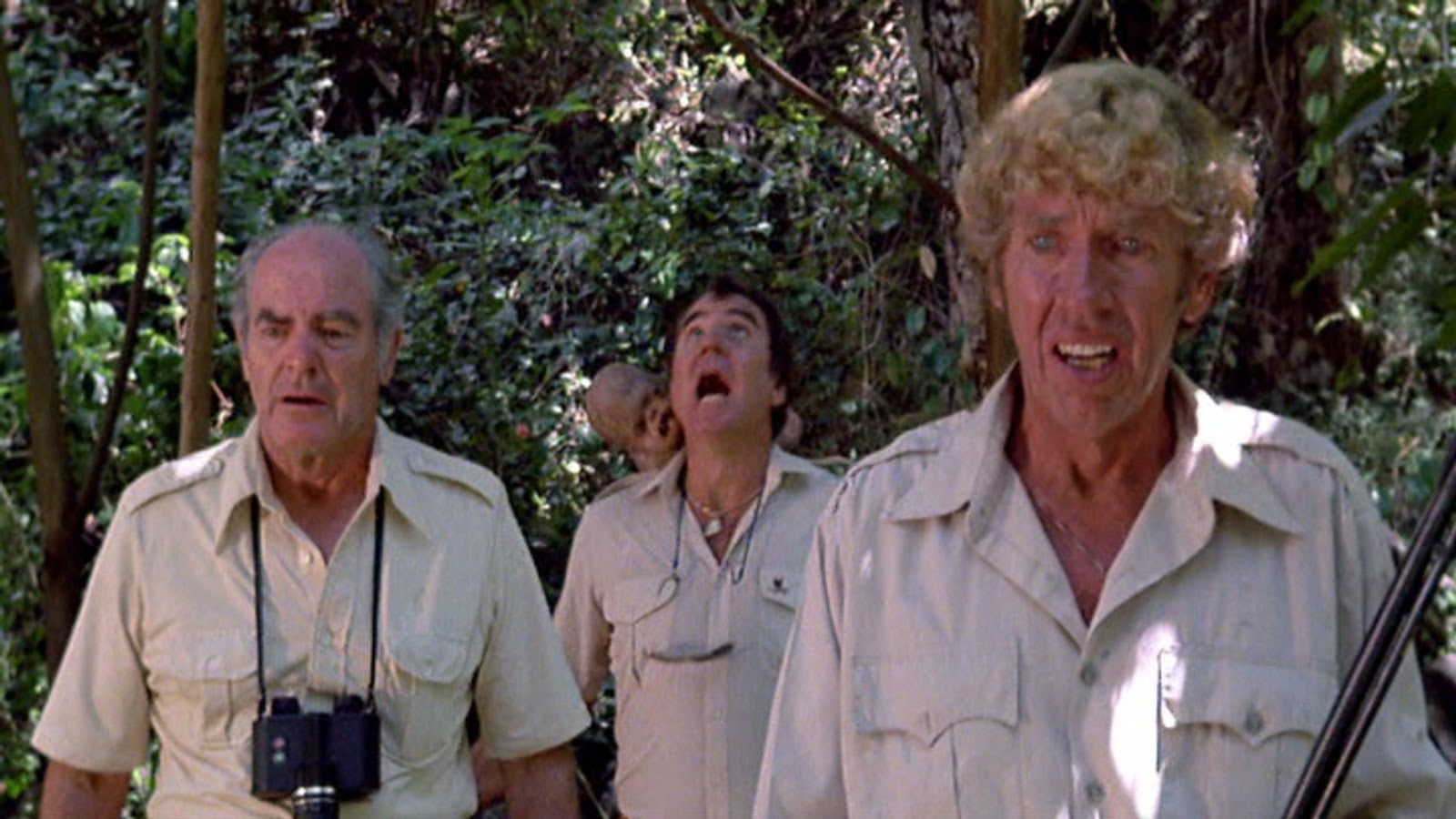
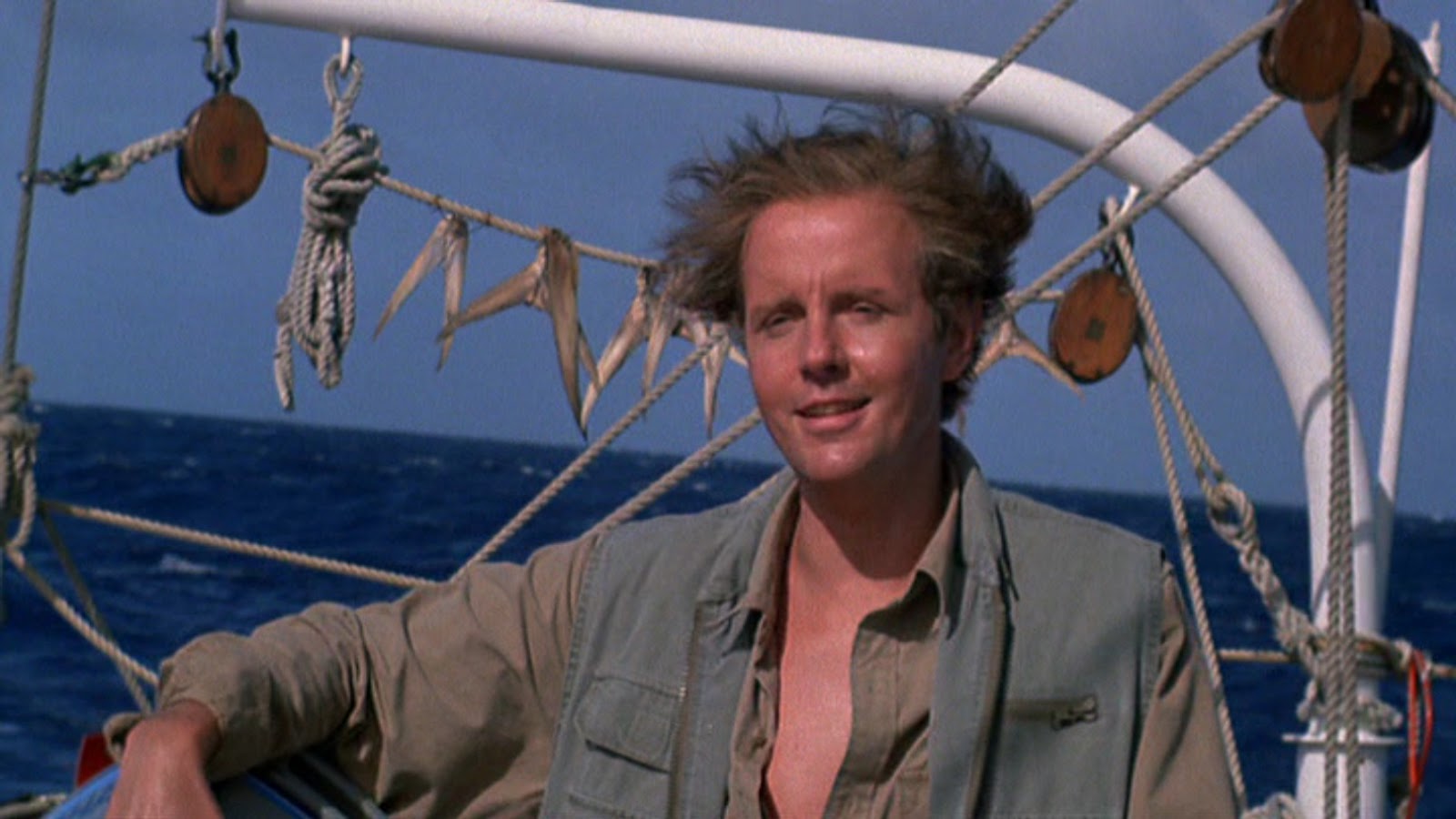
A master of both drama and disenfranchised cynicism on the screen, Michael Moriarty does honor to the franchise, giving a strong performance to follow-up John P. Ryan (as Frank Davis). We additionally meet Ellen Jarvis (Karen Black; House of 1000 Corpses, Mirror Mirror, Night Angel), an intolerant prostitute (Laurene Landon; Maniac Cop 1-2, The Stuff), and the return of Lt. Perkins (James Dixon; It’s Alive, It Lives Again, The Stuff, Maniac Cop 1-2), who comes to recruit Jarvis to join an expedition to the quarantined tropical island several years later to document the development of the isolated mutants.
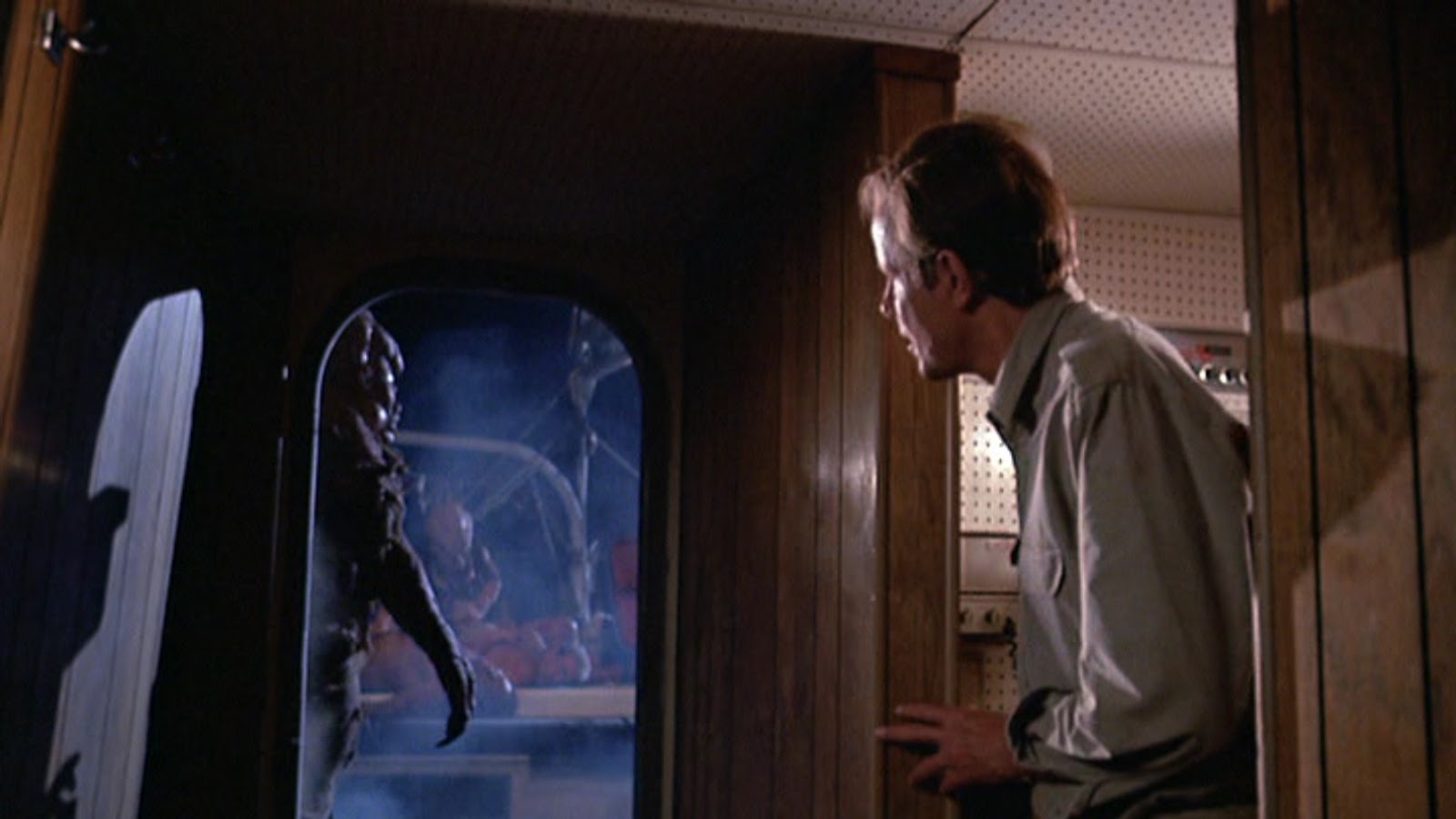
Once on the island, Jarvis hits full-tilt bonkers as he tortures his expedition mates with his over-the-top humor! Less amusing to me was how all the island babies have become ogre-like monsters (actors in dumb rubber suits with mostly stationary faces) that lead an escape expedition of their own back to the mainland United States.

I was on board for the first hour, but this third act derailed my interest. Yes, this film offered some allegory regarding misunderstood demographics (e.g., Cubans and mutant baby monsters). But this allegory didn’t provide anything we hadn’t already experienced in It Lives Again (1978). So, like so many sequels trying to be bigger and better than before… sometimes more is just more and hardly needed in the first place. I guess this was mildly entertaining, much like its predecessor sequel. But for me, It’s Alive (1974) should have probably been left alone and sequel-less.
Share this post:

MFF Dumb Data: Brad Pitt’s Movies Make More Money, Score Higher With Critics, the More He Eats
.
QUICK NOTE: I’m not implying correlation equals causation. I’m just presenting random data in hopes of making a few people chuckle. Hopefully all this data won’t be too much to digest.
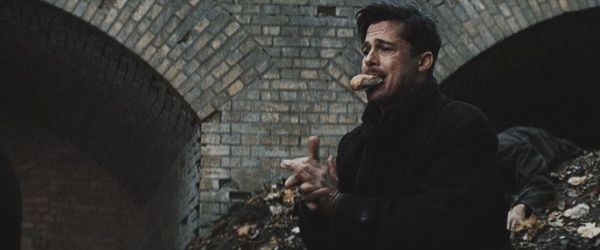
For years, the narrative around Brad Pitt is that he is always eating in his movies. It’s gotten to the point where you legitimately envision him constantly snacking on a turkey leg in each of his films. For instance:
- Troy – Fighting Eric Bana while holding a turkey leg
- The Curious Case of Benjamin Button – Eating a turkey leg while hanging with Cate Blanchett
- Cool World – Eating an animated turkey leg while chasing toons around
- True Romance – Sitting on couch while eating a turkey leg
- Legends of the Fall – Looking sad on a boat AND sadly eating a turkey leg
The eating discussion is so prevalent, I decided to do a rewatch of his movies to put together a master list of all the food, and see if any cool statistics popped out. I started by researching the lists and videos claiming to showcase ALL the food Pitt has consumed through the years. The helpful lists (another list) and videos (more videos here and here) are thorough and I applaud the work put into them, however, I quickly learned items were missing from the lists, or added items weren’t featured in the movies. So, I started a months long process of scouring through his movies (thank you Vudu, Netflix, Amazon Prime, Hulu, Crackle, Tubi, Hoopla, IMDb Freedive and my local library) to find some fun (unimportant data) I can share with you
Here are some quick thoughts before I get into the eating:
- He is really good in 12 Monkeys.
- He has eaten 4,986 estimated calories onscreen.
- Moneyball is better than I remembered…and I remembered it being very good.
- A River Runs Through It deserved the Best Cinematography Oscar.
- He doesn’t eat too much.
- His best eating moments are in Ocean’s 11, Fury and Mr. and Mrs. Smith
- His peanut butter eating moment in Meet Joe Black showcased some brave acting.
- He was badass in Snatch.
- Burn After Reading is really funny.
- He has consumed the majority of his calories in the 2000s.
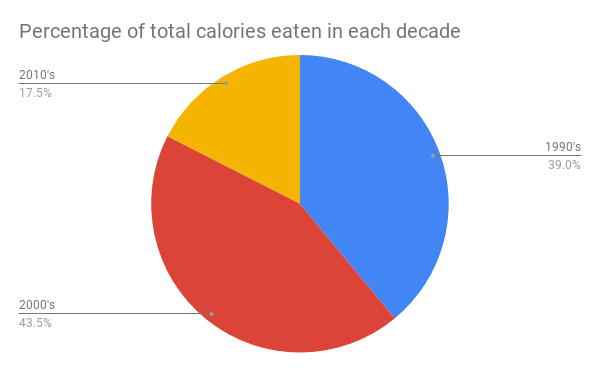
The pie chart is fitting….
.
Here are the eating rules
- I only counted his onscreen eating. Basically, we had to see him eating. I didn’t include the implied eating from movies like Seven (post dinner scene with Paltrow and Freeman) or Johnny Suede (jelly doughnut scene)
- I didn’t count beer, water, coffee or soda (sorry World War Z Pepsi scene).
- I included his Jamba Juice smoothie and gum chewing in Burn After Reading because technically that’s lunch. Also, I included the blood from Interview With the Vampire because he is eating.
- To figure out the calories, I found the serving size calorie amount of each food eaten onscreen and guessed accordingly. Or, I just typed in “tablespoon of peanut butter calories” or “cheeseburger calories” and worked with that. I am 98.87% confident with my calorie counts.
What did I find out? Brad Pitt movies featuring him consuming more than 200 onscreen calories have higher box office and critical averages than his movie featuring zero eating or very little munching. I guess critics and audiences like watching him eat (no way to prove this).
Brad Pitt movies featuring no eating
- Tomatometer Average – 64.%
- IMDb User Score – 6.9
- Domestic Box Office Average – $64 million
- Movies with zero calories eaten

The $68 million worldwide box office average can be attributed to World War Z being the only blockbuster type movie in the category. However, it is the most award nominated category with Pitt receiving Academy Award nominations for 12 Monkeys (Best Supporting Actor) and The Big Short (Producer), and winning an Oscar for 12 Years a Slave (Producer).
If you get a chance watch Snatch, Killing Them Softly, True Romance and World War Z. Pitt is very good in them
Brad Pitt movies featuring him eating 1-200 calories
- Tomatometer Average – 62%
- IMDb User Score – 6.8
- Domestic Box Office Average – $110 million
- List of movies by calorie intake

One of my favorite Brad Pitt eating moments takes place in Fury during a very uncomfortable lunch scene. I think it might feature the greatest eating of a single egg in cinema history. Aside from the egg eating in Fury, the eating moments in these movies are mundane and mostly feature Pitt eating a few bites here and there. My favorite moment of Pitt’s “non-eating” takes place in Seven, when he looks at a piece of pizza with absolute disgust and throws it back on a plate without eating it. While watching these movies again, it’s clear that Brad Pitt taught The Big Bang Theory actors how to fake eat and act, because he does A LOT of it.
If you haven’t watched The Assassination of Jessie James By the Coward Robert Ford you need to do it now. The cinematography by Roger Deakins is mind-blowing and I guarantee Pitt has never looked better while eating. I also love The Tree of Life, and I appreciate the way cinematographer Emmanuel Lubezki shoots Pitt eating as well.
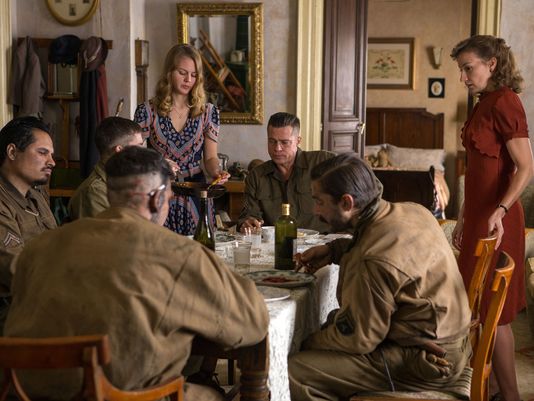
Such an uncomfortable lunch.
Brad Pitt movies featuring him eating 200+ calories
- Tomatometer Average – 67%
- IMDb User Score – 7.0
- Domestic Box Office Average – $143 million
- Brad Pitt movies featuring him eating 200+ calories
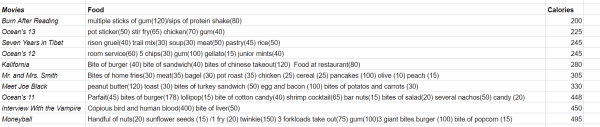
I have a feeling that Ocean’s Eleven, Moneyball and Meet Joe Black are the primary reasons why people think Brad Pitt is always eating onscreen. The eating in Ocean’s 11 is truly excessive and I kinda love it. Pitt’s commitment to shoveling food in his face is a lot of fun and I like how it continues on through the successful trilogy. Also, Moneyball gave us the visual of Pitt shoveling an entire Twinkie into his mouth, while Meet Joe Black features the strangest peanut butter eating ever.
I do like how Pitt’s eating and acting are never the same. Here are some examples:
- Ocean’s trilogy – Cool eating
- Moneyball – Stress eating
- Meet Joe Black – Curious eating
- Interview With the Vampire – Very hungry eating
- Kalifornia – Gross eating
- Seven Years in Tibet – I’ll eat anything eating
There you have it! Brad Pitt’s movies do better with critics and audiences when he eats more. The world can rest easy now.
If you like this weird data make sure to check out my other stuff.
- Jet Ski Action Scenes Are the Worst
- Analyzing the Unsuccessful Trap in Predators
- How Far Did the Shark Travel in Jaws: The Revenge?
- How Many Calories Did Shaggy and Scooby Ingest When They Are The Cotton Candy Glob?
- The Dolph Lundgren Front Kick Spectacular
- How Far Did the Creature From It Follows Travel?
- How Many Bullets Missed John Matrix in Commando?
- How Long Did it Take Batman to Setup the Bat Fire on the Bridge in The Dark Knight Rises?
- Kevin Bacon’s College Degrees
- How Fast Does the Great White Swim in Shark Night?
- Zara the Assistant and Jurassic World Had a Bad Day
- A Look at Elektra’s sandbag trainer in Daredevil
- How Far Did Nic Cage Run While Dressed as a Bear In The Wicker Man Remake?
- Breaking Down The Mariner vs. Sea Beast Battle in Waterworld
- How Long Did it Take The Joker to Setup the Weapon Circle in Suicide Squad?
- Michael Myers Hates Blinkers
- How Much Blood Dropped During the Blood Rave in Blade?
- Jason Voorhees Can’t Teleport?
- Michael Myers Loves Laundry
- How Far Did the Merman Travel in The Cabin in the Woods?
- How Far Did Matthew McConaughey Jump in Reign of Fire?
- How Fast can Leatherface Run?
- Deep Blue Sea and Stellan Skarsgard
- How Far Did Michael Myers Drive in Halloween H20: 20 Years Later
- How Did the Geologist Get Lost in Prometheus?
- People Love a Bearded Kurt Russell
- A Closer Look at Movies That Feature the Words Great, Good, Best, Perfect and Fantastic
- An In-Depth Look At Movies That Feature Pencils Used as Weapons
- Cinematic Foghat Data
- Explosions and Movie Posters
- The Fast & Furious & Corona
- Nicolas Sparks Movie Posters Are Weird
- How Do You Make the Perfect Kevin Smith Movie?
- Predicting the RT score of Baywatch
- The Cinematic Dumb Data Podcast
- What is the best horror movie franchise?
- How Fast Can the Fisherman Clean a Trunk in I Know What You Did Last Summer?
- It’s Expensive to Feature Characters Being Eaten Alive and Surviving Without a Scratch
- How Long Does it Take Your Favorite Horror Movie Characters to Travel From NYC to San Francisco?
- What was the Guy’s Blood Pressure in Dawn of the Dead?
- Why Were There So Many Lemons in National Treasure?
- How Far Does The Rock Jump in the Skyscraper Poster?
Share this post:

John’s Horror Corner: Biohazard (1985), a goofy schlocky B-movie Alien (1979) rip-off about a busty psychic and a crab-clawed monster.
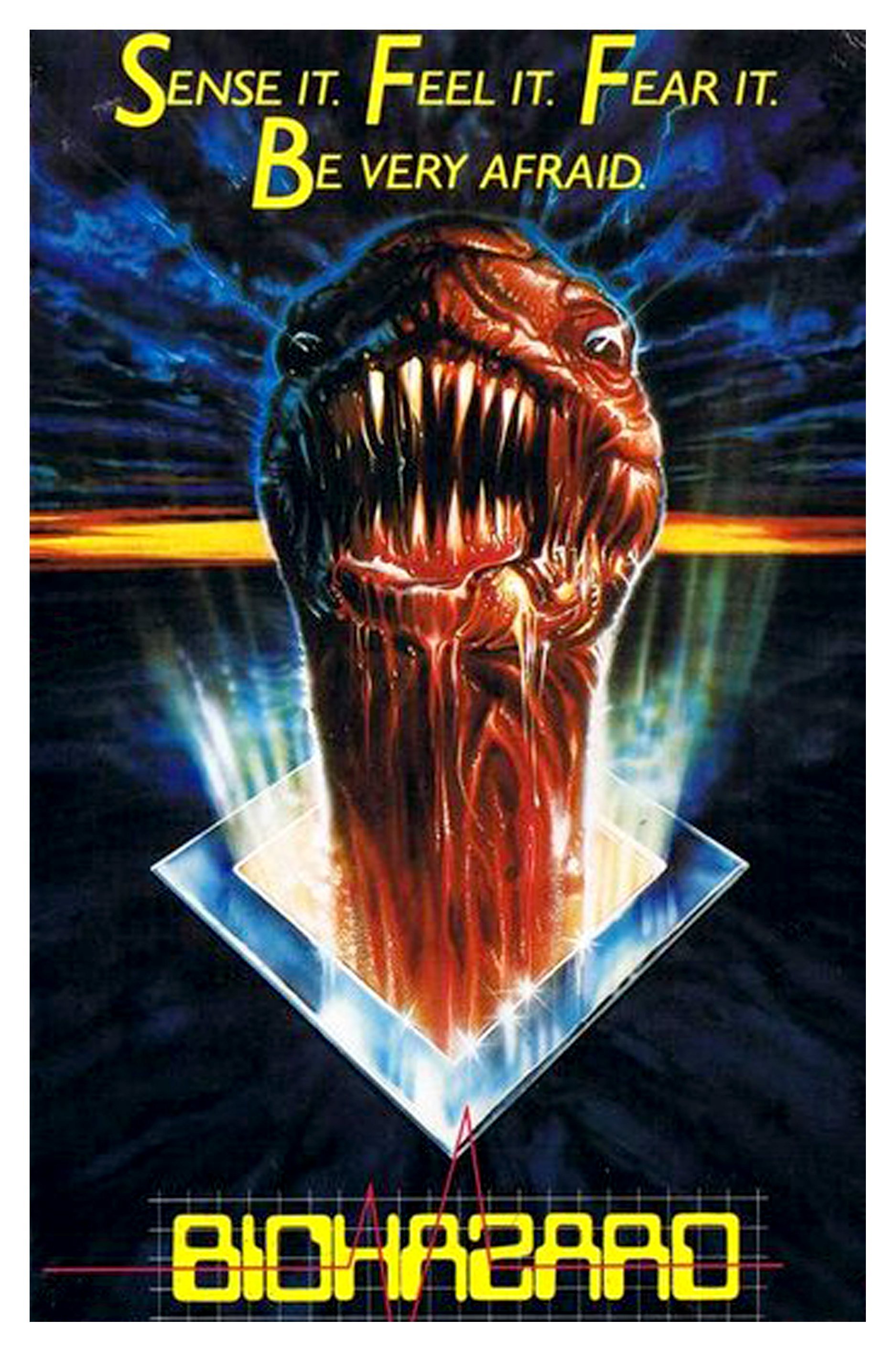 MY CALL: Among the lesser Alien (1979) rip-offs in the 80s marketplace, but not undeserving of your schlocky B-movie-loving attention. MOVIES LIKE Biohazard: For more low budget Alien (1979) rip-offs, check out Contamination (1980; aka Alien Contamination), Alien 2: On Earth (1980), Scared to Death (1980; aka Syngenor), Galaxy of Terror (1981), Forbidden World (1982; aka Mutant), Inseminoid (1982; aka Horror Planet), Parasite (1982), Creature (1985; aka Titan Find), Star Crystal (1986), Creepazoids (1987), Blue Monkey (1987), Nightflyers (1987), Deep Space (1988), Transformations (1988; aka Alien Transformations), The Terror Within (1989), Shocking Dark (1989; aka Terminator 2, aka Aliennators), The Rift (1990), Syngenor (1990), Xtro 2: The Second Encounter (1991), Dark Universe (1993) and Zombies: The Beginning (2007).
Written (in part) and directed by Fred Olen Ray (The Alien Dead, Scalps, Deep Space), this Sci-Horror opens in very familiar territory with a guy in a biohazard suit and a Geiger counter. The writing is pretty basic (yet not exactly horrible, although the acting comes close), but the content is actually suggestive of some care and effort. When we meet Lisa, a particularly busty psychic (Angelique Pettyjohn) whose skills are tested at some secret underground government facility, generals and scientists and politicians brainstorm as to how her cosmic powers might benefit the military.
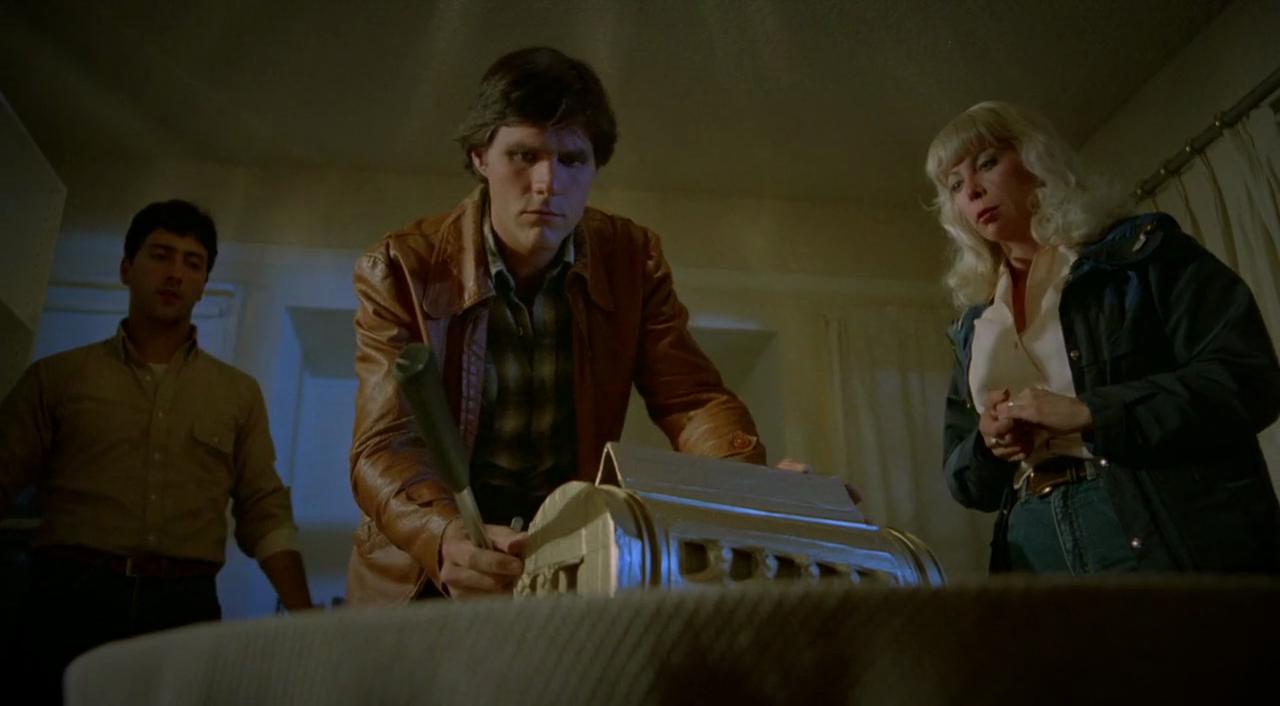
After conducting a psychic experiment, an interstellar container is summoned and transported to yet another special government facility… probably just to create the opportunity for something to go wrong in transit. And wrong it goes when an alien monster with crab claws maims one of the soldiers and escapes! So, Carter (William Fair; Deep Space) and Lisa team up to track the creature.

The latex wound effects and dead bodies are satisfyingly gory. But the rubber monster suit leaves much to be desired. When we see an on-screen death scene, it’s laughably disappointing in that hokey 1960s style of “aaaargh I’m the monster and I just grabbed you so clearly you’re dying now.” Oh well, at least we see a lot of boobs to make up for it. However, this movie isn’t the smutty film the poster suggests. The nudity may be as gratuitous as nudity gets. But still, to be fair, this is not smut.

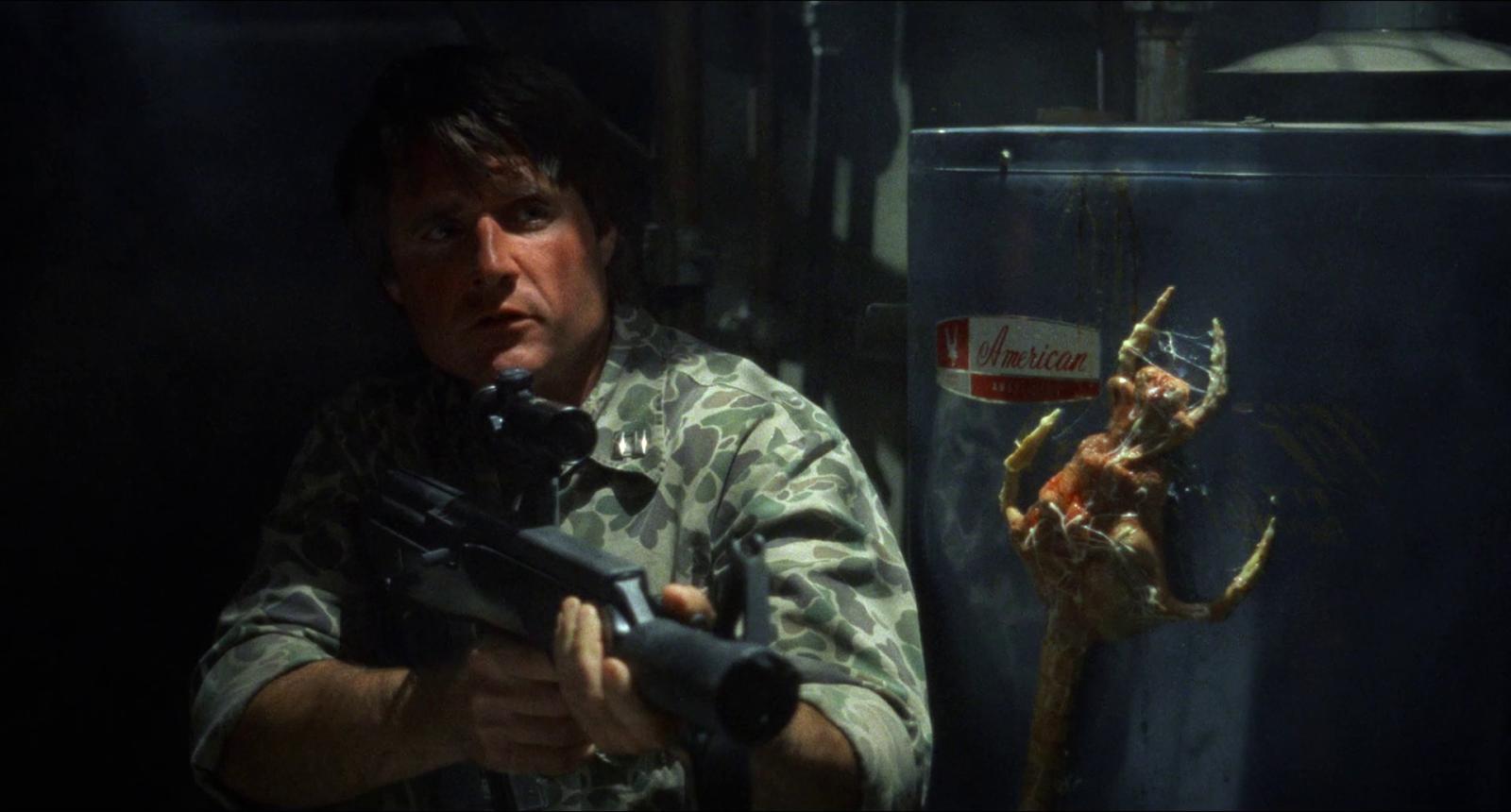
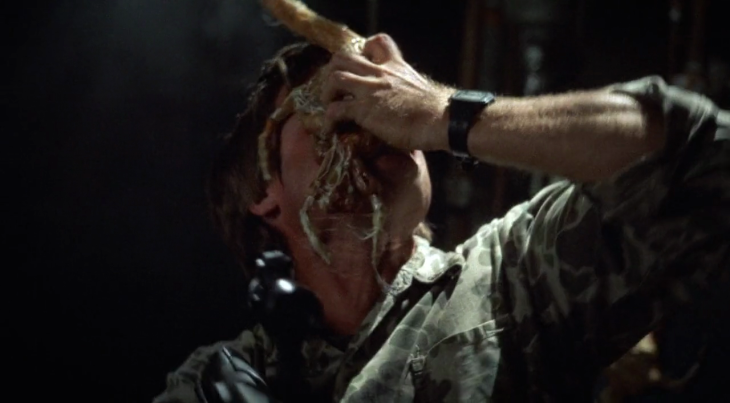
This movie wanders into the deep end of Alien (1979) rip-off territory when our clawed monster slimily drools on a victim from above, a slimy growling chestburster-like critter emerges from a space canister and rips out a guy’s throat, and a facehugger-like creature chokes and blatantly “facehugs” a guy! When Carter kills the clawed “xenomorph” it’s about as anticlimactic as it gets. But fret not, there’s a gory schlocky “booby” extra-cheesy finale complete with boobs and rending latex flesh.
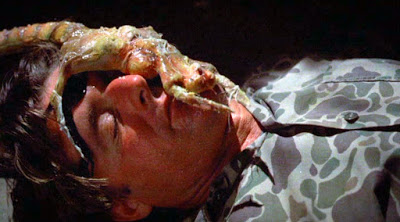
Watch the credits. They’re full of silly outtakes showing how self-aware Fred Olen Ray was of his goofy product. It makes the entire film feel more forgivable and light-hearted. The outtakes even include, you guessed it, more boobs. But even without nudity, this bad film might be the right kind of bad enough to be a good B-movie choice.


 Movies, Films & Flix